

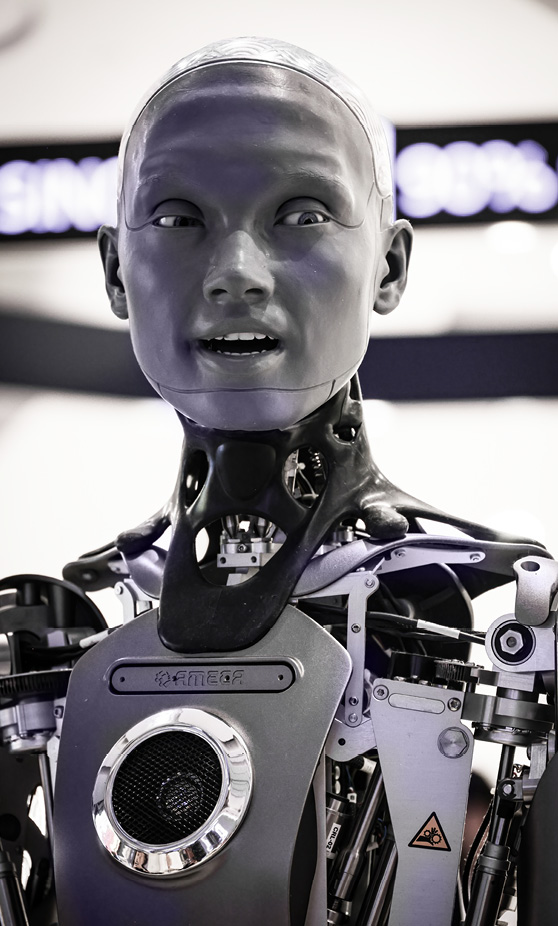
There are two lazy ways to talk about artificial intelligence in education. The first is to treat it as a miracle: a machine tutor for every child, a dashboard for every principal, a shortcut through the hard business of fixing schools. The second is to treat it as a threat: a plagiarism engine, a privacy risk, another imported technology that arrives long before the institutions are ready for it. South Africa cannot afford either superstition.
The better question is a leadership question. Can AI and digital technology help the country teach better, administer faster and widen opportunity, without hard-coding old inequalities into new systems? That is the issue Leadership should put on the national table. Not whether technology belongs in education, but on whose terms it is introduced, who benefits first, and what public safeguards are built before scale.
South Africa is no longer discussing digital education from the margins. The Department of Basic Education’s 2026 digital education update records South Africa’s participation in the eLearning Africa Ministerial Roundtable, where the country’s message was clear: emerging technologies must be shaped for African contexts, teachers must be equipped rather than displaced, and AI adoption must sit alongside legal, ethical and data protection frameworks. The department also referred to work on a National AI in Education Framework and stressed that foundational learning, including literacy, numeracy and critical thinking, remains central.
That last point matters. AI is not a substitute for reading. It is not a replacement for disciplined teaching, school leadership, nutrition, safe transport or a functioning timetable. It is, at best, a force multiplier. Used well, it can help teachers generate differentiated exercises, translate or adapt explanations, identify learners who are falling behind, reduce repetitive administration and give principals clearer signals about attendance, assessment and resource pressure. Used badly, it becomes a glossy layer over the same broken routines.
The opportunity is practical before it is futuristic. A teacher who spends fewer evenings compiling reports has more time to prepare lessons. A district that can see absenteeism patterns early can intervene before dropout hardens. A university lecturer who teaches students how to question AI outputs, check sources and disclose use is preparing graduates for the workplace they are entering, not the one their parents knew. The pro-AI academic case is not that machines think for students. It is that students must learn to think with, against and beyond machines.
Administration may be the most underrated battlefield. Education systems are data systems: enrolment, learner records, teacher development, procurement, nutrition, transport, infrastructure, assessment and certification. In South Africa, these functions often determine whether a policy is felt in a classroom or disappears into paperwork. AI-assisted administration could help departments detect duplication, flag missing data, improve case management, streamline teacher training records and make planning less reactive. The Department of Basic Education’s Online Teacher Development Platform already points in this direction: it coordinates continuing professional development, uses online diagnostics for digital learning competencies, offers microlearning, and since July 2025 integrates with the SACE platform so teachers can receive CPTD points after completing online programmes.
The social justice test is whether this machinery reaches the schools that need it most. Stats SA’s General Household Survey 2024 shows that 82.1% of South African households had at least one member with internet access through one or more locations. That sounds like near-universal readiness until the detail arrives. Only 17.4% had fixed internet at home. Three-quarters relied on mobile access. Access at an educational facility was recorded at 4.0%. Western Cape households had much higher fixed home internet access than Eastern Cape, Limpopo, KwaZulu-Natal or Mpumalanga households. In other words, connectivity exists, but it is often mobile, uneven and expensive in practice.
For education, that distinction is everything. A learner sharing a handset and prepaid data is technically connected, but not in the same way as a learner with a laptop, fibre, quiet study space and a parent who can troubleshoot software. If AI learning tools are designed for the second child and sold as a solution for the first, the system will not close inequality. It will digitise it.
This is why procurement should be treated as public policy, not shopping. Schools and departments will be offered platforms promising personalised learning, automated marking, learner analytics, chatbot tutoring and administrative efficiency. Some will be useful. Some will be expensive theatre. Leaders should ask five questions before adopting them: What problem does this solve? What evidence shows it works in South African conditions? What data does it collect, where is that data stored, and who owns it? How will teachers be trained and supported? What happens when the contract ends?
UNESCO’s guidance on generative AI in education offers a useful warning: these tools are developing faster than many regulatory systems, leaving privacy and institutional readiness exposed. The point is not to freeze innovation. It is to insist on human-centred design. Children are not test markets. Teachers are not obstacles. Public education is not a data mine.
The curriculum question is equally urgent. South Africa has begun laying the rails for digital learning through DBE digital content, online teacher development and policy work on AI readiness. But a country that wants to be more than a consumer of imported platforms must go further. Learners need AI literacy: how models produce answers, why they hallucinate, where bias enters, how to verify information, when automation is appropriate, and why original work still matters. This should not be confined to elite schools or computer labs. It belongs in language classes, history essays, science projects, business studies, vocational training and teacher colleges.
Local language is a decisive frontier. AI systems that work fluently in English but poorly in isiXhosa, isiZulu, Sesotho, Afrikaans or other South African languages will reproduce a familiar hierarchy. Digital transformation must therefore include local content, open educational resources, accessible interfaces and assessment practices that respect the country’s multilingual reality. The prize is not simply a smarter classroom. It is a classroom in which more children can be seen, supported and challenged.
Evidence must then become a habit, not an afterthought. South Africa should pilot AI tools in real classrooms, measure whether they improve learning or reduce teacher workload, publish the results and stop funding what fails. Philanthropy and business can help, but only if they accept the discipline of public-interest evaluation. The fashionable demo is easy; the test is whether a rural principal, a foundation phase teacher and a learner using mobile data are better served six months later.
The counterargument deserves serious attention. AI can encourage shortcuts. It can weaken writing if students outsource first drafts before learning how to think. It can produce false confidence in bad information. It can expose sensitive learner data. It can tempt managers into surveillance rather than support. It can make under-resourced schools dependent on vendors while better-resourced schools build capability. These are not side issues; they are the governance agenda.
Yet the answer to these risks is not retreat. South African education has too much at stake to leave powerful tools to private improvisation and anxious bans. The answer is a national compact: infrastructure that makes access real, teacher development that treats educators as professionals, procurement that demands evidence, data rules that protect children, and leadership that keeps foundational learning at the centre.
There is a useful humility in this. AI will not rescue South African education. People will. Ministers, principals, teachers, lecturers, parents, technologists, publishers and business leaders will decide whether the technology becomes a lever for inclusion or another advantage purchased by the already advantaged.
For Leadership, the trendsetter position is clear: move the debate from hype to stewardship. The leaders who matter now are not those who can name the newest platform. They are the ones who can align technology with public purpose. South Africa does not need an AI education panic or an AI education gold rush. It needs a disciplined, pro-innovation settlement in which every new tool must answer to the learner, the teacher and the Constitution’s promise of equal dignity.
Robert Arendse is the Managing Director of Leadership and writes here in his personal capacity. This article was developed with the assistance of an in-house AI tool.