

The Human Resource (HR) function is at the heart of all organisations in ensuring the achievement of business goals. This internationally recognised profession, more than any other, is responsible for transformation, sourcing, skills development and retaining talent and ensuring productive work relationships.
The SABPP’s mission is to professionalise people practices and the HR function to ensure that HR becomes an increasingly recognised and respected profession. The SABPP was established in 1982, as an autonomous body to be the standards setting and professional registration body for the HR profession. Over the last 41 years, the SABPP has registered more than 10 000 HR Professionals on five different levels of professionalism.
In 2002 SABPP was recognised by the South African Qualifications Authority as an ETQA and in 2011 as a professional body. In 2013, SABPP made history by developing the world’s first national HRM Standards, followed in 2014 by an HR Audit Framework. In 2023, the SABPP launched the revised HRM standards, which were renamed as the People Practices and Governance Standards. These revised standards speak to the current realities as well as the technological disruptions and the future world of work.
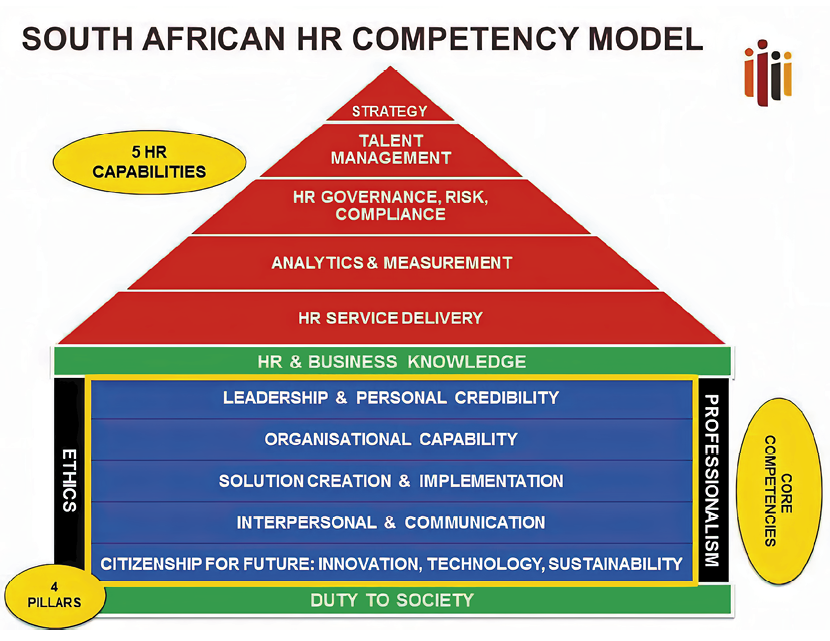
The HR Competency model developed by SABPP provides a clear description of the competencies needed by HR Professionals. Therefore, HR Standards, HR Audits, Competencies and Quality Assurance constitute the fundamental building blocks for professionalising HR and people practice in South Africa.
The People Factor Strategy
The new SABPP strategy, the 2020-2030 PEOPLE Factor Strategy, builds from the successful HR Voice strategy which ran from 2013 to 2019 and created a solid foundation for HR professionalism based on national standards and development of professional competencies. The SABPP gained credibility and made the voice of the profession heard more clearly.
Now new challenges are arising. As the pace of change in the workplace gathers momentum in the second decade of the century, there are many concerns that the 4th Industrial Revolution will displace human beings. However, as Klaus Schwab, who ‘invented’ the term, points out, the emerging technologies driving radical shifts in the way we live are truly disruptive but the evolution of these technologies, which are still at their very early stages, is entirely within our powers. We have a responsibility to take the window of opportunity and make the technologies “promote the common good, enhance human dignity and protect the environment”.
Hence, the SABPP’s 2020-2030 People Factor Strategy positions the HR profession to centre people in shaping the future, leveraging the technology and protecting the environment, supporting a fair transition to the future world of work. HR practitioners have the opportunity to take the lead in imagining and developing the workforce of the future for their organisations, reskilling the workforce of the present and making room for new entrants to the workforce.