

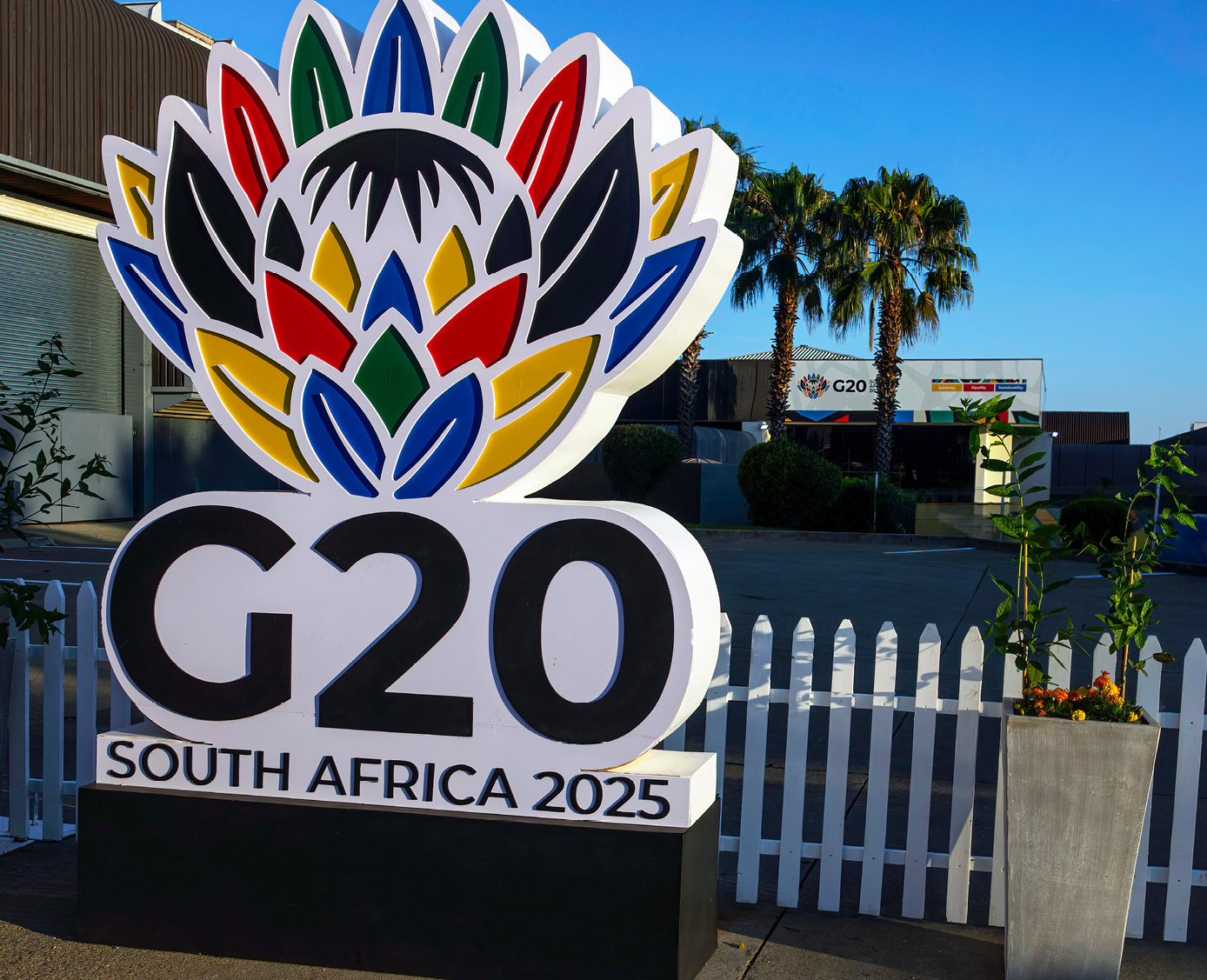
The ball is now firmly in South Africa’s court following a successful G20 presidency, writes Ido Lekota
South Africa’s 2025 G20 Presidency and the landmark Johannesburg Summit have catapulted the nation to the forefront of global diplomacy as a defining voice for the Global South.
This historic moment marks the first time an African country has assumed the G20 Presidency, elevating Africa’s development priorities and those of developing countries onto the global stage under the banner of “Solidarity, Equality, Sustainability”.
Through deft leadership, South Africa steered the Summit agenda to focus on debt sustainability, climate finance, inclusive industrialisation, critical minerals, food security, and technology governance—key issues central to the continent’s and Global South’s advancement.
Despite geopolitical fractures and notable absences, South Africa has succeeded in forging consensus and a united declaration underscoring multi-polarity and shared commitment to development, underscoring a transformative break from past G20 presidencies dominated by a narrower set of interests.
Building on the momentum from Indonesia, India, and Brazil’s previous presidencies, South Africa’s stewardship consolidated a developmental perspective reflective of historically marginalised nations.
On the other hand, South Africa’s G20 Presidency in 2025 represents a critical juncture in the country’s ongoing journey to redress inequalities rooted in its apartheid past.
The importance of this moment lies in how it brings South Africa full circle in addressing these inequalities—issues first confronted through fiscal measures during the democratic transition in the early 1990s.
At that time, a 5% transitional levy was introduced on individuals and companies earning above R50 000 annually to help fund the costs of transitioning to democracy.
While this levy served its temporary purpose, it was never extended or transformed into a permanent wealth tax.
Its discontinuation reflected the political reality of balancing interests between conservative groups, protective of their apartheid-era privileges, and progressive forces seeking transformation.
Post-apartheid reconciliation efforts included Archbishop Desmond Tutu’s proposal—following the Truth and Reconciliation Commission (TRC) report—for a once-off wealth tax on those who benefitted economically from apartheid, predominantly white South Africans.
This proposal aimed to promote national healing by addressing the economic legacies of racial privilege. However, government and business opposition labeled the initiative divisive or racist, and it was ultimately rejected.
Today, however, South Africa is seriously considering introducing a wealth tax, with rates proposed between 3% to 7% on net wealth above roughly R3.6 million. This would represent a transformative approach to raising revenue for social development and addressing persistent inequality.
Encouragingly, up to 62% of wealthy South Africans have indicated willingness to pay a 2% wealth tax, reflecting shifting public attitudes toward fiscal fairness and social responsibility.
South Africa’s leadership of the 2025 G20 Presidency has also provided a powerful platform from which to drive these reforms.
It has allowed the country to anchor global discussions on tax fairness, inequality, and inclusive growth—issues that resonate deeply with its domestic agenda.
The Global Inequality Report commissioned by President Ramaphosa underscores this imperative, calling for urgent tax reforms to break apartheid’s enduring legacy of economic exclusion.
In this context, South Africa’s G20 Presidency symbolises a seismic shift—a new paradigm of multilateralism grounded in solidarity with the Global South and reparative justice at home. It presented a blueprint for how visionary diplomacy and courageous domestic governance can converge to craft a sustainable and equitable future.
In this dual role—global norm-shaper and domestic reformer—South Africa charts an unprecedented course that links international solidarity with reparative justice. Its G20 leadership is not mere diplomatic symbolism but a call to action aligning the aspirations of the Global South with South Africa’s own pressing need to dismantle century-old inequalities.
This wave crest moment calls not only for riding the crest of global influence but also for delivering on the promise of inclusive development.
The eyes of the world and especially the Global South are fixed on South Africa’s journey as it pioneers a reimagined global economic order where justice, equality, and shared prosperity take center stage.
Now the ball is firmly in South Africa’s court. The country faces the critical test of translating G20 commitments into concrete reforms, including equitable wealth taxation, and inclusive economic policies aimed at undoing systemic inequalities.
Ido Lekota is a media practitioner and an independent socio-political commentator.