

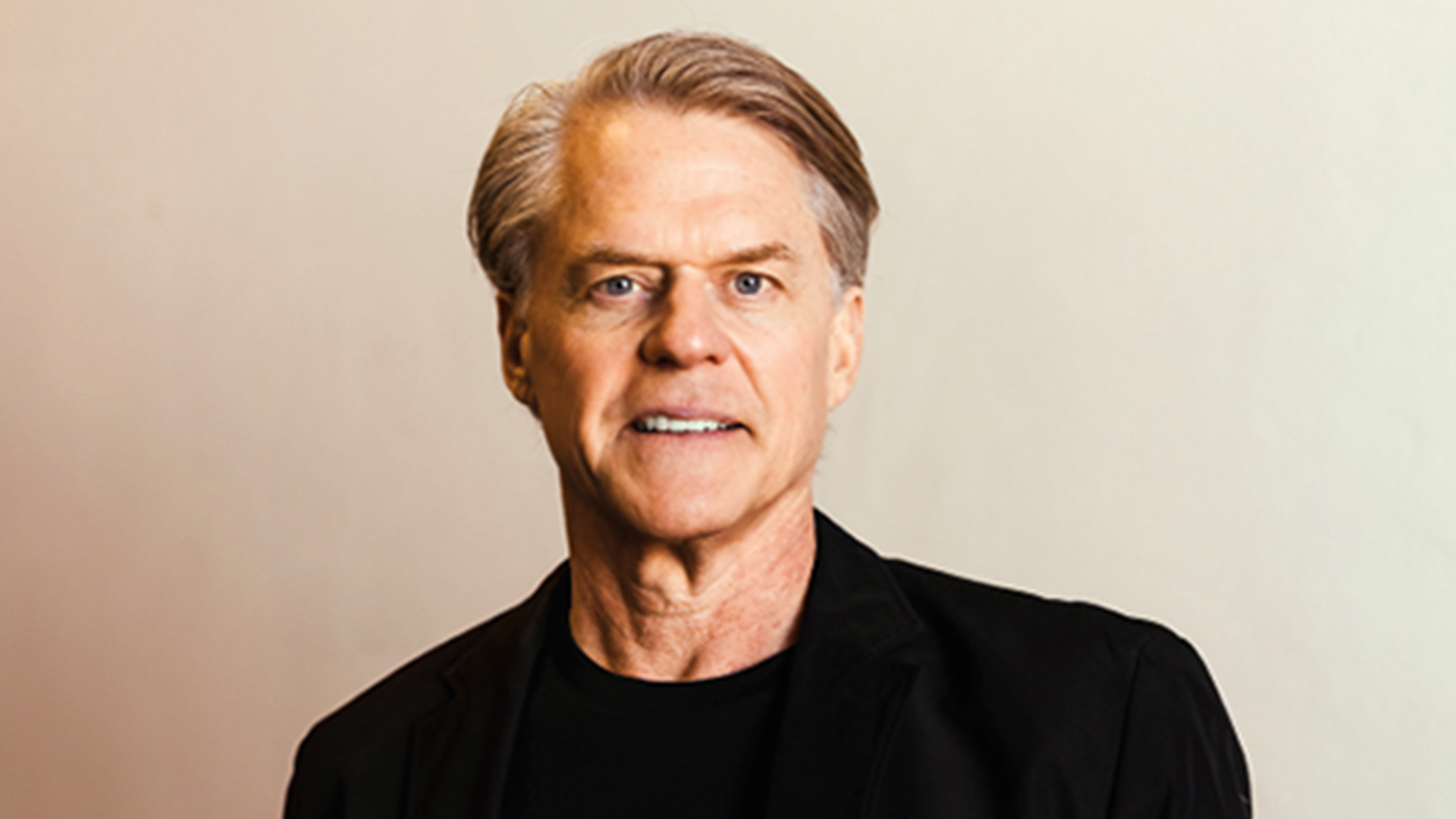
Getting AI to plan your holiday seems like a great idea – until something goes wrong. Pieter Brundyn is betting that luxury hospitality’s most valuable infrastructure will remain human.
Travel’s biggest companies are in a race to automate. Pieter Brundyn is betting that, at the highest level of hospitality, the opposite will become more valuable.
The direction of travel is clear. Airbnb says it has rebuilt itself as an ‘AI-native company’. Its models now synthesise reviews, surface information travellers are likely to care about and will soon compare homes automatically. Booking.com has introduced AI voice support and agentic trip-management tools. Expedia is preparing for ‘business-to-agent’, or B2A, distribution: a world in which hospitality businesses must appeal not only to travellers, but to the artificial agents increasingly making decisions for them.
Then there are general AI assistants – ChatGPT, Claude and Gemini – that, already knowing a user’s diary, preferences and behaviour, could increasingly plan the trip themselves: select the destination, compare flights and accommodation, build an itinerary and eventually execute the booking. Search, compare, decide becomes predict, present, confirm.
Brundyn, founder and CEO of private residential hospitality brand In Residence by Pieter Brundyn, is not against the technology. The Cape Town-headquartered company he founded in 2015 now offers more than 600 private homes across seven continents, with each booked stay supported by an on-the-ground team of destination experts. He knows that technology, data and automation are useful precisely because they can make the machinery behind that network more efficient. His concern is what happens when an industry built around caring for people begins to confuse that machinery with hospitality itself.
‘Technology can extend our reach and sharpen our tools,’ he says. ‘But it should never pretend to be the thing itself.’
Luxury hospitality, in Brundyn’s view, is not the transaction of access to an expensive house. It is the transfer of responsibility from guest to host. The guest is paying, in part, not to have to think about whether the airport transfer will arrive, whether the house will be ready, whether dinner can be moved by an hour or whom to call when the air-conditioning fails at midnight. The real product is trust. This is where the promise of the disembodied travel agent becomes less neat. These models optimise efficiency, but not necessarily quality and care.
Booking a holiday is not the same as filling a grocery basket. It is high-stakes, emotional, expensive and highly contextual. It is not simply ‘five bedrooms, sea view, available in August’. It is service, staffing, safety, discretion and the ability to recover when something goes wrong.
Where the machine stops
‘When technology moves from load-bearing to leadership, more is at stake than traveller and homeowner may realise,’ says Brundyn. ‘Real hospitality is not just a polished listing or a well-timed Instagram reel.It is built around human touch.’ Pull back the curtain on a seamless villa stay and you will never find just one person. It is closer to a mechanical movement: housekeepers who know a property intimately; maintenance teams who notice what a guest never should; drivers who understand timing and discretion; chefs adjusting dinner because the family stayed longer at the beach; concierge teams anticipating rather than reacting; operations staff protecting an asset while its owner is thousands of kilometres away.
Like a well-made timepiece, the system works precisely because the guest rarely sees it working.
In Residence has built that philosophy into its organisational structure. The villa on the website may attract the booking. The network of people around it delivers the product.
For homeowners, that infrastructure performs another function.
Someone still has to protect the property when it stands empty, recognise a maintenance problem before it becomes expensive, manage staff and carry responsibility for what happens behind a closed front door. Digital platforms are remarkably good at facilitating transactions. Less so responsibility. A machine can compare amenities. It cannot calm a child after a delayed flight or intuit what a guest will need next. The best hosts do not merely process stated preferences. They interpret people.
Luxury has confronted the same tension elsewhere. Earlier this year, Hermès commissioned illustrator Sarah Martinon and animator Armand Béraud to create hand-drawn artwork across its digital world at a moment when generative AI could have produced polished alternatives almost instantaneously. The drawings were deliberately tactile and imperfect. In a market increasingly built around machine perfection, evidence of the human hand is part of the value. This is where Brundyn sees opportunity rather than resistance.
Real connection is unsearchable
The distinction extends beyond what happens inside the villa. Artificial intelligence can build an itinerary in seconds, but its recommendations will inevitably be shaped by what it can find, rank and verify. In Cape Town that may mean Table Mountain, Robben Island and the restaurants with the strongest digital footprint. Useful but not necessarily memorable.
The experiences that define exceptional travel often sit outside the searchable world. Dinner with an artist in their studio. A private cellar opened by the winemaker. After-hours access to an exhibition. A table that was supposedly unavailable or tickets to a sold-out performance. These experiences do not exist because a page has been optimised for an algorithm. They exist because somebody knows somebody.
For Brundyn, this is another argument for keeping people at the centre of hospitality. In Residence’s destination knowledge is not simply a database of recommendations; it is a network of relationships built over time. The host becomes an interpreter of place, understanding not only what a guest might enjoy, but which doors can be opened and when.
AI can describe a culture. It can analyse preferences and predict what somebody is statistically likely to enjoy. What it cannot reproduce is the social capital and human trust through which a destination reveals its more private side.
And therein lies the irony of algorithmically perfected travel. The more efficiently a system eliminates uncertainty, the greater the risk that it also eliminates surprise. Yet some of the most meaningful moments in travel are the ones a guest could never have known to request.
‘Hospitality has always been – and will always remain – a human craft,’ says Brundyn.
The human advantage
AI will undoubtedly make hospitality more efficient. It can remove administration, organise information, anticipate preferences and give staff more time to focus on the guest. For Brundyn, that is precisely where its value lies: behind the scenes, making human hospitality better rather than attempting to replace it.
As the transactional parts of travel become increasingly automated, the distinction between convenience and hospitality will become harder to ignore. One gets a traveller from search to booking. The other assumes responsibility for what happens afterwards.
That distinction sits at the heart of how In Residence intends to grow. Scaling cannot simply mean adding more homes while removing more people. It means extending the network of relationships, local knowledge and operational expertise surrounding each stay. Technology may make that system more efficient; it cannot become the system itself.
In that sense, the AI revolution may produce an unexpected result for luxury hospitality. The more efficiently machines can predict, compare and transact, the more valuable judgement, presence and human connection become.
For Brundyn, the boundary is responsibility. A villa is not maintained by an app. A guest is not reassured by an algorithm. Trust, security and care are built by people, over time, on the ground.
Artificial intelligence may become extremely good at deciding where we sleep. It may eventually know where we want to travel before we do. But sooner or later the aircraft lands, the car pulls into the driveway and a guest reaches a front door.
Someone still has to be there to open it.
And someone still has to carry the bags.
inresidence.villas | pieterbrundyn.com