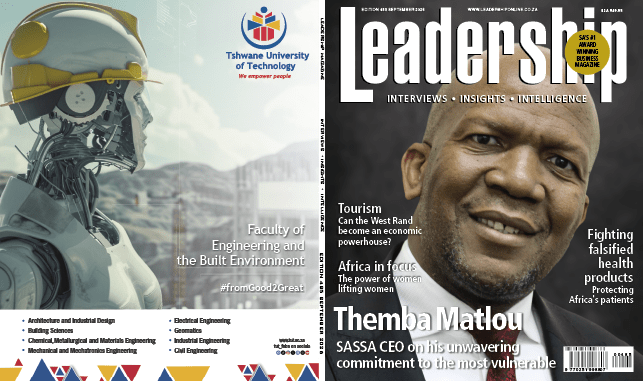
Serving 28 million with purpose
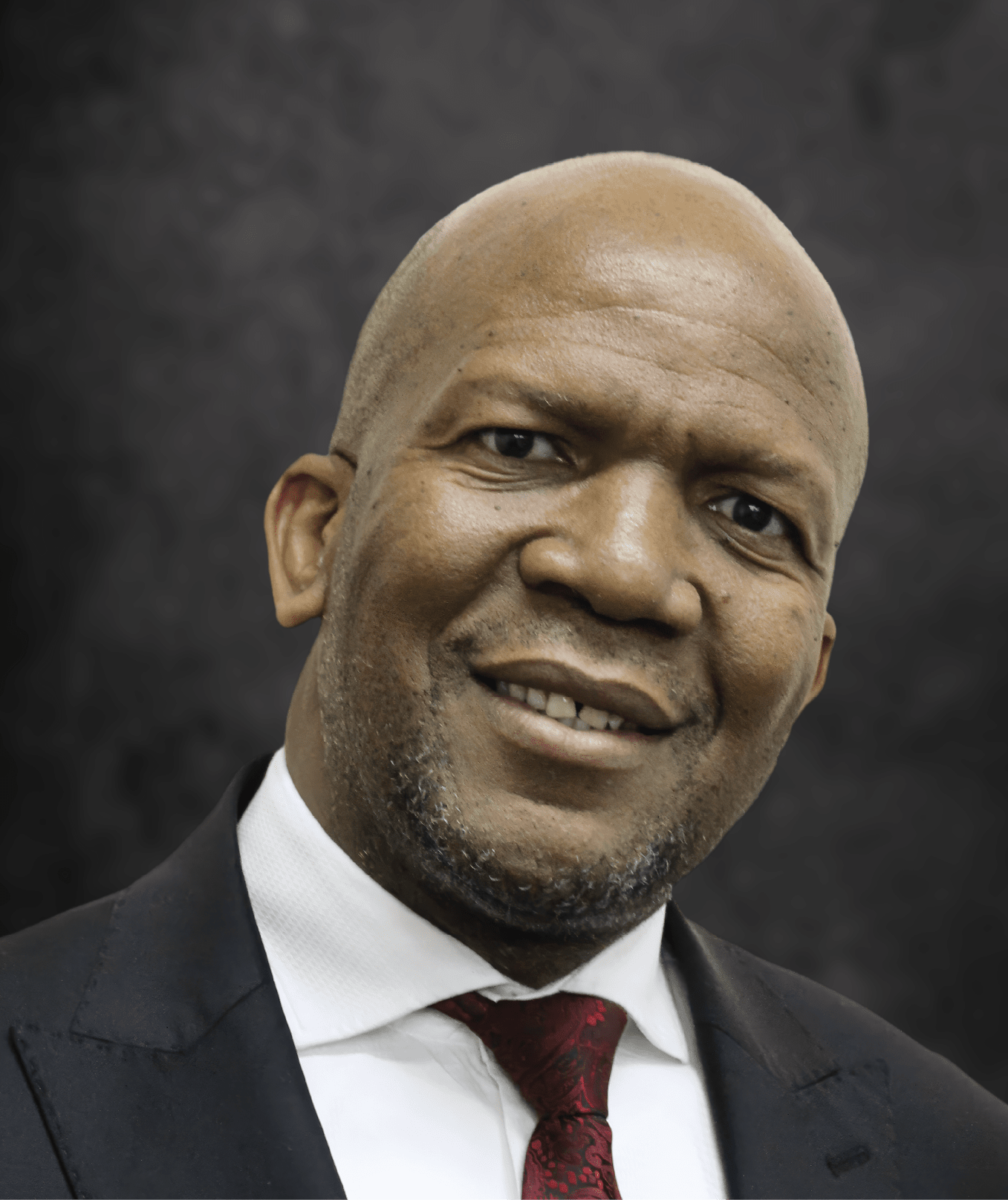
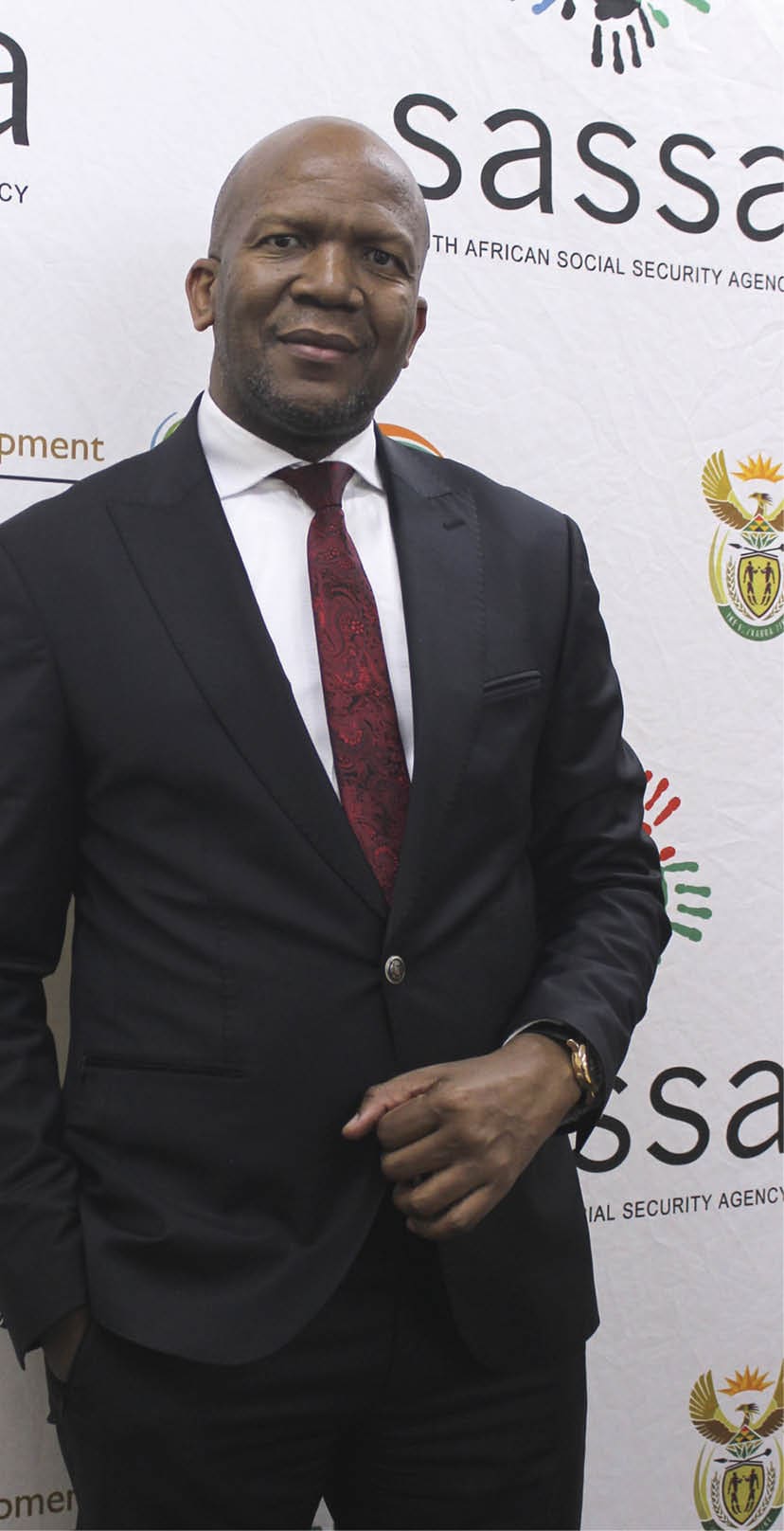
Themba Matlou is transforming SASSA through servant leadership, digital innovation and an unwavering commitment to South Africa’s most vulnerable people writes Ralph Staniforth
Few leadership positions carry consequences as immediate and deeply human as that of Chief Executive Officer of the South African Social Security Agency (SASSA). The organisation’s work can determine whether a pensioner buys food, a child has clothing for school or a family facing hardship can make it through another month.
For Matsobane Themba Matlou, who assumed office as SASSA CEO on 1 June 2025, accepting that responsibility required humility. Millions of people depend upon the organisation and behind every application, payment and enquiry is a human being whose dignity matters.
“I’ve accepted the role of the CEO with some sense of humility, especially noting that we serve a vulnerable community. You need compassion in this position, patience and respect to execute the work of SASSA,” says Matlou.
“This comes with huge responsibilities, where millions of people rely on this institution for their next meal. It has been a challenging journey but with moments of great pride.”
More than a year into the position, Matlou describes the appointment not simply as a professional advancement but as a calling. The scale is immense: according to Matlou, approximately 19 million social-grant beneficiaries and almost eight million recipients of social relief rely on SASSA.
Matlou’s ambition to restore smiles and confidence to the organisation’s clients has become a defining theme of his leadership. His ambition is for SASSA to be known as an accessible, ethical and responsive public-service organisation.
Leadership shaped by exposure
Matlou held senior management positions relatively early in his career and gained exposure to decision-making, community dialogue, employee development and organisational problem-solving. Mentors and former supervisors gave him opportunities to participate in environments that might otherwise have remained beyond his reach.
That experience taught him to understand competing perspectives and respond to complex problems. However, becoming CEO required him to operate on an entirely different scale. The diversity of people he engages with, the urgency of the decisions he must make and the consequences of those decisions have transformed his leadership approach.
At the centre of that approach is the understanding that public leadership is service. Authority, in Matlou’s view, should enable a leader to empower others, remove obstacles and create the conditions in which employees can perform at their best. One of Matlou’s toughest challenges has been declining public confidence. SASSA’s visibility means that failures, delays and allegations attract understandable attention, while improvements to a vast and complicated system are not always equally visible.
Public frustration frequently centres on queues, difficulty contacting the organisation, slow applications and concern that deserving beneficiaries may not receive assistance. Matlou does not dismiss those experiences. Instead, he says that they have caused sleepless nights and strengthened the agency’s determination to improve customer service.
“The perception is that customer experience is declining because people think that we are not really helping, but we have made great strides in introducing change-management initiatives and beneficiary education so that people get to know what SASSA is good at and the measures that we are putting in place,” he stresses.
Externally, the agency has expanded beneficiary-education initiatives through community gatherings and communication across different media channels. These programmes explain SASSA’s services, new systems and regulatory responsibilities while giving communities an opportunity to understand changes that might otherwise create confusion or fear.
Internally, SASSA Fridays and Staff engagement provide a platform through which employees can engage with organisational initiatives, share best practices and consider capacity requirements. The purpose is to connect the agency’s workforce with its broader mission and create consistency across its operations.
Grant reviews have been one area in which communication has been particularly important. Some beneficiaries fear that being selected for review automatically means losing their support. Matlou stresses that reviews are a legislated mechanism for confirming continued eligibility, not an indiscriminate effort to remove deserving people from the system.
“A lot of our people are panicking and fear their grant will be stopped, so we must intensify beneficiary education for them to understand that it is not about that,” says Matlou.
For SASSA, rebuilding trust therefore requires two interconnected actions: improving the service itself and explaining clearly why particular processes are necessary.
Making SASSA easier to reach
Physical accessibility remains fundamental, particularly in remote and underserved communities. Matlou wants SASSA’s footprint and visibility extended so that people throughout the country know where and how to obtain help. Digital transformation is central to the agency’s plan to reduce queues, accelerate applications and allow clients to use services without repeatedly travelling to an office. Self-service application channels enable people to apply and check their status using mobile phones, tablets and other devices.
“We have created quite a number of self-service channels which people can utilise in the comfort of their own home and don’t have to go to SASSA offices and queue,” Matlou says. “We’ve leveraged on the existing technological innovations that aim at improving the needs of our clients, and we have listened to our clients.”
The digital transition nevertheless contains a difficult paradox. The people most dependent upon social assistance are often those least likely to have reliable connectivity or sufficient mobile data to upload multiple documents, and Matlou recognises this concern. Digitisation cannot be considered successful if it moves queues from a building to an inaccessible online platform. Accordingly, SASSA is engaging the department responsible for the applicable regulations to explore reducing documentary requirements and making applications less burdensome.
The agency also wants to use secure data interfaces with the Department of Home Affairs, financial institutions and other government bodies to validate information that applicants might otherwise need to provide themselves. Guest Wi-Fi and self-service kiosks are among the measures intended to bridge this divide. These initiatives can give people who lack connectivity or suitable technology a means of accessing digital services closer to their communities.
The longer-term objective is a substantially simplified application process: fewer documents, greater interoperability between public databases and an experience that does not punish applicants for their economic circumstances.
The right grant, person and time
Modernisation is not only about convenience: it is also essential to the integrity of the social-grant system. SASSA must balance two duties that can appear to compete but ultimately reinforce one another: ensuring that eligible people receive assistance without unnecessary obstruction and protecting public money from fraud, identity theft, ghost beneficiaries and administrative abuse.
Matlou describes the guiding operational objective succinctly: the right social grant must be paid to the right person at the right time.
The organisation has also moved from cash-based payments towards more electronic systems that allow beneficiaries to transact through banks and merchants connected to the national payment network. Greater use of bank accounts and electronic verification makes payments more convenient while creating better safeguards and audit trails.
On the application side, beneficiary biometric enrolment uses fingerprints or facial verification to confirm identity. SASSA has also introduced biometric controls for officials capturing applications, allowing transactions to be connected to specific employees, thereby strengthening accountability.
“We have put in biometric user access that allows every official who captures the applications to be biometrically enrolled and verified so that the transaction can be linked with the particular official,” explains Matlou. “We have institutionalised beneficiary biometric enrolment, where we also introduced the social grant reviews and the eLife certification.”
These measures are supported by regular system-vulnerability assessments designed to identify weaknesses and detect identity theft. The agency has strengthened monitoring while providing ethics-management training for employees, underlining that the protection of public resources depends on human conduct as well as software.
For Matlou, technology cannot substitute for ethical leadership. A sophisticated system can still be compromised if people lack accountability, just as committed people can be undermined by weak controls. The two must develop together.
Governance and consequence management
Strengthening internal governance has consequently been another priority. Matlou says SASSA has substantially reduced irregular expenditure and implemented consequence management across the organisation. Structures devoted to fraud management, compliance, internal audit and risk oversight are intended to prevent wrongdoing, identify suspicious activity and ensure that alleged corruption is investigated and resolved.
“We have an anti-fraud management strategy to take a zero-tolerance stance to fight against fraud. These are the measures we put in place to gain public confidence and trust,” adds Matlou.
Audit-steering and ethics-management committees provide further layers of oversight, while awareness programmes seek to embed responsible behaviour throughout the agency. Matlou believes this is essential because SASSA’s legitimacy rests upon public confidence that assistance reaches eligible citizens and that its employees treat public funds as a solemn trust.
Fraud prevention can also increase the agency’s capacity to assist those genuinely entitled to support. Every payment stopped because it is fraudulent or no longer justified represents money that can be redirected towards legitimate beneficiaries or other government priorities.
A lifeline across generations
SASSA is celebrating 20 years of existence in 2026 and Matlou highlights that it began by paying approximately 2.7 million beneficiaries but now supports close to 28 million people, if permanent social grants and social relief are considered together.
The scale prompts difficult national debates about unemployment, economic inclusion and dependency, yet abstract debate can obscure what a grant means inside a home where income is scarce or absent. An older person’s grant may support grandchildren as well as its nominal recipient. It may buy food, school clothing and transport, stabilising an entire household. Child-support grants can help keep young people healthy and in school, while social relief can give an unemployed person the modest breathing space required to seek work or attempt to start a small enterprise.
“SASSA has undoubtedly bridged the gap of poverty while also significantly linking most of these clients to some economic and improved livelihood opportunities,” says Matlou.
“There are young people who, through the grants, have been able to become entrepreneurs and create employment opportunities, so that clearly has an impact on our society.”
He also points to the frequently underestimated role played by older women whose grants sustain extended families.
“An old-age grant that a gogo receives will often feed a number of children in the family. They are able to go to school and buy food and clothes, so the organisation has indeed become a lifeline to many,” he adds.
This does not mean that a grant alone can overcome the structural causes of poverty. Matlou’s broader aspiration is to connect recipients, particularly young people, with opportunities that can improve livelihoods and enable greater economic participation. Social protection, in this understanding, is not the opposite of development. Rather, it creates a minimum platform of stability from which development may become possible.
Transformation begins with employees
A modernised SASSA cannot be built through systems alone. Its success depends upon the thousands of employees who interact with clients, process applications, resolve difficulties and represent the institution in communities. Matlou has therefore placed considerable emphasis on engaging with and motivating staff. Local-office visits allow senior leadership to hear directly from frontline employees, understand operational constraints and recognise the pressure under which they work.
“We have improved the mood of the organisation by having capacitated our workforce and built a motivated team through continuous engagement with staff and also doing what we call local-office visits to motivate our staff, visit them and to understand what they require as well as their challenges,” says Matlou.
The introduction of Service Excellence Awards has created a formal means of recognising strong performance. Such recognition is intended to reinforce an organisational culture in which good service is visible, valued and emulated. For Matlou, empowering employees produces a direct benefit for beneficiaries. When people possess the knowledge, confidence and authority to solve problems, clients receive faster and more compassionate assistance.
“Leadership is also about empowering and producing other leaders,” he adds. “When the workforce and the people you work around are empowered and motivated you get to receive positive impact not only from them but from the outcome of their work, meaning that the clients will be happy because they are the ones receiving at the end.”
He cautions leaders against becoming self-centred or threatened by the ability of others, adding that leadership must create exposure, training and room for talented people to grow.
“Don’t be jealous. Capacitate in the form of training people, expose them to the environment, send them to universities and training colleges,” he says.
“We need to expose people to environments that they’ve never thought they would be exposed to so that they unlock their potential. There’s a lot of potential waiting to be unleashed but they need the opportunities.”
This is a conviction grounded in Matlou’s own experience, as mentors once invited him into influential spaces, trusted him to present high-level reports and helped him discover abilities that might otherwise have remained dormant. He now regards creating equivalent opportunities for others as a leadership responsibility.
Mentorship as an institutional investment
Matlou describes mentorship as a cornerstone of effective leadership. Its purpose extends beyond offering occasional advice: mentorship transfers knowledge, develops judgement, strengthens confidence and prepares organisations for succession.
“Through guidance and support, one is able to harness the potential of individuals and assist them to navigate through challenges and make informed decisions. You need to navigate mentorship in organisations that have a culture of learning, succession and leadership excellence,” stresses Matlou.
Within SASSA Matlou has identified local-office managers with strong potential. These managers operate at the point where national strategy meets the practical complexity of the grant value chain, making their development especially important.
Some have been nominated for international courses and broader exposure. By investing in multiple promising leaders rather than selecting a single protégé, Matlou hopes to strengthen the leadership pipeline throughout the agency.
This approach also makes transformation more sustainable. An organisation serving millions cannot depend entirely on one CEO, executive team or generation of managers. Its competence must be distributed widely enough to survive leadership transitions and respond consistently across every region.
Partnerships that make the system work
Although SASSA carries the responsibility for administering social grants, it cannot fulfil that mandate in isolation. Its verification and payment processes rely on collaboration with other government departments, banks and external stakeholders.
Real-time interfaces with the Department of Home Affairs allow identity information to be checked during applications. Cooperation with banks supports income verification and the payment system, while information from the Department of Employment and Labour and the Unemployment Insurance Fund helps determine whether applicants meet eligibility requirements.
Formal agreements help structure these relationships and establish the lawful exchange of information. As digitalisation progresses, such interoperability should reduce duplication, improve fraud detection and spare applicants from repeatedly providing information already held securely by the state.
Cybersecurity and privacy must remain integral to this development. SASSA manages highly sensitive personal and financial information, making digital risk as important as physical security. The agency’s modernisation programme therefore incorporates electronic fraud management, cyber-risk controls, cybersecurity measures and record digitisation.
Building the SASSA of the future
Matlou’s long-term vision is ambitious: a highly modernised, easily accessible institution capable of processing straightforward applications with dramatically improved turnaround times.
He wants the customer experience to resemble that of a modern financial institution, with integrated systems, working technology and services that can be accessed through multiple channels.
“Grant applications must be simplified. When someone walks into a SASSA office or applies on a cellphone there must be a one-day turnaround for approval. SASSA must look like a banking model where you come in and you’ve got all the systems and technologies working,” he adds.
One substantial challenge is records management. Matlou refers to approximately 70 million records that must ultimately be digitised and managed more effectively. Achieving that will be a major undertaking but it is fundamental to creating faster processes, stronger controls and reliable institutional memory.
The agency also intends to introduce customer-satisfaction feedback through its call centre, enabling clients to evaluate the service received after an interaction. The information can help leadership identify recurring difficulties, improve response times and hold operations accountable to the people they serve.
For Matlou, the ultimate test will be whether the modernisation is felt by beneficiaries: fewer queues, simpler applications, quicker answers, safer payments and greater certainty.
Faith, balance and servant leadership
The pressures of leading an institution upon which millions depend are considerable. Matlou sustains himself through reading, faith, exercise and continued contact with communities. Philosophical and leadership books help shape his thinking, while spiritual gatherings provide renewal and perspective. Community engagement prevents leadership from becoming detached from the daily realities experienced by beneficiaries and he believes leadership requires integrity, purpose and a willingness to serve rather than a desire to be served.
“I believe in being a servant and a conscious leader who puts people first by supporting, empowering, monitoring, motivating and enabling them to perform at their best. Guided by integrity and purpose and faith in the Lord, this approach really helps me make ethical and accountable decisions, strengthen team performance and contribute to the successful delivery of SASSA’s mandate.”
He draws particular inspiration from the Gospel of Mark: “Whoever wants to become great amongst you must be your servant, and whoever wants to be first must be slave to all. For even the Son of Man did not come to be served, but to serve.”
“That’s the code I’m living with,” adds Matlou.
Rising after adversity
Like every leader working in a highly visible institution, Matlou has faced periods of intense personal and professional testing. Misconceptions and misinformation, he says, have sometimes threatened to distract him from his principal responsibility.
Such moments forced him to protect his character, maintain focus and reconnect with the purpose of his work. He found encouragement in the widely attributed words of Nelson Mandela: “It is not how many times you fall, but how many times you rise every time you fall.”
“Every leader cannot manage without tribulations. That’s a lesson that people must know. At times as a leader I also got tested with misconception and misinformation, which potentially needed to distract me from the main goal that I had,” says Matlou.
His response was to concentrate on faith, character and the communities SASSA exists to serve. “I focused on the positive and also on the people we need to serve. That dramatically changed who I am.”
A legacy measured in dignity
Matlou wants to leave SASSA more modern, trusted and accessible than how he found it. His desired legacy includes digitised records, streamlined business processes, stronger fraud controls, a respected brand and an institution with which every South African can confidently engage. However, he adds that the deepest measure of success will be the experience of the pensioner who receives assistance without standing in a queue all day; the parent who completes an application without unaffordable data costs; the youth who converts a small measure of relief into an opportunity; and the deserving beneficiary protected because fraud was removed from the system.
In the life of a vulnerable person, a grant can represent food, safety, education, mobility and hope. Administering it well is both an operational responsibility and a moral one. Matlou’s challenge is to unite compassion with control: to build a system accessible enough to welcome every eligible person, yet strong enough to exclude fraud; technologically advanced enough to deliver efficiency, yet human enough to recognise the circumstances of those it serves.
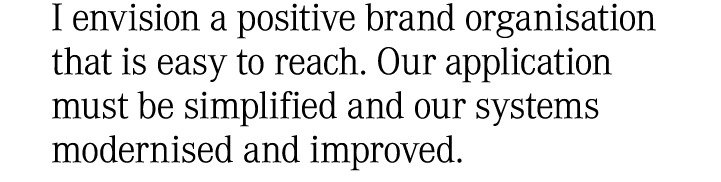
That is why his language repeatedly returns to smiles, trust and dignity. He understands that SASSA’s reputation will not be restored by communication alone. It will be earned through millions of individual encounters in which people feel seen, respected and assisted. “I envision a positive brand organisation that is easy to reach. Our application must be simplified and our systems modernised and improved.”
For the CEO, however, the institution’s future also depends on developing leaders from within, and if he can empower employees, cultivate successors and create a culture of service that outlasts his tenure then the transformation will be far more durable than any individual achievement.
Twenty-eight million people represent an extraordinary administrative responsibility. They also represent 28 million reasons for SASSA to become better. Under Matlou’s leadership, the agency’s path forward is being defined by modernisation, accountability and a simple but demanding principle: public service must always begin with the people.
Ralph Staniforth is a freelance writer.