

The transformation of the University of the Western Cape into a digital hub reflects the institution’s broader commitment to innovation, inclusivity, and academic excellence in the Fourth Industrial Revolution (4th IR). UWC is historically recognised as a university with a strong social justice mission in South Africa.
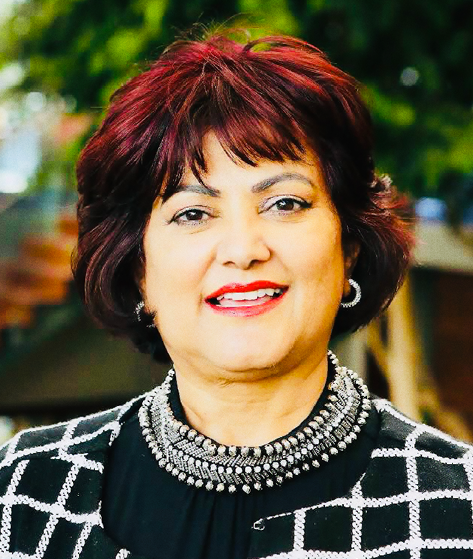
At the University of the Western Cape (UWC), this transformation is taking place through a bold and strategic vision led by Dr Shirlene Neerputh, Director of Library Services, whose leadership is helping position UWC Libraries as a dynamic digital knowledge hub designed to power academia. Her vision is for UWC Libraries to become a future-ready digital library integrated with technology, enabled access to information and data driven services in the 4th IR. The mission is to enhance UWC’s academic project through digitally transformed library services.
Her leadership reflects a deep understanding that modern libraries are not defined by physical resources and spaces, but by their ability to connect people, ideas, technology, and knowledge in meaningful and transformative ways, which promote social justice.
Dr Neerputh has thus crafted an envisioned library organogram, with a cross functional service team culture, aligned to the UWC institutional operating plan 2026-2030. The library fosters a work culture, driven by the principles of professionalism; teamwork, and accountability.
Dr Neerputh is helping to bridge educational divides and empower students by driving digital inclusion and creating equitable access to scholarly information for success.
The Digital Campus
A key driver of this transformation has been the university’s investment in digital infrastructure and information technologies.
Through the centres for Information and Communication Services, and Innovative Education and Communication Technologies (CIECT), UWC envisions a “Digital Campus” where innovative technologies support learning, research, and institutional efficiency. The university has expanded campus-wide Wi-Fi connectivity, online learning, cloud-based computing and digital communication platforms, multimedia production and digital skills development, to ensure that the communities are digitally connected.
The library has become an active digitally integrated system for the campus community, focused on digital literacy and social inclusion, cognisant of instilling information and digital skills.
Responding to the Digital Shifts in Education
The COVID-19 post pandemic accelerated this transformation, highlighting the urgent need for universities to provide uninterrupted remote access to services and resources.
Dr Neerputh’s stewardship of the UWC Libraries has evolved into a technologically enabled academic ecosystem that embeds the information resources and services in curricula and research, bolstering the creation, preservation, and dissemination of knowledge.
UWC Libraries offer “spaces and places” for online learning, with digital communication platforms to support flexible participation, and lifelong learning, driven by the Library Learning and Teaching and Scholarly Communications staff teams. Students and academics from diverse backgrounds can participate regardless of geographic limitations.
The rapid advancement of digital technologies, online learning, generative artificial intelligence, and global research collaboration has disrupted how knowledge is accessed, produced, and shared. A digitally integrated and connected library service enables the university to quickly adapt to disruptions, emerging technologies including generative artificial intelligence (AI), and changing educational models.
Artificial Intelligence (AI) in Learning, Teaching and Research
Artificial intelligence has become an increasingly important part of the digital campus landscape. While AI offers enormous opportunities to improve teaching, learning and research efficiencies, automate information retrieval, personalise learning experiences, and enhance administrative systems, it also introduces important ethical and academic considerations.
Importantly, UWC Faculty has embraced AI and recognises that information and digital literacies are an essential graduate attribute. The educative role of the library is to help students and academics understand how to evaluate information critically, and navigate the ethical implications of AI, mindful of POPIA and cybercrime.
Dr Neerputh believes that digital transformation at UWC Libraries is built on fostering trust, encouraging collaboration, supporting continuous learning, and creating shared ownership of institutional change.
Dr Neerputh advocates for embracing AI and digital transformation must approach developments with both ambition and technical know-how. Innovation should always be accompanied by ethical leadership, inclusivity, and long-term vision.
The South African context makes this work particularly significant. Unequal access to technology and educational resources continue to shape the experiences of many students and campus communities. UWC’s digital transformation and the library, therefore serves as a vehicle for social inclusion and educational empowerment in AI.
The Digital Library
Academics and students have greater access to electronic resources; institutional repositories; datasets and collaborative online platforms that support inter-disciplinary and data-driven scholarship.
- UWC Digital Library enables:
- Access to global scholarly resources instantly;
- Increased visibility of UWC research outputs;
- Collaboration across Faculty and geo-political institutional borders;
- Management and preservation of research data securely;
- Participation in Open-Access publishing and international knowledge networks, including the UWC Press where the platform is managed by the library.
The above positions UWC as a globally connected leading research university. The library is futuristic focused by adopting open scholarship, aligned to the South African Open Science policy.
Libraries advocate for Open Access, actively seeking solutions for disrupting the high costs associated with the “Read and Publish” subscriptions. Dr Neerputh serves on the South African National Negotiating Licenses Consortium (SANLiC) as the Deputy Chairperson, which aims for 80-97% cost-savings, via negotiations for member transformative Read and Publish Deals, also opting for discounted Author Processing Costs.
She is the Lead for the CHELSA (Committee of Higher Education Libraries in South Africa) and TENET (Telecommunications and Educational Network) Task team, in designing the South African National Theses and Dissertations Repository infrastructure for advancing African research, collaborating with Ubuntu-Net Alliance.
The launch of innovative digital tools such as MyLOFT and Open-Source Library Management Systems–FOLIO (Future of Libraries is Open) and YODA (Your Data), and AI Libguides, UWC Libraries illustrates commitment to seamless digital access and enhanced user experience. These advancements are transforming how users engage with the library, enabling more efficient learning, teaching and research workflows and greater academic collaboration across disciplines and institutions, strengthening institutional resilience.
Looking ahead, Dr Neerputh envisions an optimal higher education landscape, where universities will function as an interconnected digital gateway, where physical and virtual environments co-exist seamlessly to support flexible, collaborative learning, teaching and research initiatives for lifelong education and global engagement.
Agility in Leadership
For Dr Neerputh, one of the greatest challenges of digital transformation has been recognising that leadership itself must evolve alongside technology. Leading transformation in higher education requires adaptability, resilience, collaboration, and a willingness to re-think traditional systems and mindsets. Rather than viewing digital transformation as a purely technological process, she sees it as a human-centred journey that depends on culture, vision, and institutional readiness.
As UWC navigates complex global challenges shaped by artificial intelligence, digital disruption, and evolving learning, teaching and research practices in the 4th IR, the work being done at UWC Libraries offers a compelling model for the future of academic libraries. Through agile leadership and a strong commitment to inclusivity and social justice, Dr Shirlene Neerputh is not only transforming a library, she is helping shape the future of higher education.