














![COVER & COVER ARTICLE SPONSORED BY [NAME]](assets/images/item_105552.png)














































Governing and leading through complexity
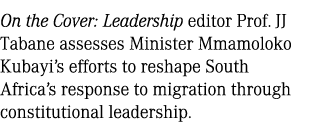
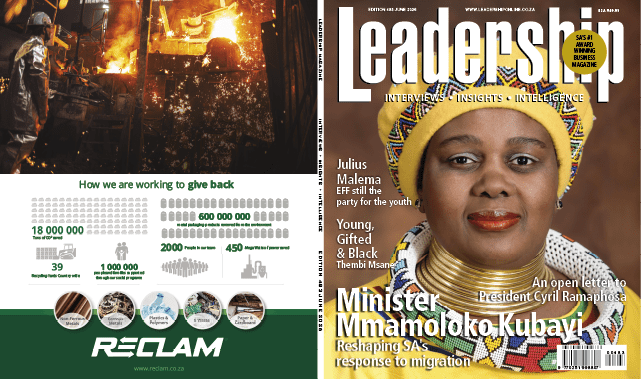
How Minister Mmamoloko Kubayi is reshaping South Africa’s response to migration through constitutional leadership
Few issues test the capacity of modern governments more profoundly than migration. Across the world, it has become one of the defining governance challenges of the twenty-first century, sitting at the intersection of national security, constitutional rights, economic development, diplomacy and social cohesion. Governments are increasingly discovering that migration is no longer simply an immigration issue as it has become a measure of state capability and institutional resilience.
South Africa confronts this challenge in circumstances that are uniquely its own. As the continent’s most industrialised economy, it continues to attract people seeking employment, education, investment opportunities and refuge. At the same time, persistent unemployment, organised criminal syndicates, pressure on public services and growing concern over irregular migration have transformed migration from an administrative responsibility into one of the country’s most politically sensitive governance issues. The debate now extends far beyond who enters the country and has become a test of the state’s ability to regulate movement, enforce legislation, protect vulnerable people and preserve confidence in democratic institutions.
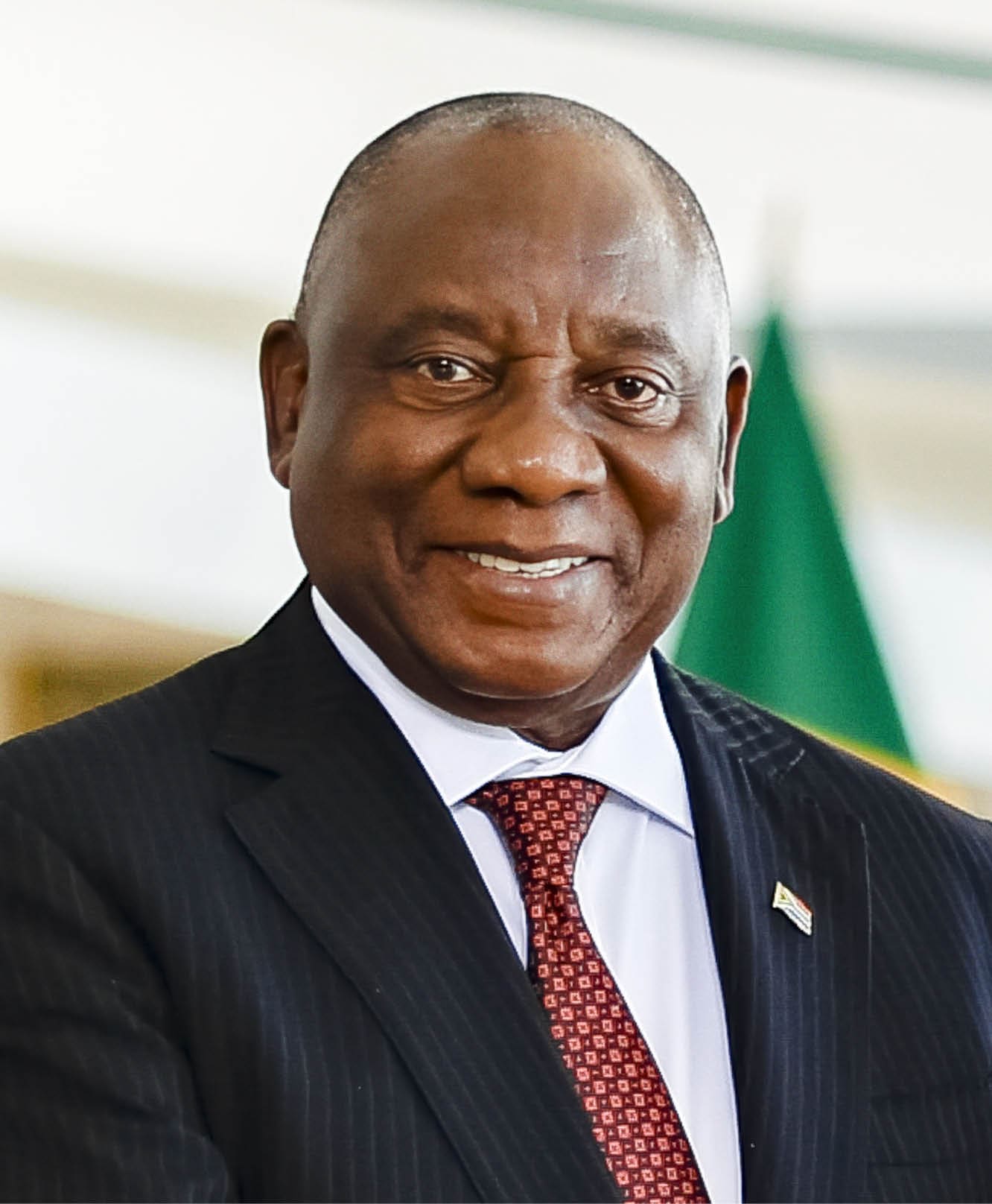
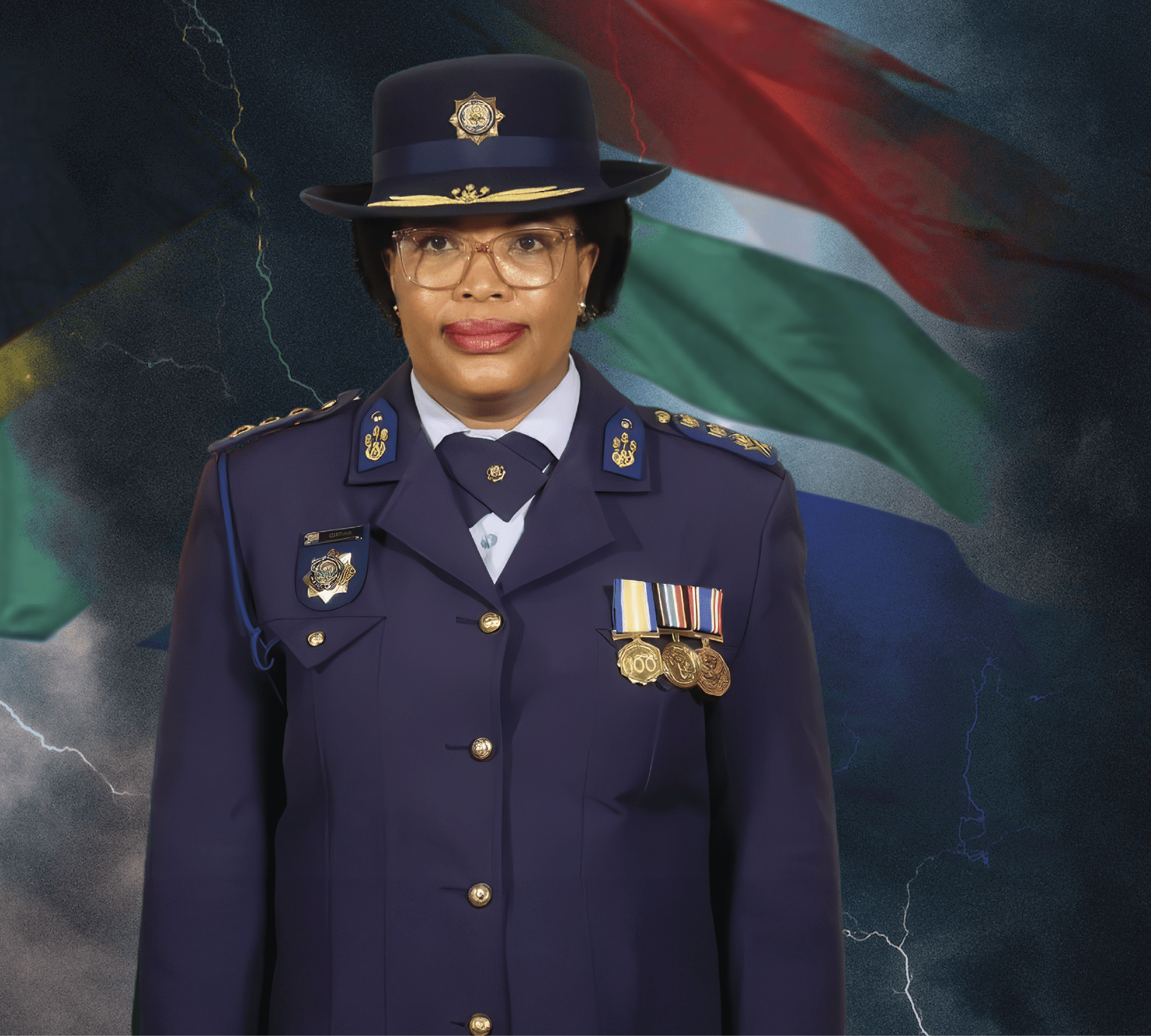
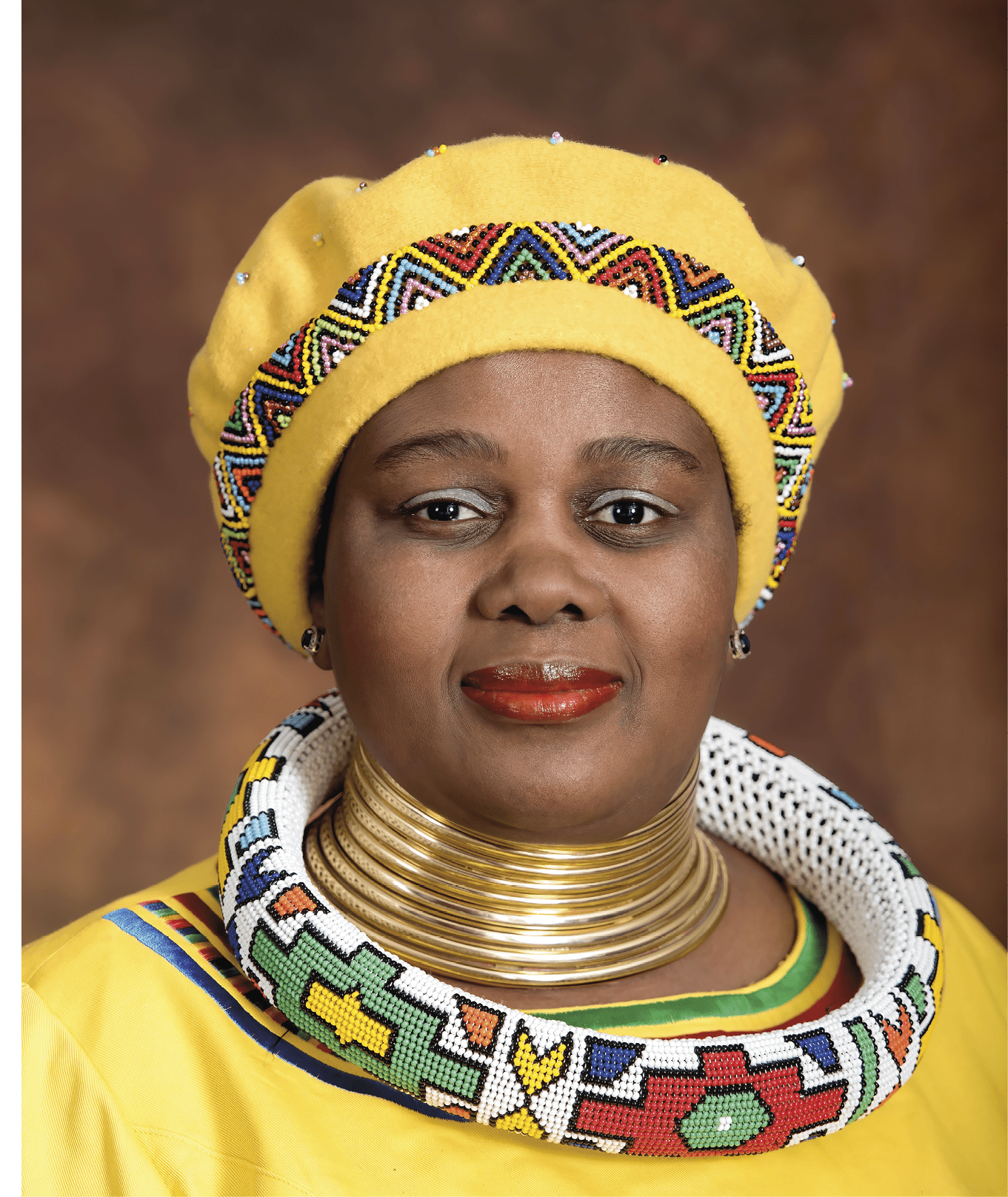
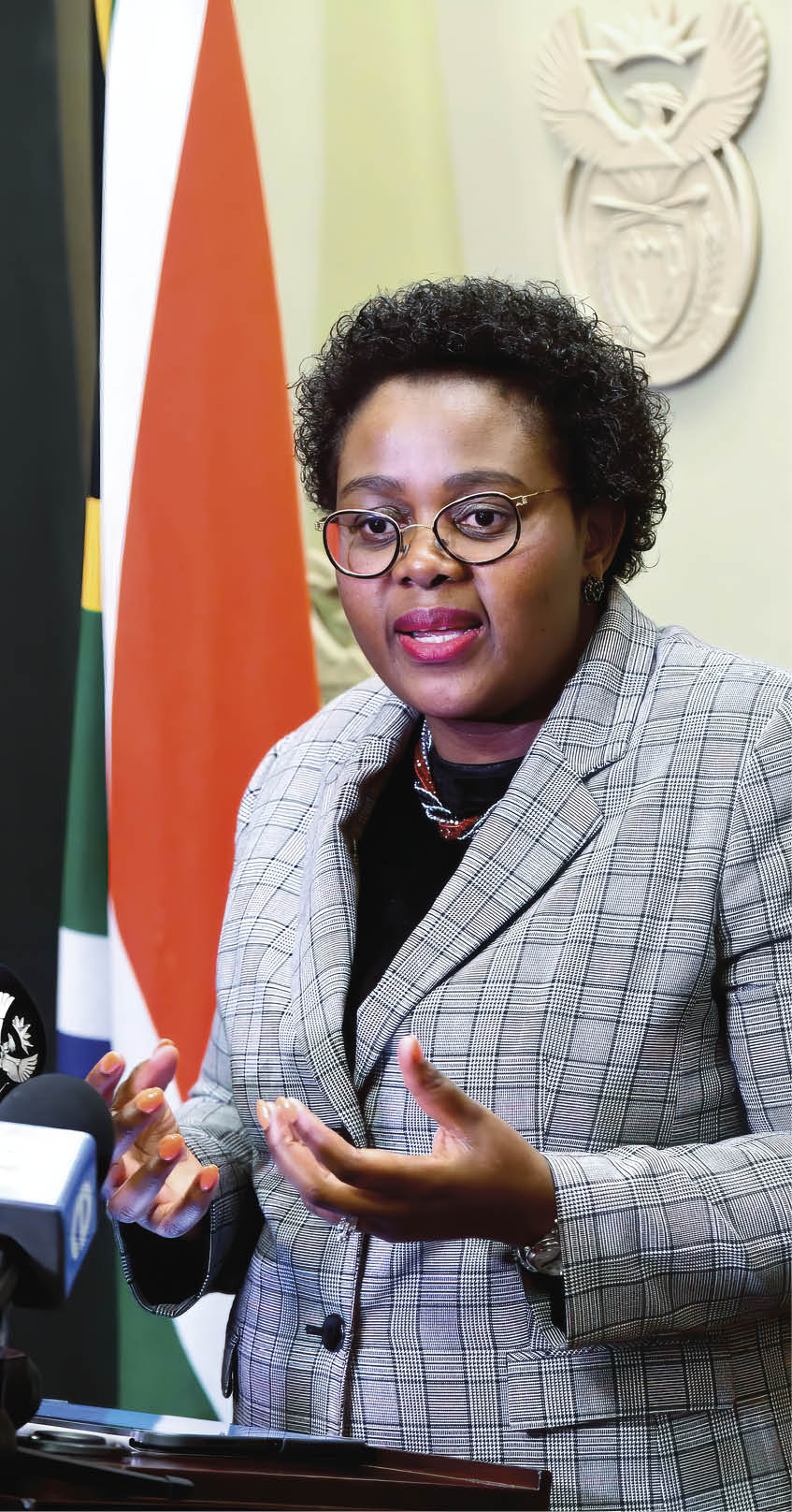
It is within this environment that Mmamoloko Kubayi, Minister of Justice and Constitutional Development, has assumed one of the most demanding responsibilities in government. As Chairperson of the Inter-Ministerial Committee on Migration (IMC), she has been entrusted with coordinating government’s response to an issue that cuts across virtually every sphere of public administration. It is a responsibility that demands far more than oversight of immigration policy. It requires bringing together institutions with different mandates, aligning multiple ministers behind shared objectives and ensuring that every intervention remains firmly anchored in the Constitution and the rule of law.
President Cyril Ramaphosa’s decision to establish the IMC in June 2026 reflected a recognition that migration could no longer be approached through fragmented departmental interventions. Home Affairs alone could not resolve challenges involving policing, border security, labour markets, municipal governance, diplomacy or justice. Instead, government required a single coordinating structure capable of translating separate mandates into a coherent national response. Kubayi was appointed to chair that structure, placing her at the centre of one of the most closely scrutinised policy debates confronting the democratic state.
Kubayi’s appointment reflects confidence in a leadership style defined by coordination, disciplined implementation and consensus building. Chairing the Inter-Ministerial Committee demands more than legal expertise. It requires the ability to align departments with different mandates, priorities and operational cultures behind a common national strategy. Whether in energy, human settlements or justice, Kubayi’s approach has consistently favoured method over spectacle, systems over slogans and implementation over headlines. Those qualities have become increasingly significant in a policy environment where public expectations often exceed the pace at which lasting reform can realistically be achieved. They also position her to lead one of government’s most ambitious governance reforms through a clear and coordinated national strategy.
At the heart of that strategy is the Five-Point Plan on Migration, the framework through which government is reshaping South Africa’s approach to migration governance. Rather than treating migration as a collection of isolated challenges, the plan is built around five interconnected priorities: strengthening law enforcement, securing South Africa’s borders, deepening regional cooperation, closing legislative and policy gaps, and modernising the administrative systems that support implementation.
Together, these five pillars represent more than a migration strategy. They reflect government’s broader effort to strengthen the capability of the democratic state.
The need for such a strategy reflects the complexity of migration itself. It dominates news cycles, fuels political debate and is amplified daily across social media. It evokes legitimate concerns about crime, unemployment, border security and service delivery while simultaneously raising difficult constitutional and humanitarian questions. In such an environment, leadership is measured not by the loudness of political rhetoric but by the ability to navigate competing realities without compromising public confidence in government. That is the approach Kubayi has sought to bring to the work of the Inter-Ministerial Committee. Those who have worked alongside her often describe her leadership as deliberate rather than theatrical. She has rarely sought to dominate public debate through sweeping political statements, preferring instead to build credibility through evidence, coordination and disciplined implementation.
That philosophy has shaped the committee’s work from the outset. Rather than allowing migration to become a debate driven by emotion or ideology, the IMC has consistently reframed it as a question of governance. Effective migration management depends less on isolated interventions than on coordinated institutions working towards common objectives through legislation, law enforcement, secure borders, regional partnerships and capable administrative systems.
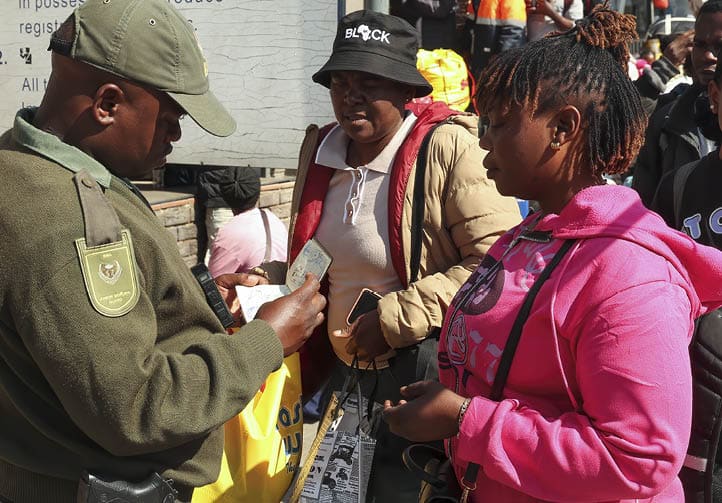
The first pillar of the Five-Point Plan begins with upholding the rule of law, a principle that underpins Kubayi’s approach to migration governance. According to her, effective migration management depends on the consistent and impartial application of legislation. Throughout the committee’s public engagements, she has emphasised that enforcement is directed at unlawful conduct, not nationality. Integrated operations have focused on document fraud, organised criminal syndicates, labour exploitation, human trafficking and unlawful border crossings. Central to the committee’s approach is a clear distinction: migration enforcement is not about identity, it is about legality.
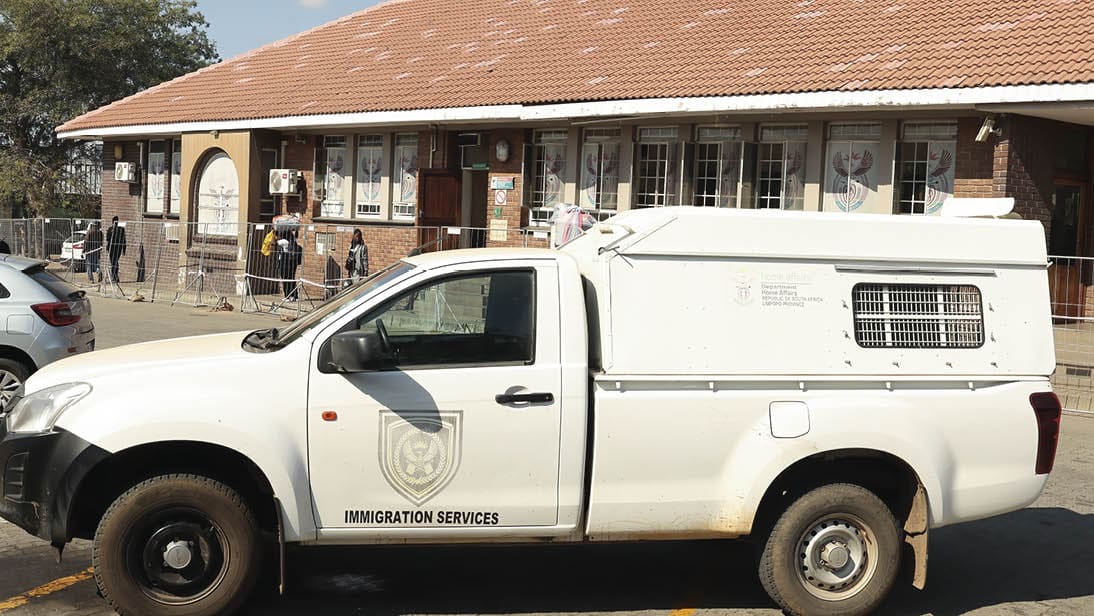
That commitment has been reinforced through transparency, with Kubayi consistently placing operational information in the public domain. Joint law enforcement operations resulted in 354 arrests and prosecutions linked to migration-related offences, while South Africa’s dedicated immigration courts finalised 28 736 immigration-related cases between April and the end of June 2026. By placing verified information before the public, the committee has sought to replace rhetoric with evidence and strengthen confidence that migration management is being implemented through lawful and accountable processes.
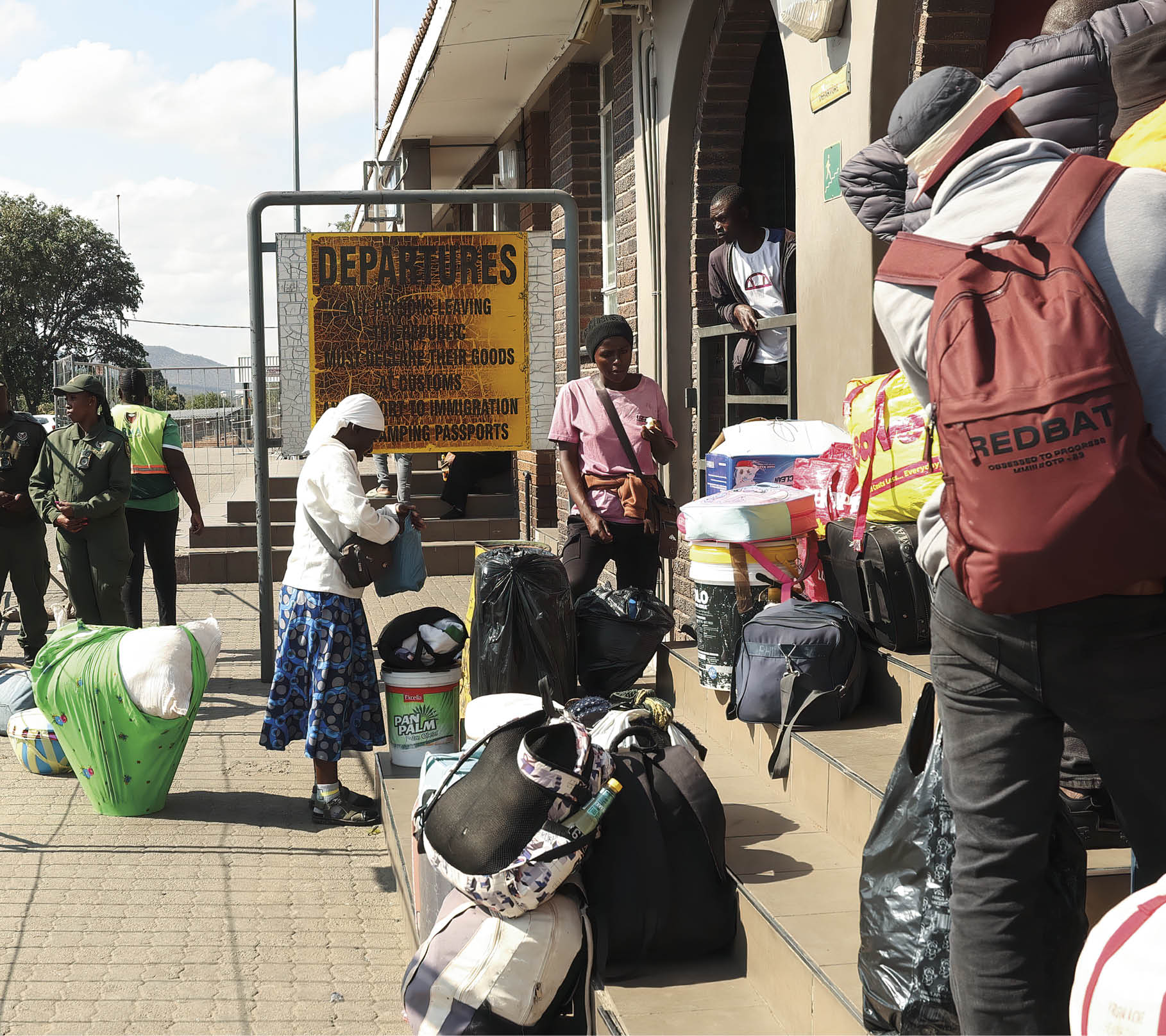
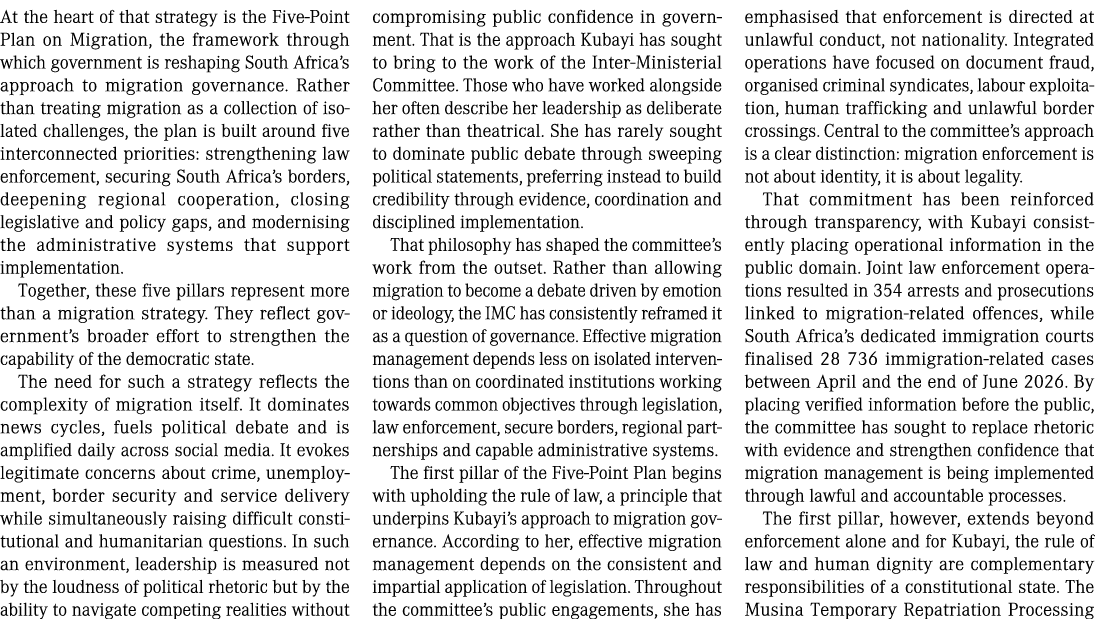
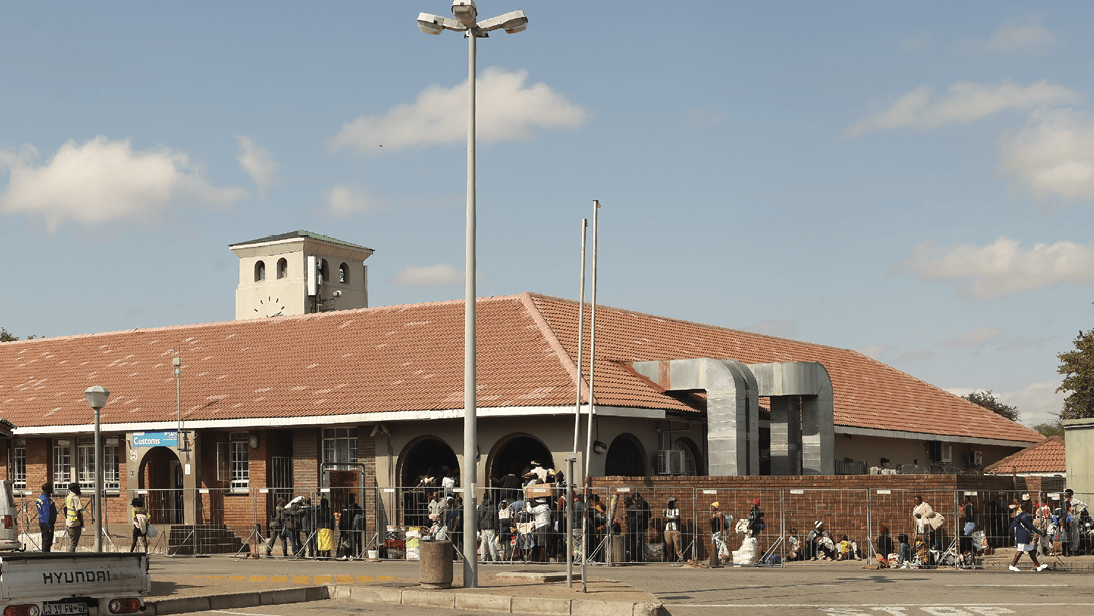
The first pillar, however, extends beyond enforcement alone and for Kubayi, the rule of law and human dignity are complementary responsibilities of a constitutional state. The Musina Temporary Repatriation Processing Centre reflects that balance, processing 68 138 foreign nationals between 14 June and 24 July, while the Border Management Authority recorded 72 906 repatriations across South Africa’s ports of entry during the same period. Beyond its operational role, the centre coordinated humanitarian support through partnerships between government, municipalities, international organisations, faith-based institutions and civil society. That balance between lawful enforcement and constitutional responsibility leads naturally to the second pillar of the Five-Point Plan, which shifts the focus to strengthening South Africa’s border management systems.
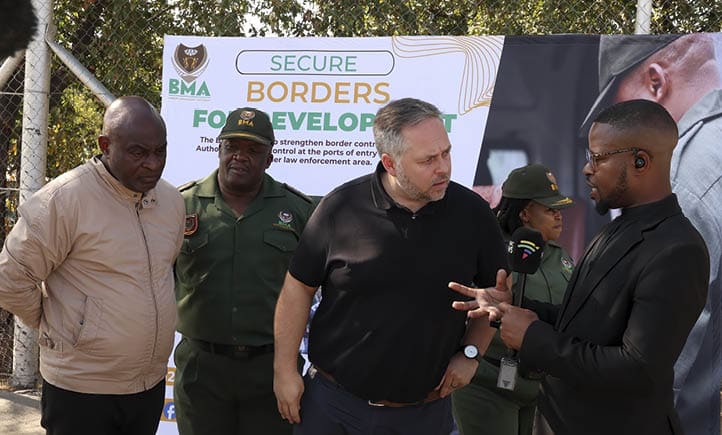
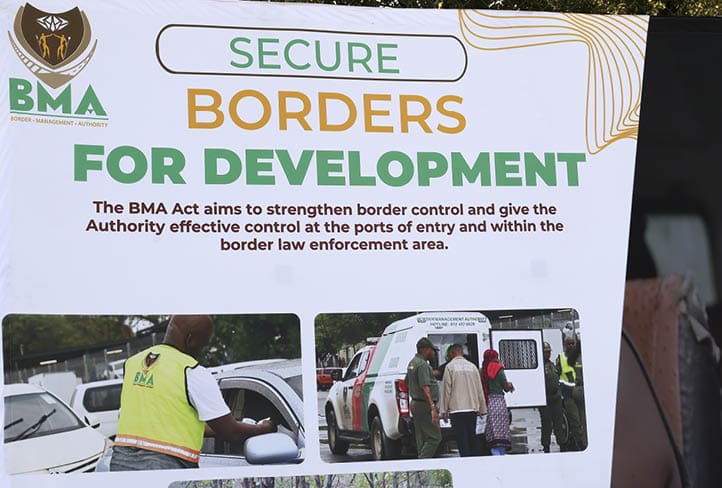
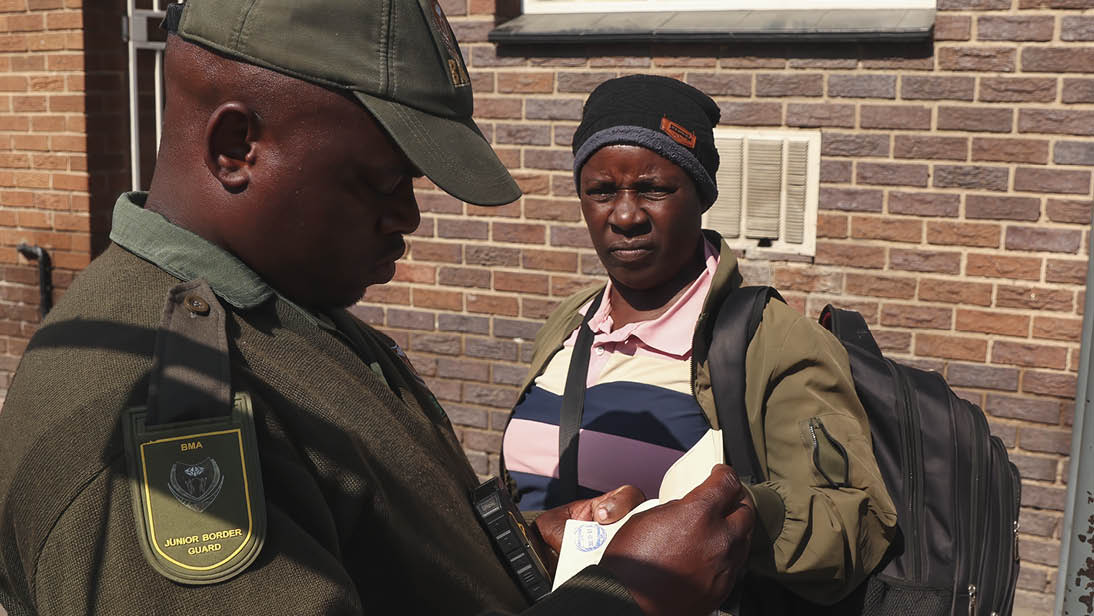
The second pillar advances the focus from enforcement to border security. Across the world, border management has evolved beyond fences and passport control into a measure of state capability, requiring intelligence-led policing, modern surveillance and coordinated administration. Kubayi has consistently framed secure borders as an investment in state capability rather than a security intervention alone, reflecting her conviction that effective migration governance depends on strong institutions rather than isolated enforcement measures. Since April 2026, 93 joint borderline operations have targeted illicit goods, human trafficking and drug syndicates, while work continues to modernise ports of entry and strengthen border infrastructure. Her approach recognises that the effectiveness of a border is measured not only by its physical defences but by the ability of intelligence, law enforcement and administrative systems to operate as a single, coordinated whole.
The third pillar of the plan recognises that migration cannot be managed by South Africa acting alone. Long before an individual reaches the country’s borders, the economic, political and social forces driving migration are already unfolding elsewhere on the continent. Kubayi has therefore consistently argued that effective migration governance depends as much on regional cooperation as it does on domestic capability.
Under her leadership, the committee has strengthened engagement with neighbouring countries, the Southern African Development Community, diplomatic missions and the African Union to improve cooperation on documentation, information sharing and voluntary repatriation. Instead of treating migration solely as a domestic enforcement issue, she has positioned diplomacy as the first instrument of engagement, supporting calls for migration to feature more prominently on the African Union agenda and arguing that the continent requires a coordinated response to the economic, governance and developmental factors driving irregular migration.
That approach also reflects Kubayi’s belief that effective migration management is entirely compatible with South Africa’s commitment to Pan-African solidarity. Drawing on the country’s own liberation history, she has unswervingly rejected the false choice between protecting national sovereignty and maintaining regional cooperation, arguing that secure borders and strong continental partnerships are mutually reinforcing rather than mutually exclusive. While regional cooperation addresses migration beyond South Africa’s borders, the fourth pillar of the Five-Point Plan turns attention to the country’s own legislative framework. Migration patterns have changed significantly over the past decade, driven by technological advances, increased labour mobility and increasingly sophisticated criminal networks. Legislation must evolve accordingly if government is to respond effectively to contemporary realities.
The fourth pillar draws directly on Kubayi’s responsibilities as Minister of Justice and Constitutional Development. Recognising that effective migration governance depends on legislation that keeps pace with evolving realities, the committee has identified reforms relating to immigration, citizenship, refugee protection, employment services and business licensing. The objective is not to restrict lawful migration, but to close legislative gaps, strengthen enforcement, improve coordination across government and provide greater certainty for citizens, businesses and lawful migrants alike.
The fifth and final pillar focuses on strengthening the administrative systems that determine whether policy can be translated into practice. Efficient visa administration, credible identity management, reliable documentation and integrated information systems seldom dominate public debate, yet they underpin the effectiveness of migration governance and the credibility of the state itself.
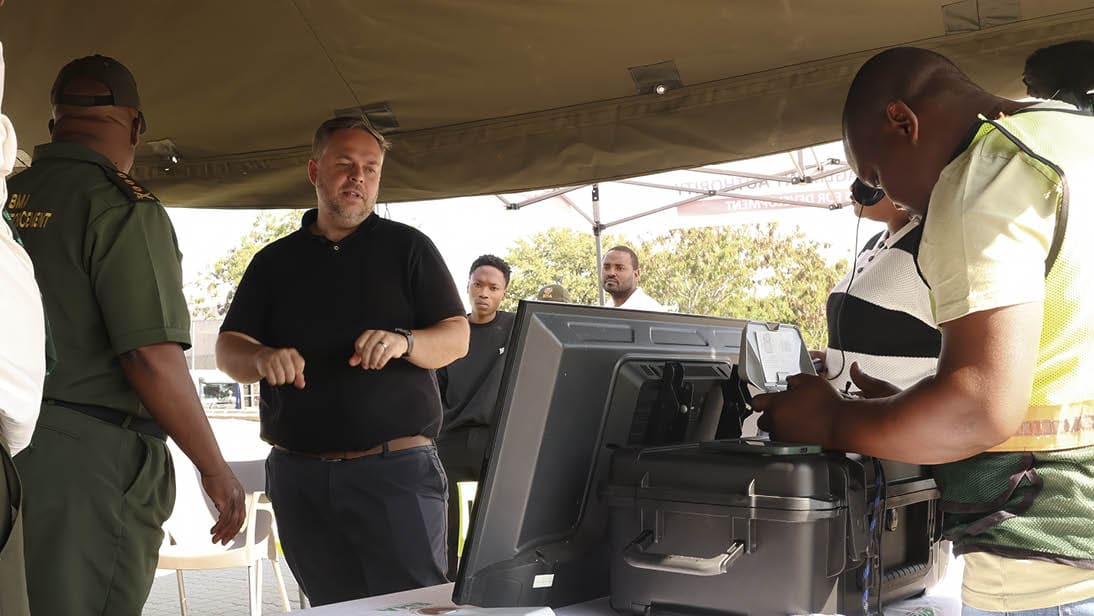
For Kubayi, this is where policy moves from intention to implementation. Strengthening immigration processing, improving documentation systems and modernising administrative procedures are therefore central to the committee’s work, reducing opportunities for fraud, improving service delivery and reinforcing public confidence in South Africa’s migration system. More broadly, it reflects her conviction that sustainable reform depends not only on sound legislation or effective law enforcement, but on a capable public administration that can implement policy consistently and efficiently.
Beyond the operational demands of the Five-Point Plan, Kubayi has found herself confronting another challenge: protecting the integrity of public discourse. Migration has become fertile ground for misinformation, manipulated content and inflammatory rhetoric that can quickly translate into real-world tension. In response, the committee adopted a legal and evidence-based approach, reminding the public that misinformation, hate speech, incitement to violence and online intimidation carry legal consequences under South African law. Throughout its communications, it has maintained that migration must be managed through evidence, lawful processes and responsible public engagement, not speculation or fear.
The Inter-Ministerial Committee has become the clearest expression of Kubayi’s approach to public leadership. Entrusted with one of government’s most politically sensitive responsibilities, she has navigated competing political, legal and humanitarian imperatives with measured judgement, ensuring that the rule of law remains the foundation of government’s response while balancing the demands of security, diplomacy and constitutional governance.
Taken together, the Five-Point Plan represents far more than a migration strategy. It demonstrates that complex governance challenges cannot be resolved by individual departments acting alone, but through coordinated leadership that brings institutions, legislation, diplomacy and law enforcement behind a common national purpose. It also reflects a broader understanding that migration is not simply about regulating movement across borders. It is about preserving public confidence, protecting constitutional democracy and ensuring that the state remains capable of responding to one of the defining governance challenges of our time.
The true measure of its success will not be determined solely by arrests, repatriations or legislative reform. It will be whether South Africa emerges with greater public confidence, stronger institutions and a migration system that protects national sovereignty while remaining faithful to the values of the Constitution. Achieving that balance has required political judgement, legal discipline and a willingness to confront one of the country’s most contested policy debates without surrendering to populism, misinformation or political expediency.
Perhaps that is the defining lesson of Kubayi’s leadership. Throughout her ministerial career, from Energy and Human Settlements to Justice and Constitutional Development, she has repeatedly been entrusted with portfolios that demand calm judgement, institutional discipline and the ability to navigate competing interests. Chairing the Inter-Ministerial Committee on Migration has brought those qualities into even sharper focus.
Faced with an issue that affects livelihoods, national security, diplomacy and constitutional rights, she has sought to demonstrate that effective leadership lies not in amplifying division, but in building consensus, protecting the rule of law and ensuring that government responds with both firmness and fairness. It is an approach that has reinforced South Africa’s constitutional values while strengthening engagement with regional partners and advancing a more coordinated response to migration across the continent.
As South Africa continues to navigate one of its most complex governance challenges, Kubayi’s stewardship of the Inter-Ministerial Committee offers an important lesson in democratic leadership. Faced with competing political pressures, constitutional obligations and regional expectations, she has demonstrated that the most enduring reforms are achieved not through momentary political victories, but through principled leadership, capable institutions and an unwavering commitment to the public interest.