

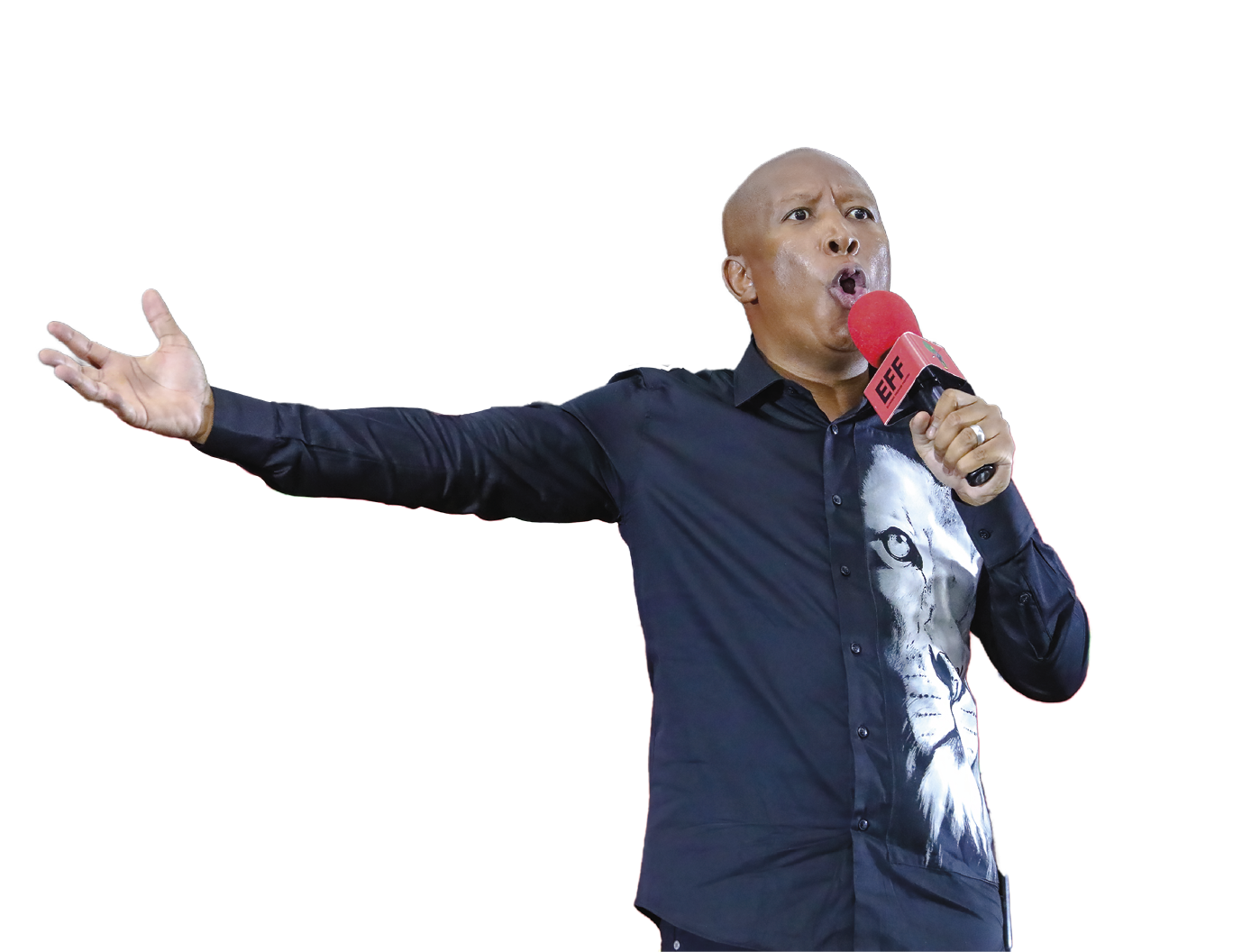
Youth month is a stark reminder that change is possible and can be driven and achieved by young people. That is why the EFF remains committed to leading with young people, writes Julius Malema.
June serves as a permanent reminder that the youth of South Africa must never be spectators in the struggle for justice, freedom, and economic emancipation. The generation of 1976 taught us that meaningful change is driven by young people who are prepared to lead from the front, challenge injustice, and refuse to accept the status quo. It is this revolutionary spirit that continues to guide the Economic Freedom Fighters (EFF) as we march to the rhythm set by the youth of Soweto, who understood that the future belongs to those courageous enough to fight for it.
The generation of 1976 marched towards Pretoria because they understood where power was located. Laws that dispossessed black people were made in Pretoria. The pass laws were administered from Pretoria. The 1913 Land Act was enforced from Pretoria. Bantu Education was designed and defended from Pretoria. The
students knew that if they wanted change, they had to challenge power directly.
Political freedom without economic freedom leaves millions trapped in poverty. South Africa may have democratic institutions, but millions of young people still wake up every morning without work, without opportunity and without hope. Youth unemployment remains one of the greatest crises facing our nation. An entire generation is being produced only to enter what can only be described as a factory of unemployment.
South Africa is one of the most resource-rich countries in the world. We possess vast mineral wealth. Yet we continue to export raw materials while importing finished products. We send jobs overseas and then wonder why unemployment grows. Despite the EFF advocating for nationalisation of mines, the ANC government continues to export chrome, coal and other minerals in their raw form instead of building industries that process them locally.
Industrialisation and beneficiation are not abstract economic concepts, they are practical tools that the EFF knows will lead to job creation. If the government were serious about youth unemployment, it would place industrial development at the centre of economic policy.
The same principle applies to public services. The EFF is against high electricitytariffs that continue to burden the poor. Pensioners and social grant recipients should be exempt from paying for electricity because once a person is already dependent on the state, how are they expected to possess additional funds needed for electricity. The poor pay the highest price for government failure. They spend hours searching for water. They sit in darkness during power outages and carry the burden of a state that increasingly struggles to provide basic services.
Yet perhaps no issue better reflects the unfinished struggle of 1976 than education. The right to education should not depend on a family’s income. Education is not a luxury. It is not a privilege reserved for those who can afford it. It is a fundamental right. When the EFF speaks about free education, we mean more than tuition fees. Free education includes uniforms, books, meals, accommodation, and access to technology. A child cannot learn effectively when they are hungry. A student cannot succeed at university without decent accommodation and reliable internet access.
In the digital age, access to information is as important as access to classrooms. Free Wi-Fi and affordable data are no longer optional. They are essential tools of learning and participation. This is why the EFF continues to assert that ‘Data Must Fall’ because information is increasingly accessed through digital platforms and to deny young people access to connectivity is to deny them access to opportunity itself.
The struggle for dignity must also extend beyond education and employment. South Africa continues to face an epidemic of violence against women and children. A society cannot call itself free when women live in fear. It cannot claim progress when children are exposed to abuse in their homes and communities. The protection of women and children is not a secondary issue. It is central to building a just society.
The youth of 1976 also understood the destructive impact of alcohol on black communities. They challenged social conditions that weakened families and destroyed potential. Today, the abuse of alcohol continues to contribute to violence, poverty and social instability. Responsible leadership requires confronting these realities honestly rather than allowing commercial interests to dictate public policy.
As the EFF we are against the advertising of alcohol precisely because it projects a falsehood and perpetuates a narrative that is incorrect.
We do not see effects of excessive use of alcohol and our people are not deterred from over consumption. This is why we encourage our people, particularly the youth to stay away from alcohol especially if it leads to making regrettable decisions.
The spirit of June 16 was never narrow or exclusionary. It was rooted in solidarity. That same spirit should inform our relationship with the rest of the African continent.
South Africa cannot isolate itself from Africa. The struggles of the people of the Democratic Republic of Congo, Sudan, Somalia, and elsewhere are connected to our own aspirations for peace, development, and dignity. Africa’s future depends on unity rather than division.
As youth month draws to an end, the EFF continues to run with the baton that leads to the alignment of political and economic freedom. We remain the only organisation that is actively seeking young voters because we will never minimise the role of young people in this country.
The EFF wants young people registered and ready to vote out a government who is led by a president that hides foreign currency in his sofas.
We want young people to be in the forefront of change, to exercise their democratic right on 4 November and vote corrupt leaders in their municipalities out. They must replace them with EFF leaders as those are the leaders who will deliver services to them.
Youth month is a stark reminder that change is possible and can be driven and achieved by young people. That is why the EFF remains committed to leading with young people.
Julius Malema is the CIC and President of the Economic Freedom Fighters.
Opinion
The EFF is against high electricitytariffs that continue to burden the poor