

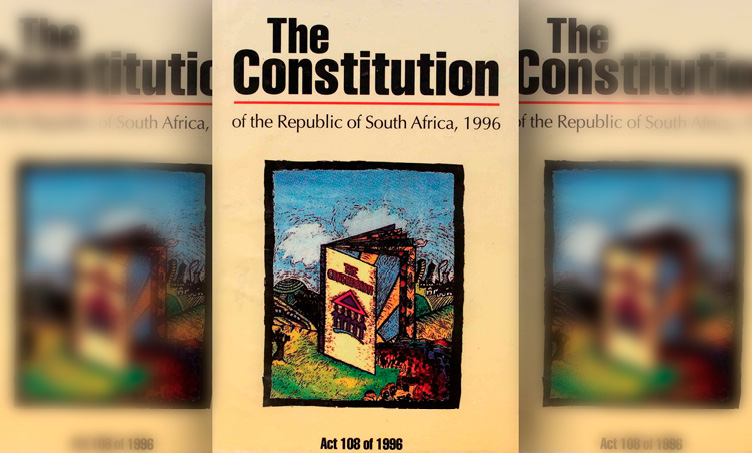
As South Africa marks 30 years since the signing of its Constitution, Mbhazima Shilowa reflects on the gains and failures of the democratic era–and calls on all South Africans to move beyond commemoration and recommit to the unfinished work of building a united, just, and prosperous nation its founders envisioned
On 10 December 1996, a few days after the Constitutional Court certified that the final Constitution complied with the constitutional principles agreed upon during the Codesa multiparty negotiations, then President Nelson Mandela signed it into law.
It was more than a legal act. It was a declaration of intent. A nation emerging from centuries of exclusion, conflict, and injustice was making a promise to itself and to future generations.
The promise was not that South Africa would become perfect overnight. The promise was that never again would race determine citizenship, dignity, or opportunity.
The promise was that every person would enjoy equal protection before the law. That diversity would not be feared but embraced. The government would derive its authority from the people and remain accountable to them. In the words of the Freedom Charter, the people would govern.
For the first time in the history of our country, freedom, dignity, equality, and justice would belong to all who live in South Africa, united in our diversity.
As we celebrate the 30th anniversary of the adoption of our Constitution, it is worth reflecting not only on the document itself, but on the extraordinary vision that gave birth to it.
There was a moment in South Africa when the impossible felt possible. Not because we were naïve. Not because the wounds of the past were shallow. But because, for a brief and extraordinary period, we chose the country over vengeance, the future over bitterness, and nation-building over tribal triumph.
We were not merely changing governments. We were attempting something far more ambitious–to build a united, democratic non-racial, non-sexist and a prosperous constitutional democracy from the ashes of centuries of division.
The foundation
Against all odds, we began. The Constitution became the foundation of that vision. It established a democratic state founded on human dignity, equality, and freedom.
It sought to balance majority rule with the protection of individual rights. It created institutions designed to safeguard democracy and ensure that power would never again be exercised without restraint or accountability.
Most importantly, it provided a common framework for former enemies to become fellow citizens. The Constitution did not erase our differences. It gave us a way to live with them. For a time, the promise seemed within reach.
Public discourse often focuses, understandably, on what remains undone. Yet an honest assessment of the democratic era requires us to also acknowledge how much has been achieved.
We dismantled racist laws. Millions of households gained access to electricity. Millions more gained access to clean water and sanitation. Schools, clinics, roads, and housing developments reached communities that had long been neglected. Social grants became a vital safety net for vulnerable households.
Universities and workplaces became more representative of the country they served. A black professional and entrepreneurial class emerged at a scale unimaginable under apartheid.
These achievements do not erase poverty, inequality, or unemployment. Nor do they excuse failures of governance, corruption, or state capture. But they remind us that progress and disappointment can exist simultaneously.
A nation can move forward and fall short at the same time. Recognising the gains of democracy is not an act of complacency. It is an act of honesty. Because if we cannot acknowledge what has worked, we will struggle to understand what went wrong–and how to fix it.
The world admired South Africa not because we were perfect, but because we had chosen reconstruction over destruction. We had chosen hope over revenge.
Lost along the way
Yet somewhere along the journey, we lost our way.
Corruption weakened institutions. State capture eroded trust. Economic growth stagnated. Unemployment deepened especially among women and the youth. Crime and inequality flourished in the cracks.
As afrustration grew, so too did division.
We retreated into smaller identities–race, ethnic groups, class, nationality, and ideology. We stopped speaking enough about what unites us and became consumed by what divides us.
As we celebrate 30 years of our Constitution, we should resist the temptation to view it merely as a legal document. The Constitution was never intended to be a monument. It was intended to be a project. A living commitment to building a united, democratic, and prosperous society.
Its vision remains unfinished. The challenge before this generation is not simply to commemorate the Constitution, but to honour it.
We must translate its values into functioning schools, safe communities, ethical leadership, economic opportunity, and shared prosperity. We must build an economy that provides jobs, reduces unemployment and inequality, and provides social and economic infrastructure. We must restore confidence in public institutions and deal decisively with all forms of corruption wherever it appears. Most importantly, we must reject and condemn the politics of division and resentment. The Constitution enjoins us to ensure that every South African see themselves as part of the future of this country.
Ultimately, constitutions do not change nations on their own–people do. That is the great task before us as we mark this important anniversary. Not merely to remember the South Africa we imagined in 1996, but to complete the work of building it. To provide hope where there is despair.
The dream of a united, non-racial, non-sexist, democratic, and prosperous South Africa does not belong to one political party, one race or one generation. It belongs to all of us.
Thirty years later, the promise contained in the Constitution is worth fighting for. It is realisable, if only all of us put shoulder to the wheel.
Mbhazima Shilowa is the former premier of Gauteng and former general-secretary of Cosatu.
This article originally appeared on News24 and is published with permission.