

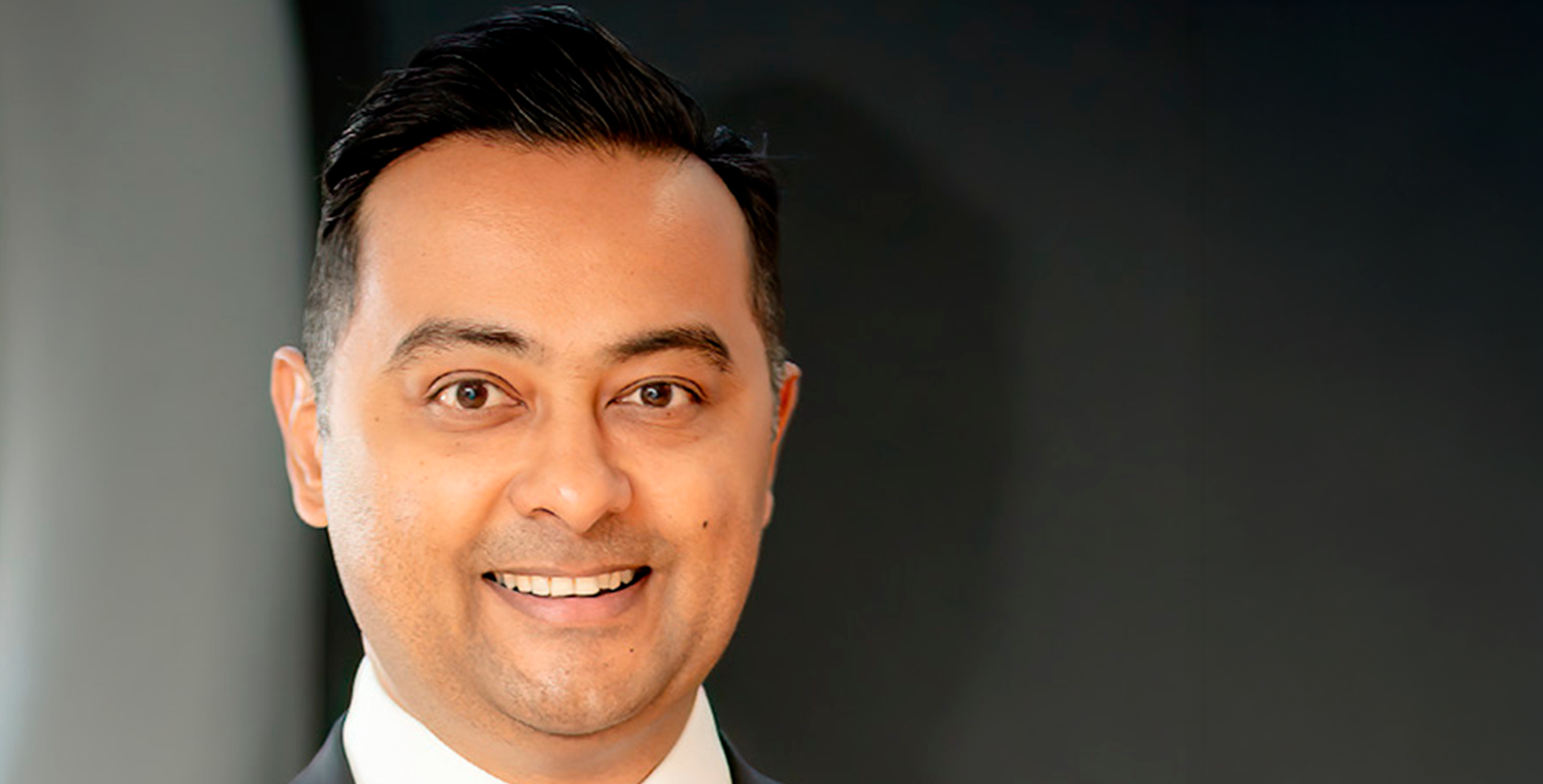
For Sajeel Maharaj, stepping into the role of CEO of Citadel is not about changing the identity of one of South Africa’s most respected independent wealth management businesses. He views it as a responsibility to protect what has made the company successful while, at the same time, positioning it for its next phase of growth, innovation and long-term client value creation.
Sajeel Maharaj describes his appointment as CEO of Citadel as “a mixture of gratitude, excitement and responsibility”. Gratitude because he sees it as a privilege to lead a business such as Citadel; excitement because of the opportunities ahead; and responsibility because leadership is, in his view, ultimately about serving others.
“You don’t measure a leader by the number of followers he has but by the number of leaders he leaves behind,” says Maharaj. “That was true of my predecessor, and it will be true of my tenure.”
Maharaj is not arriving as an outsider. He joined Citadel in 2018 and has spent the past seven years as COO working across different parts of the business and gaining a close understanding of its people, systems, culture and client promises. His background in investment banking, corporate finance and mergers and acquisitions across London, New York and Johannesburg has provided him with a strong commercial foundation, but Citadel offered something different: the chance to build a business that has a direct impact on clients’ lives.
“I’m fortunate that this isn’t a new business to me,” he says. “Having spent the past eight years here I’ve seen first-hand the calibre of our people and the values that have made Citadel successful. My job now isn’t to change who we are, it’s to help shape us into an even better version of ourselves.”
Culture as competitive advantage
The lessons Maharaj takes into the CEO role are clear. The first is that culture is a competitive advantage. Products change, markets move and strategies can be replicated, but a culture built on trust, integrity and genuine care for clients is difficult to copy.
The second is stewardship. For Maharaj, leadership is not ownership in the narrow sense. It is the responsibility of holding something valuable for a period of time and leaving it stronger for the next generation. The third lesson is that success is always collective.
“Every achievement I’ve been part of has come from talented people working together around a shared purpose,” he says. “One of the greatest privileges of this role is that I get to create the conditions where our people can thrive.”
That philosophy matters in a business such as Citadel, where client relationships, advice and trust sit at the centre of the value proposition. Maharaj believes culture is not a soft issue or a slogan for internal communication. It is the operating system of the organisation.
“Strategy can be designed in a boardroom, but culture determines whether it is delivered in reality,” he says. “In a business like Citadel where trust, advice and relationships are central, culture is not a soft concept. It is a hard driver of performance and client outcomes.”
His approach to strengthening that culture rests on clarity of purpose, leadership by example, accountability and careful hiring and development. He believes that every person in the organisation must understand not only what Citadel does but also the reasons behind its actions and decisions. Leaders must also be deliberate about the behaviours they reward, tolerate and reject.
“A strong culture is not a comfortable culture–it is a clear one,” adds Maharaj. “We will continue to raise expectations around professionalism, client engagement and internal execution.”
Growth with purpose
Citadel’s strategic direction under Maharaj will be evolutionary rather than revolutionary. He highlights the fact that the company’s “why” has not changed in the 33 years since its founding, and that “why” remains to be a client’s most trusted partner in building and protecting wealth.
“We are building South Africa’s most trusted and admired independent wealth management business, one that creates lasting value for clients, opportunities for our people and sustainable returns for shareholders,” he says. “Every strategic decision we make should move us closer to that ambition.”
The priorities he identifies are client centricity, sustainable growth, investment in people and culture, thoughtful use of technology and building a business that endures. Growth, in his view, is not about scale for its own sake. Rather, it is about deepening impact.
“We don’t grow simply to become bigger,” he adds. “We grow so we can have a greater impact for more clients, create more opportunities for our people and leave the business stronger for the next generation.”
Technology is another major priority, but Maharaj is careful to frame it as an enabler rather than a replacement for human advice. Artificial intelligence, digitisation, data analytics and digital platforms are changing financial services, but in wealth management the human relationship remains central.
“The challenge isn’t whether to embrace technology. It’s how to use it responsibly to enhance advice, improve efficiency and deliver a better client experience without losing the human relationships that define our business,” stresses Maharaj.
Trust is the business
For Maharaj, trust is not one aspect of wealth management: rather, it is the foundation of the entire industry.
“Wealth management isn’t simply about managing portfolios. It’s about helping people make some of the most significant financial decisions of their lives, and it’s being there for their families when that person is no longer there,” he says.
That requires competence, consistency and professionalism but, above all, it requires trust earned over time. Citadel’s long-standing client retention rate of 99% for most of the past decade bears testimony to the depth of those relationships.
“My responsibility as CEO is to ensure we never take that trust for granted,” adds Maharaj. “Every portfolio we manage represents someone’s life’s work, their aspirations and often their legacy. That’s an enormous responsibility we need to keep earning.”
Maharaj’s long-term ambition is for Citadel to remain one of the most trusted and respected independent wealth management businesses in its market, not only measured by size or profitability, but by the quality of its client relationships, consistency of advice and strength of culture.
“My aspiration is not to be defined by the title but rather by the quality of stewardship during the period I hold it. If people can say that the business became stronger, more resilient and more trusted under my leadership then that would be the most meaningful measure of success,” says Maharaj.
That sense of responsibility also extends beyond clients and shareholders. Citadel has rolled out a financial literacy project that, since inception in 2024, has improved the financial literacy of over 96,000 learners at 102 no-fee paying schools across the Western, Eastern and Northern Cape, KwaZulu-Natal, Gauteng and the North West. Maharaj sees this as a practical way for the business to contribute using its own skills and expertise.
“As a proudly South African business we have a responsibility to our clients, employees and shareholders as well as to our broader community. Beyond the numbers, the real story is access. Each rollout of the programme has meant more young people becoming financially literate in a practical way,” he says.
Maharaj’s message to clients is one of continuity and ambition. Citadel’s commitment remains unchanged but its ambition for what it can deliver over time is growing. In an increasingly complex world, Maharaj wants the business to remain a source of stability, clarity and continuity.
“To the broader industry I would say this: wealth management is ultimately a trust business. Technology, products and platforms will continue to evolve rapidly, but the core of our industry will always remain the same: people trusting other people with their financial futures,” concludes Maharaj.
Leadership is the responsibility of holding something valuable for a period of time and leaving it stronger for the next generation