

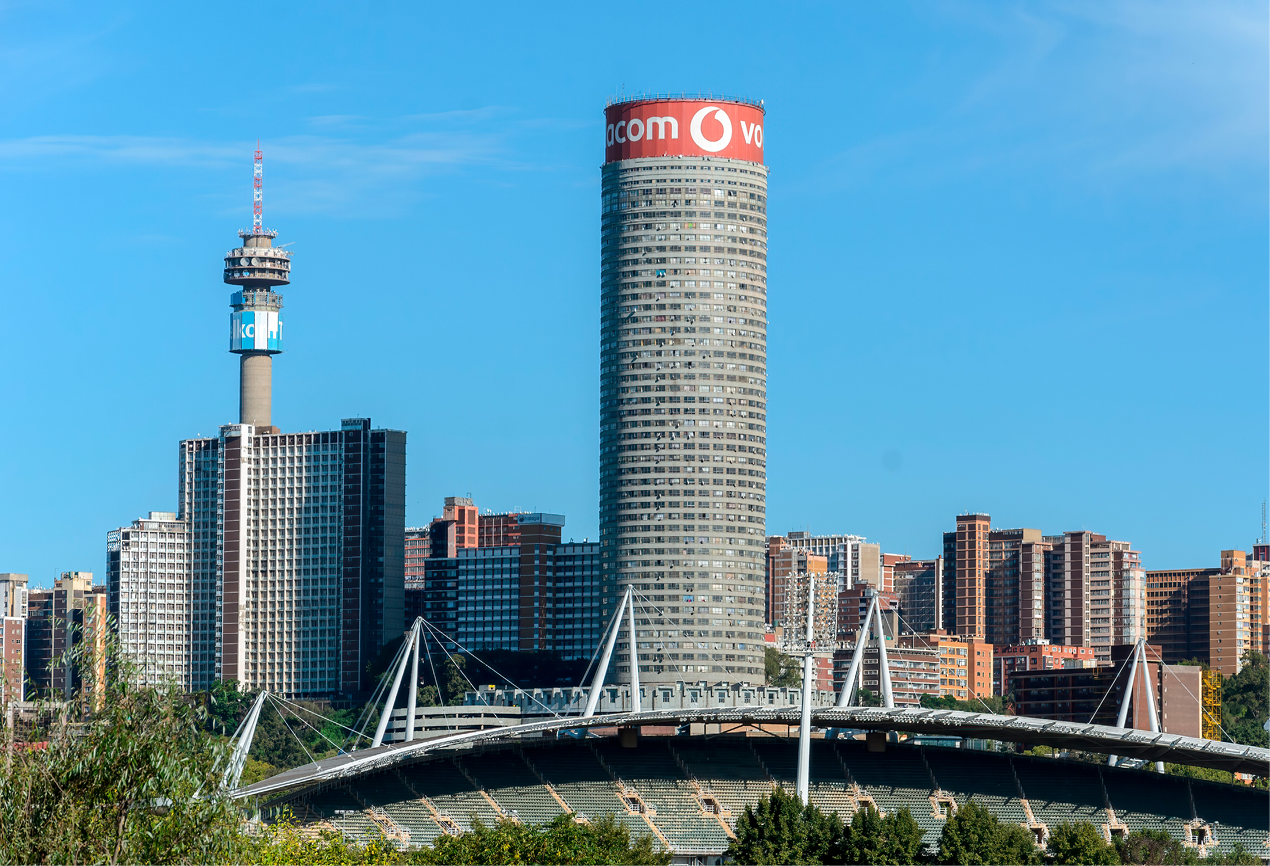
The choices made today, by government leaders, business executives, community organisations, and citizens, will shape Gauteng’s trajectory for years to come, writes Olona Majikijela
On Wednesday, 13 May 2026, the Gauteng City-Region Observatory (GCRO), the Mapungubwe Institute for Strategic Reflection (MISTRA), and the Gauteng Provincial Government (GPG) launched Finding Our Rhythm: Pathways and Futures for the Gauteng City-Region, a landmark scenarios report that explores what Gauteng could look like by 2035. The launch also marked the beginning of the 20th-anniversary commemoration of the Gauteng City-Region (GCR) concept, first introduced in 2006 to position Gauteng as an integrated, globally competitive city-region.
More than a forecasting exercise, the report challenges leaders across government, business, academia, and civil society to confront the choices that will shape Gauteng’s future. At a time when South Africa’s economic heartland faces mounting pressures, including unemployment, infrastructure challenges, climate change, and coalition politics, the report offers a timely reminder that the future is not predetermined. It is shaped by decisions made today.
Why Scenarios Matter
In an increasingly uncertain world, leaders cannot rely solely on traditional planning models. Political shifts, technological disruption, economic volatility, and environmental pressures have made long-term decision-making more complex than ever before.
This is where scenario planning becomes valuable. Rather than predicting a single future, scenarios explore multiple plausible futures, helping leaders understand risks, identify opportunities, and prepare for different outcomes.
The Gauteng Scenarios 2035 project adapted the nationally recognised Indlulamithi Scenarios to Gauteng’s unique economic, social, and governance realities. Developed through extensive consultation with stakeholders from government business, labour, academia, and civil society, the project aimed to provide strategic insights to support Gauteng’s development agenda and long-term planning.
At its core, the report asks a simple but powerful question: What kind of Gauteng do we want to build by 2035?
Gauteng’s Strategic Importance
Gauteng remains South Africa’s economic engine. Despite occupying less than two percent of the country’s land mass, the province contributes more than a third of national GDP and serves as a critical hub for finance, commerce, logistics, innovation, and industry.
Yet Gauteng’s strengths exist alongside significant challenges.
The province continues to grapple with high levels of unemployment, inequality, and poverty. Infrastructure maintenance has become an increasing concern, while rapid urbanisation places pressure on housing, transport networks, and public services. Social tensions, political fragmentation, and climate-related risks add further complexity to an already demanding environment.
The report identifies 26 variables likely to influence Gauteng’s future and groups them into three key driving forces:
- The Gauteng Economy: Dynamism or Depression?
- Living Conditions, Health and Wellbeing: Better or Worse Quality of Life?
- Governance: Chaos or Consensus-Building?
Together, these forces will determine whether Gauteng thrives, stagnates or declines over the coming decade.
The Economic Imperative
One of the most significant themes emerging from the report is the urgent need for economic transformation. Historically, Gauteng’s prosperity was built on mining and manufacturing. However, both sectors have experienced substantial decline over the past several decades. The challenge now is identifying new growth pathways capable of creating jobs and driving inclusive development.
The report argues that Gauteng must move beyond dependence on traditional industries and pursue a diversified growth strategy. Potential opportunities include advanced manufacturing, financial services, technology, logistics, tourism, township economies, mining services, and the creative industries.
Importantly, the report cautions against searching for a single “silver bullet” sector. Instead, it advocates for building a complex economic ecosystem where multiple industries can grow and reinforce one another.
Technology will play a crucial role in this transformation. Artificial intelligence, digital infrastructure, and innovation could improve productivity, strengthen service delivery, and create new economic opportunities. However, these advances also present challenges, particularly for workers whose jobs may be displaced by automation.
The African Continental Free Trade Area (AfCFTA) presents another major opportunity. If effectively implemented, it could position Gauteng as a gateway for trade, investment, and financial services across the continent. Yet success will depend on the province’s ability to improve infrastructure, enhance competitiveness, and adapt to an increasingly integrated African economy.
Ultimately, Gauteng’s future competitiveness will depend not on its natural resources or geographic location, but on its ability to harness its greatest asset: its people.
Human Capital and the Future Workforce
One of the report’s strongest observations is that Gauteng’s primary advantage lies in its concentration of human capital and knowledge.
In an increasingly digital economy, skills, innovation, and creativity will become even more valuable. This places significant responsibility on the province’s education system, universities and training institutions.
However, the report warns that persistent inequalities in educational quality could undermine Gauteng’s future prospects. While some learners receive world-class education, many others continue to face significant barriers to quality learning opportunities.
The digital divide remains another concern. Although internet access has improved considerably, many households still lack reliable fixed internet connectivity. Without deliberate intervention, technological advances may deepen existing inequalities rather than reduce them.
For leaders, the lesson is clear: Investment in people must remain at the centre of Gauteng’s development strategy.
Quality of Life as a Development Priority
Economic growth alone is not enough.
The report emphasises that improving living conditions, health, and wellbeing will be equally important in shaping Gauteng’s future.
Healthcare remains a significant challenge. Financial constraints, overcrowded facilities, resource shortages, and workforce pressures continue to affect service delivery. While National Health Insurance offers the possibility of reducing inequalities between public and private healthcare, its long-term impact remains uncertain.
Education faces similar challenges. Historical inequalities, spatial divisions, and resource disparities continue to shape educational outcomes across the province.
Housing and urban development present another layer of complexity. Gauteng’s population continues to grow rapidly, increasing demand for affordable housing and placing pressure on existing infrastructure. Informal settlements continue to expand, while many inner-city areas struggle with deteriorating buildings and inadequate maintenance.
Yet the report also highlights opportunities.
Smarter spatial planning, investment in public transport, urban renewal initiatives, and the development of sustainable human settlements could significantly improve quality of life. Revitalised city centres, better integration between residential and economic areas, and more efficient transportation systems could create a more inclusive and productive urban environment.
Climate Change Cannot Be Ignored
Climate change emerges throughout the report as one of the defining challenges facing Gauteng.
The province is expected to experience more frequent and severe climate-related events, including heatwaves, droughts, flooding, and infrastructure damage. These impacts will have direct consequences for public health, food security, water availability, and economic productivity.
Water security, in particular, was identified as one of the variables with the highest impact and uncertainty.
As population growth, infrastructure challenges, and climate pressures converge, ensuring reliable access to water may become one of the most important governance and development issues facing Gauteng over the next decade.
For leaders, climate adaptation can no longer be viewed as an environmental issue alone. It is increasingly an economic, social, and governance imperative.
Governance: The Deciding Factor
While economics, education, and infrastructure are all important, the report repeatedly returns to governance as the factor that ultimately determines success or failure.
Effective governance influences investment confidence, service delivery, infrastructure maintenance, public trust, and social stability. It shapes whether development strategies are implemented successfully or remain trapped on paper.
The report identifies governance as one of Gauteng’s most significant uncertainties.
Coalition politics, shifting electoral dynamics, and increasing political fragmentation create both risks and opportunities. On one hand, instability can delay decision-making and weaken implementation. On the other hand, collaborative governance models may encourage broader participation and stronger partnerships across society.
The province’s future will depend heavily on its ability to build capable institutions, strengthen accountability, and foster collaboration between government, business, labour, and civil society. In a complex and interconnected environment, no single actor can solve Gauteng’s challenges alone.
The Leadership Challenge of the Next Decade
Perhaps the most important takeaway from the Gauteng scenarios process is that the province’s future will not be determined solely by economic trends, technological advancements or political developments. It will be shaped by leadership.
The challenges identified in the report are deeply interconnected. Economic growth cannot be sustained without reliable infrastructure. Social cohesion cannot flourish in the absence of opportunity. Effective service delivery requires capable institutions, while long-term planning depends on political stability and public trust. Addressing these issues demands leaders who can think beyond electoral cycles and organisational boundaries.
For Gauteng’s public and private sector leaders, this means adopting a more collaborative and future-focused approach. The province’s most pressing challenges cannot be solved by government alone. Business, academia, civil society, and communities all have a role to play in shaping outcomes. Building partnerships, fostering innovation, and strengthening accountability will be critical to ensuring that Gauteng remains competitive and inclusive.
The scenarios also highlight the importance of resilience. Future leaders will need the ability to respond to uncertainty, adapt to changing circumstances, and make decisions that balance immediate needs with long-term development goals. In many respects, the future of Gauteng will depend less on the challenges it faces and more on how its leaders choose to respond to them.
Three Possible Futures
The report presents three scenarios that illustrate how Gauteng’s future could unfold by 2035.
The first scenario, It’s About Time, reflects a future in which progress remains slow and uneven. Economic growth continues but fails to generate meaningful transformation, leaving many structural challenges unresolved.
The second scenario, Homeless, portrays a more troubling future characterised by governance failures, worsening infrastructure, economic stagnation, and deepening social instability.
The third scenario, Paradise Road, offers a more optimistic vision. In this future, Gauteng successfully strengthens governance, attracts investment, expands economic opportunities, and improves living conditions for its residents.
None of these scenarios is a prediction.
Instead, they serve as tools for reflection, encouraging leaders to consider the consequences of today’s decisions and the pathways that may emerge from them.
Finding the Rhythm
The title of the report carries an important message.
Finding a rhythm suggests alignment, coordination, and shared purpose. It recognises that sustainable progress requires different parts of society to move together rather than in isolation.
For Gauteng, finding that rhythm will require strategic leadership, institutional capability, and long-term commitment. It will require balancing economic growth with social inclusion, technological advancement with human development, and immediate needs with future resilience.
As Gauteng commemorates twenty years of the city-region concept, the province stands at a pivotal moment in its development journey.
The future remains uncertain, but uncertainty should not be mistaken for inevitability.
The choices made today, by government leaders, business executives, community organisations, and citizens, will shape Gauteng’s trajectory for years to come.
The question is no longer whether change is coming. The question is whether Gauteng can find its rhythm quickly enough to shape that change into a future that is more prosperous, inclusive and resilient for all.
Olona Majikijela is the Communications Officer for Frank Dialogue Holdings.