

The migration debate cannot be won through slogans or scapegoating but through honest leadership, accountable government, and a shared commitment to justice, writes Gugu Motlanthe
Migration has become one of the most divisive issues in South Africa. Still, the real crisis is the failure of leadership to confront the economic stagnation, institutional decline, and policy failures that have allowed migration to become a source of public frustration.
As the poet Warsan Shire reminds us, No one leaves home unless home is the mouth of a shark. People flee war, poverty, climate disasters, and persecution in search of safety, opportunity, and dignity. We must reject false narratives and confront the conditions that drive migration and fuel Afrophobic violence.
The government must acknowledge what millions of South Africans already know. Confidence in our migration system has eroded. Economic growth has stalled, public institutions have weakened, and the refugee and asylum system is no longer fit for purpose. We cannot continue governing through denial. What South Africa needs is a far more courageous national dialogue, one that confronts difficult truths, restores confidence in our institutions, and charts a balanced approach that upholds both the rule of law and our constitutional values.
The Economics of Migration
Properly managed, migration benefits economies. Throughout history it has built societies, and South Africa itself is a product of migration rooted in Pan-African solidarity. Legal migrants contribute to the economy, the tax base, and the social fabric.
Equally, illegal migration undermines the rule of law. A credible migration policy must therefore do both: welcome legal migration while effectively managing illegal flows.
These are not competing priorities but complementary responsibilities of a capable state. Yet government has responded reactively rather than strategically, leaving communities frustrated, weakening institutions, and deferring difficult decisions. The question is no longer whether migration has become a political flashpoint, but whether we can address it before it further divides our democracy.
The Deeper Illness
Economic growth and credible migration management are partners, not competing priorities. Without growth there are no jobs, and without jobs frustration is easily redirected towards vulnerable communities. Migration is not the disease. The deeper illness is weak leadership and the absence of a coherent national vision.
South Africa has seen previous generations mobilise around causes such as Fees Must Fall, yet many of the inequalities they challenged remain unresolved. The Arab Spring offers another reminder that social unrest is rarely triggered by economic theory. It begins when people lose hope that opportunity and dignity are within reach.
South Africa cannot afford for its universities to become the next flashpoint.
With youth unemployment approaching 50%, we are sitting on a combustible social reality. At the same time, identity politics is increasingly defining our society, encouraging people to focus on what divides rather than unites them. However, we know another South Africa exists. Whenever our national teams succeed, we rally behind one flag and celebrate in every language. That is why nation-building matters. In a society marked by division and mistrust, sport, arts, and culture are not simply portfolios of government but powerful instruments for rebuilding social cohesion.
The Quiet Decline
The challenge before us extends far beyond migration. It is about rebuilding the Republic itself. The greatest danger is not sudden collapse but gradual decline, where abnormal conditions slowly become accepted as the new normal. We have adapted to failing electricity, deteriorating public safety, and dysfunctional municipalities. While that resilience is admirable, it has also weakened accountability as families pay twice, first through taxes and then through private alternatives. When citizens stop asking whether government is meeting its obligations and begin asking only whether they can survive without it, democracy becomes vulnerable.
The Regional Reality
Migration intersects with housing, healthcare, crime, national security, and economic growth. The African Continental Free Trade Area represents Africa’s greatest economic opportunity in decades, yet regional integration remains slow. According to the Africa Visa Openness Index, only 28% of intra-African travel is visa-free and, although 32 countries have signed the Protocol on the Free Movement of Persons, few have ratified it.
Many migrants have established families in South Africa and some countries of origin are reluctant to facilitate returns. While billions leave the economy through remittances, South African businesses also sustain jobs through trade across the continent.
Migration is therefore a regional challenge. Mass deportation is neither financially practical, legally straightforward nor morally justifiable. Pretending otherwise merely delays the difficult decisions.
Reputation and Solidarity
When it comes to multilateral institutions and global partnerships, our reputation matters. Countries are judged by stability, reliability, and values. If we retreat from Pan-African solidarity, we will pay a premium and future generations will inherit the cost of our inertia.The overwhelming majority of migrants arrive seeking what our Constitution promises being dignity, opportunity, and hope. South Africans are equally entitled to expect immigration laws to be enforced. These principles are not mutually exclusive.
A constitutional democracy can defend both human dignity and the rule of law. Our greatest failure has been allowing them to be presented as opposites.
Corruption and officials on the take have fuelled today’s migration crisis. Migration has become fertile ground for political mobilisation. Today it is migration; tomorrow it will be tenders, dysfunctional municipalities, or elections.
Political vacuums never remain empty.
The Power of Aspiration
We must recognise another force: aspiration. Television, social media, and streaming platforms project images of South Africa across the continent every hour. For millions of young Africans, we represent the land of opportunity. Where opportunity appears visible, inward migration follows. Government must anticipate these consequences instead of merely reacting to them.
A Choice for the Future
Our future depends on rebuilding institutions worthy of public trust, restoring competent governance, reviving economic growth, and enforcing the rule of law without abandoning our humanity. Our destiny cannot be separated from that of the continent and, if we fail to define South Africa’s role in Africa, others will define it for us.
Civil society must reject vigilantism and resist the politics of fear. The migration debate cannot be won through slogans or scapegoating but through honest leadership, accountable government, and a shared commitment to justice.
The goal is not simply to manage migration. It is to build an Africa where people move by choice, not desperation, and where every person can live with dignity, opportunity, and without fear.
Gugu Motlanthe is the Executive Trustee of the Kgalema Motlanthe Foundation.
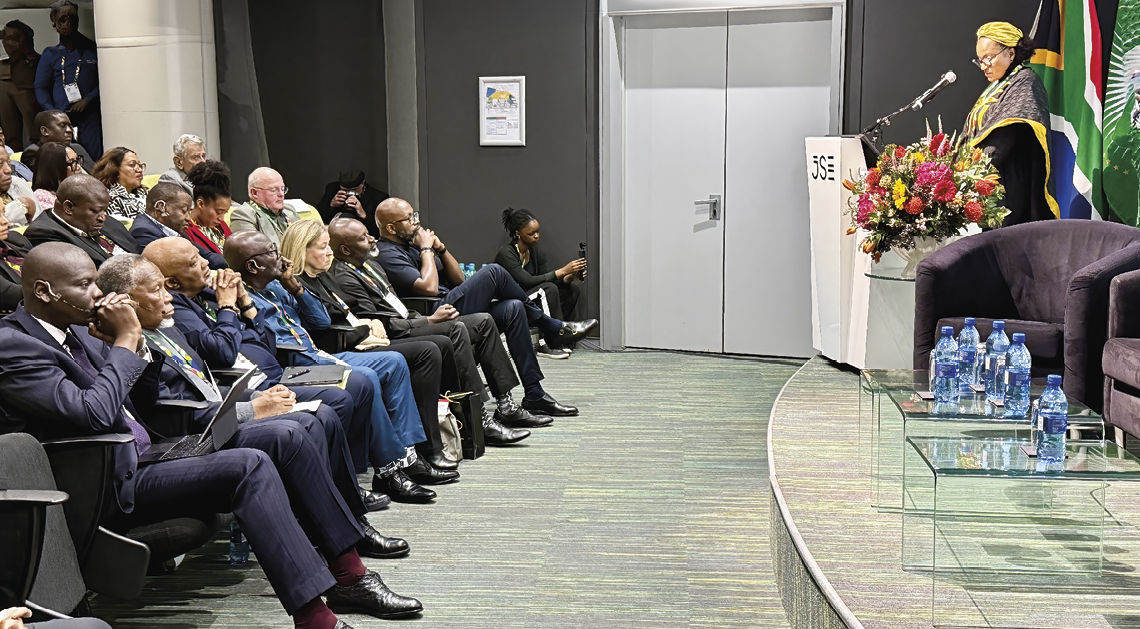
This article was adapted from remarks delivered at the KMF Winter Seminar on 23 July 2026.