

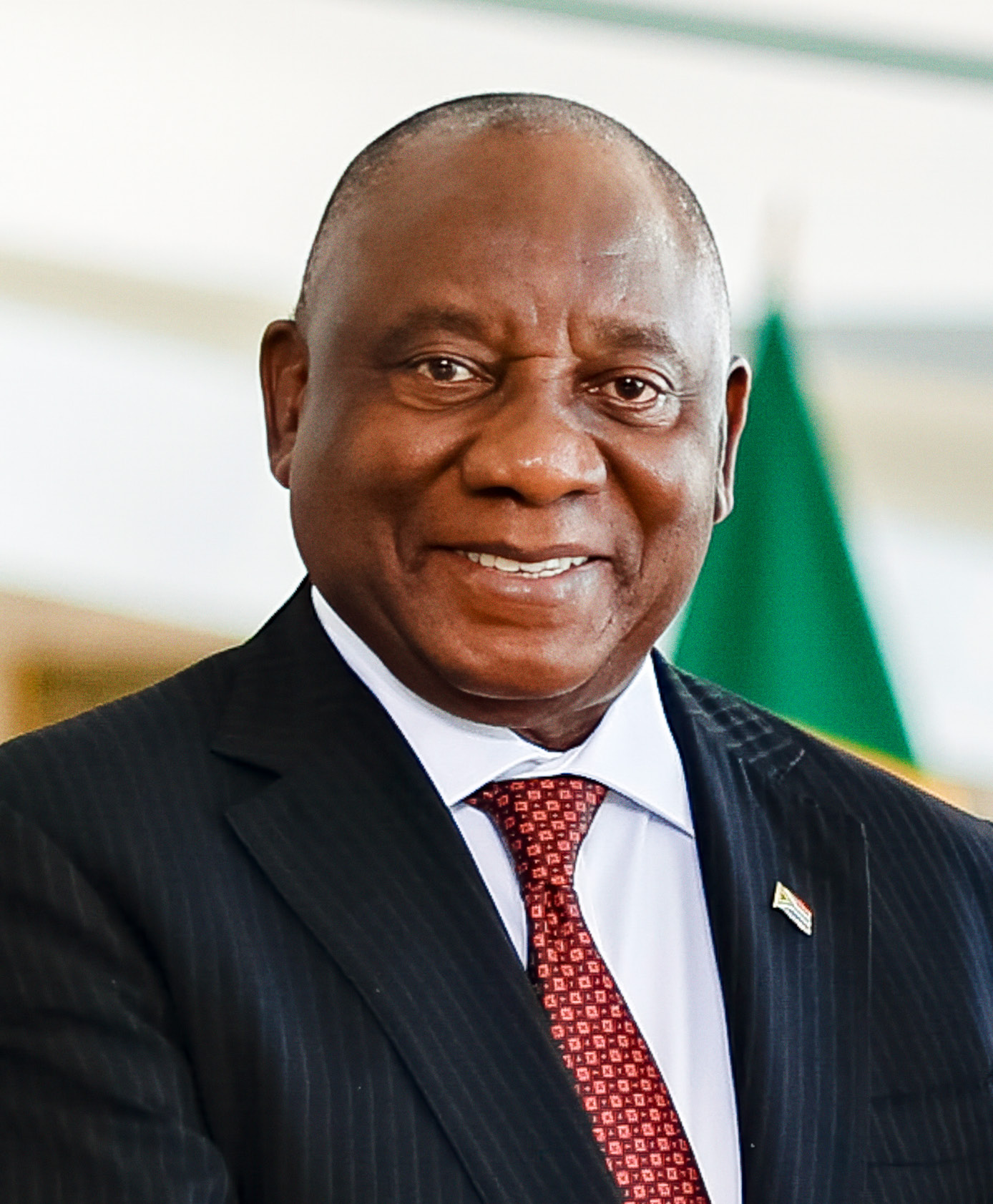
In a constitutional democracy, leadership is not about holding on to power. It is about serving the people, writes Jay Naidoo.
Dear Mr President,
I write to you not as a political opponent, but as someone who stood alongside you during the struggle for our freedom and who respects the office you occupy.
There was a time when you, as General Secretary of the National Union of Mineworkers, and I, as General Secretary of COSATU, occupied two of the most significant leadership positions in South Africa’s mass democratic movement. We organised workers, communities, and students knowing that detention, torture or assassination were real possibilities. The difference between life and death was often measured in days.
Together with millions of ordinary South Africans, we entered into a covenant with our people. It was never simply to win elections or occupy government. It was to build a country where every South African could live with dignity, justice, and opportunity.
That was the meaning of freedom in 1994. To deliver a better life to all our people.
We understood that our struggle was never simply about replacing one government with another. It was about dismantling the economic foundations of apartheid itself. Apartheid was built on cheap black labour, exclusion from ownership, and the denial of opportunity to the overwhelming majority of our people.
We believed political freedom would be accompanied by economic freedom.
That was our covenant.
Thirty years later, we must ask ourselves an uncomfortable question: have we fundamentally transformed that economy, or have we simply created a new politically connected elite alongside the old concentrations of wealth and economic power while millions remain excluded?
That is not the vision that inspired our struggle.
The photograph from the early 1990s captures one moment in that journey. You had become the newly elected Secretary-General of the African National Congress after its unbanning. Chris Hani had returned from exile to lead the South African Communist Party. I remained General Secretary of COSATU and Cde John Gomomo our COSATU President. We represented different organisations, but we shared one purpose.
We did not inherit freedom.
We earned it together with millions of workers, students, faith leaders, civic organisations, and ordinary citizens who made apartheid impossible to govern. We did not defeat apartheid on the battlefield. We defeated it because ordinary people withdrew their consent, organised themselves, and made negotiations inevitable.
I remember when the apartheid government bombed the headquarters of COSATU and the National Union of Mineworkers in 1987. I remember providing office space to Chris Hani and the SACP after the organisations were unbanned. I remember the funerals, the marches, the negotiations, and the daily effort to prevent South Africa from descending into civil war.
We chose courage over revenge.
We chose reconciliation over hatred.
We chose constitutional democracy over permanent conflict.
That is why I write to you today.
For the past month I have travelled alone across South Africa. I have driven through villages, towns, farms, and mountains. I have sat with workers, farmers, elders, young people, and families. I have listened far more than I have spoken.
What I have encountered is not a nation without hope.
It is a nation that feels abandoned.
Our people remain generous. They remain resilient. But they no longer believe that those in power are listening.
I have seen collapsing municipalities, broken roads, failing hospitals, schools without dignity, corruption that has hollowed out public institutions, and young people who see little pathway into the economy.
I have also witnessed something that should trouble every South African.
Poor South Africans turning against poor Africans.
This is not the freedom we struggled for.
South Africa has every right to secure its borders, enforce its immigration laws, and remove those who are in the country unlawfully through lawful processes. Every sovereign nation has that responsibility.
But we cannot allow corruption, state failure, and economic despair to be redirected into violence against vulnerable human beings.
The greatest threat to our democracy is not the foreigner seeking an honest livelihood.
It is corruption.
It is failed governance.
It is organised crime.
It is inequality.
It is the steady erosion of public trust.
Mr President, we also stand at a dangerous constitutional moment.
South Africans have every right to protest. We fought for that right. We fought for the freedoms now protected by our Constitution: the freedom to speak, to organise, to assemble peacefully and to challenge those in power.
Those freedoms are sacred.
But they are not a licence to threaten violence, spread hatred, intimidate communities, destroy infrastructure or take the law into one’s own hands.
No individual or organisation has the right to hold our constitutional democracy hostage through fear or vigilantism.
If there are genuine grievances, and there are many, they must be addressed through democratic and lawful means. The answer to failed governance cannot be mob rule. The answer to corruption cannot be lawlessness. The answer to economic exclusion cannot be violence against innocent people.
I therefore ask you to address the nation before these tensions escalate further. Reassure South Africans that peaceful protest will always be protected. But make it equally clear that incitement to violence, attacks on migrants, destruction of public or private property, and attempts to undermine the rule of law will not be tolerated.
That is your constitutional duty.
But maintaining public order is only part of your responsibility.
Your greater responsibility is to remove the conditions that have allowed this anger to grow.
Millions of South Africans have lost trust in government. They see corruption going unpunished. They see public money stolen while municipalities collapse, hospitals deteriorate, schools fail, and young people remain unemployed. They see political connections rewarded while honesty, competence and entrepreneurship are left behind.
These grievances are real.
They cannot simply be condemned.
They must be addressed.
Take the people of South Africa into your confidence.
Tell the 65 million people you serve what action has been taken on the findings of the Zondo Commission and the many commissions of inquiry your government has established. Explain what has been achieved, what remains outstanding, and when those responsible for looting the public purse will finally be held accountable.
Help us understand the threats facing our constitutional democracy. If there are organised groups, criminal syndicates or foreign interests seeking to destabilise our country, tell the nation what can responsibly be disclosed and, most importantly, what your government is doing about it. South Africans deserve facts, not rumours. Trust is rebuilt through honesty.
We do not need more promises.
We need action.
Hold your Cabinet accountable.
Hold your government accountable.
Hold the public service accountable.
Restore the integrity of our institutions.
Root out corruption without fear or favour.
Build an economy that rewards innovation, entrepreneurship and productive work, especially for those who were historically excluded.
Too much of our economy remains concentrated in too few hands, while corruption and patronage have prevented meaningful economic transformation. Our dream was never to replace one elite with another. It was to build an inclusive economy in which every South African could participate with dignity.
If government fails to deal with these root causes, others will continue to exploit the anger they create.
South Africans deserve better than a choice between corruption and chaos.
They deserve an honest state that earns back their trust through action, not promises.
As one of your comrades from those difficult years, I ask you to lead with the courage that history once demanded of us.
Leave the meetings.
Leave the blue-light convoys.
Travel quietly through our villages.
Sit with elders.
Listen to workers.
Listen to young people.
Hear the pain beneath the anger.
Remember the covenant we made with our people.
In many of our traditions, we believe our ancestors remain present, not to rule over us, but to witness how we care for the gifts we have inherited.
Whether one shares that belief or not, every generation is accountable to those who came before it and to those who will come after it.
History gave our generation the privilege of helping to win freedom.
History is now asking what we have done with that freedom.
And if your government no longer has the capacity, the will or the moral authority to fulfil that covenant, then there is also honour in acknowledging that reality.
In a constitutional democracy, leadership is not about holding on to power. It is about serving the people.
If you cannot restore that trust and provide the leadership this moment demands, then do the honourable thing: return your mandate to the people and allow them, through democratic elections, to decide who should lead South Africa forward.
That is not defeat.
That is democracy.
Mr President, the time for incremental adjustments has passed.
Lead.
The country is waiting.
Our ancestors are watching.
And one day our children and grandchildren will ask whether we honoured the trust that was placed in us.
May we have the courage to answer them with honesty before history delivers its verdict.
Jay Naidoo is the Founding General Secretary of COSATU, a former Minister in President Nelson Mandela’s Cabinet, and a South African citizen and Elder