

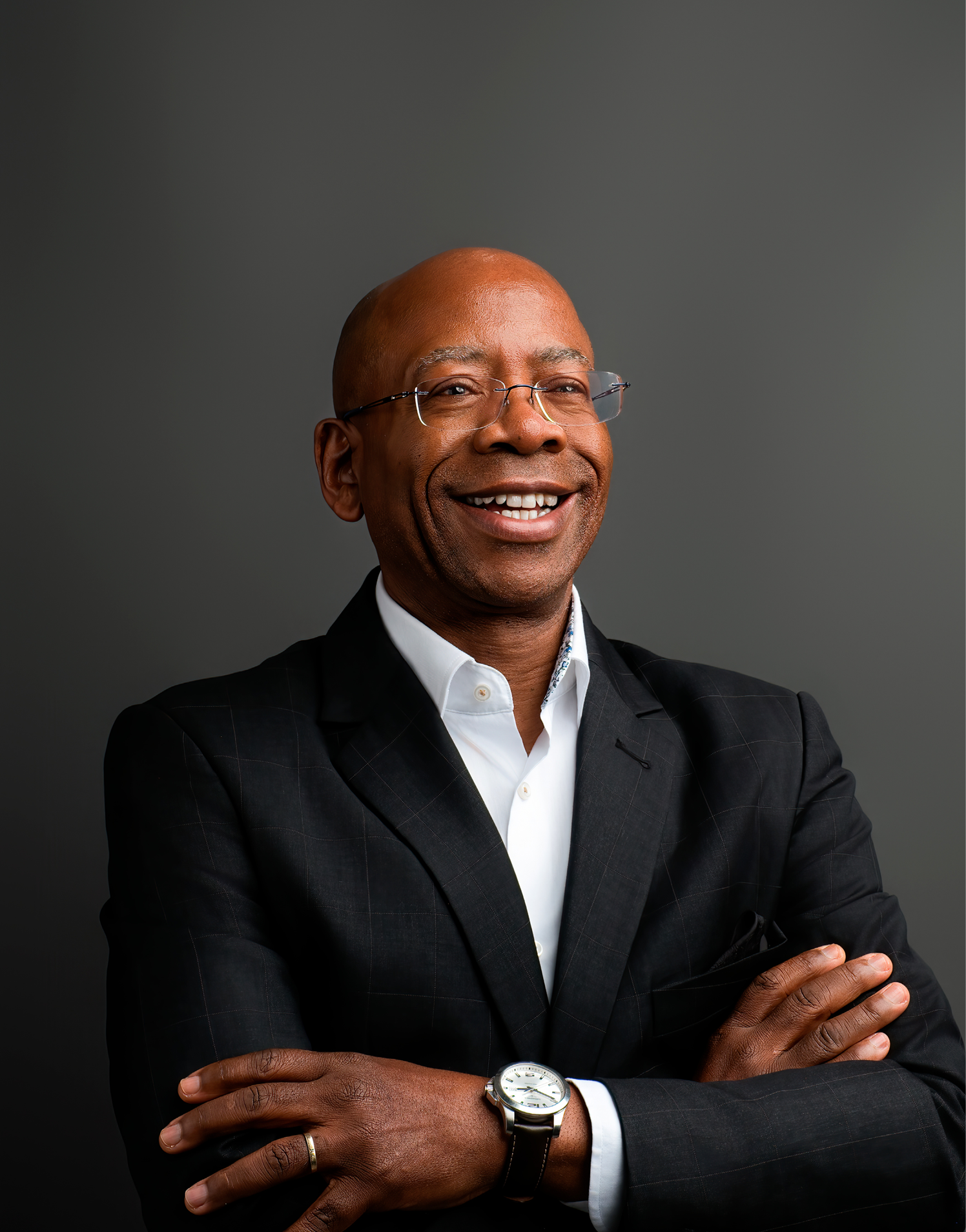
Professor Bonang Mohale lays down the facts
before calling on everyone to vote in November
When the almost 76-year-old President Rolihlahla N. Mandela lived to see his own inauguration and so began his first and only term at the Union Building, the young people of 16 June 1976 saw a ray of light and with it, dared to hope that the very first democratically elected President of South Africa had put victory within reach and prevented the country from becoming embroiled in the mounting hostilities and inevitable implosion.
Finally, the National Party’s hold on the country, its economy, society, and people was about to be broken, shattered, and crushed. The 16 June 1976 had received a spiritual wholeness that, to this day seems fated to elude them.
Although precipitated by the enforced Afrikaans as a medium of instruction, their Memorandum of Demands also included the abolition of Bantu education; the right of students to be taught in their home languages and English; the release of student detainees; the abolition of apartheid in favour of a constitution that would recognise the rights of all citizens; and the release of all political prisoners to enable a new political dispensation based on dialogue between government and authentic black leaders.
The idealistic struggles of early revolutionary forebears to try and hang on to their ancestral land and establish genuine equality is proving to be a dismal failure. The lived experience of the children of Rolihlahla N. Mandela and Eric Mafuna is that they are liberated on paper and in name only without having achieved any real share in the power structure–most pronounced in their continued exclusion from economic participation.
The system that they paid dearly for, with their lives and for which they made the supreme sacrifice to root out and defeat, continues to exploit them and their parents–demanding everything but returning nothing. South Africa’s present uncertain path towards economic emancipation will most certainly not touch the current economic power patterns that has been set for generations to come.
The Outcomes-Based Education (OBE) that was introduced post-apartheid as Curriculum 2005, largely failed due to an overly complex curriculum, inadequate teacher training, and a severe lack of resources in underfunded schools. It resulted in neglected foundational skills, inflated administrative workloads, and exacerbated historical educational inequalities.
The biggest problem facing the country’s education system is systemic inequality, deeply rooted in the historical legacy of apartheid. This divide fractures the system into two distinct tiers, namely the well-resourced, historically privileged schools, and severely under-resourced, impoverished schools, which overwhelmingly serve black and rural learners.
The country faces an ongoing youth unemployment crisis, with the national unemployment rate for those aged 15-24 reaching 60.9%, and the broader rate for youth aged 15-34 standing at 46%. Out of the roughly 21 million working-age youth, over 4.7 million are actively unemployed, and a staggering 45.6% are not in employment, education, or training (NEET).
This remains one of the most pressing social and economic challenges.
Since the dawn of democracy in 1994, the country has made significant policy strides, yet the challenge persists. Despite numerous government initiatives and interventions, millions of young South Africans remain locked out of the labour market. The root causes are complex–ranging from corruption, greed, economic stagnation, poor governance, a lack of opportunities, and an ongoing skills mismatch between education and industry needs.
Economic stagnation has seen decades of low GDP growth that have severely limited the economy’s ability to absorb new entrants into the job market; skills mismatch has resulted in many young people who lack foundational work experience or leave school without the specific technical, mathematical, and literacy skills demanded by modern employers and poor spatial integration wrought by the legacy of spatial apartheid isolates many young people in marginalised townships away from economic hubs, making job searching costly and difficult.
While having a degree significantly reduces the overall risk of unemployment (the national graduate unemployment rate is roughly 9% to 11%, compared to nearly 33% for the general population), the unemployment rate for African graduates is up to three times more than that of other population groups, currently sitting at roughly 18% to 21% (depending on age and location), compared to just 3.7% for white graduates.
This accounts for over 200 000 unemployed or discouraged black graduates. Young, black female graduates experience the highest unemployment rates, averaging 4.5% higher than their male counterparts. Whilst many employers require work experience, thereby creating a difficult entry barrier for fresh graduates.
The South African Medical Association Trade Union (SAMATU) revealed that out of a cohort of 1 891 doctors who completed their community service at the end of 2025, about 1 480 remained unemployed just weeks into the new year. While the exact number of unemployed doctors fluctuates as batches of graduates enter the system and provincial departments slowly absorb them, the issue stems from a structural crisis in the South African public health sector.
Provincial health departments are frequently constrained by budgets and austerity measures, leaving critical posts unfunded. Following community service, there is no automatic placement for medical officers in the state sector, and graduates must compete for a limited pool of vacancies. Junior doctors are legally required to complete internships and community service to obtain independent or private practice licensing and yet bureaucratic bottlenecks and a lack of state funding for these mandatory roles prevent them from working.
This unemployment exists side-by-side with massive doctor shortages in the public sector, where the doctor-to-patient ratio can stretch to 1:3 000. This is despite the fact that South Africa is not a poor country–just badly managed! The City of Johannesburg has an estimated nominal GDP of approximately $131 billion to $150 billion. This is larger than the economies of Kenya ($147b), DRC ($123b), Ethiopia ($121b), and Ghana ($118b) in the top 10 African economies.
It acts as South Africa’s primary economic and financial hub, contributing about 16% of the country’s total GDP and accounting for over 40% of the Gauteng province’s economic output. The economy of Johannesburg is massive relative to the rest of the continent. The Sandton district within Johannesburg is considered the wealthiest square mile on the continent, boasting a local GDP of around $74 billion.
Johannesburg’s GDP per capita is estimated between $13 000 and $15 000, which ranks among the highest in Africa. Gauteng’s economy has an estimated Gross Domestic Product (GDP) of $165 billion (roughly R2.4 trillion). This is larger than the economy of Angola ($152b). Despite being South Africa’s smallest province by land area, it is the country’s economic powerhouse, generating about 33% to 35% of the total national GDP.
Perusing through the Prudential Authority’s statistics and teasing out just the cash ecosystem is truly illuminating indeed! It demonstrates beyond any shadow of doubt that South Africa is poor by choice. Especially when one considers that South Africa is blessed with an abundance of resources, the government has more than 730 State Owned Enterprises and Companies (SoE/Cs), SARS has collected about R2.01 trillion in the 2025 financial year. The Public Investment Corporation (PIC) manages over R3 trillion (approximately $166 billion–same size as the nominal GDP of Gauteng Province at $165 billion!) in assets under management–wholly owned by the South African government, it ranks as the largest asset manager in Africa and oversees funds for major public sector entities, most notably the Government Employees Pension Fund (GEPF).
There are 800 000 Stokvels in South Africa in 2025 with 11 million members saving R50 billion annually; SASSA benefits 19.2 million with R250 billion annually; NSFAS benefits 1.1 million (of 1.3 million) students with R50 billion annually; taxi operators are 250 000 handling R90 billion annually and spaza shops and general dealers are 172 000 handling R1 trillion annually!
The 10–12 million ‘hassling class’ (of the 15–18 million working class) is worth ~R500m per annum. Big Retailers are a R1 trillion per annum business. The country has 29 000 ATMs handling R900 billion cash withdrawals per annum; SADC foreign central banks account for $114 trillion per annum and The Mint handles about R2.5 billion coins, with associated R400m minting costs per annum. There are 2.6 million small businesses (<R20m turnover per annum); 50 000 medium (<R100m turnover per annum); 5 000 large (~R1 billion turnover per annum); and 500 corporations (>R1 billion turnover per annum).
The young women and men of the 16 June 1976 have learned hard and bitter lessons and they will want to get it right this time of local government elections that has given them the chance to start all over again with new rules and a new social compact between the white haves and the black have nots.
An exhilarating and challenging prospect–perhaps the Utopian dream of a better life for all could emerge as a young peoples’ triumph and reward for the 50 years of both sacrifice and disillusion. The very first, urgent, and most immediate task is for ALL eligible young people (18 years and above) to go and register to vote and actually wake up 07:00–21:00 on Wednesday, 4 November to brave the cold and the queues to cast their vote–for a leader of their choice! A leader that is committed to root out and defeat state capture; completing the unfinished task of transformation; ethical leadership; good governance; service delivery; and law and order, safety and security!
Professor Bonang Mohale is the Chancellor of the University of the Free State, Former President of Business Unity South Africa (BUSA), and Professor of Practice in the Johannesburg Business School (JBS) in the Faculty of Business and Economics.