

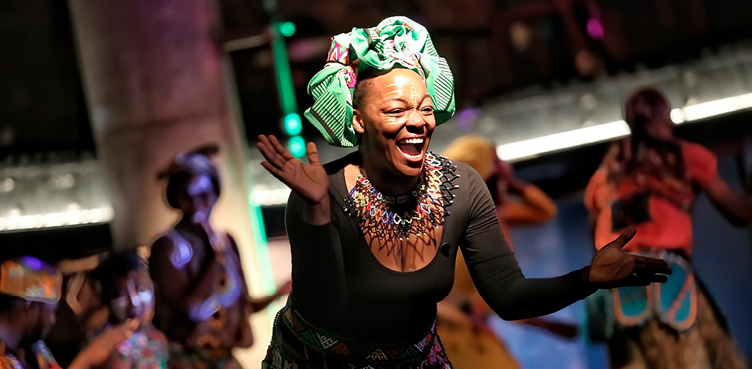
Salman Khan looks at why the region’s future may lie not beneath the ground, but in the experiences it can create above it.
For more than a century, the economic identity of South Africa’s West Rand has been defined by what lies beneath its soil.
Gold built cities, attracted capital, created employment, and shaped the industrial character of the region. Mining remains an important part of its history and economic identity. But as the global economy changes, an important question must now be asked: What will drive the West Rand’s next generation of economic growth?
One compelling answer is staring us in the face: tourism.
Not tourism as an occasional weekend activity, but tourism as a serious economic sector capable of attracting investment, creating enterprises, generating employment, stimulating infrastructure development, and distributing economic opportunity across communities.
The opportunity is substantial.
Tourism Is No Longer a Peripheral Industry
The global tourism and hospitality industry has entered a new era. International tourism has recovered strongly following the COVID-19 pandemic, with approximately 1.52 billion international tourist arrivals recorded in 2025.
The global Travel & Tourism sector contributed an estimated US$11.6 trillion to the world economy, supporting approximately 366 million jobs.
South Africa is also benefiting from this resurgence. According to the World Travel & Tourism Council (WTTC), Travel & Tourism contributed an estimated R618.7 billion to South Africa’s GDP in 2025, equivalent to approximately 8.8% of the national economy, while supporting around 1.68 million jobs.
These figures demonstrate that tourism is no longer simply a leisure industry. It is an important economic sector capable of stimulating investment, infrastructure development, entrepreneurship, employment, and regional economic transformation.
The critical question, therefore, is: How much of this economic value is being captured by the West Rand and surrounding tourism economy?
Are all South African destinations capturing their fair share of the tourism economy?
The answer appears to be no.
Tourism value remains heavily concentrated in a relatively small number of established destinations, particularly the Western Cape and KwaZulu-Natal. Meanwhile, regions with exceptional tourism assets continue to compete for visibility, investment, and market share.
The West Rand and surrounding region is one such opportunity.
A Tourism Giant Waiting to Be Connected
The Morame region–encompassing the West Rand and surrounding areas including Mogale City, Rand West City, Merafong City, Hartbeespoort, Magaliesburg, Brits, and neighbouring destinations–possesses an extraordinary combination of assets.
Here, visitors can encounter some of humanity’s oldest stories at the Cradle of Humankind World Heritage Site, explore the natural and cultural landscapes of the Magaliesberg Biosphere, experience wildlife and conservation, discover mining heritage, enjoy adventure and extreme sports, explore agricultural and farm tourism, engage with astronomy and space science, and experience a rapidly developing gastronomy and hospitality offering.
There are hiking and cycling routes, mountain biking, boating, microlighting, safari experiences, cultural attractions, battlefields, boutique breweries, cheesemakers, organic farms, restaurants, guest lodges, hotels, and community tourism enterprises.
The challenge is not necessarily a lack of attractions.
The challenge is connectivity, packaging, investment, infrastructure, destination marketing, and a common regional vision.
The assets exist. What is required is an ecosystem capable of transforming individual attractions into a competitive destination economy.
From Mining Legacy to Experience Economy
The phrase “from extraction to experience” is not intended to diminish the historical contribution of mining. Rather, it recognises that economic diversification is essential for the region’s future.
The West Rand has an opportunity to transform its mining heritage itself into a tourism asset.
Former mining landscapes can become heritage attractions. Industrial history can become educational tourism. Geological resources can become part of adventure and geo-tourism. Communities that have historically depended on extractive industries can participate in new tourism enterprises.
This is the essence of the experience economy: turning places, stories, culture, landscapes, and heritage into experiences that visitors value—and communities can monetise sustainably.
The Missing Link: Investment
Tourism cannot flourish on attractions alone.
Destinations require roads, digital connectivity, signage, public spaces, visitor centres, accommodation, transport, skills, safety, destination marketing, and investment-ready tourism products.
This is where the private sector becomes critical.
The West Rand needs to be viewed not simply as a tourism destination, but as an investment proposition.
There are opportunities across the tourism value chain—from accommodation and restaurants to adventure tourism, transport, technology, events, wellness, agriculture, entertainment, conservation, and community enterprises.
For CEOs and investors, the question should therefore not be, “Does the West Rand have tourism potential?”
It should be: “How do we convert that potential into investable opportunities?”
A New Regional Compact
This transformation cannot be achieved by one organisation.
It requires a new regional compact involving national, provincial, and local government; municipalities; tourism authorities; investors; corporates; academia; communities; conservation organisations; hospitality businesses and entrepreneurs.
Morame Regional Tourism Organisation was established in 2021 to contribute to precisely this agenda: stimulating tourism development, attracting visitors, encouraging new enterprises, and helping position Gauteng West as a leading tourism destination.
Its ambition is to contribute towards making the region Gauteng’s number one tourism destination by 2030.
That ambition now requires collective ownership.
The Morame Regional Tourism Conference 2026
The inaugural Morame Regional Tourism Conference 2026, taking place on Saturday, 3 October 2026, is designed as a platform to begin that conversation.
Under the theme “Reimagining the Region: From Heritage to a High-Value Tourism Economy–From Extraction to Experience: Redefining the West Rand and Surrounding Region’s Economy”, the conference will bring together government leaders, investors, business executives, tourism authorities, academics, conservationists, entrepreneurs, and community organisations.
Minister of Tourism Patricia de Lille will deliver the keynote address, alongside distinguished leaders from the tourism and hospitality sector.
But the real objective is not another day of speeches.
It is to create investment conversations, partnerships, practical recommendations, and an actionable regional tourism development framework.
Ten thematic areas will explore the opportunities and challenges across heritage and mining tourism, adventure and sports tourism, astro-tourism, gastronomy, dark tourism, agricultural and eco-tourism, infrastructure, accommodation and auxiliary services, biosphere sustainability, and wildlife and conservation.
Investor forums, exhibitions, tourism showcases, and networking opportunities will further connect ideas with potential investment.
The Economic Engine We Have Yet to Build
Tourism has a unique multiplier effect.
A visitor does not spend money only at an attraction. They require accommodation, food, transport, entertainment, guiding, retail, and other services. That expenditure can flow through local businesses, informal enterprises, farms, communities, and suppliers.
This creates opportunities at micro, meso, and macro levels of the economy.
For a region facing the continuing challenges of unemployment, inequality, and economic transformation, that multiplier effect matters.
The West Rand does not need to choose between its past and its future.
It can turn its past into an economic asset.
The gold beneath the ground created one economy.
The question now is whether the heritage, landscapes, culture, biodiversity, creativity, and experiences above the ground can create the next one.
The opportunity is real. The assets are extraordinary. The market exists.
What is required now is vision, investment, collaboration, and execution.
The Morame Regional Tourism Conference is intended to be the catalyst.
Because the future of the West Rand may not simply be about what it extracts.
It may be about what it creates, what it shares, and what the world comes to experience.
From Heritage to a High-Value Tourism Economy.
From Extraction to Experience.
Salman Khan is the Conference Chair and Board Member of Morame Regional Tourism Organisation.