

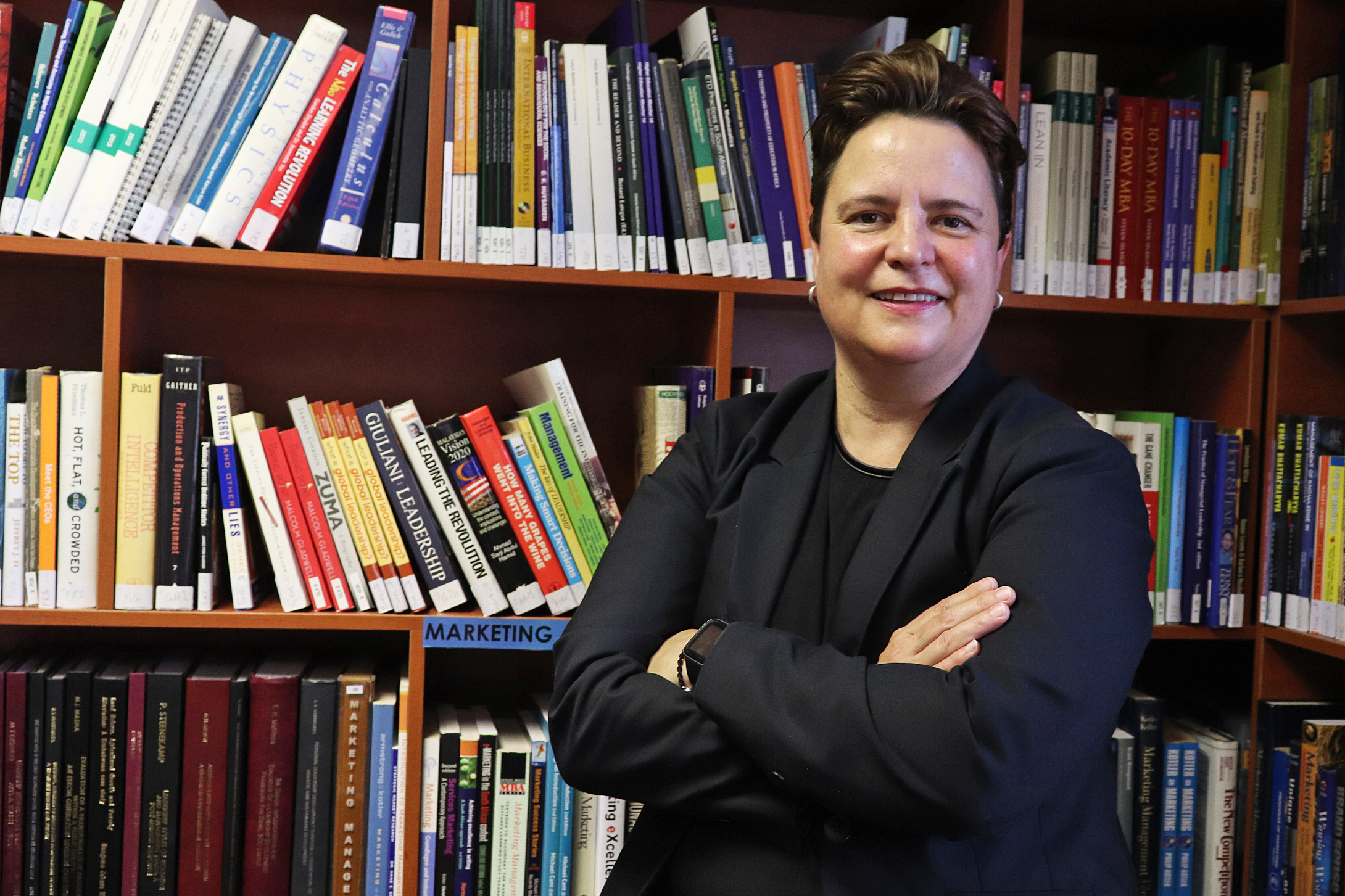
Until higher education reflects the dignity, plurality, and aspirations of democratic South Africa more fully, decolonisation will remain unfinished freedom work, writes Professor Linda Meyer.
Freedom Day invites South Africans to reflect on how far democracy has come and how far it still has to go. Few spaces bring that tension into sharper focus than higher education. South Africa may have broken with colonialism and apartheid yet many of the structures that shaped its universities remained in place long after the political transition. The Department of Higher Education and Training’s language policy framework still acknowledges the de facto dominance of English as the language of learning and teaching across the system, underscoring how limited the shift has been towards African languages as languages of academic instruction and scholarship.
This matters all the more in a society where the promises of democracy remain unevenly realised. Higher education is one of the institutions through which opportunity is widened, status is conferred, and leadership is formed. But it is also one of the clearest places to ask whether democratic South Africa has transformed the deeper terms on which knowledge, belonging, and success are organised.
Whose language, whose knowledge, whose confidence counts
One of the clearest signs that decolonisation remains incomplete is the continued dominance of English in higher education. In many South African universities, students are still expected to read, write, debate, and demonstrate academic ability primarily through English, even when it is not the language in which they think most naturally or express themselves most fully. DHET’s own framework recognises the need for explicit support for students for whom English is not a first language and calls for the development and use of South African languages across teaching, learning, and scholarship. This confirms that access has widened without the system fully redesigning itself around the linguistic realities of the students it serves.
The issue goes beyond comprehension. Language shapes confidence, participation, and who feels intellectually at home in the university. It also shapes what counts as knowledge. Many courses still lean heavily on European and North American scholarship, while African thought, local histories, and indigenous knowledge systems remain less central than they should be.
“Even where African content appears on reading lists, African realities are often treated as case studies, data or context, while theory and intellectual authority continue to come from elsewhere. That hierarchy affects whose thinkers are introduced as foundational, whose experience is treated as intellectually generative, and whether the university sees Africa as a place from which knowledge is produced or simply a place to which theory is applied,” says Prof. Linda Meyer, MD at IIE Rosebank College.
Why this matters for student success
These are not only symbolic exclusions. They have material consequences for who succeeds, who feels they belong, and who makes it through the system. The gap between access and completion remains one of the clearest signs that formal inclusion and meaningful transformation are not the same thing. The Council on Higher Education has shown that average graduation rates in public universities remained low, rising only from around 17% in 2010 to 21% in 2019.
Admission, in other words, is only one part of the story. The real test of transformation lies in how well students are able to progress, succeed, and complete their studies once they are inside the system. CHE VitalStats shows that undergraduate course success rates in 2023 remained uneven across racial groups, with Black African students at 77%, Coloured students at 81%, Indian students at 84%, and White students at 88%. Those disparities show that higher education continues to produce unequal academic outcomes along historically shaped lines.
Why #FeesMustFall still matters
The decolonisation debate in South African higher education did not enter public life quietly. Student protests in 2015 and 2016, especially #RhodesMustFall and #FeesMustFall, forced universities and the country to confront questions of curriculum, language, cost, belonging, and the colonial shape of the institution. Their significance lay not only in symbolic contestation over statues or institutional names, but in exposing how deeply colonial power remained embedded in the everyday life of universities–in curricula, language, institutional culture, staffing patterns, and definitions of academic excellence.
“Those protests shifted the debate. They moved transformation beyond questions of demographic access and representation and pushed epistemic and structural change into the centre of public discussion,” says Prof. Meyer. “In that sense, they did not begin the decolonisation conversation, but they made it impossible for universities to keep treating it as marginal, rhetorical or optional.”
What meaningful change would require
Meaningful decolonisation will require more than symbolic gestures or revised policy language. It will depend on curriculum reform that treats South African and African realities as intellectually central rather than peripheral. It will require serious investment in African languages as languages of teaching, scholarship, and research, rather than leaving them largely symbolic in policy. It will also demand teaching approaches that allow students to engage more critically and connect theory more meaningfully to lived reality.
Just as importantly, universities will need to treat student success, academic support, accommodation, and belonging as central transformation questions rather than secondary administrative concerns. A serious discussion of decolonisation cannot stop at what is taught. It also has to ask what conditions are needed for students to flourish in the institution.
A sign of how far this debate now reaches can be seen outside higher education itself. The Department of Basic Education’s draft History Curriculum and Assessment Policy Statement for Grades 4 to 12 proposes a shift away from a dominant Eurocentric lens through which African history has been taught to a decolonised approach which focusses on African realities and history. Even though this development sits at school level rather than university level, it reflects the same larger effort to rethink whose histories are centred and how knowledge is organised across the education system.
Freedom remains unfinished work
Freedom Day is a reminder that liberation is not secured only in constitutions, elections or national memory. It also has to find expression in the institutions that shape knowledge, belonging, and opportunity. Higher education is one of those institutions. It helps form the country’s future leaders, thinkers and professionals, and it plays a powerful role in deciding whose knowledge is valued and whose reality is taken seriously.
That is why decolonisation matters so deeply. It is part of the larger democratic task of ensuring that freedom is lived, not simply commemorated. Until higher education reflects the dignity, plurality, and aspirations of democratic South Africa more fully, decolonisation will remain unfinished freedom work.
Professor Linda Meyer is the MD at IIE Rosebank College.