Busi Radebe profiles South Africa’s Minister of Basic Education,
Siviwe Gwarube, and finds that thanks to her continued
commitment and accessibility, basic education is on the right track
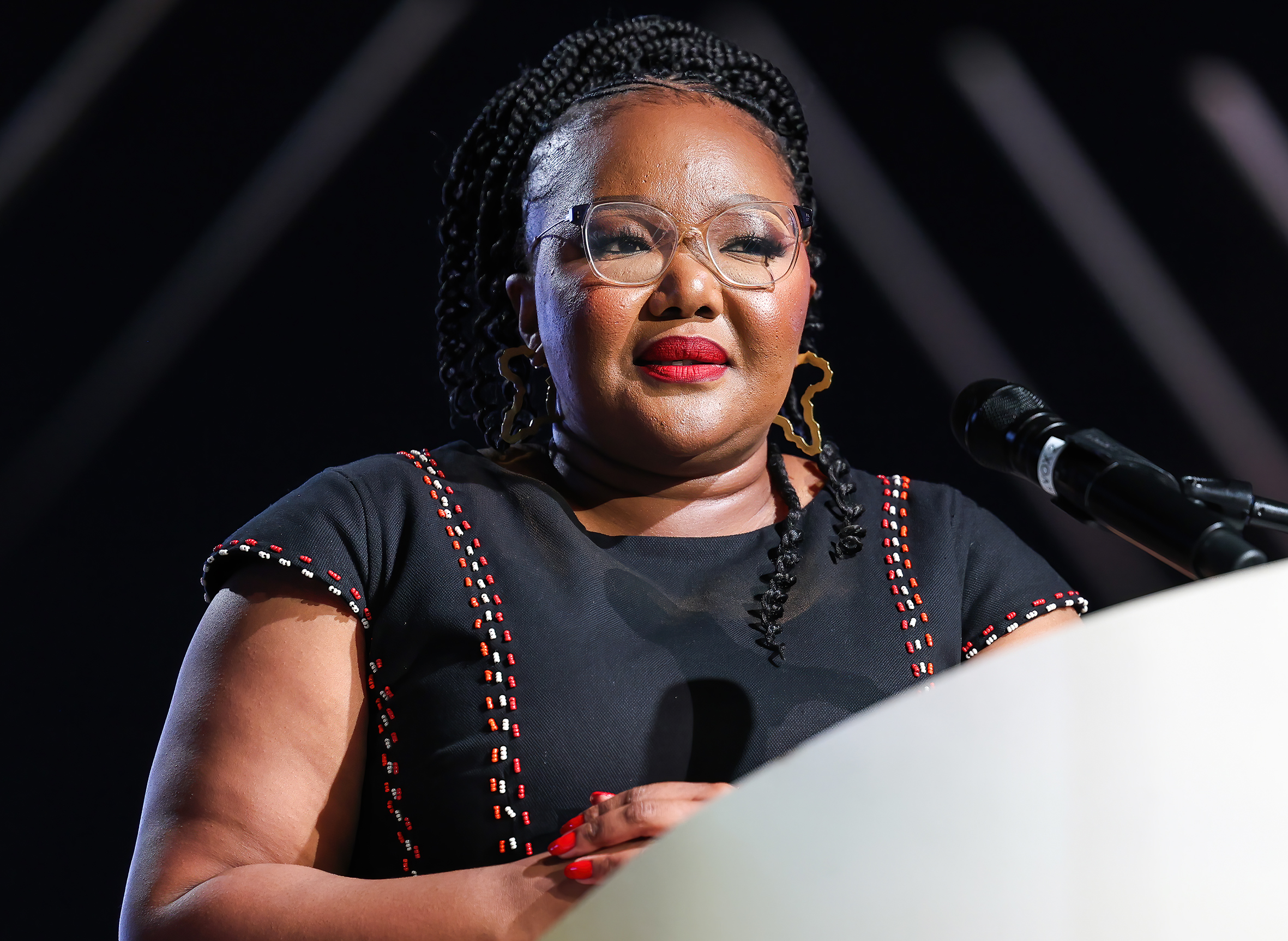
When Siviwe Gwarube arrived for her first day as South Africa’s Minister of Basic Education on 3 July 2024, she carried with her more than political credentials or the symbolism of a Cabinet appointment. She arrived with a lived understanding of how South Africa works and how it fails. Raised in KwaMdingi, a rural village in the Eastern Cape, and later schooled in the suburbs of King William’s Town, Gwarube grew up navigating the reality of two vastly different South Africas. One offered predictability, opportunity, and institutional functionality. The other demanded resilience in the face of structural neglect. The lesson was clear and enduring in that where you are born still largely determines how far you are likely to go in this country.
That understanding has shaped the way she approaches leadership. As Minister of Basic Education, Gwarube does not govern from abstraction or ideology, but from a grounded reading of institutional weakness and social consequence. Her leadership is informed by the belief that public service, when disciplined and ethical, remains one of the most powerful instruments for social change. In her framing, education is not a rhetorical priority. It is infrastructure.
When it works, it expands life chances. When it fails, it entrenches inequality across generations.
Raised by a teacher and guided by a grandmother who believed that education sits at the centre of South Africa’s response to unemployment, inequality, and social fracture, Gwarube’s orientation toward public service was forged early. Education was never presented to her as an aspiration alone. It was presented as a system that either functions for you or quietly forecloses your future. That grounding matters in a sector burdened by decades of reform fatigue, uneven capacity, and political defensiveness.
Her formal entry into public life began at Rhodes University through student leadership and advocacy. It was there that she learned how representation works and how quickly legitimacy is lost when leadership becomes detached from accountability. After university, she entered national politics as a spokesperson to the Leader of the Official Opposition, a role that demanded clarity under pressure and an ability to translate complex policy debates into public meaning. The work sharpened her understanding of how institutions communicate trust and how easily that trust can be eroded.
From there, she moved into executive government in the Western Cape, serving as Head of Ministry in the Department of Health. The transition from opposition politics to administration proved formative for her and presented new challenges. In government, policy ceased to be an argument and became a system measured in service delivery, institutional coherence, and public confidence. Health, like education, leaves little room for theory. Decisions taken at the centre surface quickly shows up in communities and households. That exposure to implementation and consequence would later shape Gwarube’s approach to basic education, a department long criticised for the distance between ambition and classroom reality.
She returned to Parliament as a Member of the National Assembly during a period of national strain, as South Africa grappled with the early impact of COVID-19. Rising through the ranks of the Official Opposition to become Chief Whip, she developed a reputation for organisational discipline and procedural focus. Parliament, she argued consistently, only matters if it remains oriented toward the lives of citizens rather than the preservation of political theatre. That insistence on institutional seriousness would follow her into the executive.
Her appointment as Minister of Basic Education came unexpectedly, but not unprepared. Education was never theoretical to her and that framing has proven to be critical in a portfolio where leadership is tested not by announcements, but by the capacity to prioritise under constraint. Those constraints arrived quickly. The Basic Education Laws Amendment (BELA) process demanded political judgment and institutional stability. Tragedies such as the deaths of more than 11 children in the Mthatha floods and the catastrophic Vaal accident that clawimed the lives of 14 children cut through abstraction entirely, underscoring a hard truth that governance failures in education carry life and death consequences.
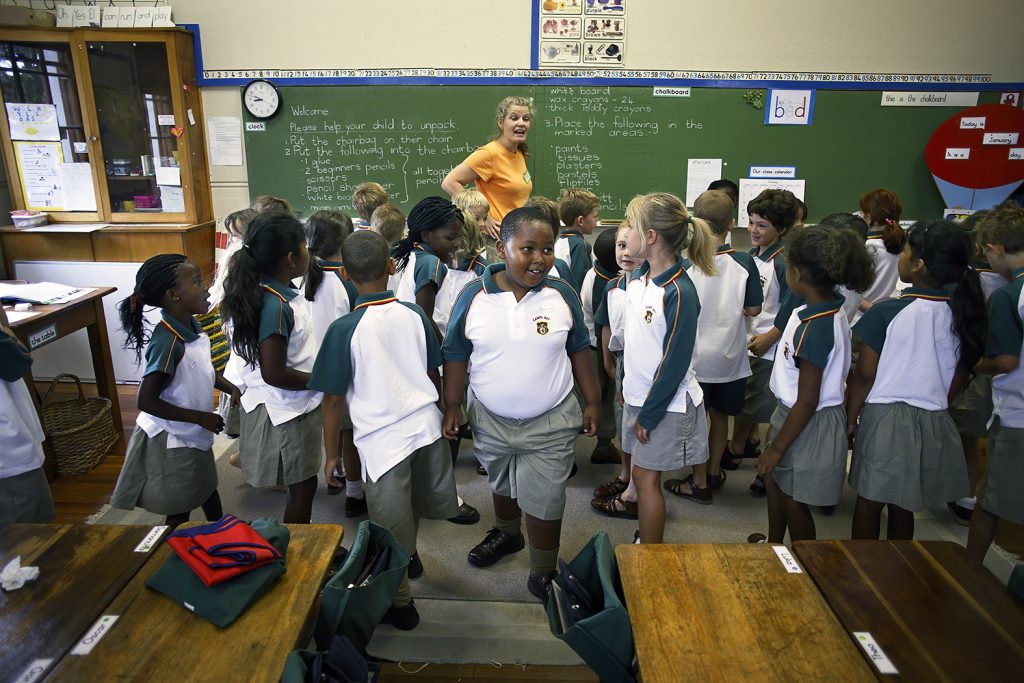
Rather than retreating into bureaucracy, Gwarube began her tenure with a national Listening and Learning Tour during her first 100 days in office. She travelled extensively, visiting schools across provinces and engaging directly with teachers, principals, parents, and learners. It was a deliberate leadership choice. Reform under her leadership would begin with listening rather than decree. What she encountered in the corridors and communities where children are taught was sobering. Overcrowded classrooms. Ageing infrastructure. Unsafe learning environments. Educators who are stretched thin by administrative burdens and budgetary constraints. Yet she also encountered commitment. Teachers showing up daily under deeply challenging conditions, still determined to teach.
That experience sharpened her sense of responsibility. Education leadership, she concluded, is not about visibility or rhetoric. It is about accountability to those who carry the system on their backs. The Listening and Learning Tour also reinforced a central insight that now underpins her approach. No policy reform can succeed without an honest understanding of conditions on the ground and without the trust of those expected to implement it.
That insight anchors her leadership philosophy. At its core is a belief that education reform must be ethical, evidence based, and relentlessly learner centred. Policy must serve outcomes rather than ideology. Decisions must be guided by data and implementation capacity rather than political convenience. Institutions must exist to enable learning, not to shield inefficiency. Three principles shape her approach. Equity is understood as fairness rather than sameness. Excellence that raises standards rather than lowers expectations. Integrity that tolerates neither corruption nor mismanagement in a sector that shapes the country’s future.
Public scrutiny of Gwarube’s leadership has often focused on matric outcomes, particularly following the release of the 2025 National Senior Certificate results. South Africa achieved an 88% pass rate, the highest in the country’s democratic history. While acknowledging the significance of this milestone, Gwarube has consistently cautioned against treating matric performance as a definitive measure of system health. She has pointed to concerning declines in key gateway subjects such as Mathematics, Economics, and Accounting, alongside persistent disparities between provinces and between urban and rural schools. At the same time, she has highlighted that 66% of Bachelor passes came from no fee schools, underscoring that strong outcomes are possible even under constrained conditions. For Gwarube, matric results are not an endpoint but a reflection of what has occurred throughout the schooling cycle, reinforcing her view that sustainable improvement begins in the early grades rather than at the point of exit.
That diagnosis has driven a reorientation of departmental priorities. Foundational literacy and numeracy are treated as non negotiable. Early childhood development has been positioned as central to long term reform, particularly in provinces such as KwaZulu-Natal, Limpopo, and the Eastern Cape where early learning opportunities remain most uneven. The objective is not simply access, but readiness, ensuring that children enter formal schooling able to learn and progress with confidence.
Teacher development sits at the centre of this agenda. Gwarube has been explicit that the quality of an education system cannot exceed the quality of its teachers. Her focus has shifted toward continuous professional development, stronger subject matter support, and leadership training for school principals. She has argued that reform cannot be episodic or compliance driven. It must accompany teachers throughout their careers and respect their professional judgement.
She has also confronted a quieter but deeply corrosive problem. Administrative overload. Drawing on research from Stellenbosch University, Gwarube acknowledged the reporting burden imposed by multiple departmental tools and compliance mechanisms. In response, she initiated efforts to reduce unnecessary bureaucracy with the aim of returning teachers’ time and energy to teaching and learning. The objective is not deregulation for its own sake, but functional clarity in a system that has too often confused oversight with effectiveness.
Equity in her leadership framework extends beyond curriculum. It includes school safety, learner wellbeing, and the integrity of support systems. The National School Nutrition Programme is treated not as a welfare add on, but as an educational imperative. Under her leadership, this programme that has often fallen prey to corruption much to the detriment of the children that depend on it in order to thrive at school, will be made more efficient. A hungry child cannot learn. An unsafe school cannot function. A system that tolerates corruption cannot credibly claim to pursue fairness. Restoring institutional trust, she has argued, is as important as delivering new programmes.
Technology and innovation feature in her vision, but with discipline. Digital tools must serve pedagogy rather than substitute for it. Robotics and coding cannot compensate for weak literacy and numeracy. Sequencing matters. When foundations are strong, technology becomes an enabler of opportunity rather than a driver of inequality. This pragmatic stance reflects a broader insistence on doing the basics well before layering on ambition.
Throughout her tenure, Gwarube has emphasised the role of parents and communities. Schools do not operate in isolation. Performance is consistently stronger where families are engaged and learning is reinforced beyond the school gate through routine, expectation, and shared responsibility. Education, in her view, is a social compact as much as a state function.
Looking ahead, her vision is focused and institutional rather than personal. She speaks less about sweeping overhauls than about rebuilding foundations. A system where every child has access to quality early learning. Where every classroom is led by a supported teacher. Where institutions function with integrity and purpose. The legacy she seeks is not acclaim, but improvement.
Success, in her terms, will be measured by whether South Africa hands future generations an education system that works better than the one it inherited. Education, she often says, is the architecture of opportunity. Under Siviwe Gwarube’s leadership, basic education is being asked to recover its moral and institutional authority and to answer a defining question of the democratic era. Whether the state still has the capacity, discipline, and courage to make opportunity predictable rather than accidental.
This is the challenge that defines her tenure. Not whether the system can produce isolated moments of success, but whether it can consistently deliver dignity, quality, and fairness to every child who enters a South African classroom.
With Gwarube’s continued commitment and accessibility, basic education is on the right track as it is a department that requires a leader who is unafraid to tackle difficult questions. Her leadership remains a testament that young people are competent and they can lead. When given a chance, they often rise to the occasion and supersede all expectation. They take criticism in their stride, employ holistic approaches that seek to leave no one behind and actively engage with all stakeholders in order to produce results that the country can be proud of. Results that change lives contribute to a better life for all, regardless of where they were born.
Busi Radebe is the General Manager for Media and Digital Technology at Frank Dialogue Holdings.