

Leadership is delighted to publish an excerpt from Charlotte Otter’s new book, We Need New Leaders: Mastering reputation management to reshape the C-Suite
Finding the leader within—landing or creating a dream job
Leadership is evolving. Just as we are (slowly) learning not to equate loud confidence with leadership competence, we are also learning to accept different kinds of leadership. The interviewees in this book ranged from CEOs, senior managers and founders to people in their first management roles and people who work solo. All identify as leaders.
Leadership is not a job title. It does not mean complying with a norm or mirroring the leaders around us. It may mean leading a team and having direct reports, and it may not. It may mean climbing the career ladder and following a linear path to the top job, and it may not. It may mean working alone as a fractional CFO with a portfolio of different customers. It may mean being a founder, working alone with occasional freelance support.
As a society, we are obsessed with thinking and talking about leadership, and those who lead. If you go into any bookshop, the shelves are lined with books on leadership. Entire university departments are devoted to the theory and study of leadership.
Experts like Simon Sinek and Adam Grant have huge social media followings based on their leadership research, writing and podcasts. This shows how curious we are. It’s not my goal to define leadership here, but it is my goal to shine a light on ways we can change it. The question I’m trying to answer is: How do we get from a leadership cohort that is still predominantly a monoculture to one that is more diverse?
I decided to learn from leaders themselves. And in this chapter, I reflect on some of the lessons I learned from emerging leaders—those who are new to it, who come from a wide range of backgrounds and who are finding their feet in an early leadership role.
Lessons from emerging diverse leaders
Katja Kolmetz is the founder and CEO of a company called Wavemakers. Having had corporate roles in her early twenties where she felt she was trying to meet the expectations of others, Katja was inspired to find a way of leading that was comfortable to her. She describes this as trying to find a way to lead “where I didn’t have to put on a mask and try to be someone I was not”. And having found that, Katja and her Wavemakers team have built a company to help the next generation find leadership inside themselves. They now have a community of 15 000 young professionals around the globe and Katja is regularly invited to give keynotes and speak on panels about a new kind of leadership.
Interrogate the leadership stereotype
Thinking of leadership stereotypes as men versus women is reductive. Katja says:
“I realised that it’s not about women or men but that there are many people who are different from the current leadership stereotype that we have in our minds. We’re constantly navigating this idea of changing ourselves to fit in – or being different, and then not being fully valued or respected for it.”
Either way, this causes discomfort. New leaders are either trying to fit into a mould that doesn’t sit well with them or challenging it entirely. Katja says emerging leaders often articulate their challenges as if there is something wrong with them. They feel the need to change something about who they are to fit in.
Katja believes there is another way, and this is the basis of Wavemakers’ mission to redefine leadership.
“It takes a lot of courage and strength to break some of these patterns and create change. You can’t expect everyone to do that, but if some people gain that perspective and gain that energy to poke some holes into the idea of what makes a perfect leader professional, they start to see it in themselves.”
Finding (a new kind of) leadership within
John Alexander became the youngest city councillor ever in Dundee, Scotland, at the age of 23. He was invited to stand for the Scottish National Party in 2012 while still at university. John’s motivation was not so much a love of politics itself but a strong compunction that Dundee needed politicians that resembled the area.
John grew up in a working-class family. His father never spent a day out of work, taking up new roles when other work dried up to make ends meet, his mother escaped domestic violence in the 1980s fleeing to Dundee, and his brother spent time in jail as a teenager (importantly, after finishing his term: gaining qualifications, attending university, getting married and building a positive life).
John explains that he has always been extremely honest about his background in interviews and conversations: “I think this helps me in my job because I’ve got a bit of a deeper understanding of what people feel and see and how their lives interact with reality. It also helps because people know you’re not bullshitting. Going into different conversations with constituents and being able to say I might not exactly understand how you feel but here’s what happened to me opens up avenues of conversation. But it also means that I get a really honest reflection of what’s going on in Dundee, which means I can do my job better. I am brutally honest with people about my own experiences but also what I perceive.”
John translated that brutal honesty into a 12-year political career. He was never the politician who made big promises. Instead, he focused his language on how problems would be tackled, and his strategies were emulated in other Scottish districts.
Reflecting on leadership, John says those who excel are those who are true to themselves:
“And they’ve always been the ones that don’t require other people to help them with momentum, drive, determination or focus. They have a crystal-clear vision of what they want to achieve, how they want to achieve that and who they want to achieve it for.”
A few months after our interview, John announced he was standing down from his many political roles (leader of Dundee City Council, chair of the Scottish Cities Alliance, co-chair of a Poverty Commission and deputy chair of the Climate Leadership Commission). In the announcement he said the balance between being a good father and husband and an effective council leader was becoming harder to manage.
In a way he predicted this when he talked about being one of the first councillors ever to take paternity leave:
“There shouldn’t be barriers. We should be enabling people from all walks of life to get involved, but we need to support them. We need to challenge structures, and we need to change them. Because if nothing changes, then we’ll never get those people coming to the fore in terms of the roles and responsibilities that they could excel in. I’ve seen really good people, exceptional leaders, leave jobs because structures are preventing them from being all that they could be—and is actually only to the detriment of the organisation, not to that individual.”
Leading from outside the hierarchy
Another emerging leader I interviewed who is driven by purpose and challenging structures is Musema Robert, a Ugandan fashion designer who runs an avant-garde social activism fashion brand called Msema Culture. He designs and makes all the clothes himself and has three full-time and several part-time employees. He is also deeply connected with his local community, where he trains women and girls in sewing skills to help them find work and create income. His products also serve to communicate something to the community where he lives and works, and the last collection for men and women celebrated a narrative around menstrual rights and menstrual hygiene.
Musema says his drive to help women and highlight women’s issues comes from his very close relationship to his mother, who, on her own, worked to ensure that he had the tuition fees for school and university. He’s proud of the number of people he has mentored in his community. He currently has ten women in an 18-month programme and in total has mentored over 60 women. The skills they learn aren’t restricted to sewing. “I also teach them how to make liquid soap, because this is something they can learn in one week and then start selling their product right away.” The women also learn tailoring and how to make reusable pads. Once women have graduated from the programme he helps them to find jobs with other organisations, but his dream is to grow his own business enough so that he can hire more people.
He feels his leadership has been challenged by the fact that he does not look like a typical leader in a suit and tie. The idea of diversity, and different kinds of leaders who are not typical, is only just arriving in Uganda. He found it very hard to get into leadership programmes because he is a young black person with dreadlocks. (However, he was able to join WaveMakers which helped him with many things, including leadership and communication skills, as well as other business skills including tips on technology.)
Musema identifies as culturally Rastafarian, and he appreciates that the Rastafari way has helped him in the promotion of peace and love, community building, social justice and activism as well as doing awareness programmes. It helps him to be a leader in his community even if he does not have a title because “if you work to shape the community, you are a leader”.
He sees leadership as being outside a hierarchy or a job, but rather something that grows out of passion:
“So, for us, we take it to be something that’s just free. You do it on your own at your will. You do it with passion, because that’s the best thing that we can do. Being a leader with passion without the hierarchies and the ranks, so that you are not compromised.”
The idea of leading from outside the hierarchy was confirmed by another interviewee, Lara Heskestad, who works in a multilateral organisation focused on international development. Throughout her experience across multicultural settings, she came to realise that rather than taking on an active, front-facing leadership role, she preferred to lead and influence from the side, as she calls it:
“My superpower is being able to observe what is going on in the room, seeing the impact of what the leader says and the way they lead on people. If there is a disconnect, I try to identify the source and then use empathy and communication to bridge the gap. By leading from the side, I’m able to be effective, influence change in organisations and help others achieve their goals in a way that feels most natural to me.”
Non-linear, non-traditional, no fear
Preeti Shetty is the only South Asian woman on the board of a Premier League football club. Overall, only 10% of Premier League football club board members are women. As a child growing up in Dubai to Indian parents, she played and watched sport, but never planned to make it her career. After studying media and communications in the UK, she landed an internship at BBC Sport where she realised two things: first, that sport is all about storytelling; and second, that it has the potential to change lives. “You start to realise that the inequity that exists in society is extremely visible in sport. And so, you start to break down what that is like for women and girls, what that is like for women of colour, and people with disabilities.”
That interest in measuring data plays out in her role as CEO of Upshot, a social enterprise that measures the impact of nonprofit sports organisations.
Preeti’s route to CEO was not traditional. After finishing work at the BBC, she did a Masters in sports management and wrote her thesis on monitoring evaluation tools in sport for the development sector. One of these tools was Upshot, which the Football Foundation (FF) was in the process of launching. After her masters, she began working for the FF on their Upshot launch and in 2016 she became head of Upshot. In 2021, Preeti bought Upshot from the FF and became the owner.
The process of running Upshot—while simultaneously buying it from the FF—was not easy for Preeti and the team. They had to find a lot of money fast, and she had to manage the transition from being an employee to being an owner.
And it’s not about a linear career. She has “a lot of side hustles” and she encourages her team to do the same:
“I tell them, it will make you better at this job and it’ll make you less fearful and less dependent if this goes wrong. That’s where we stifle innovation is when we put the fear of God in people that they can’t fail. I think that’s what I’m most proud of: that I’m not scared to fail.”
As the CEO of Upshot, a board member for Brentford and holding several other board positions, Preeti is now recognised as a campaigner and spokesperson for social justice through sport.
How emerging leaders land their dream jobs is as different as the leaders themselves.
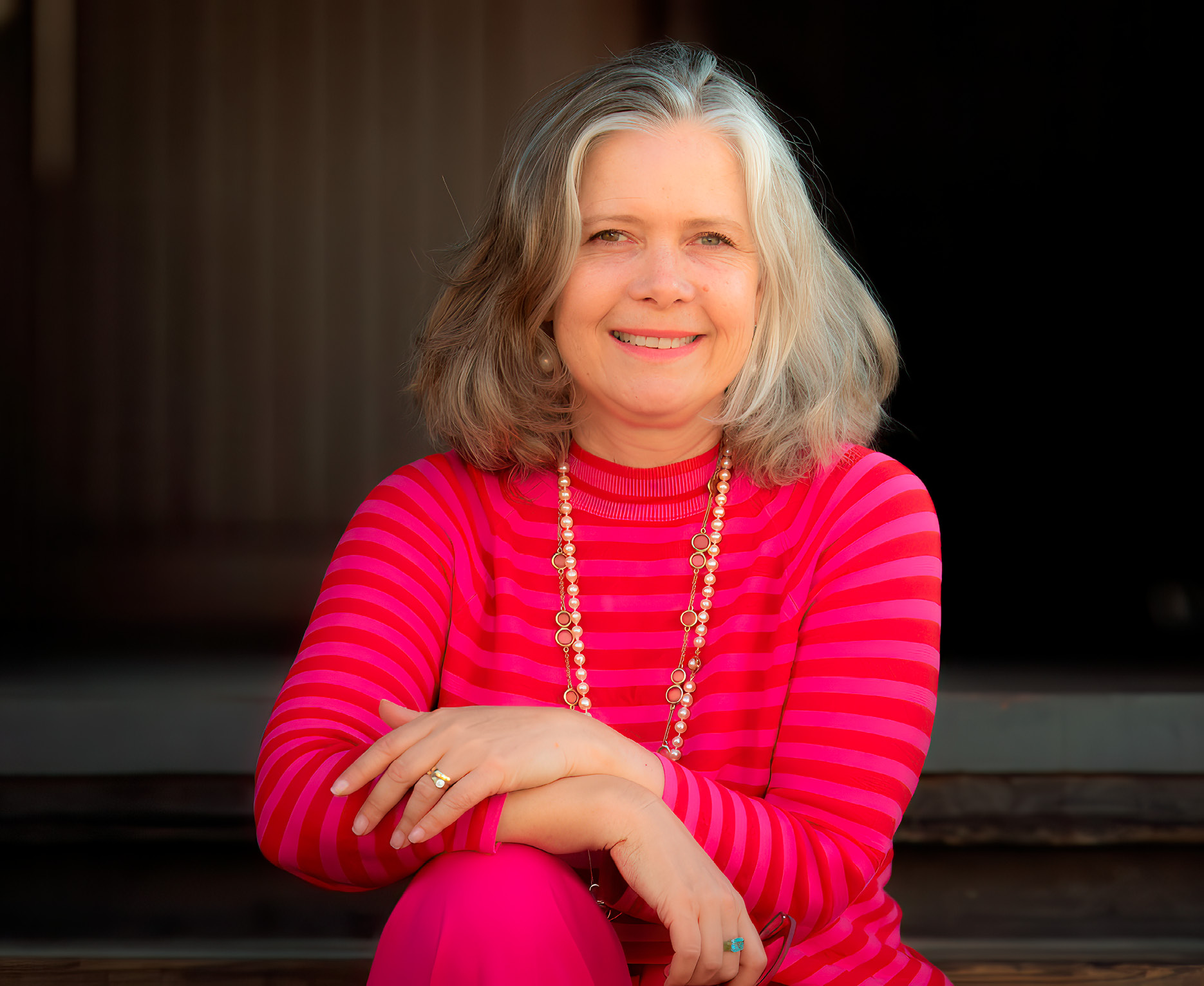
Charlotte Otter is the author of ‘We Need New Leaders: Mastering reputation management to reshape the C-Suite’.
