



Azola Mayekiso, the CEO of the National Housing Finance Corporation (NHFC), is on a mission to improve the lives of South Africans. The passionate executive sat down with Ralph Staniforth for a chat about all things housing finance, including the new era at the NHFC, supporting emerging developers, how the private sector can help, and the barriers many face when it comes to putting a roof over their head.
The National Housing Finance Corporation (NHFC) provides innovative and affordable housing finance solutions to the low-to-middle income market.
As a state-owned entity in the human settlements sector, supporting housing delivery through the provision of affordable housing finance is the entity’s mandate. The NHFC is a Schedule 3A entity according to the Public Finance Management Act, 1999.
Since opening its doors in 1996 under the guidance of the Department of Human Settlements (NDoHS), the NHFC’s funding focus has primarily been on social housing institutions, non-banking retail intermediaries, privately-owned property developers, construction companies, and investors in the affordable housing space.
The secondary focus has been on providing other forms of wholesale funding (equity and quasi equity) to help emerging developers with the equity contributions required to make their funding applications financially viable.
The merger of the Rural Housing Loan Fund NPC (RHLF) and the National Urban Reconstruction and Housing Agency NPC (NURCHA) into the NHFC in 2018 expanded the organisation’s mandate to include rural housing, as well as supplying bridging finance to developers and construction companies in the subsidy housing market.
Driving the operations and strategy of the NHFC in 2024 is Chief Executive Officer (CEO) Azola Mayekiso.
Since taking on the role in March 2023, Mayekiso has been hard at work capacitating the business by putting in place enhancements to processes & procedures and recently she’s bringing on board senior resources to help drive efficiencies both in the NHFC’s operations, as well as on the investments side of the organisation.
In addition, Mayekiso and her team have been crafting and implementing turnaround plans to better manage their post investment monitoring capacity and capabilities, both in terms of their collections practice and the technical monitoring of property portfolios of clients that they have funded.
This includes conducting internal enhancements and partnering with independent experts to assist in the turnaround plans, especially within their social housing portfolio.
Now, Mayekiso has been tasked with taking the entity into a new era, with a transition undertaking as well as a major incubation programme providing a major shift in focus for all involved.
A new dawn for the NHFC
In the very near future, the NHFC will be transitioning to the Human Settlements Development Bank (HSDB).
In terms of this development, Mayekiso explains: ”Strategically, we are working through a process of migrating the NHFC to become the Human Settlements Development Bank with an expanded mandate where we fund delivery of human settlements; not just housing.
“What this means is we will fund things like bulk and link infrastructure, as well as amenities. We will also get involved in coordinating affordable housing players during the planning phase and will play an active role in ensuring that mega human settlements projects reach financial close.”
The end goal is for the HSDB to be the go-to institution with respect to funding for all aspects of human settlements.
Additionally, the HSDB will play an advocacy role on behalf of the sector where the entity will try to influence policy reviews with the policy makers for the benefit of the sector, both from an end-user perspective, as well as in terms of the developers.
”If the HSDB is to fulfil its mandate as outlined above, then it needs to be capitalised by its shareholder and will also need to go to the capital markets to raise funds,” Mayekiso, who holds a Bachelor of Business Science degree from the University of Cape Town, continues.
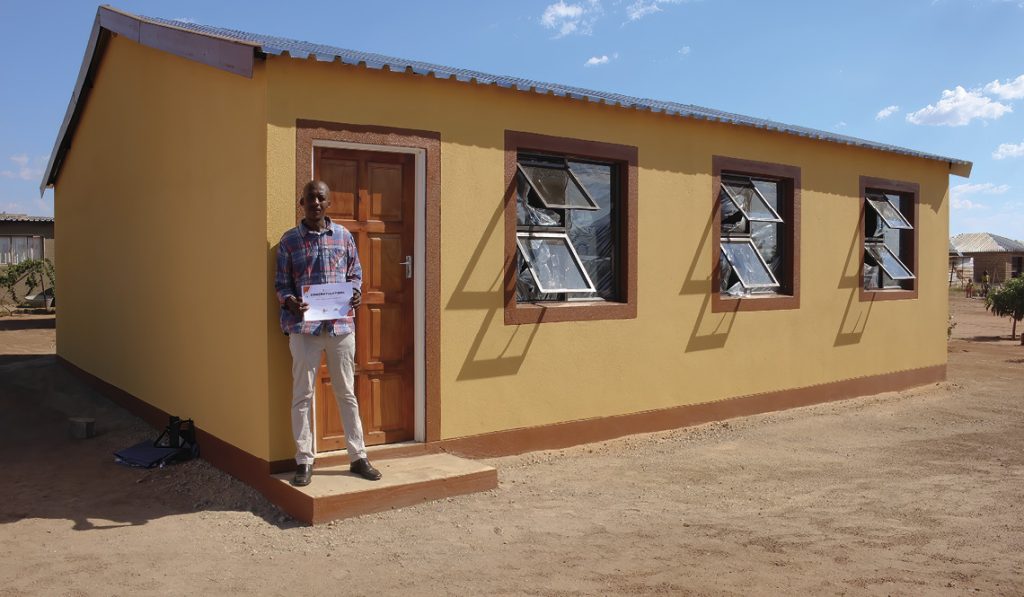
”The global Development Finance Institutions (DFI) that have funded us cannot wait for the HSDB to be established; accompanied by the injection of shareholder capital, because for them, they will be looking at a bigger balance sheet on the back of which they can inject bigger debt facilities to the HSDB.”
”They would like to provide us with bigger facilities than they did in the past because they love our mandate and want us to have a bigger impact on South African society.”
What this will mean for the average person on the street is that delivery of affordable housing will be accelerated, while blocked mega human settlements projects will be unblocked once they reach bankability.
”Once we launch the green housing fund, they will live in housing units that are solar powered, where water use is judiciously managed, and the building materials used are environmentally sustainable,” Mayekiso adds.
The launch of something special
The NHFC Emerging Developer Incubation Programme (NEDIP) is the talk of the town at the moment.
The programme is designed for those entrepreneurs with projects that have shortfalls and gaps that hamper them from securing project finance.
In other words, this is a game-changer for those struggling to get their projects over the line.
The programme, at its core, is intended to support developers reach the following milestones:
- Reach financial closure: Demonstrate financial viability, securing project finance, debt financing, and equity requirement where necessary.
- Mitigate technical and project management capacity risks: These are risks that may hamper completion of the project development (construction stage) within approved parameters in the specified time, technical quality for infrastructure and top structure, and completion cost overruns.
- Tenanting strategies: Support developers with rental projects to develop and execute effective rental revenue management, tenant management and facility management.
- Business sustainability and operational efficiencies: Enable the developers to internalise good business and development management practices.
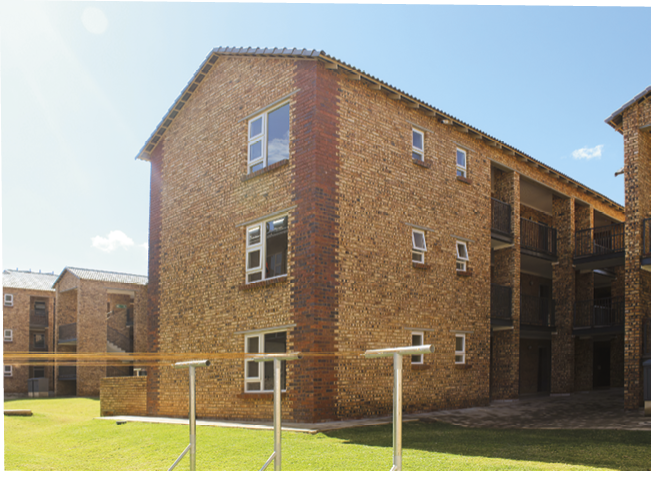
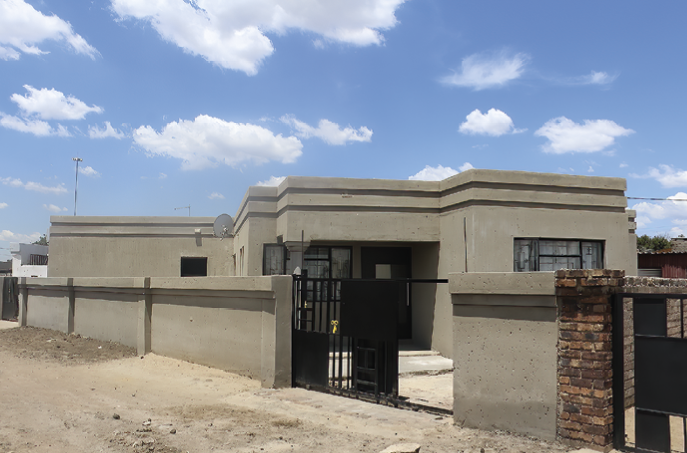
Mayekiso is particularly excited about what the programme will do with regards to market failure, which she places into two distinct categories:
- ”When funders receive applications for funding, they expect to receive fully packaged/bankable transactions that are ready for a full due diligence assessment. What we have found in the case of emerging developers is we have to do an enormous amount of hand-holding trying to help them package their transactions and bring them to a point where a fully-fledged funding assessment can be conducted on their transactions. This takes up a lot of the Lending team’s time and many months go by before there is a viable transaction to assess. The incubator is going to help the emerging developers with this aspect of the process pre-investment. The NHFC will fund this deal packaging aspect with our own enterprise development funds. This will help the NHFC team focus on actually conducting due diligence on transactions and will eliminate the hand-holding aspect, as this will be outsourced to an independent service provider that will assist the emerging developers on our behalf.”
- ”The second aspect where we believe this intervention will be instrumental is post investment but during the construction phase, as well as post the construction phase for the rental products. The incubator will provide technical capacity to help emerging developers execute on the projects successfully. They will do this by either supervising the professional teams that the emerging developers have put together or they will help the emerging developers assemble proven professional teams to execute on project delivery. Post construction, for the private rental, student accommodation, and social housing products, the incubator will assist with property management and asset management services in instances where the emerging developers do not have these capabilities in place. This is because in our experience, especially where social housing is concerned, the SHIs that we’ve funded have proven not to have the ability to manage tenants, rental collections are problematic, and delinquent tenant evictions are particularly challenging. The incubator will therefore be instrumental in putting measures in place to ensure that these important aspects will be taken care of.”
In general, incubation programmes are essential for helping entrepreneurs who might not have the broad set of competencies that are required to make their business a success.
This particular incubation programme, Mayekiso avers, ”is practical and will progress the emerging developers from one phase of the funding application process to the next, to a point where they get funding and are assisted during the construction phase, which is very risky, as well as post construction.”
The emerging developers who develop affordable housing for sale will also receive assistance on how best to market their products and secure the required pre-sales.
”The end goal is to help the emerging developers secure funding for their transactions, help them execute their developments successfully, and assist them to manage their properties post construction, so that they are to service the NHFC facilities until they are fully amortised,” Mayekiso, who obtained her MBA from the Dutch institution Hanze, continues.
”This intervention will contribute immensely towards transforming the sector and ensuring that black developers become serious players over time.
”Additionally, the intervention not only helps the sustainability of the NHFC, but also assists the developers develop a track record of successfully delivering on projects such that one day they will not need the NHFC funding and can be funded by the commercial banks.”


It is clear to see that the NHFC is trying to solve issues by creating initiatives such as the incubation programme, but what other issues within the sector still need to be solved as a matter of urgency?
One such issue is the cost of delivering a truly affordable housing unit.
The NHFC intends to work on this aspect by playing a facilitator role in the affordable housing value chain, as well as by influencing policy such that alternative building technologies that lower the cost of delivery and quicken the time of delivery are mainstreamed.
Once this is achieved, truly affordable housing will be a reality in South Africa.
”On the value chain side, we would like to support emerging manufacturers of building materials by putting them on our panel of material providers. This will mean that they are preferred material providers in the material undertaking programme that we are going to relaunch for the benefit of contractors that we fund for delivery of the Reconstruction and Development Programme (RDP) and Breaking New Ground (BNG) housing,” Mayekiso says.
”We will make the same database of emerging building material providers available to all the developers we fund so that they can access the materials cheaper and thus be in a position to deliver the housing units more affordably.”
The production of green housing units is another goal for the NHFC.
The entity already supports other delivery agents (ODAs) that are delivering green social housing units and they would like to encourage their developers to focus more on delivering green housing solutions going forward.
“Once we have engaged sufficiently with providers of climate funds in terms of how we need to prepare ourselves for receiving them, we will then launch a green housing fund and through it fund green housing developments,” she adds.
The success of the NHFC
Some of the more successful stories of late for the NHFC have been through their strategic investments with companies such as International Housing Solutions and the Trust for Urban Housing Finance.The NHFC have managed to leverage billions in investments into the affordable housing sector, which has translated into thousands of built units.
In terms of their lending activities, the NHFC have managed to support social housing institutions in an environment where commercial banks were reluctant to participate.
Some of these lending activities have become success stories, including having constructed some of the country’s flagship social housing units.
An Eastern Cape-based social housing institution established in 2001 (Own Haven Housing Association) is considered one of the success stories.
The Social Housing Institution (SHI) is currently servicing five facilities awarded by the NHFC over the years which have produced 1 999 units, with a further 659 currently under construction, with an expected completion of early 2025.
This will bring the units built by the SHI through the financing assistance of the NHFC to 2 658 units.
A second Eastern Cape-based social housing institution (Imizi Housing Utility NPC) has also grown considerably through the financing support of the NHFC, currently servicing five facilities which have produced 1 644 units.
”In general, considering all our lending and investment activities, the NHFC as at March 2023 has delivered cumulative housing opportunities of up to 800 000 across the length and breadth of South Africa. This is reported and demonstrable in our Integrated Annual Reports. The achievements of this past year are currently undergoing an audit by the Auditor General, and once confirmed will increase this figure,” Mayekiso explains.
The support of the private sector
The private sector plays a major role in assisting the NHFC when it comes to their First Home Finance grant, which is a once-off housing finance subsidy that enables qualifying beneficiaries to buy or build their first home on an affordable basis.
The NHFC is a national implementing agent for the NDoHS to distribute the once-off individual grant that facilitates affordable first-time home ownership to its intended beneficiaries.
Once the beneficiaries have been pre-approved for the grant, they can then shop around for a mortgage, an unsecured loan or a pension-backed mortgage, and use the grant as either a deposit or to pay for the transfer costs.
The banks or non-bank lenders then approve the mortgage, pension-backed mortgage or unsecured loan after considering the positive effects of the First Home Finance grant on the whole transaction.
The NHFC have already leveraged billions from the private sector for the benefit of beneficiaries of the First Home Finance grant.
To further strengthen this collaboration with the banking sector, the NHFC are due to sign a memorandum of agreement with the Banking Association South Africa (BASA) in the near future.
Another example of the NHFC’s collaboration with the private sector is their partnership with Cashbuild and Capitec for the Cashbuild Zakhelikhaya programme, which is targeted at their employees and customers.
Through this programme, the Zakhelikhaya beneficiaries who qualify for First Home Finance are pre-approved for the grant, they select a building plan they want from the range offered by Cashbuild through the programme, and then apply for a purpose loan from Capitec.
Cashbuild provides the building materials, the NHFC provides the First Home Finance grant, and Capitec provides the purpose loan for the building of the structure for the amount outstanding after the grant has been taken into account.
”We have also leveraged the participation of the private sector through our strategic investments where we have invested in private sector companies that play in the affordable housing space. Said companies have also attracted investment from other private sector funders. With our initial investments into some of these companies, we have managed to leverage billions of investment from the private sector,” Mayekiso explains.
While Mayekiso is grateful for the support of the private sector over the years, she believes that more can be done in partnership with the NHFC.
She is calling on more members of the private sector to step forward and help to make a difference in South Africa.
”With respect to funding delivery of low cost and affordable housing, however, the private sector can do more in terms of co-funding developers and contractors together with the NHFC. We equally would like to invite institutional investors to come alongside us when we launch our Equity Transformation Fund,” she adds.
The Equity Transformation Fund will see the NHFC invite institutional investors like pension funds, life companies, and other private equity funds to invest alongside the organisation to help even more emerging developers with the equity contribution that is required in order to make their transactions financially viable.
Barriers, pushback, and the future of housing
While the hard work of the NHFC has provided so much relief for South Africans over the years, the reality is that barriers to entry still exist for many.
Mayekiso believes that the Equity Transformation Fund will go a long way in helping bridge the gap where possible, but it is going to take other innovative ways to help as many people as possible going forward.
”We are mainly a debt provider and with any debt provider we cannot provide 100% of the project finance or working capital that is required to develop projects. There is always an equity contribution that is required from the project sponsors or developers,” she explains.
”One of the areas where we are intensifying our efforts is in getting our equity and quasi equity instruments redesigned and our valuation methodologies updated per product area, such that we are able to provide this equity support to emerging developers.”
”We have balance sheet capital that we can assist with but due to viability challenges, we have not managed to deploy it to our satisfaction, hence the effort to redesign the instruments at our disposal.”
Sadly, the NHFC does encounter a bit of resistance from communities where they want to house people. In some instances, such resistance is experienced by NHFC contractors on various social and economic concerns.
Some of the concerns pertained to the allocation of Breaking New Ground (BNG) houses, particularly where beneficiaries were of the view that the processes to allocate the houses were not transparent. This ultimately hampered progress on site, therefore delaying financing activities.
Some of the other pushback is in instances where the existing communities are not in favour of having affordable housing built ”in their backyards”, citing concerns around reduced property values, security, increased traffic, and a general fear of integration with lower income groups. This risk, Mayekiso says, is mitigated through ensuring that a proper municipal consultation process is conducted and verified well ahead of time.
”The clients of the NHFC have also further mitigated these risks by establishing forums such as a project liaison committees, which demonstrates necessary collaborative efforts by various stakeholders to ensure buy-in of the communities. These committees would typically include the developer, the main contractor, legitimate local business forums, the local ratepayers, community associations, the local ward councillors, and community policing forums. A Project Liaison Committee is therefore established in order to formalise this engagement and manage the buy-in of all relevant stakeholders,” Mayekiso says.
”In instances where communities or neighbours have taken developers to court during construction, the NHFC have provided moratoria to the developers, differing repayments, in an effort to ensure that legal processes are concluded and black developers in particular are supported during these lengthy court procedures which could in some instances bankrupt the construction project.”
One question which often gets asked when the topic of housing comes up is whether we will ever see a South Africa where shacks and informal settlements are firmly things of the past.
While Mayekiso admits that it is her dream to see every citizen living in a proper house, the reality is that the South African economy makes such a goal very difficult. However, while it may be just a dream right now, it is a dream very much worth pursuing for Mayekiso.
”My dream is for us to achieve that one day, however, all the additional living costs that are associated with owning a formal home can be a deterrent to South Africans, a lot of whom are poor and unemployed. The majority of those that are employed can barely make ends meet.
”So, the eradication of informal settlements is directly linked to the general prosperity of our nation and for as long as the economy is struggling and we do not get to a point where there’s an economic tide that lifts the entire prosperity of the nation, eradication of informal settlements might be a pipedream.
”Having said that though, the National Department of Human Settlements has an official programme of upgrading informal settlements nationally and budgets—which include the Informal Settlements Upgrading Programme Grant—for the cause, are allocated every year to the provinces and metros nationally. I do hope that through this programme, we can one day get there,” she concludes.
And we certainly hope that dream becomes a reality for the betterment of South Africa.
