

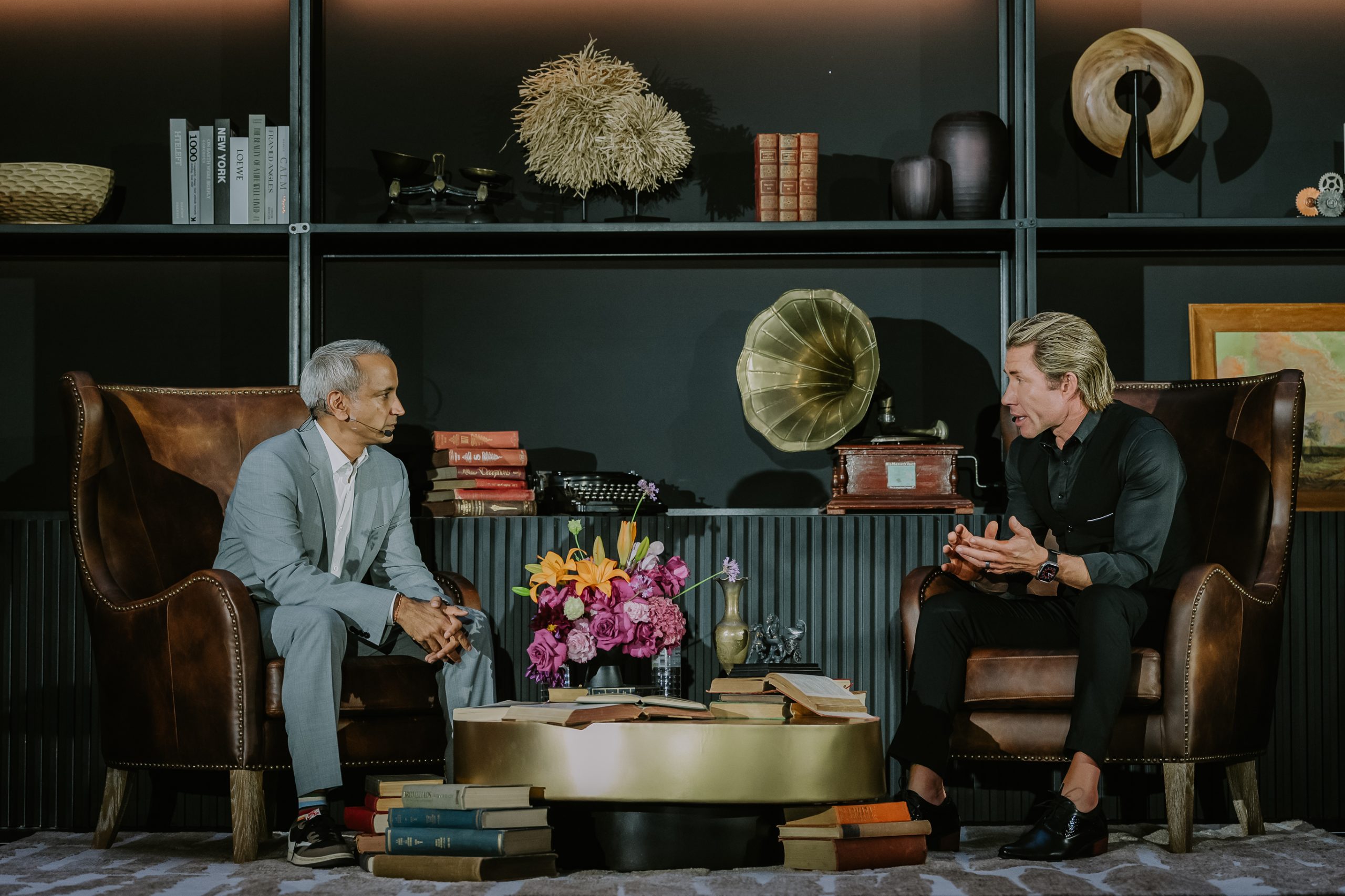
We all sleep, but do we sleep properly? Ralph Staniforth sat down with Chief Executive Officer of Discovery Vitality, Dinesh Govender, to explore how the organisation is using sleep as a way to curb ill health in South Africa and beyond–both now and for generations to come.
In 2025, Discovery Vitality published their ‘Sleep Factor’ report, a deep-dive into the world of sleep and its short- and long-term effects on the human body.
The findings of the report were an eye-opener for many. After 47 million sleep records were analysed, it was proven that a proper night’s sleep significantly reduces mortality, lowers disease risk, and improves driving safety.
The opposite is frightening.
The fast-paced world that we live in does not always allow for adequate sleep, therefore putting many in a much higher danger range for early death, disease, and other adverse effects and ailments.
Dinesh Govender, the Chief Executive Officer of Discovery Vitality, explains: “What became impossible to ignore from the report was the magnitude of the impact the findings highlighted. When you analyse over 47 million sleep records and see that poor sleep is linked to a 22% higher risk of death, it stops being a ‘lifestyle choice’. It becomes a clinical risk factor on par with smoking or physical inactivity.
“For me, the tipping point was realising that improving sleep isn’t just about feeling better, it’s associated with a materially lower mortality risk. At that point, inaction was a dereliction of our purpose. Sleep had to become a core pillar.”
Despite the overwhelming evidence, people still struggle to prioritise sleep.
While there are many factors at play in this regard, from a behavioural-science perspective, Govender believes the issues arise from the perceived lack of overall benefits that sleep provides–a dangerous game.
“Sleep is uniquely difficult to promote because it is invisible and its benefits are delayed. Unlike exercise, where you feel the endorphin rush, or eating, where you taste the food, the payoff for sleep is simply… not feeling terrible. Behaviourally, humans are hardwired for immediate gratification. We sacrifice sleep for Netflix, doom scrolling or work emails because the reward is now, and the penalty is tomorrow.”
And still, despite all the evidence, corporate culture continues to reward exhaustion and overworking.
The question now is, does the science force leaders to fundamentally rethink how they define productivity and performance?
Govender believes this is vital.
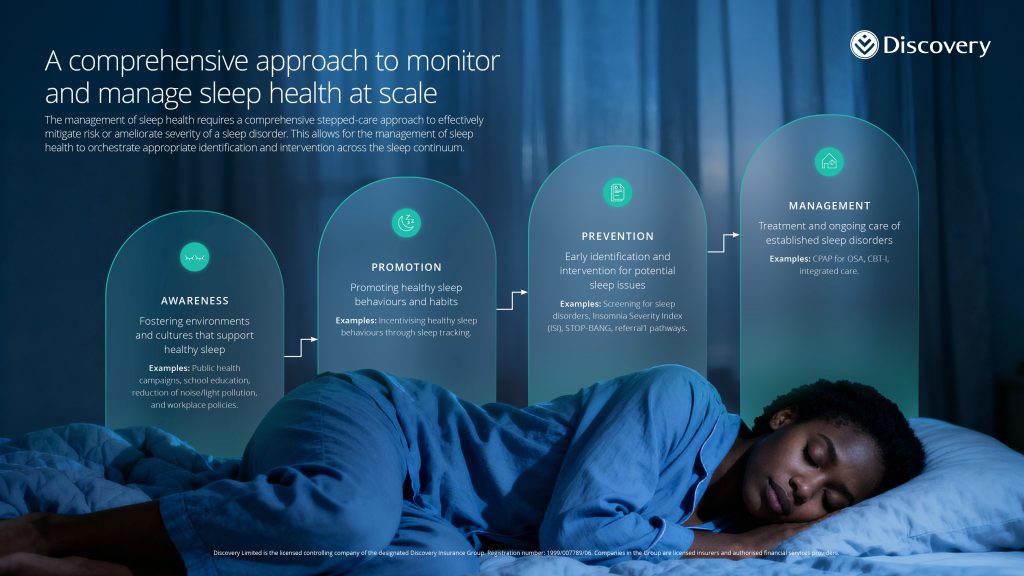
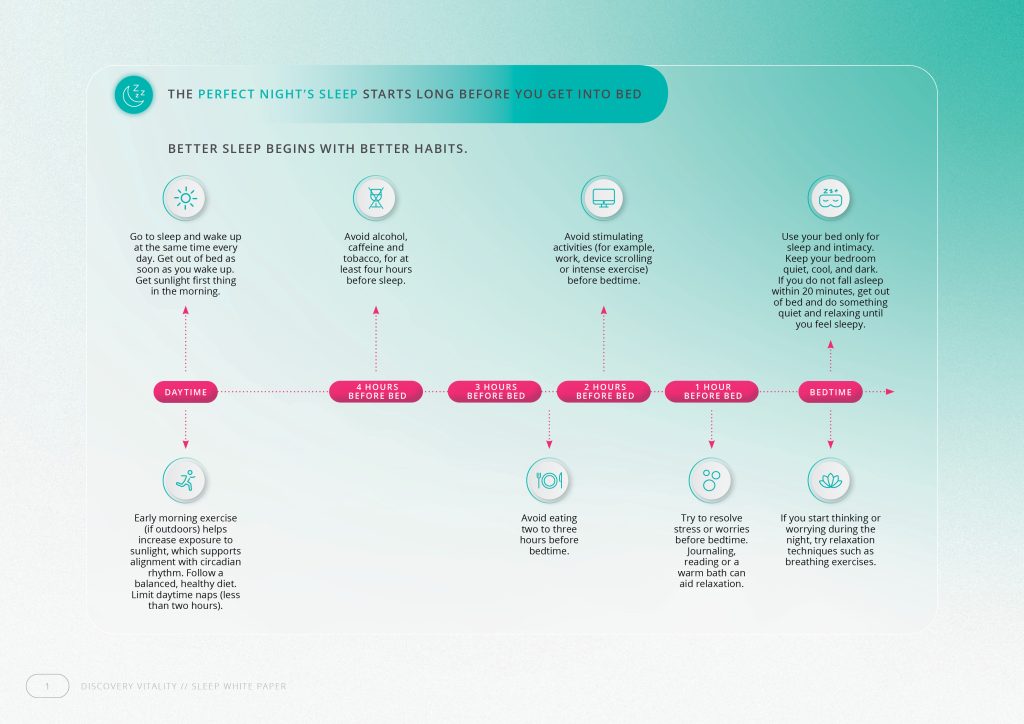
“The science is unforgiving on this point. The old belief that longer hours and burning the midnight oil signal commitment is not just outdated–it’s economically irrational. Poor sleep destroys cognitive performance, decision-making, and resilience. If you are a leader who wants high performance, sleep is not a trade-off; it is a prerequisite. The best leaders will shift from optimising for time to optimising for energy and recovery.”
With this in mind and backed by the report’s findings, Discovery Vitality has pivoted to launch their Sleep Rewards programme.Already armed with Vitality Active Rewards and HealthyFood Rewards, the missing piece of the puzzle involved the recovery stage–creating a holistic approach to well-being.
“You cannot optimise a machine if you ignore the repair cycle. Sleep Rewards completes the health loop. It allows us to influence the full cycle of health–how people move, eat, and how they recover. It makes our shared-value ecosystem truly holistic,” Govender shares.
The Launch of Vitality Sleep Rewards
Vitality has historically rewarded visible activity, gym visits, healthy food purchases, and health screenings.
As sleep centres on recovery and restoration, Discovery Vitality had to come up with a new model to ensure their vision for a healthy dose of sleep was adopted by their members.
This required a more nuanced approach.
Govender, who is a Chemical Engineer by training, explains: “You can’t just say ‘get 8 hours of sleep’ because that ignores individual biology. We had to design a system that rewards improvement.
“The Vitality Sleep Score doesn’t just look at duration; it analyses regularity and quality (REM and deep sleep). It translates complex data into a simple, personalised, and actionable goal. It’s not one-size-fits-all; it’s a tailored fit.”
This is where Discovery Vitality’s partnership with ÕURA came into being.
ŌÕURA are the creators of the smart ring–wearable tech which helps to keep track of a person’s vitals throughout the day and night.
With the help of these rings–which are the result of a decade of research and development, Discovery Vitality is now able to monitor a person’s sleep pattern and produce a Sleep Score, which contributes towards overall goals and long-term sleep improvement.
“ÕURA is the gold standard for sleep and recovery tracking. They combine clinical-grade accuracy with an elegant user experience. You actually want to wear the ring. This partnership signals our direction of travel: we integrate best-in-class technology to make our behaviour-change platform more powerful,” Govender says.
“We share a commitment to using science to help people live healthier, and we are thrilled to bring the Ring 4 exclusively to South Africa.”
Wearable technology in general is becoming increasingly central to preventative healthcare.
As Vitality expands deeper into this space, it is vital that this type of innovation remains practical, accessible, and relevant across all the different consumer realities.
For Govender, inclusion is a non-negotiable, as if innovation only serves the few, it breaks Discovery Vitality’s shared-value model.
“This is precisely why we built a multi-layered ecosystem. Yes, we have the premium URA Ring integration, but we also allow tracking via Apple, Garmin, and Samsung. And for those without wearables, we are launching the in-app Vitality Sleep Tracker using your phone’s sensors.
“Everyone deserves the chance to sleep better,” he insists.
The Sleep Rewards programme has since been integrated across the Vitality, Health, Insure, and Discovery Bank properties.
As a result, it has strengthened the broader shared-value model Discovery has built over time–with Govender admitting that sleep is now very much seen as the ultimate connector.
“Better sleep improves health outcomes (Vitality/Health), reduces the risk of vehicle accidents (Insure), and even improves financial decision-making (Bank). By embedding sleep across the ecosystem, we create a virtuous cycle,” Govender says.
“The member lives better, the insurer manages risk better, and society benefits from safer roads and lower healthcare costs. That is shared value in action.”
Vitality as a Global Behaviour-Change Platform
Vitality is increasingly recognised as one of the world’s leading behaviour-change platforms.
This is in a big way thanks to the work that goes on behind the scenes, with 25 years of data science and clinical research contributing to the complex behavioural economics engine that lies beneath the surface of the hugely popular rewards programmes.
“Anyone can give you a coffee voucher for walking. The hard part–the secret sauce–is knowing exactly how much to nudge, when, and for whom, to drive sustained change. It is a difficult equation to replicate, which is why we remain the leaders,” Govender explains.
With the advent of AI-driven Personal Health Pathways now incorporating sleep, we are inching ever closer to a truly personalised and predictive healthcare ecosystem for millions of people.
This, Govender says, has helped Discovery’s transition from “reactive sick care” to “proactive, personalised prevention”.
By combining AI with their rich behavioural datasets, Discovery can now predict risk, tailor sleep goals to a specific health profile, and intervene before illness sets in.
“Sleep is the latest, most powerful input into that engine,” Govender adds.
While the work of Discovery is proving to be game-changing, operating with enormous volumes of behavioural and health data has raised concerns that behavioural nudging may well become overreach, potentially crossing an ethical line.
While Govender is fully aware of these concerns, he has moved to alleviate them by insisting that “transparency and value” are of the utmost importance.
“Our role is to empower, not manipulate. As long as a member understands exactly how their data is used–and as long as they receive clear, tangible value (financial rewards, better health) in return–then nudging is a force for good. The moment the value is unclear, we have overstepped,” he shares.
A CEO’s Journey and Philosophy
Govender, who is also a member of the Discovery Executive Committee, has been with the organisation since 2010, previously holding the position of Chief Marketing Officer before moving into the Chief Executive Officer of Discovery Vitality role in 2018.
Prior to joining Discovery, Govender was a consultant at McKinsey & Company. He holds an MBA from Harvard Business School (2004) and a BScEng (Chemical) from UKZN (1998).
Govender’s evolution as a leader has been a unique journey, with the transition shaping his leadership philosophy and understanding of behaviour change.
He is very much a servant leader and believes that titles mean little if the impact you are making does not leave a lasting effect.
“Before I became Discovery’s CMO, I was a consultant, and before that, I was an Environmental Technologist at an oil refinery. Wherever I am, I thrive in working with great people on tough challenges to have an impact. I love problem-solving; and changing people’s behaviours to help them live longer, healthier, happier lives. It is a great challenge,” he says.

“In my role as Vitality CEO, I focus on ensuring that we don’t just launch innovative programmes, but that those programmes fundamentally alter how people live their lives.”
As Govender helps usher in the new era of sleep within the Vitality stable, does he actually walk the walk–or sleep the sleep, so to speak?
While he admits that he has had to confront his own hypocrisy, given that he used to take great pride in responding to emails at midnight, he now fully understands the importance of a good night’s rest and is intentional about maintaining good habits.
Now, I treat sleep as a non-negotiable meeting. I’ve made minor changes to late-night-eating habits and avoid exercising late. But the biggest change has been setting a bed-time alarm, which is frankly much more powerful for your health than a wake-up alarm. My wife has set a wind-down alarm that reminds us to prepare for bedtime, and it’s had a demonstrable impact on my Vitality Sleep Score,” he shares.
While leaders aren’t always comfortable talking about legacies, particularly when still fully entrenched in their work, Govender is open and honest about what he wants to be remembered for and the impact he wants his work to leave.
“I want my legacy to be that we shifted the world from a sick-care to a health-care mindset. That we proved prevention is not just cheaper than cure–it is smarter. The result would manifest in millions more years of healthy life for more South Africans.
“More broadly, I want to see that a South African company, born in Johannesburg, has been able to build a global platform for behaviour change that improves lives at scale. That is the ultimate shared value,” he concludes.
And we wish you nothing but the best as you continue to make a difference to millions of lives through your dedication to the healthcare cause.
Ralph Staniforth