

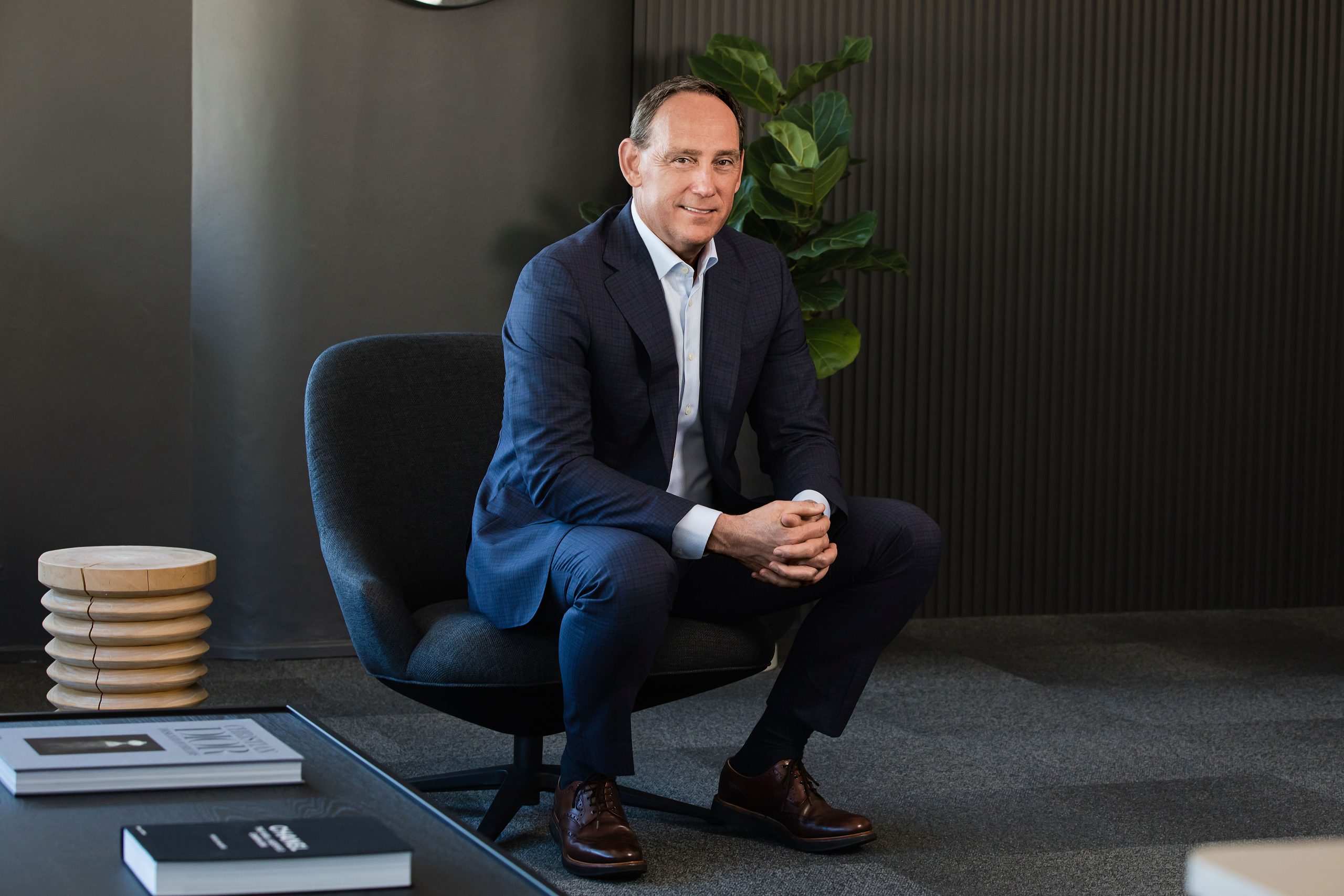
From South Africa to Singapore, Beijing to Rome, Moscow to San Francisco–Roy Bagattini reflects on culture, leadership and the human side of global business.
Over three decades, Roy Bagattini led major organisations across South Africa, Western and Eastern Europe, The Americas and Asia. As Group CEO of Woolworths Holdings Limited, and previously in senior leadership roles across global consumer brands, he has guided businesses through vastly different political, cultural and economic environments.
As he prepares to close this chapter of his executive career, Roy reflects on what global leadership taught him about people, culture, family and why South African leaders may be uniquely equipped for an increasingly complex world.
You’ve spent 30 years leading businesses across five continents. Looking back, is leadership universal, or fundamentally shaped by context and culture?
Roy Bagattini: I think it depends on the underlying assumption of what a leader’s role is. In some cultures, leadership is defined in a traditional, hierarchical way, and I suppose those conventional components are reasonably universal.
For instance, in places like Russia or China, there is often an expectation that the ‘boss knows best’, gives direction, and everyone follows. This tends to create highly compliant organisations that execute clearly against direction.
On the other hand, in most democratic environments, including South Africa, successful leadership is less about being directive and more about inspiring others and being collaborative. In these markets, successful leadership is more about building alignment around a clear and credible vision. Additionally, in these workplaces, to get things done, there needs to be a focus on mentorship and learning, underpinned by shared values.
The two approaches look very different, and in some ways, effective leadership is shaped by context and, as an expatriate leader, I learnt that being sensitive to the culture and environment, even if one deliberately pushes boundaries, is critical to success.
While styles may differ, the one thing that is remarkably universal to me is this: people want to feel respected. They want to feel heard. They want to believe they matter.
No matter where I’ve worked in the world, I’ve found that when people feel genuinely respected and listened to, they grow in confidence and capability. To me, that is the universal part of leadership.
At its most fundamental level, I believe leadership is about having a positive impact on people.I want the people I lead to be better off and go further, because I was their leader.
You’ve led in environments as varied as Singapore, Moscow, Rome, Hong Kong and San Francisco. How did you adapt your leadership style in each place?
Roy Bagattini: After an immensely enriching thirty years working across five continents, I’ve come to believe my most important lessons in leadership were never really about strategy. They were about people.
While competence and accomplishments matter enormously because they create credibility and build trust, they are not enough on their own. Over time, I learned that leadership is ultimately judged by the impact you have on people.
The simple and honest answer is that genuine curiosity and respect need to be the entry point. In approaching new assignments and roles, I was always conscious of the immense privilege of being invited to work in another country, and I never believed arriving with a title meant I understood the culture.
I’ve seen expatriate leaders fail because of a mistaken sense of superiority. The quickest way to lose credibility in a new environment is to assume your way is the right way before you’ve truly listened.
In every country I worked in, I made a conscious effort to immerse myself among local communities and within their cultures. In India, for example, I made an effort to understand colloquial phrases, humour and social dynamics. I watched Bollywood movies and also relied on my team to better connect to local culture, understand what made people laugh and how relationships worked.
Humour has always been an important way for me to connect with people, but I learned quickly that even humour is cultural and needs to be nuanced and sensitively relevant.
One also learns quickly that decision-making itself is cultural. In China, for instance, decisions would often happen outside the workplace, in social settings, over dinner, or even at a karaoke bar, with an unspoken understanding that once formal barriers are removed, trust-building becomes easier. In these informal settings, we would often discuss, agree, and then the next day, formally rubber-stamp decisions in meetings.
In Russia, I found people expect clear direction and want accountability only for what they’ve been explicitly told. Singapore was more competency-based. People respected leaders who demonstrated deep knowledge and expertise.
South Africa, in my experience, is a blend; hierarchies matter, but there is also a powerful emphasis on employee empowerment, participation, equality and inclusivity. This has very much been my experience at Woolies.
The biggest lesson, at the end of the day, is that curiosity, adaptability and humility trump any generic leadership approaches when it comes to working in new environments.
Were there moments where working internationally changed your perspective on leadership?
Roy Bagattini: Absolutely. Living and leading across multiple countries forces you to confront your own assumptions.
My experience certainly wasn’t without its fair share of cultural faux pas. I still remember rather embarrassingly being the first person to arrive for dinner at one of our Indian partners’ homes, only to discover the other guests arriving almost two hours later. I quickly learned that an 8pm invitation did not necessarily mean 8pm!
When you grow up and build your early career in one environment, you naturally start believing certain ways of thinking or operating are “normal.” International exposure teaches you that many of those assumptions are cultural, not universal.
It also teaches patience and perspective. There were times where I initially misread situations because I was interpreting them through my own lens rather than understanding the local context properly.
Leadership abroad has also made me deeply appreciate how much trust is earned, and never guaranteed. At senior levels especially, people rarely give you their full trust immediately. You earn it slowly, through consistency, humility and respect, rather than authority.
And perhaps most importantly, working internationally reinforced for me that leadership becomes less about having all the answers as you mature, and more about creating environments where people can contribute at their best.
What role did family play in your international career decisions?
Roy Bagattini: Every move we made was a family decision, never simply a career decision.
As a family, we looked carefully at what each move would mean for all of us–not just professionally, but personally.
Before our first international move, I remember my boss phoning my wife directly to discuss the opportunity with her. At the time I thought that was quite unusual, but looking back, it reflected an important truth: global careers only really work when the whole family is aligned and supported.
For me, family was non-negotiable. I don’t believe you can lead effectively if your family is on the other side of the world.
The moves brought enormous richness to our lives. We shared adventures we otherwise would never experience, and I wouldn’t trade those years for anything.
Of course there were sacrifices too. At times I worried about my son not having the continuity of one school system or one friendship group. But today he has friendships and perspectives that span the world. Looking back, those shared experiences made us incredibly close as a family.
What advice would you give young people who want to build meaningful careers today?
Roy Bagattini: Work hard. Be dependable. Stay curious. Those things sound simple, but over time they become powerful differentiators.
Early in your career, focus less on status and more on capability. Focus on becoming genuinely good at something. The modern tendency to “follow your passion” can sometimes be misleading. In reality, passion often follows mastery. People become passionate about things they become good at, not the other way around.
I’d also encourage young people to stay adaptable and open-minded. The world is changing incredibly quickly, and careers are far less linear than they used to be. The people who tend to succeed over time are not always the smartest people in the room. More often, they are the ones most willing to learn, evolve and stay resilient through setbacks.
Take risks, seize opportunities. Some of the most valuable periods of growth come from doing difficult, sometimes unglamorous work, exceptionally well.
And finally, remember, how you treat people matters. Your reputation is built long before you become senior–through the small decisions, the difficult moments, and whether people experience you as respectful, accountable and constructive.
How about people who are further along their leadership journey–do you have advice for people working in senior positions who might lead other leaders?
Roy Bagattini: Leading senior leaders is fundamentally different.
Earlier in your career, leadership is often more operational and instructional. At executive level, people are already highly capable and successful. They’ve developed instincts and leadership styles that have served them well over many years.
At that level, leadership becomes far more about alignment, judgment and trust.
One of the realities of senior leadership is that highly competent executives can still create dysfunction if trust breaks down or if alignment around purpose weakens. You can have a room full of intelligent people pulling in slightly different directions and create enormous organisational drag.
I’ve learned that mature leadership requires emotional restraint at times. It requires listening properly, resisting ego, and understanding that influence is often more effective than authority.
And perhaps most importantly, leadership can feel lonelier as you move upward. There are fewer people who will tell you difficult truths unless you consciously create an environment where they feel safe to do so.
Having led both globally and locally, what do you believe South African leaders uniquely bring to the world stage?
Roy Bagattini: South African leaders are generally resilient, adaptable and deeply people-oriented, largely because of the environment we come from.
South Africa forces leaders to operate with paradoxes every day. We experience extraordinary resilience alongside deep inequality; world-class capability alongside structural constraint; optimism alongside frustration. That environment forces leaders to engage with complexity rather than avoid it.
I also believe South Africans have a strong instinct for humanity and social justice. You cannot lead effectively here without understanding the importance of dignity, inclusion and the ability to see the humanity in every individual.
One of the most important things I learned early in my career was that people, no matter what role they perform, genuinely want to do a good job, contribute positively and feel proud of what they do when they are treated with respect. That belief has shaped the kind of leader I’ve tried to be throughout my career.
Looking back now, I realise the foundations I built in South Africa prepared me exceptionally well for global leadership. The further I travelled, the more I appreciated where those instincts came from.
In the end, people rarely remember leaders purely for the results they delivered. What they remember most is the impact those leaders had on them personally–how they made them feel.
That, ultimately, is the real work of leadership.