

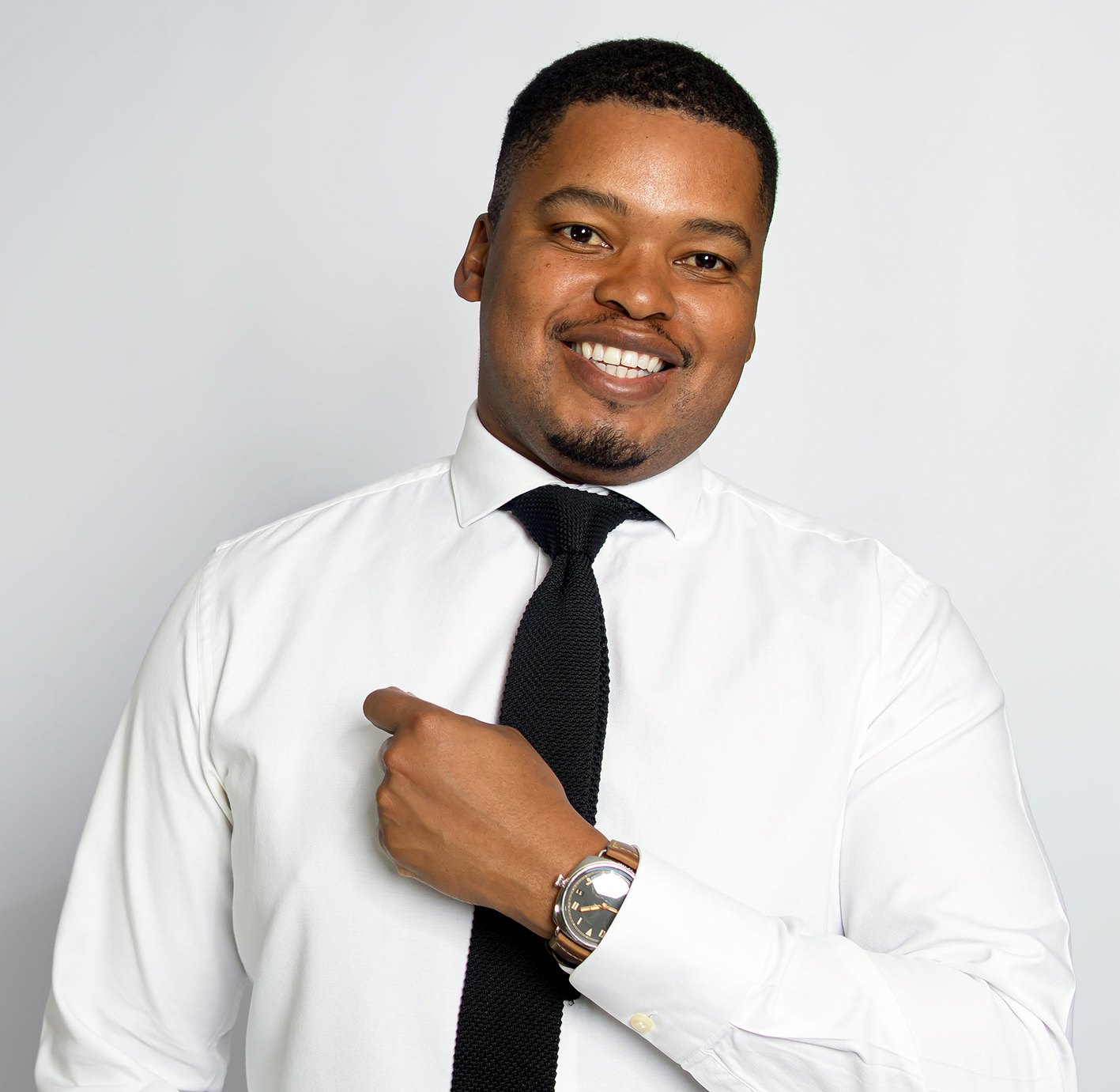
Olona Majikijela delves into the leadership of Masande Dyasi
In a world where technology evolves faster than most organisations can adapt, few leaders stand out for bringing clarity to complexity. One of them is Masande Dyasi, Managing Director of Sourceworx, who has built a leadership philosophy rooted not in the allure of technology but in its purpose.
For Dyasi, leadership is not about leading people into the future blindly. It is about aligning technology to real business problems, creating environments where people are empowered to think critically, and serving Africa’s unique context with solutions designed for its realities. His career has been shaped by a simple yet powerful observation: complexity does not guarantee value. Clarity does.
The Early Shift: From Overengineering to Purpose
Dyasi’s leadership journey began with a sharp realisation. Many technology projects do not fail because of the lack of skill or resources. They fail because they are misaligned with the lived realities of the people meant to use them. He recalls seeing organisations invest significant budgets into systems and tools only to find that they were not fit for purpose.
“The projects that succeeded were those where technology was critically aligned with real customer priorities,” he reflects.
This discovery became foundational to his leadership approach. Rather than chasing complexity or cutting-edge trends, he pursued disciplined simplicity. In his view, leadership in tech is not defined by how advanced the tools are, but by how effectively they serve people.
Sourceworx: A Repositioning with Purpose
When Dyasi took leadership at Sourceworx, he recognised that remaining a standard IT services provider would not be enough to make meaningful impact. The African technology landscape had a clear gap. Businesses were investing in technology but were not always seeing measurable business outcomes. Something needed to change.
Under his leadership, Sourceworx repositioned itself as a strategic technology partner. To do this, he began engaging directly with C-suite leaders and converting their strategies into practical implementation. Transformation became a business-led process rather than a technology-led one. The rule was simple: strategy first, technology second.
However, transformation could not only rely on systems and frameworks. It required people who were skilled, aligned and confident. Dyasi prioritised upskilling teams, building capacity and fostering a culture of clarity where people understood strategic intent and could deliver measurable outcomes.
He is guided by a simple belief: technology should enhance human capability, not replace it. This principle continues to guide Sourceworx today.
EdVantage: Innovation Rooted in Context
The COVID-19 pandemic became a defining moment for Sourceworx. Across Africa, educational and training institutions faced a crisis. Skills development programmes came to a standstill. Global learning platforms existed but they could not adapt quickly enough to local realities.
Instead of waiting for solutions, Sourceworx built EdVantage, a learning management solution designed specifically for the African context. It enabled seamless remote delivery, real-time learner management and quick programme scaling. It responded to real needs instead of imposing generic models.
Many institutions later used its structure to formalise blended learning approaches. EdVantage proved that technology does not need to simply imitate global solutions. It can originate from African challenges and respond directly to them.
It also became a real example of Dyasi’s philosophy in motion: when technology understands its environment, it becomes powerful.
Leadership Through Hard Choices
Dyasi’s leadership did not evolve in comfort. Instead, it was tested through difficult decisions that shaped his understanding of integrity, strategy and resilience.
In 2010, following early successes in South Africa and Kenya, he made the difficult decision to part ways with his partners because of a misalignment in vision. It was a moment of reflection that forced him to ask himself what kind of company he wanted to build. The experience reminded him that leadership is anchored in integrity, even when decisions are not easy.
Several years later, he made another bold shift. In 2017, as major contracts were nearing renewal, he redirected the company’s strategy toward strengthening Original Equipment Manufacturer partnerships and pursuing accreditations. The decision required sacrifice and long-term commitment. However, it later positioned Sourceworx for sustainability and relevance in the market.
Both decisions shaped his leadership in profound ways. They taught him that leadership is not about comfort. It is about values and long-term clarity, even when the impact is not immediately visible.
His Leadership Philosophy: Minimal Viable Solutions
One of Dyasi’s strongest leadership beliefs is rooted in the principle of the minimal viable solution. As technology evolves rapidly, teams are often tempted to gravitate toward advanced features and tools. Yet, for him, innovation must be practical, scalable and tied directly to measurable outcomes.
The question he constantly returns to is: What is the simplest version of this solution that will still solve the problem effectively?
He believes that organisations often over solve problems or implement systems that do not align with the actual needs of employees or customers. This results in wasted resources and fragmented implementations.
By focusing on clarity, relevance and outcome-driven models, Dyasi ensures that innovation is purposeful rather than performative.
Resilience in Teams: The Power of Questioning
The culture at Sourceworx reflects one of his core leadership principles: resilience through open dialogue. Teams are encouraged to challenge assumptions, ask questions and interrogate problems. Junior team members are given space to contribute ideas rather than simply follow instructions.
“Resilience comes from cultures where questioning is encouraged, not suppressed,” he explains.
This approach ensures that solutions are examined from multiple angles and potential gaps are identified early. It also builds strong alignment between strategy and implementation.
For Dyasi, leadership is not about having all the answers. It is about building spaces where the right questions can be asked freely.
Africa’s Technology Future: Beyond Replication
Asked whether Africa needs its own model of digital transformation, his response is direct: Africa’s challenges and strengths require unique approaches. Our continent has a history of developing inventive solutions while operating within limited resources. These constraints have often led to more creative, flexible and efficient problem-solving than conventional methods.
He refers to M-Pesa, developed in East Africa in the mid-2000s, as one of the best examples. It transformed financial inclusion and inspired a global wave of mobile money solutions. M-Pesa succeeded because it was rooted in African realities such as mobile-first behaviour, informal trade systems and infrastructure limitations.
Africa does not need to replicate global standards. Instead, it needs to build on its strengths: community-driven innovation, agile thinking and strong mobile ecosystems. These strengths position Africa to create globally relevant solutions while remaining grounded in local context.
Strategic Partnerships and Africa’s Next Phase
With South Africa preparing for the 2025 G20 Presidency, there is a growing focus on advancing digital transformation across key sectors.
Agriculture and healthcare have been identified as strategic priorities for Africa’s growth. Technology in these areas is becoming critical for strengthening food security, enhancing productivity and building resilient health systems.
Dyasi believes that strategic partnerships play a vital role in unlocking Africa’s innovation potential. However, strategic alignment and access to capital are still challenges. President Cyril Ramaphosa has called for G20 bodies to ease access to finance for African economies. Without affordable capital, high-impact technology cannot scale.
He argues that partnerships should move beyond transactional arrangements and instead drive capacity building, shared infrastructure and talent development across borders. He also believes that collaboration among African countries is essential. With complementary strengths and emerging innovation hubs, African countries can build shared digital ecosystems that scale regionally and beyond.
What He Looks for in People
When hiring or collaborating, Dyasi is drawn to individuals who possess curiosity, integrity and a desire to improve every environment they engage with. Skills alone are not enough. He values character, learning agility and the ability to think beyond one’s role.
His leadership style aims to build a human-centred approach, even within an industry driven by systems, automation and data. He believes that technology should empower people rather than replace them. By enhancing productivity, elevating job satisfaction and creating environments where people can think differently, he hopes to build organisations that are both efficient and humane.
Advice to Young African Leaders
To young leaders in the technology space, he offers advice that goes beyond ambition. He encourages them to solve real problems, rooted in real contexts. Technology should not simply imitate global trends. It must respond to people, industries and communities that need meaningful solutions.
He encourages leaders to value cross-disciplinary collaboration. The most powerful innovation, he believes, happens at the intersection of different fields. He urges young African innovators to stay rooted in their environment but to think globally. Some of the most transformative ideas in the world were born in Africa because they were designed for African realities.
Looking Ahead: A Leadership Vision for the Next Decade
As Africa steps into a new digital era, Dyasi believes the next major differentiator will not be access to technology but how leaders choose to apply it. The future, in his view, will reward organisations that can connect strategic intention with practical delivery and build solutions that are both commercially viable and socially valuable. He strongly advocates for leadership models that blend ethical decision-making with innovation, noting that progress without accountability often creates solutions that exclude the people who need them most.
His long-term vision extends beyond Sourceworx. He hopes to help shape a generation of African leaders who are confident enough to question inherited systems and imaginative enough to create their own. Technology may drive change, but it will be values, integrity and strategic courage that determine the future of African business. “If we can build in a way that reflects our reality and serves it well,” he says, “Africa will not follow global shifts. It will help define them.”
Legacy and Reflection
Beyond Sourceworx, Dyasi wants to contribute to a business landscape where strategic alignment, operational excellence and human-centred innovation are normalised. His hope is that African businesses become globally recognised not only for creativity but also for their efficiency, impact and scalability.
When asked what leadership means when no one is watching, his answer captures the essence of his journey.
“Leadership when no one is watching is about integrity, accountability and making quiet decisions that shape culture. It is the discipline to do what is right, even when it is difficult or unseen.”
Masande Dyasi’s leadership may appear calm from the outside. But beneath the surface is a relentless drive for clarity, alignment and purpose. His story reminds us that real transformation does not begin with technology. It begins with the courage to think differently, the discipline to act with clarity and the belief that Africa does not need to wait for the future. It can build it.
With vision, integrity, and deep strategic alignment, he is proving that Africa’s most powerful technology is its leadership.
Olona Majikijela is a Junior Account Director at the Sgwili Media Group.