

South Africa can still influence its own
economic future, writes Nasiphi Ndevu
South Africa entered 2026 with renewed hope that the economy was finally beginning to turn a corner. Inflation was close to the Reserve Bank’s 3% target, interest rates had started to come down, and the national budget provided some reason for optimism. After years of weak economic growth, there was a growing feeling that the country could finally move towards a stronger and more sustainable recovery.
However, that optimism has been tested by a difficult second quarter and a worsening global economic environment. South Africa’s economy contracted by 0.2% in the second quarter of 2026 after six consecutive quarters of growth.
The setback has raised fresh questions about the strength of the country’s recovery and whether the economy can withstand external shocks while also dealing with its own long standing structural challenges.
Speaking on Classic Business during The Week That Was, Professor Raymond Parsons of the North West University Business School and the University of the Western Cape said South Africa’s recent economic setback needed to be understood in the wider global context. He argued that the country’s recovery had not been completely derailed but had been severely interrupted by the global energy crisis.
Professor Parsons pointed out that South Africa began the year from a relatively positive position. Inflation had moved closer to the Reserve Bank’s target, interest rates had been reduced, and there was a positive mood following the national budget. At the beginning of the year, the broad economic forecast was for growth of around 1.6% in 2026. That outlook has now changed.
The global energy crisis, rising oil prices, and other international pressures have created a difficult environment for countries that depend heavily on imported energy. South Africa is one of those countries. As oil prices rise, the pressure is felt across the economy through higher fuel prices, transport costs, food distribution costs, and the cost of producing and moving goods. Professor Parsons believes the key question is no longer simply what caused the contraction. The more important question is what South Africa can do from this point forward.
“We need to recall where South Africa was at the beginning of 2026,” he said, explaining that the country had entered the year with genuine signs of improvement. The latest contraction therefore represents a serious setback, but it does not necessarily mean that the recovery has come to an end. For Professor Parsons, the country still has important cards to play. These cards are mainly linked to domestic policy and structural reform. While South Africa cannot control the price of oil or global economic conditions, it can control how quickly it addresses problems within its own economy. This makes structural reform more important than ever.
Professor Parsons stressed that South Africa now needs to provide much stronger evidence that its reforms are visible, irreversible, and tangible. For many years, structural reform has been discussed as an important solution to South Africa’s economic problems. However, announcements and plans do not automatically translate into stronger economic growth, more investment or more jobs. The challenge is implementation. The professor argued that South Africa needs to move beyond political statements and demonstrate that reforms are producing results. This is particularly important in areas such as electricity and logistics, where there have been some signs of improvement.
Electricity supply and the performance of the country’s logistics system have a direct impact on businesses. When electricity is unreliable, companies face higher costs and interruptions to production. When ports and rail systems do not operate efficiently, businesses struggle to move goods, while exporters become less competitive.
There have been some positive developments. Transnet, for example, has reported a return to profit after several difficult years. Eskom has also been working through its own challenges. But Professor Parsons believes that the real test will be whether these improvements eventually result in increased private investment and stronger fixed capital formation.
In other words, South Africa needs to see businesses putting more money into factories, equipment, infrastructure, and other productive assets. This is where confidence becomes important. Businesses are more likely to invest when they believe that the economic environment is becoming more stable and predictable. Policy announcements can help create confidence, but confidence ultimately needs to be supported by evidence of real change.
Professor Parsons said South Africa needs to build on the latest phase of the partnership between government and business. This partnership focuses on several crucial areas of the economy and is now moving towards what he described as “hard targets” and faster implementation. For him, government and business cannot work in isolation if the country wants to achieve stronger economic growth.
The private sector has an important role to play in investment, job creation, and economic activity, while government has an important role in creating the right policy environment and addressing infrastructure and regulatory barriers. The two sides therefore need each other. Professor Parsons made it clear that South Africa must recognise that some of the commitments made through the government and business partnership can only be achieved by working together with the private sector. This is particularly important at a time when global conditions are becoming less favourable.
Oil prices have become one of the biggest threats to the economic outlook. During the discussion, Warwick Lucas, Private Clients Portfolio Manager at Vunani, warned that oil prices above $100 a barrel could have serious consequences if they remain at those levels for an extended period.
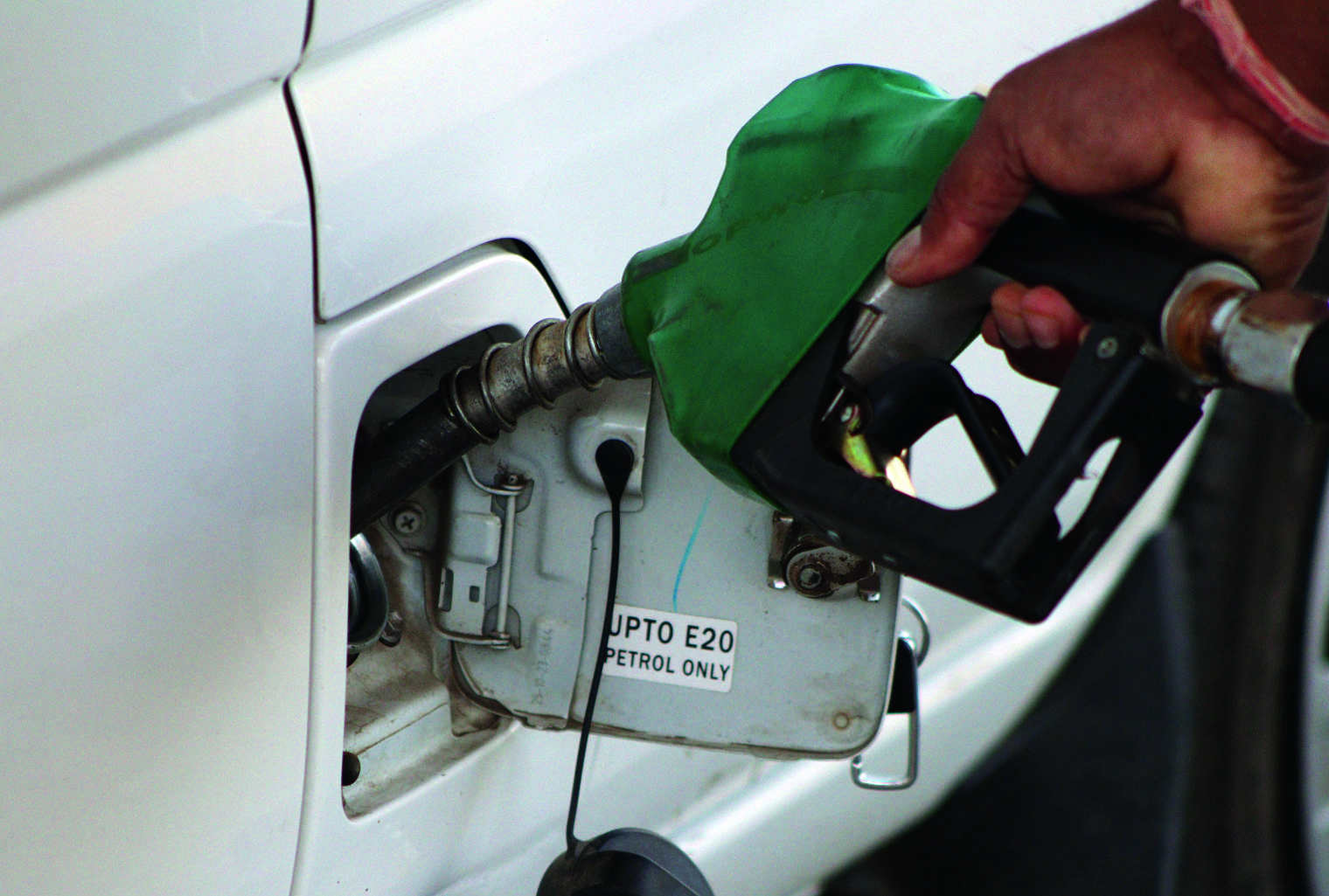
For South Africa, higher oil prices are particularly painful because they quickly feed into the cost of fuel.
A further increase would place additional pressure on households and businesses. Higher fuel prices do not only affect motorists. They also affect the cost of transporting goods, operating businesses, and moving food across the country. Diesel costs affect freight and logistics, while higher energy costs can also affect manufacturing and other industries. These pressures eventually reach consumers.
For businesses, rising fuel and energy costs can reduce profit margins. Companies may find it harder to keep prices affordable while also protecting their profitability. If they increase prices, consumers may reduce their spending. If they absorb the costs, their margins become smaller.
This creates another challenge for economic growth. The global situation is also making the work of central banks more difficult. Inflation remains a concern in major economies, while oil prices are pushing costs higher. This creates pressure on central banks to be careful about cutting interest rates. For South Africa, this matters because lower interest rates are important for economic activity. When borrowing costs fall, households and businesses can have more room to spend and invest. But if inflation begins rising again, the Reserve Bank may have less space to reduce rates. This is why the global energy crisis has implications far beyond the price of petrol and diesel.
Professor Parsons believes South Africa’s economic growth forecast has already been affected by these developments. He now sees growth at around 1.2% for 2026, compared with the earlier expectation of about 1.6%. He believes growth could improve to around 1.6% or 1.7% next year, but much will depend on whether South Africa can use its domestic policies effectively.
That puts the focus firmly back on government and business. The country cannot influence global oil prices, international inflation or geopolitical developments. However, it can influence the efficiency of its own economy. This means improving electricity supply, strengthening logistics, encouraging investment, reducing unnecessary obstacles for businesses, and making sure that agreed reforms are actually implemented.
The recent economic contraction should therefore be seen as both a warning and an opportunity. It is a warning because it shows how vulnerable South Africa remains to global shocks. At the same time, it is an opportunity because it highlights the importance of fixing problems that have been holding back the economy for many years. Professor Parsons’ message is ultimately one of urgency rather than defeat. South Africa’s economic recovery has suffered a serious interruption, but there is still an opportunity to rebuild momentum.
The country now needs to demonstrate that reforms are more than promises. Investors, businesses and households need to see practical improvements. Government and the private sector need to work together with clear targets and measurable results.
The goal should not simply be to return to the narrow growth range of between 1% and 2%. South Africa needs to create the conditions for stronger and more sustainable growth over time. This will require continued attention to structural reform, investment and cooperation between government and business. It will also require a willingness to act quickly when global conditions become more difficult.
As Professor Parsons noted, the central question is what South Africa does from now on. The country has already experienced the impact of a major external shock. The next step is to strengthen the domestic foundations of the economy so that future shocks do not cause such severe damage.
South Africa began 2026 with hopes of a gradual recovery. Those hopes have been weakened, but they have not disappeared. The task now is to turn positive announcements into real implementation, improve the conditions for investment, and make the partnership between government and business work in practice. The second quarter contraction is therefore more than just another economic statistic. It is a reminder that South Africa’s recovery remains fragile and that progress cannot be taken for granted.
For Professor Parsons, the path forward is clear. South Africa must use the areas it can control to strengthen the economy, accelerate reform, and restore confidence. The global environment may remain difficult, but the country still can influence its own economic future. The challenge is to act with enough urgency to turn that ability into measurable progress.
Nasiphi Ndevu is the Head of Research at Frank Dialogue Holdings.