

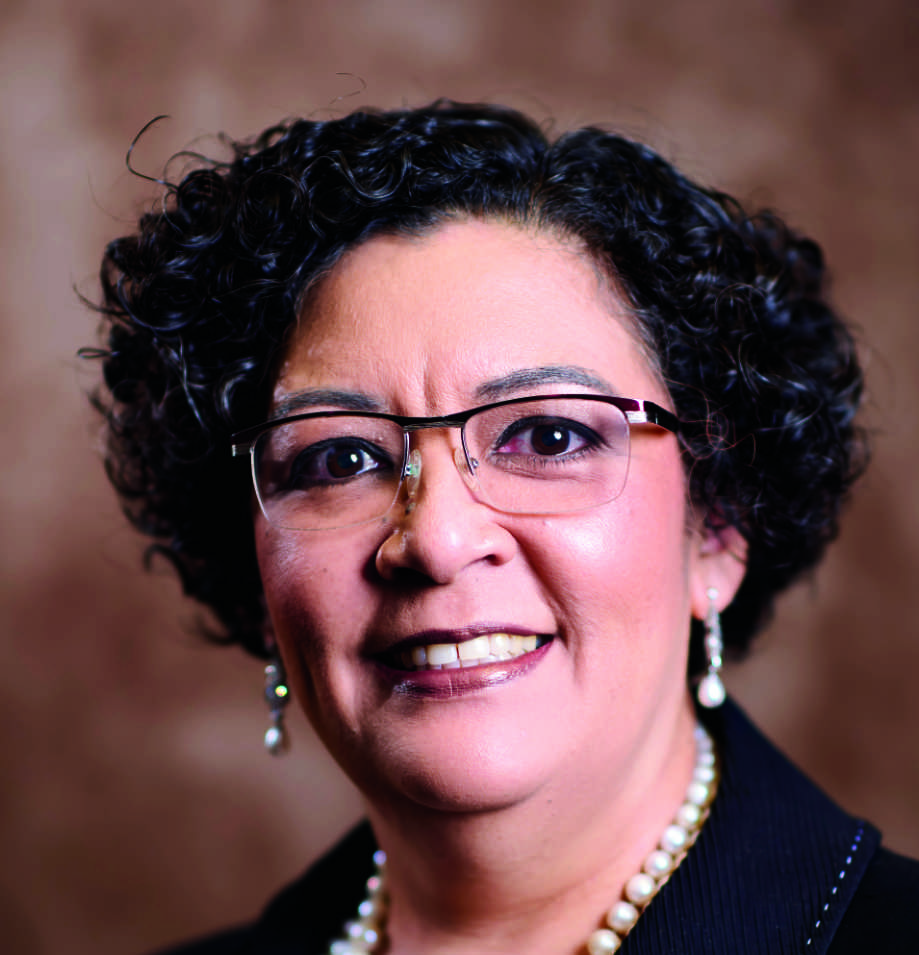
National Lotteries Commission Commissioner Jodi Scholtz discusses strengthening governance, improving transparency and ensuring lottery funding reaches communities
Since joining the National Lotteries Commission (NLC) in February 2023, Commissioner Jodi Scholtz has focused on strengthening governance, improving institutional performance and rebuilding public confidence.
Among the organisation’s achievements are the implementation of an online end-to-end grant management system, re-engineering of business processes, stronger internal controls and greater stakeholder engagement.
“Above all, the greatest highlight is seeing funding reach the communities it is meant for,” she says.
The NLC has a dual mandate: regulating the National Lottery and Sports Pools, societies and other lotteries, and distributing lottery proceeds to good causes.
Its strategy prioritises governance, efficient funding, transparency and player protection. Its broader priorities include education, family cohesion, combating gender-based violence and femicide, rural development, food security, youth development and addressing malnutrition and stunting.
Scholtz has drawn on her public-sector governance and institutional reform experience to strengthen systems, establish clear expectations and empower employees.
Restoring public confidence
Governance and transparency remain central to the NLC’s work, particularly given its responsibility for distributing funds intended to benefit the public.
“For me, integrity and accountability are the foundation of any institution that serves the public, rather than boxes to be ticked,” Scholtz says.
She believes public confidence depends on consistent governance, effective internal controls, openness about funding decisions and honest stakeholder engagement.
“Trust is earned every day through consistent and transparent conduct, and our commitment is to keep delivering on that for the people of South Africa.”
Supporting communities
Lottery proceeds support charities and community organisations, sport and recreation, and arts, culture and heritage.
Funding enables organisations to extend their services, creates opportunities for young people and supports artists and athletes.
“Behind every grant are people: community organisations that are able to extend their services, young people who gain access to opportunities and facilities, and artists and athletes who are supported to grow.”
Scholtz has also represented South Africa internationally, including at the European Lotteries Industry Days in Marrakech, where regulatory cooperation and player protection were discussed.
She was named among the Top 50 Most Influential Women in Gaming in Africa in 2024 and received the Mail & Guardian Women of Power 2026 Governance Award.
Building a lasting institution
Scholtz describes her leadership approach as ethical, collaborative and results-driven, emphasising clear direction, listening and empowering employees.
Her experience has reinforced the importance of accountability, teamwork and a shared commitment to public service.
Her ambition is to leave the NLC stronger, more modern and trusted, with capable employees and systems that distribute funding fairly and efficiently.
She also wants lottery funding to strengthen local economies and help communities become more resilient.
“I want those who come after me to inherit an organisation that communities are proud of and have confidence in.”Lionel October,
Board Member
Lionel October is the Board Member of the Na-tional Lotteries Commission. He is a
seasoned public servant and policy leader,
he has played a pivotal role in shaping the country’s industrial, trade, and Broad-
Based Black Economic Empowerment
(B-BBEE) frameworks.
From 2011 to April 2021, October served as Director-General of the Department of Trade, Industry and Competition (the dtic), becoming one of the longest-serving Director-Generals in South Africa’s democratic era. Under his lead-ership, the dtic earned multiple Best Perform-ing Department Awards, while he himself was recognised as Best Performing Director-General in 2015. His tenure was marked by a commitment to institutional excellence, gov-ernance, and advancing South Africa’s indus-trial development agenda.
Before entering government, October spent a decade in the trade union movement, notably
as the founding General Secretary of the South African Clothing and Textile Workers Union (SACTWU). He also served as a senior commissioner at the Commission for Conciliation, Mediation and Arbitration (CCMA), gaining ex-tensive experience in labour relations and stakeholder engagement.
Academically, October holds an MSc in Eco-nomics (Development) from the University of London, a Law degree, and a BA Honours in Development Studies from the University of the Western Cape. His career reflects a lifelong dedication to strengthening South Africa’s economic institutions, advancing inclusive growth, and supporting industrial transformation.
Aaron Molemo Mogolane, Chief Risk Officer
Aaron Molemo Mogolane is a highly accomplished governance, risk, compliance, and assurance executive with extensive experience in enterprise risk management, corporate governance, regulatory compliance, internal controls, business resilience, and organisational performance.
With a strong track record of leadership in both strategic and operational environments, he has established himself as a trusted advisor to executive management, boards, audit committees, and regulators on matters relating to risk oversight, governance effectiveness, and organisational sustainability.
He served as a Board member of the South African National AIDS Council (SANAC) after being appointed by the Deputy President. He also served as a National Risk Committee member for the Department of Employment and Labour as well as the Department of Small Business Development.
As a seasoned Chief Risk Officer (CRO), Molemo is responsible for leading and strengthening enterprise-wide risk management frameworks that enable organisations to identify, assess, mitigate, and monitor strategic, operational, financial, compliance, and technology-related risks. His expertise lies in designing integrated risk management systems that support informed decision-making, improve organisational resilience, and enhance long-term value creation. He is recognised for his ability to align risk management practices with organisational objectives while promoting a culture of accountability, ethical conduct, and continuous improvement.
As the CRO of the NLC, Molemo leads Risk Management, Ethics Management, Non-Compliant Grantee, Corporate Insurance, Business Continuity Management, as well as Environmental, Social, and Governance Strategy (ESG) functions. Key highlights and achievements include growing the Risk Management Maturity of the NLC, full implementation of the Anti-Bribery Management System (ABMS), and establishment and implementation of the Environment, Social, and Governance Strategy.
Throughout his career, Molemo has demonstrated exceptional capability in embedding risk-based thinking into business processes and organisational culture. He has led numerous initiatives focused on strengthening governance structures, improving internal control effectiveness, enhancing organisational resilience, and building sustainable compliance frameworks. His ability to balance strategic priorities with operational demands has contributed significantly to improved organisational performance and risk management maturity.
Vincent Jones,
Chief Audit Executive
Vincent Jones is the Chief Audit Executive of the National Lotteries Commission (NLC), where he provides strategic leadership across Internal Audit, Information Technology Audit, and Forensic Investigations. His portfolio supports the NLC’s commitment to sound governance, accountability, organisational integrity, and continuous improvement.
Since joining the NLC, Vincent has played a key role in strengthening and modernising the organisation’s assurance and forensic capabilities. An important priority has been reinforcing the independence and strategic positioning of Internal Audit. The function reports functionally to the Audit and Risk Committee, strengthening its ability to provide objective and independent assurance to the organisation’s governance structures. Under his custodianship, the Internal Audit function has continued to mature and professionalise. A significant milestone was achieving a “Generally Conforms” assessment through its Quality Assurance Review readiness assessment, demonstrating alignment with internationally recognised professional internal audit standards and practices.
Vincent has also championed initiatives to strengthen organisational integrity and fraud-risk management. This included the development and implementation of the NLC’s Lifestyle Audit Policy, a first for the organisation. He has further prioritised strategic stakeholder relationships, including collaboration with the South African Police Service (SAPS) and Special Investigating Unit (SIU), strengthening cooperation around investigations, referrals, and matters requiring further action.
A further focus of his leadership is the modernisation of assurance. Vincent believes Internal Audit must increasingly move beyond traditional retrospective reviews towards more continuous, agile, and data-driven assurance. Under his leadership, the function is expanding the use of data analytics and continuous auditing techniques, while exploring the responsible application of artificial intelligence and other emerging technologies to enhance audit coverage, identify anomalies, and provide earlier insight into emerging risks.
His career spans more than two decades in governance, internal audit, compliance, and forensic investigations. Before joining the NLC, Vincent served as Chief Audit Executive at both the Film and Publication Board and Cape Peninsula University of Technology and previously held senior roles in compliance and forensic investigations within government.
Vincent is a Certified Internal Auditor (CIA) and holds a BCom in Financial Accounting, BCom (Hons) in Internal Auditing, Postgraduate Diploma in Forensic and Investigative Accounting, and an MPhil specialising in Fraud Risk Management. His postgraduate research explored best practices for regulating the acceptance of gifts within the public sector, reflecting his longstanding interest in ethics, governance, and fraud-risk prevention.
Adv. Lesedi Boihang, Executive Manager:
Legal Services and Organisational Compliance
Adv. Lesedi Boihang is a distinguished legal, governance, regulatory, and compliance executive with more than two decades of leadership experience across constitutional institutions, regulators, public entities, and state-owned enterprises. His career has been defined by the intersection of law, governance, institutional accountability, and strategic leadership, positioning him as a trusted adviser to Boards, Commissioners, Chief Executive Officers, and executive leadership on complex and consequential matters.
At the National Lotteries Commission (NLC), Adv. Boihang serves as Executive Manager: Legal Services & Organisational Compliance, providing enterprise-wide leadership across legal services, organisational compliance, governance advisory, litigation oversight, and information governance. He advises the Commissioner, Board, and Executive Committee on matters requiring not only legal precision, but sound institutional judgement, regulatory foresight, and an appreciation of the broader public-interest mandate of the organisation. His portfolio encompasses the development of legal and compliance strategy, management of legal risk, oversight of complex litigation, regulatory compliance, ethics, and the advancement of governance assurance frameworks.
Prior to joining the NLC, Adv. Boihang served as Executive Manager: Legal, Regulatory Compliance & Tribunal at the Ports Regulator of South Africa, where he led the legal, regulatory compliance, and tribunal administration functions and served as Registrar of the Ports Regulator Tribunal. His earlier executive experience includes leading enterprise-wide regulatory compliance and assurance at the Road Accident Fund and legal compliance, environmental governance, and occupational health and safety compliance at Transnet National Ports Authority. He has also practised as an advocate of the High Court of South Africa, with experience spanning constitutional, administrative, commercial, labour, environmental, and governance law.
His leadership philosophy is anchored in the proposition that sound governance is not an administrative burden, but an institutional asset. He advocates for leadership that combines intellectual rigour with ethical courage; that treats compliance as a strategic enabler rather than a defensive function; and that recognises the enduring relationship between institutional credibility, public trust, and responsible decision-making.
For Adv. Boihang, leadership is ultimately about stewardship: leaving institutions stronger, more resilient, and more capable of fulfilling their mandates than they were found. His professional purpose is therefore not confined to resolving today’s legal or regulatory challenges, but to helping build institutions whose governance, integrity, and decision-making can withstand the scrutiny of tomorrow.
He holds an LLB from the University of North West and a BA Law from the University of the Witwatersrand, complemented by executive education through the University of Cape Town Graduate School of Business and other specialised governance, risk, compliance, mediation, and leadership programmes.
Thulani Skosana, Chairperson of the Distributing Agency
Thulani Skosana is an Afro-optimist and Afro-positivist committed to advancing the potential of Africa and its people. His current work commitments are totally shaped by a desire to contribute to an ecosystem where ordinary South Africans from underserved areas have the resources and agency to address their socio-economic challenges and create lasting solutions.
He serves as one of the three Chairpersons of the Distributing Agency (DA). His primary role is to shape and lead the DA’s strategic responsibility to consider, evaluate, and adjudicate applications for funding of worthy causes in full alignment with the NLC’s Annual Performance Plan (APP), based on a deep understanding of South Africa’s socio-economic development priorities.
His optimism is grounded in reality. Africa carries the weight of deep inequality and poverty. However, he is drawn to the endless possibilities that emerge as we recognise that these harsh realities can be defeated when we continuously cultivate our endless commitment to a better life for all.
This perspective shapes how he sees grantmaking. He sees it as a partnership built on mutual respect and the shared purpose of providing organisations and communities with the space to actively respond to their realities and deploy suitable and impactful solutions. Sustainable social impact requires organisations with capable leadership, and the ability to learn and adapt to changing circumstances.
His leadership approach is grounded in consensus. He values bringing people together, creating space for different perspectives, and working towards a shared perspective before critical decisions are taken. Consensus, to him, is not about avoiding difficult conversations. It is about ensuring that people feel heard, that diverse experiences inform the conversation, and that decisions are strengthened by collective ownership. This approach influences a collaborative, ethical, and results-driven team culture.
At the heart of his work is a commitment to African agency. He does not see philanthropy as a mechanism for rescuing communities or prescribing their futures. Rather, he sees it as a means of sharing resources, opening doors, strengthening capacity, and supporting people and organisations to determine what progress looks like for themselves.
Through grantmaking and sector engagement, he seeks to combine strategic thinking with humanity, optimism with realism, and leadership with collaboration. His ambition is to help create an NPO ecosystem where organisations are trusted as partners.
Their diverse voices should inform decisions, and African-led ideas should have the opportunity to grow into meaningful and sustainable impact.