

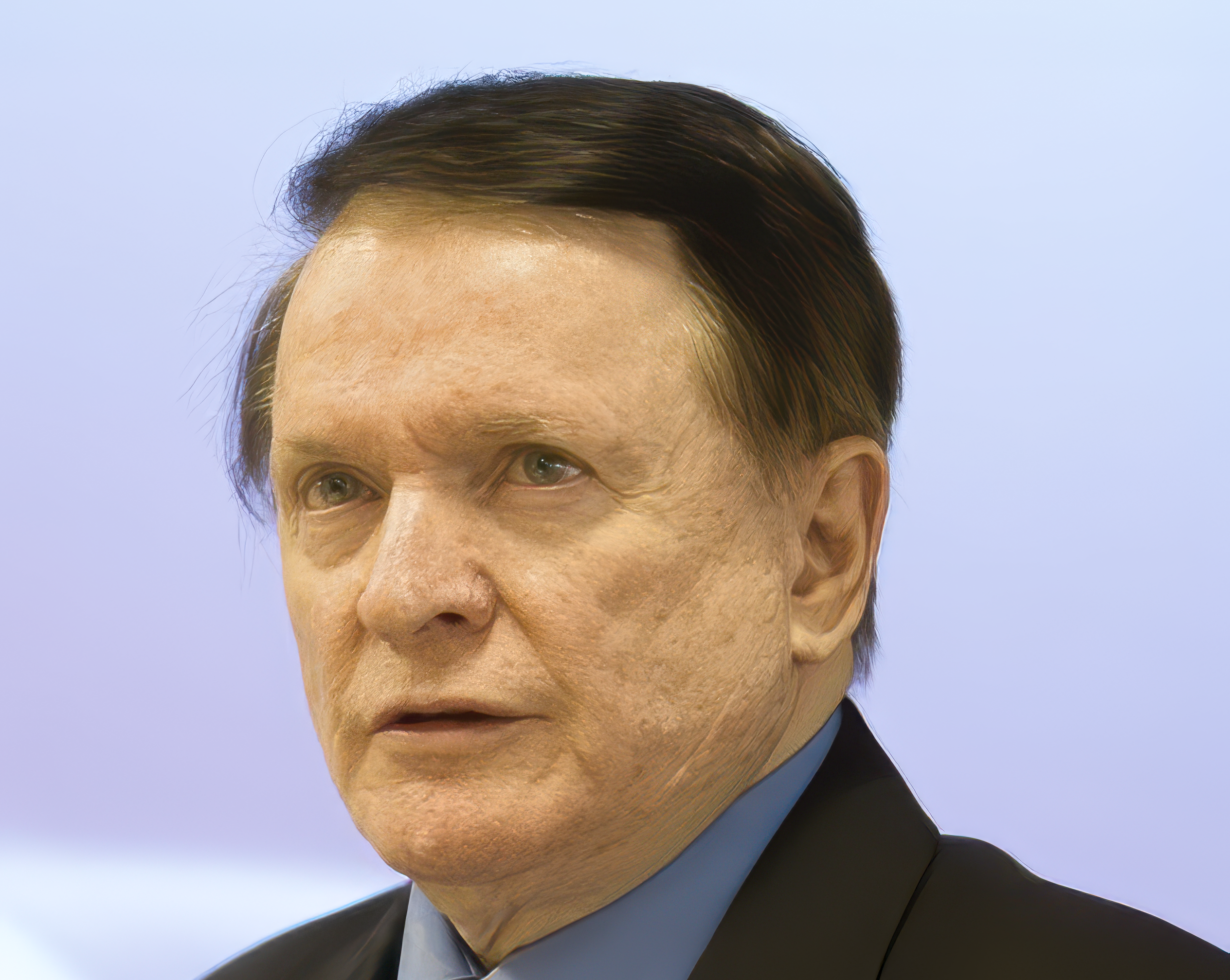
In a world of elevated uncertainty, South Africa’s economic resilience will depend less on perfect policy choices and more on timely, credible, and co-ordinated action, writes Raymond Parsons.
Not unexpectedly, the IMF recently cut its forecast for South Africa’s 2026 GDP growth to 1% from 1.4%, citing the ongoing global energy crisis.
It was a salutary reminder that adjusting to global economic shocks is never easy or painless.
Although the IMF expects South Africa’s growth performance to recover in 2027, much also now depends on how the country responds to unprecedented global factors to avert a worst case scenario.
The IMF survey suggests guidelines on how, in these challenging times, countries like South Africa could best reconcile economic growth concerns and social support needs with fiscal sustainability.
As cost pressures build, it requires a skilled tightrope walker to balance the need to face fiscal facts and high debt-to—GDP ratios, on the one hand, with the claims of common humanity on the other. It also presages tough wage negotiations this year.
The economy will therefore be lucky to escape with a minor setback to growth and a temporary bout of ination in 2026. Superimposed on the elevated oil price itself on April 1 were higher fuel and Road Accident Fund levies, adjusted carbon taxes, and higher Eskom tariffs.
The GNU announced last-minute, short-term relief in the fuel levy on March 31 to partially cushion the negative effects of global developments.
A ministerial team has also been appointed to co-ordinate the government’s efforts of living, fuel, and food security assistance being integrated into a realistic economic game plan.
The ministerial team’s immediate response must be, first, to provide targeted relief, with sunset clauses, to vulnerable households and sectors; and second, to accept that, while the crisis may feel temporary, it is also structural.
Business has a vital role to play in fast—tracking investment in alternative energy and improving supply chain resilience.
The economic outlook and its vulnerabilities, nevertheless, again remind us why, many roads in Africa–be they to higher investment, more job creation or increased tax revenues–ultimately lead to faster, inclusive economic growth. Growth isn’t “a cure for all diseases, an end to all distress”, but it makes other socioeconomic aims easier to attain.
After all, the GNU recently set a GDP growth target of 3.5% by 2030. So, on the positive side, there was indeed convincing evidence recently that South Africa’s business cycle had reached a decisive turning point.
Various “green shoots” of economic recovery were widely identified. Inflation was being contained, and interest rates were being reduced, together with a well-received budget. South Africa therefore has resilience to draw upon. And though there has been recent evidence of positive structural change, such as in transport, circumstances again dictate the need to accelerate the pace of growth-friendly reforms that tangibly promote response holistically to mitigate the impact on the cost.
Its challenge will be to interrogate the need for fiscal reprioritisation, identify what trade-offs are required, and expedite reform of the fuel price structure.
The team’s overhauling of the fuel price configuration is urgent. Timelines should be set. A decision on the future of the temporary but partial fuel levy relief must be taken soon.
The cost to the fiscus of R6 billiob a month may seem infinitesimal in a budget of more than R2.7 trillion, but clearly cannot continue indefinitely without further investment, diversification, and delivery.
As the economy seeks to adapt to a far-reaching, changed global outlook, South Africa needs to find the right trade-offs in the supportive policies now required.
In a world of elevated uncertainty, South Africa’s economic resilience will depend less on perfect policy choices and more on timely, credible, and co-ordinated action.
Raymond Parsons is a professor at the North-West University Business School and extraordinary professor at the Universrty of the Western Cape.