

Professor Bonang Mohale dissects what is currently holding back South Africa and offers valuable insight into how we can take the country forward.
Certainly if anyone does not provide for those who are his own, and especially for those who are members of his household, he has disowned the faith and is worse than a person without faith.’–
1 Timothy 5:8
For the majority of South Africans, the above, at best, is aspirational. Despite the Broad-Based Black Economic Empowerment Act 53 of 2003, Liquid Fuels Charter of 2003, Mining Charter of 2018, Codes of Good Practice, etc., thirty two years into democracy, poverty still has a black, feminine, and rural face. All cashiers, petrol attendants, and waitrons are still black. When the rest of the world is seized with the 21st century challenges, South Africa, despite its enormous potential, is not even meeting basic needs like clean running water, freedom from hunger nor safety and security (the collapse of the South African Police Service and resultant hijacked buildings represent a crude breakdown of the rule of law). This is precipitated mainly by greed, state capture, and ineptitude that manifests as economic stagnation (annual growth rate of 1.1%) over the past 15 years, widespread corruption, policy instability, the deliberate collapse of state-owned enterprises/companies (SoEs/Cs), and a government debt burden of over R5 trillion.
Even though South Africa has reclaimed the biggest economy in Africa status, our current $400 billion GDP is the same as it was in 2011 but the population has grown to 65 million people. It starts right from the beginning that we were so eager to attain our political liberation that we did not think deeply and profoundly about how we are going to use this office to fundamentally transform the economic system–pretty much like a dog chasing a car–to facilitate the participation of the majority of our people–in order for them to simply reach their (not even fullest) potential, reclaim their self worth and self respect. Because there is no nobility in being poor.
As a result, we are the only African country that became free and did not both substantially increase our educational levels and exponentially increase the ownership of the economy by the indigenous people by at least double digits. Now we are known as the only African country to be free from colonialism and after only 30 years, voluntarily handed back power to the colonialists, oppressors, and racists. And yet history is replete with examples that privilege will only ever concede what it must to retain its pursuit of accumulation–it is incapable of any other manner of future. White people will never voluntarily dismantle the system that privileges them. It is Assata Shakur who reminds us that “nobody in the world, nobody in history, has ever gotten their freedom by appealing to the moral sense of the people who were opressing them”. Success must always uplift others.
Apartheid was a brutal, vile, and savage law that was violently enforced. Our most spectacular failure is squandering the absolute two thirds majority and not using it to, among others, not dismantling the system that has been intentionally designed to impoverish black people. Great Britain had three reasons for choosing to hand over South Africa to white male Afrikaners (instead of to the black elite that was well educated and were much better farmers), namely, for the country to be a crucible of cheap labour, forever; for Great Britain to have the first right of refusal to the country’s raw gold and to forever determine the price of diamonds, hence the creation of the London Sales Organisation. And for not restoring the land back to its original owners who were violently and forcibly removed, as well as not reversing the impoverishing spatial apartheid planning that ensured that black people lived, at least 40 kilometres from their places of work, hence towns still named ‘Vergenoeg’ even to this day.
By failing to improve the education level of black people, we have condemned our people to a life of poverty. Everyone has a choice, unless a victim, poor, and nowhere to go. A reflection of pivotal moments in the struggle of black people is quite instructive and the conclusion can only be that despite a great start on the 27 April 1994 and huge country potential, most black people have gone backwards. The African National Congress (ANC) was formed on 8 January 1912 in Bloemfontein as the South African Native National Congress (SANNC) to unite black (Africans, Coloureds, and Indians) people, chiefs, and organisations against discriminatory laws and to fight for political, land, and civil rights. It was established primarily to challenge the exclusion of black people from political power following the creation of the Union of South Africa in 1910.
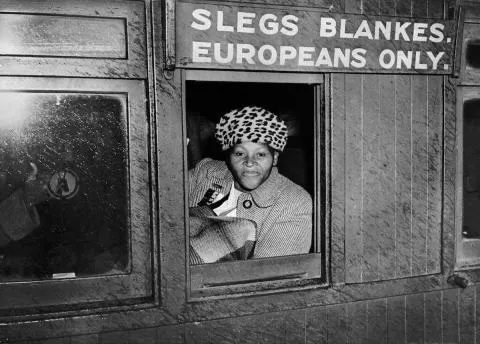
Later on, the Freedom Charter, came into being in response to the unjust socio-political and economic status that persisted. It aimed at ushering a new course for South Africa by calling for security and an end to segregation geographically, politically, economically, and educational. Adopted in 1955, it served as a foundational blueprint for a democratic, non-racial South Africa, uniting diverse anti-apartheid movements against white minority rule. It articulated popular demands for equality, land redistribution, and economic justice, aiming to replace the apartheid regime with a government representing all people. These events, among others culminated in our political but not economic liberation and birthed the Constitution of South Africa (1996) as the supreme law of the land, serving as the cornerstone of the country’s democracy by replacing apartheid’s parliamentary sovereignty with constitutional supremacy. The Constitution is premised on three pillars of constitutional democracy, social justice, and fundamental human rights that ensures accountability, and guides society towards equality, dignity, and unity.
South Africa has an implementation paralysis and not a shortage of policies. The Reconstruction and Development Programme (RDP), Growth Employment and Redistribution (GEAR), Accelerated and Shared Growth Initiative for South Africa (ASGISA), New Growth Path (NGP), National Development Plan (NDP)–2030, and the more recent Economic Reconstruction and Recovery Plan (ERRP) all sought to address the economic facet of the national process. It is in Chapter 12, titled ‘Building Safer Communities’, the National Development Plan (NDP) 2030–a strategic document meant to guide policymaking and budget allocation over twenty years–frames safety as a fundamental human right and a prerequisite for social and economic development, aiming for a South Africa where people ‘feel safe and have no fear of crime’ in all aspects of their lives. The NDP offers a long-term perspective. Its goal is to eliminate poverty and to reduce inequality by 2030. The document tackles many of the issues that were identified in the National Planning Commission’s Diagnostic Report published in 2011. It identified nine challenges as too few jobs, poor education quality, inadequate infrastructure, a resource-intensive growth path, spatial challenges, an ailing public health system, poor performance of public service, corruption, and deep divisions within society and proposed specific policies to address these. It defines a desired destination and identifies the role different sectors of society need to play in reaching that goal.
As a long-term strategic plan, it serves four broad objectives of providing overarching goals for what we want to achieve by 2030; building consensus on the key obstacles to us achieving these goals and what needs to be done to overcome those obstacles; providing a shared long-term strategic framework within which more detailed planning can take place in order to advance the long-term goals set out in the NDP and creating a basis for making choices about how best to use limited resources. The Plan aims to ensure that all South Africans attain a decent standard of living through the elimination of poverty and reduction of inequality. The core elements of a decent standard of living identified in the Plan are housing, water, electricity, and sanitation; safe and reliable public transport; quality education and skills development; safety and security; quality health care; social protection; employment; recreation and leisure; clean environment; and adequate nutrition.
Released in 2013, the NDP was approved and adopted by government and received strong endorsement from the broader society. The NDP was not the first post-apartheid policy document that attempted to tackle South Africa’s high levels of poverty and inequality. The Reconstruction and Development Programme (RDP 1993), Growth, Employment, and Redistribution Programme (GEAR 1996), and Accelerated and Shared Growth Initiative of South Africa (ASGISA 2006) were all designed to accelerate economic growth and reduce poverty. The optimism generated by the ANC’s early successes must now, after 32 years of democracy, be tempered by its conspicuous failures.
Over the last 15 years in particular, the material welfare of South Africans has declined across large parts of the income distribution and the most damage was done to the poorest. It is the Nobel-prize winning economist Amartya Sen in 1999 who defined development as the existence of three linked freedoms namely, political freedom, freedom of opportunity, and economic protection from abject poverty. When President Rolihlahla Nelson Mandela was inaugurated as the first democratically elected president of the Republic of South Africa on 10 May 1994, his and many South Africans’ ‘political freedom’ had been realised but not the ‘economic protection from abject poverty’.
As of April 2026, multiple South African National Police Commissioners have faced criminal charges, with the most recent being Lieutenant General Sehlahle Fannie Masemola, who was suspended following charges of corruption and violating the Public Finance Management Act. Historically, this position has faced numerous scandal-related charges, including cases against sitting former commissioners, Jackie Selebi and acting commissioner Khomotso Phahlane. Now democratic South Africa has its tenth National Police Commissioner, Lieutenant General Puleng Dimpane.
The chronology from the latest is, Lieutenant General Sehlahle Fannie Masemola (31 March 2022–23 April 2026), General Khehla John Sitole (22 November 2017–31 March 2022), Lieutenant General Lesetja Mothiba (1 June 2017–22 November 2017), Lieutenant General Khomotso Phahlane (15 October 2015–01 June 2017), General Mangwashi Victoria Phiyega (12 June 2012–30 October 2015), Lieutenant General Nhlanhla Mkhwanazi (24 October 2011–12 June 2012), General Bhekokwakhe Hamilton Cele (2 August 2009–24 October 2011), General Jacob Sello Selebi (1 January 2000–12 January 2008), and General John George Fivaz (29 January1995–31 December 1999). This is only the symptom of a festering sore, marking a continuation of an institutional crisis precipitated by state capture, greed, impunity, leadership failures at the very top, lack of oversight and accountability.
As far back as 2012, the National Development Plan identified ‘serial crises of top leadership in the police’. The national police service is on auto pilot with the National Police Minister, National Police Commissioner, Deputy National Police Commissioner, Shadrack Sibiya all currently on suspension and another Deputy National Commissioner, Tebello Mosikili, a subject of an Independent Police Directorate (IPID) investigation. There is no doubt that what this complex and about 180 000 strong SAPS with a huge budget needs is reform and rebuilding if we are serious about eliminating deep rooted corruption, organised crime, witnesses being murdered, bribes, disappearing dockets, etc. The bare minimum is a professional service that rewards competence over party loyalty and factionalism, with independent oversight and absolute transparency where ethical dissent is celebrated.
We have all, collectively, not succeeded in eradicating the long lasting legacy of apartheid. There is a need to establish the empirical and institutional baseline of where we currently are at with our transformative interventions, especially the Broad-Based Black Economic Empowerment (B-BBEE), provide an authoritative account of the compliance record and enforcement landscape, a review of the research evidence on ownership diversification and structural outcomes in order to make a dispassionate assessment of what the framework must now do differently. Only facts will allow us to objectively interrogate the degree to which B-BBEE has achieved broadbased redistribution of productive ownership, examine the concentration of empowerment gains, the conditions enabling elite capture and fronting, and the relationship between ownership transformation and productive investment, so as to better inform as to what institutional redesign is required for fundamental structural economic change.
What will logically follow is to examine the role of development finance institutions in giving effect to the ownership and enterprise development objectives of B-BBEE, assess performance trends and portfolio impact, interrogate whether existing financing instruments adequately support the transformation of the means of production, and consider how impact financing can mobilise broad-based ownership at scale. Imagine if we ALL genuinely focused on the principle of common purpose and greater good. What needs to be done is for all of us to assume a shared and collective ownership of the country’s future trajectory with a much more inclusive approach; extend trust in which we show up as a united front; be explicit about how the problems of the country are going to be addressed; service delivery and citizens as front and center of actionable programmes; thoroughly discussed and debated Cabinet decisions that must usher in a fundamental change in both direction and pace; root out and defeat state capture, inappropriate cadre deployment and ubiquitous ‘irregular, fruitless and wasteful expenditure’; implement an economic strategy that must prioritise households and small businesses; pursue foreign policy based on the country’s best interest not beholden to ideology; give regulatory certainty and policy stability as well as localisation and beneficiation that must precede global investment initiatives, focused on agriculture and manufacturing which are urgently needed; reduce our cost of capital; and increase our global competitiveness, investments (FDI >3%), and growth and implement frictionless Africa Continental Free Trade Agreement (AfCFTA). Operation Vulindlela (OV) 2.0 is urgent, critical, and necessary as a prerequisite for growth.
All social partners must now play a new and different role, especially because this outcome has demonstrated beyond any shadow of doubt that democracy, capitalism, and peace that do not benefit the majority, are themselves now at risk. Business must behave as a trusted advisor, partner of choice that is doing everything in its power to ensure a capable state–business that is more objective, agile, independent, open, accessible, less arrogant, more accountable, and responsive and not just demanding improved access and not just serving only business interests; with other social partners, must hold the government to account. It is urgent to ensure that all DGs are appointed and confirmed to ensure more constructive engagement on, among others, a 7th administration that is committed to transformation; ethical leadership; good governance; service delivery and law and order, safety and security; environmental, climate change, decarbonisation, greener steel, and just energy transition.
In the final analysis, we must build our own businesses and hire our own children. It is madness to continue to make babies and then send them to a different neighbourhood for them to go down on their knees and ask someone else for a job. Building a business, one builds ownership, a system, and a brand, is paid for value created, earns profit, growth depends on customers, and it offers independence. Getting a job on the other hand, one builds skills, works under rules and supervision, earns a fixed salary, growth depends on promotion, and offers stability. We must build our own businesses in order to create family wealth for our progeny.
I am absolutely obsessed with education in the full understanding that academic certification and being educated will never make one rich. It was never meant to do that. Being educated simply makes one employable. If you want to be rich, you must start a business of whatever nature. You need to take some risks. With big risks comes big rewards or sometimes mega pains.
Former President Uhuru Kenyatta accentuates this point that, if you really love vour children, get a business, not a job, because when you die your children cannot inherit your job, but they can definitely inherit your business. In fact, if you die on the job, your boss will replace you before your burial. If your family lives in the company house they will kick them out before they can say anything. So when you close from work, don’t go and watch television. Go home and think of a business idea.
Professor Bonang Mohale is the Chancellor of the University of the Free State, Former President of Business Unity South Africa (BUSA), Professor of Practice in the Johannesburg Business School (JBS) in the Faculty of Business and Economics and Chairman of four companies (two listed), The Bidvest Group Limited and ArcelorMittal as well as Swiss Re Corporate Solutions Africa and SBV Services.