


Public discourse on BEE must move beyond simplistic narratives of failure, writes Tshediso Matona.
Recently, the Broad-Based Black Economic Empowerment (B-BBEE) Commission formally requested William Gumede, a professor at the University of the Witwatersrand, to provide the data and research underpinning his claim that BEE policy has benefited only 100 politically connected individuals to the value of R1 trillion. This request was made in line with the Commission’s statutory mandate to monitor the implementation of B-BBEE, and in response to concerns arising from an article authored by Gumede on 15 March 2026.
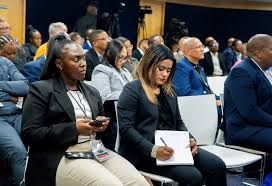
At a B-BBEE symposium held at the University of Johannesburg on 14 April 2026, which Gumede attended, I raised these questions directly with him in a public forum. However, he was unable to provide a satisfactory explanation. In the article in question, Gumede writes that in mining, 46 politically connected individuals secured 60% of all BEE deals and attributes this to a 2015 report by the Minerals Council of SA. Perusal of this report however, disproves Gumede’s claim, and instead it shows that among the companies that participated in BEE deals of that time is Royal Bafokeng Holdings, as a broad-based ownership vehicle representing over 300 000 members of that community.
Scrutiny of any public policy is both necessary and healthy, and independent academic scholars are uniquely helpful in this regard. However, it is troubling that the article in question makes such bold assertions about a policy of such foundational importance in South Africa as B-BBEE.
The absence of public access to the analysis undertaken in the article in question means that the methodology, assumptions, and findings cannot be independently verified. This falls short of basic standards of academic discipline. To present definitive conclusions from pre-2015 data as being relevant in 2026 is analytically unsound, not least because B-BBEE policy has evolved significantly since then. In the absence of this clarity, there is a lack of clarity on how conclusions were reached, what datasets were used, and the scope of B-BBEE transactions that were analysed.
Instead, we are left with rhetorical anecdotes from which sweeping generalisations are made that B-BBEE has failed and is intrinsically linked to corruption, job losses, and economic decline.
The fact is that BEE has evolved markedly since the 1990s/early 2000s version of the policy, when transactions featured a handful of high-profile personalities. But its form changed from mid-2000s to the present Broad-based BEE, which incentivises a wider net of black economic participation, including women, workers, communities, as well as support for enterprises, suppliers, and skills development, measured by B-BBEE scorecard.
Broad-based BEE is what is currently being implemented in the economy and followed by businesses and government. It is thus outdated and misleading to claim that the policy only benefits a few. Granted, there are issues of concern about the policy, but a narrow beneficiary base which Gumede claims is not one of them.
The B-BBEE Commission monitors a number of BEE policy data-sets, which include B-BBEE scorecards of businesses and government entities; ownership transactions of threshold R25 million and above which are submitted for vetting to the Commission, as well as Enterprise and Supplier Development of black-owned businesses (ESD and Skills training investments.
In a recently concluded research, the Commission is about to release, over 28 000 B-BBEE scorecard certificates were evaluated covering the period 2013 to 2023. The Commission has found steady progress across broad-based aspects of the B-BBEE scorecard, even if varying degrees. For example, the average achievement of the 25% ownership score-card target rose from 12.4% in 2013 to 21.4% in 2023. Based on this sample size, it is obvious this cannot be accounted for by only 100 black persons.
Similarly, from 2017 to date 758 ownership transactions have been submitted to the Commission worth a total of R615 billion in shares acquired by black people, again contradicting the notion that BEE deals are concentrated. In fact, these transactions feature 251 collective ownership vehicles in the form of Employee Share Ownership Schemes and Trusts, with Shoprite’s Employee Trust alone valued at approximately R8.9 billion with over 130 000 employee beneficiaries, and more than R1 billion already distributed to workers between 2022 and 2025. Complementary research by private equity company Tusker further indicates that approximately 870 000 black South Africans hold shares through B-BBEE ownership schemes.
From tracking of ESD and Skills Development investments of corporates since 2021 to date as part of compliance with B-BBEE, the Commission has found approximately R200 billion combined spend on supporting emerging enterprises and workforce training, directly benefiting abroad base of participants, including youth and job creation.
None of this suggests that B-BBEE is beyond critique. Like any policy, it must be continuously assessed and refined. There are legitimate concerns about its implementation, effectiveness, and the need to deepen its impact. But the policy deserves honest, nuanced evaluation. As shown above, wider evidence, not the choice to be narrow, does not support a verdict of absolute failure nor absolute success. Neither is B-BBEE’s performance to date cause for abandoning the course. The task instead is to fix identified problems about the policy, re-ignite commitment, and accelerate implementation.
It is to also flawed to position B-BBEE as if it represents the totality of South Africa’s economic policy framework, when it is only a part. This is a ploy to blame the policy for shortcomings that are not its own. To reiterate, B-BBEE is primarily concerned with justice for black people as redress for economic exclusion suffered during colonialism and apartheid, and to implement the equality clause of the Constitution.
Gumede goes to extremely desperate lengths to blame BEE for corruption, which amounts to pure hate of the policy rather than objective analysis. Many laws get abused, and BEE needs to be protected against this. But company law also gets abused, if the corporate scandals that South Africa has witnessed in recent times are anything to go by, involving the likes of Steinhoff, Tongaat Hulett, EOH, among others. Corruption must be combatted as a systemic challenge which manifests wherever governance, oversight, and accountability are weak.
The B-BBEE Commission recognises that fragmentation and unevenness of data on B-BBEE is a vulnerability of the policy, which is currently exploited by its opponents. This is a challenge the Commission is seized with, including partnerships with academic institutions, to ensure reliable data and strengthen the evidence base for scientific assessments of B-BBEE’s performance and impact.
Public discourse on BEE must move beyond simplistic narratives of failure. It must engage with complexity, recognise both progress and shortcomings, and remain anchored in evidence rather than fleeting sentiments. Only then can we have a meaningful conversation about how to strengthen B-BBEE as a tool for inclusion, rather than undermining it through misrepresentation bordering on propaganda.
Tshediso Matona is the Commissioner for B-BBEE.