| www.leadershiponline.co.za
Big Debate
www.leadershiponline.co.za |
Big Debate
Notes on the Trump-Ramaphosa white riot
Tony Karon gives eight quick thoughts on
a ritual humiliation tableau, and the long game
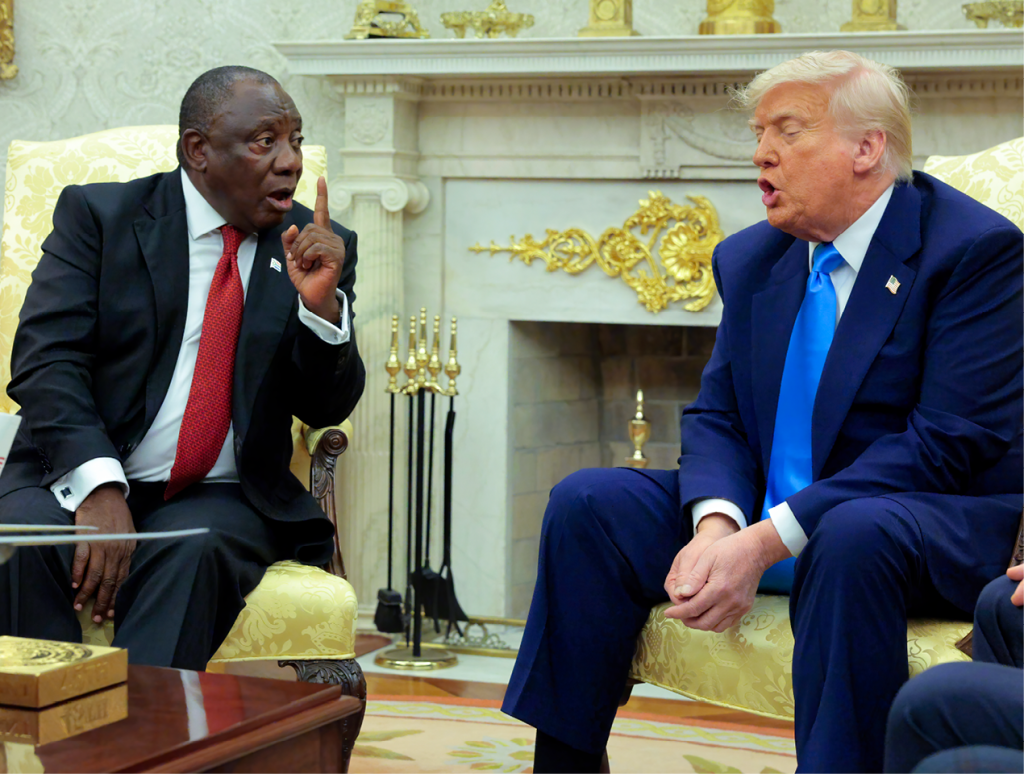
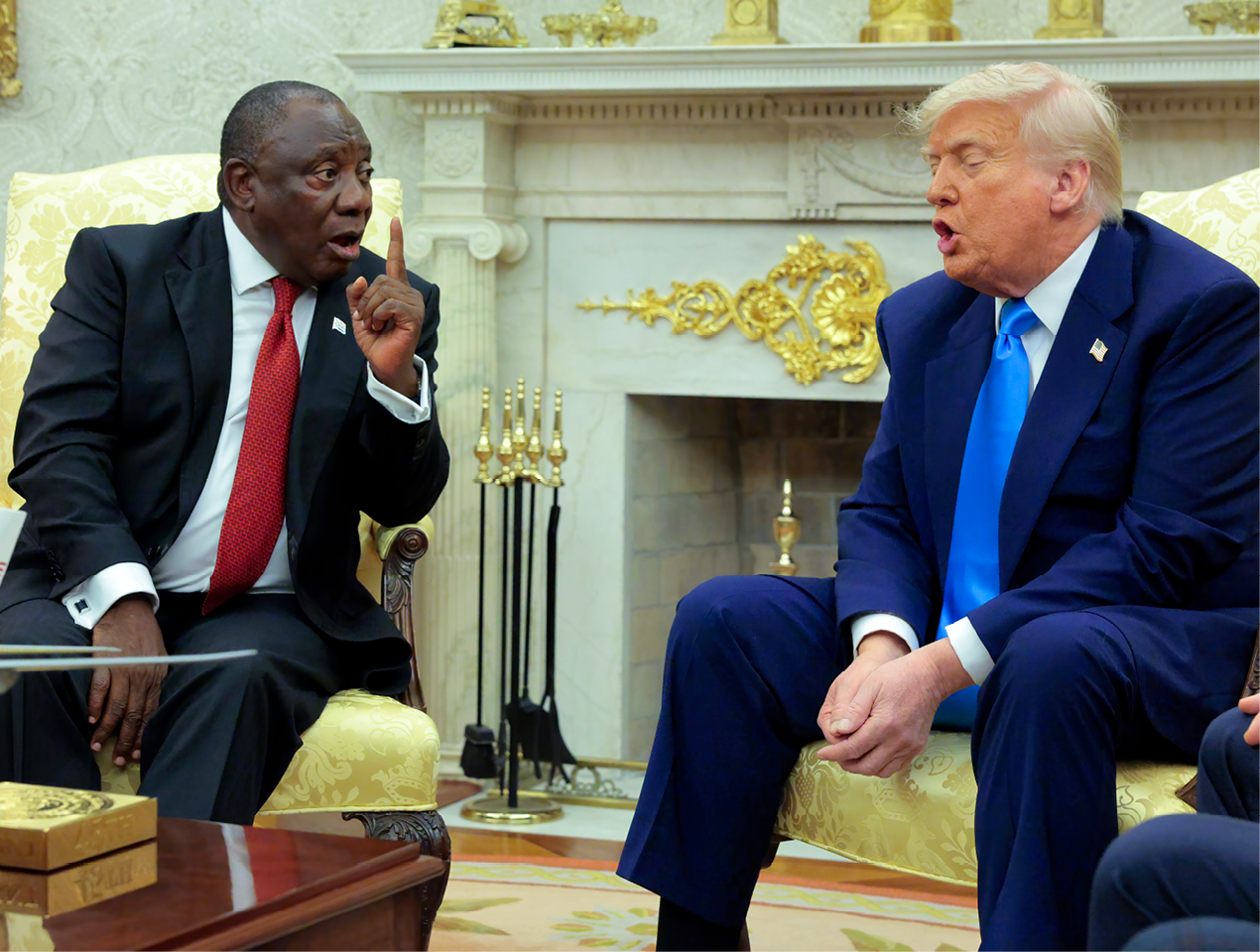
As predicted, Trump subjected Ramaphosa to a barrage of ritual humiliation, centered on the lie of “white genocide” in South Africa. It was always going to be this way, though the thing about ritual humiliation is that both parties understand they’re in a theatrical performance, and, like pro-wrestling, nobody is really hurt. Trump had no use for this meeting other than for the domestic political opportunity it afforded him to grandstand over the “white genocide” fable. Did Ramaphosa effectively repudiate the Big Lie? No. (It’s not about reality in South Africa, remember—see point 2). He tried to offer dignified disputation of the claims or change the subject to trade, but it wasn’t possible because Trump was never going to engage in good faith. His lies, like pro-wrestling, are immune to fact-checking—the facts are not the point. Trump on camera is 100% theater, not serious engagement, debate or conversation in which the interlocutor is treated with respect: The interlocutor is there as a prop for the Trump performance. A visitor—like Canada’s Mark Carney—with a domestic political mandate and the clout to push back hard can sometimes disrupt the performance: Ramaphosa couldn’t do that, because he arrived as the supplicant, begging Trump to restore the status quo ante, which meant antagonizing his host (by, say, politely disputing each lie) was a non-starter.
Did Ramaphosa and his team imagine a face-to-face meeting could “reset” the US-SA relationship of the neoliberal heyday? If so, that would have been naïve. Trump took the meeting as an opportunity to perform a fantasy of holding his guest to account for an illusory “white genocide”. Of course this fable has been widely discredited, but that doesn’t matter to Trump: It’s purpose has nothing to do with South African reality; it’s a product of his own domestic political narrative, in which any moves towards redress for the legacy of America’s foundational racism are deemed a deadly threat to his white nationalist base. South Africa is simply a fairytale to scare white Americans about the genocidal horror that awaits on the path of DEI.
Whiteness was the winner. Ramaphosa—hailed in some quarters a tactical genius for bringing along at least three random, wealthy white South African friends of Trump (tycoon Jan Rupert, and golfers Ernie Els and Retief Goosen—the odious Gary Player couldn’t make it) in the hope that their presence would neutralize the “white genocide” fiction. To the (quite ambivalent) extent to which they did this, their presence and voices also overshadowed those of Ramaphosa himself. And Trump’s disdainful body language when COSATU head Zingiswa Losi spoke was an eloquent reminder of the baas-skap in the room. (Trump will not be corrected by a black woman. Or man, for that matter.) Ramaphosa effectively relied on three random white men of no governmental standing, and whose interests are hardly those of the majority of South Africans, to establish his bona fides with Trump. The US president joked and engaged with them, and it felt that between them they had more time on the floor than Ramaphosa himself, who had to smile politely through not only Trump’s torrent of falsehoods, but also such curiosities as Els thanking Trump for US support for the apartheid regime’s illegal invasion of Angola. Billionaire Rupert was effectively tapped as adjudicator of legitimacy in South African politics, which can’t be healthy. It was a conversation centered on whiteness; whiteness was the key credential for being believable in the way this whole encounter was set up on both sides. Whiteness is the coin of the realm for Trump, but Ramaphosa deploying it via his rich friends hardly restrained his lying host. What would Malcolm X have said? (Of course, Malcom never ran a struggling economy with millions of Black lives dependent on securing investment from anywhere, so that may not be a fair question.)
If the South Africans imagined this was a serious engagement with the issues over which Trump has harangued them, that would have signaled an unfortunate naivete. It’s a long-established principle that most of what happens in front of the White House press corps is theater—when American journalists started firing questions about NY Attorney General Tish James and about a Qatari 747 gifted to Trump, I was reminded of the first time the U.S. media grilled Bill Clinton about Monica Lewinsky: It was in the same room, and he was hosting a visit from Yasser Arafat, looking nonplussed as Clinton talked not about Oslo, but about the whether or not he had “had sex with that woman”. Welcome to America. Trump has simply doubled down on the presser as theater, and himself as auteur.
Trump Kremlinology side note: Are Israel and its champions in Trump’s dog box? It’s quite widely assumed that one of the reasons Trump is punishing South Africa is its attempts to hold Israel accountable under international law for the (US-enabled) genocide in Gaza. So it was quite remarkable that when asked directly what he expects of South Africa in respect of the ICJ case, Trump shrugged and said he expected nothing to change, and he’d wait for the court’s verdict. (The US by bipartisan consensus has little time for international law, and has enforced sanctions against international jurists.) And while Cold Warrior-in-chief Marco Rubio was berating South Africa as a stooge of China, Iran, Hamas etc in the Senate this week, Trump raised none of these red herrings. Just the white-nationalist ones. Is he pissed at Netanyahu? Or simply annoyed with the most ardently Zionist faction in his camp who’ve been berating him over the gift from Qatar?
Did Ramaphosa hold his own? That’s a moot question, possibly even an unimportant one. When you’ve voluntarily walked into a tableau over which you have no control and in which you’re cast as responsible for an invented “genocide” and have no option but to suck up whatever is hurled at you because you can’t afford a breakdown, what does success look like? It could have been worse; he remained dignified and graceful in the face of blatant lies. It could also perhaps have been marginally better, if he’d more forcefully repudiated some of the crap, but his goal was to talk trade and opportunity. I guess I’d rate his performance a 6, which is probably the ceiling of what was possible in this mug’s game.
The future: Has anything changed for the better as a result of this visit? Not that we can see, so far. Perhaps they broke new ground on trade? Depends what was on offer. Any concessions to Elon Musk over Starlink will be pocketed, for sure, but Musk is on his way out of a central role in Trump world. The reasons that AGOA may not be renewed are not specific to South Africa. The G20? Again, it may have little to do with South Africa—so far Trump has shown zero appetite for multilateralism. It’s clear that the multilateral world will have to survive without US buy-in.
The big picture for South Africa, like most of the Global South, requires adjusting to a new global order in which US power, narrowly nationalist and mercantile-transactional, is decentered—and offers limited prospects for progress. Its best long-term prospects lie in the strengthening of economic and geopolitical ties across the Global South. But there’s no binary switch here; it’ll take years to strengthen these ties. So, in that schema, Ramaphosa eating humble pie at Trump’s table could be (but also may not be) a kind of holding move, limiting the short-term damage as far as is possible, to buy time to develop alternatives. Hopefully, though, before the Trump Show, he was on the phone with Lula and Xi, Claudia Sheinbaum and Modi, and others in a similar predicament. And hopefully his travel schedule with take him to their capitals and more in the months and years ahead. There is plenty of life beyond the White House TV studio.
Tony Karon
Big Debate
How Ramaphosa and co inadvertently shot themselves in the foot in America
Abbey Makoe gives his opinion on
what went down in the Oval Office recently
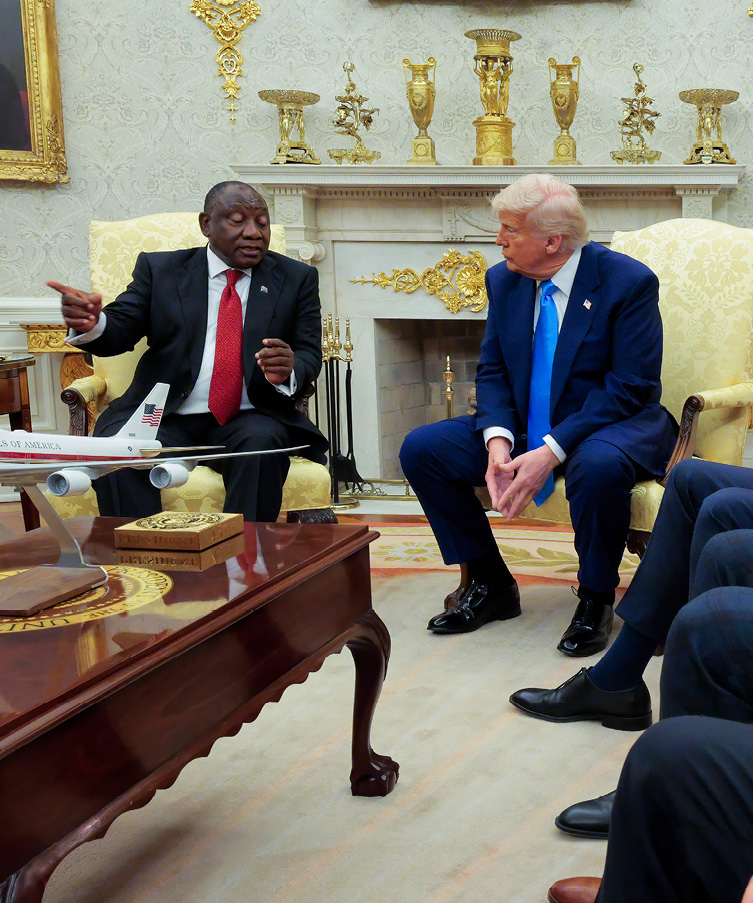
Inadvertently, President Cyril Ramaphosa and his team to the White House ended up achieving what they never set out as their goal in the first place: Confirming before the international media that South Africa is suffering from ubiquitous crime.
South Africa’s detractors have often described our country as the crime capital of the world. And, in their mission to reset frosty bilateral ties with Washington, President Ramaphosa and his team members took time, one after the other, painting a picture of a crime-riddled society that is simply too much of a high risk to invest.
Team SA was vociferously attempting to debunk the AfriForum-led fat lie of genocide against the Afrikaner community, especially farmers. But in that turbo-charged performance, the President and his team unfortunately ended up shooting themselves in the foot, drawing a picture of pervasive crime for which they asked their host President Donald Trump for technological assistance to curb it.
Violence and crime against the Afrikaner community was always going to be high on the agenda during President Ramaphosa’s meeting with his unpredictable US counterpart this week. President Ramaphosa was armed with credible players in his team to dispel the Afrikaner genocide myth. However, the sudden accentuation of SA’s crime epidemic in general was the work of President Ramaphosa’s undoing.
In attempting to counter the false narrative of Afrikaner farmers genocide, our President voluntarily revealed that SA’s crime was not discriminatory in nature. We all have a fair share of it, he and his team argued without any force or coercion.
Afrikaner billionaire Johann Rupert, a member of the Ramaphosa delegation and a close friend of President Trump, added two very crucial but equally self-harming details about crime in SA.
The Cape Flats in the Western Cape, which is under the governance of Agriculture Minister John Steenhuisen’s DA party, experience the bulk of their crime from gang warfare.
Secondlly, according to the highly-esteemed Rupert, the wine farmlands experience most of the crime from the marauding illegal foreigners.
Now, what this means is that the illegal foreigners are untraceable. Unless caught in the act, there is no way to investigate their whereabouts. They have no finger prints in the country’s home affairs database, no source of knowing who they are, their age, gender, how long they’ve been in the country, what else they do for a living other than steal, kill and maim their victims, and so forth.
Rupert’s assertion is unfortunately true. But additionally, in front of the president and a few of his cabinet ministers, Rupert was telling the White House and international community at large that SA’s borders are porous, and immigration systems accordingly in shambles.
The border patrol authorities are not winning against illegal fence-jumpers (others go under the fence, or simply through it) and the picture Rupert painted was of a chaotic free-for-all.
Trump has recently sent packing dozens of Venezuelan gang members, declaring them undesirable aliens in the US. Rupert painted a picture of the Western Cape that is infested with gang wars that constantly claim innocent lives and have turned life into hell for the multitudes.
President Ramaphosa was determined to strike a trade deal that involved all sort of assistance, including in crime fighting technology. But even the most ordinary US police officer listening to the SA Team’s presentation would shake in their boots and rather resign from the force than being deployed to SA.
And yet, that was not the end of the story!
One of the professional golfers in President Ramaphosa’s team, Retief Goosen, told President Trump and his people about the hellish life his family endures in Polokwane, Limpopo.
His elderly mother lives in constant fear of being attacked and raped. His brother struggles with the safe-guarding of family business that involve part-time farming. “My family lives behind high electric fence,” the man affectionately known in the golfing circles as ‘The Goose’ told President Trump.
For a moment, I was wondering for which team Goosen was playing for—Trump or Ramaphosa?
Then ‘The Big Easy’, Ernie Els, a golfer friend of President Trump, also painted a picture of a SA riddled by indiscriminate wave of crime. All these performances, mark you, come in an effort to dispel the false narrative that the Afrikaner farmers are exclusively targeted in a reign of terror, or genocide, as the White House believes.
We are trying to build a country together, but there are some who are working against transformation. The objectives for an inclusive society are noble, but crime is a nightmare, to paraphrase Els.
Even COSATU’s President Zingiswa Losi added her own labour spice to the over-arching albeit unintended theme of crime to the televised exchanges between Washington and Pretoria. SA needs the US companies to invest, but the US needs to assist SA in the efforts to push back against the runaway crime otherwise the environment would not be conducive for US investment, she reasoned.
Now, in the light of the overall performance of President Ramaphosa’s team, we need to be worried. We must be very worried. Sometime ago the sitting Minister of Police, Bheki Cele, confirmed that some police stations around the country are under the 24-hour protection of the ADT, or other private security companies.
Initially, I had dismissed such claims as sheer baloney, or downright racist. It wasn’t until the then Minister Cele confirmed the claims that I was left with a jaw down.
On the day that President Ramaphosa and Team were inadvertently shooting themselves in the foot, something in support of their scary presentation to the White House was happening in Kleinvlei in the Western Cape.
The Kleinvlei police station was attacked. Luckily, or thankfully, no one was hurt. With AfriForum in our midst, I have no doubt that the news has already reached Elon Musk and the White House. A few months ago, another police station was attacked in the Eastern Cape at night and guns stolen.
Granted, President Ramaphosa & Co was strenuously trying to show that crime is not an exclusive preserve for the Afrikaner minority. We all have our own share of it, and hardly ever refer to it as “genocide”.
This unfortunate message of a SA under the throes of criminality went out globally from the horse’s mouth. Every foreign investor into our economy must be evaluating their options. As for potential investors, they must have thought coming from the lips of the country’s head of state, his ministers, SA’s wealthiest man in Rupert and a couple of professional golfers who are not into politics, SA must sure be a hell of unsafe destination to do business.
Even the Agriculture Minister in the team, John Steenhuisen, acceded to a battle with crime, but as always, never lost the opportunity to have a go at Julius Malema and the MK Party, a cooperation between the two of which – in the eyes of Steenhuisen—constitute a “Doomsday Coalition”. The DA leader told Trump: “We joined the GNU to keep this lot out!”
As Ramaphosa and Team would wish, let’s hope the harm they inflicted unto themselves before a tricky encounter with Trump is not fatal, and can be healed sooner than later. History must never repeat itself, hopefully. The President and his Team need to learn to stick to their script, no matter how ferocious video-led ambush could be. SA is not a banana republic and that, at least, is a point that was well made amid the ensuing Oval Office melee.
Abbey Makoe is the Founder and Editor-in-Chief of Global South Media Network.
This article originally appeared on Global South Media Network and is published with permission.
Big Debate
Ramaphosa and Trump @ the White House–tale of three inconvenient truths
Ashraf Patel shares his thoughts on Cyril Ramaphosa’s trip to visit Donald Trump
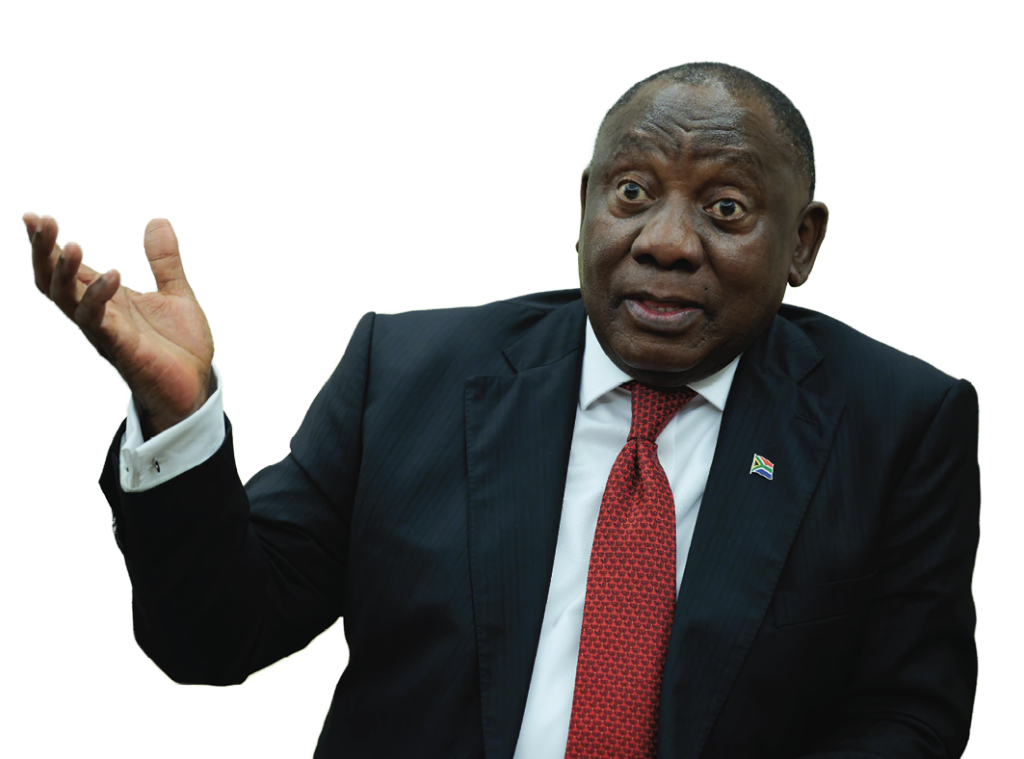
“Lies, Damn Lies and Statistics!” was Winston Churchill’s famous response to one his major political challenges. This statement certainly rang true as Trump and Ramaphosa each provided us with a spectacle of different versions of reality. Trump’s bombastic statements on white farm murders generously referenced fake news and disinformation. Ramaphosa’s narratives—although more suave, were peppered with more sophisticated inconvenient truths of another kind.
Team Ramaphosa’s US visit came amidst the backdrop of South Africa’s rapid declining role and prestige, in Africa a declining economy, the Budget 3.0 debacle, a low GDP, highest unemployment in its debut G20 Africa year.
Let’s unpack some inconvenient truths:
G20 themes of Solidarity, Sustainability sacrificed
Ramaphosa graciously thanked President Trump for his donation of 150 respirators to South Africa during the COVID-19 pandemic. More concerning is that Ramaphosa did not even raise the COVID-19 nationalism of the US that left Africans at the bottom of the global health pyramid.
In fact, neither Ramaphosa nor Trump even appreciated that our own CSIR were developing its own homegrown respiratory technology.
Under the auspices of the Department of Trade, Industry and Competition (the dtic), the CSIR worked closely with a number of local partners to develop the Continuous Positive Airway Pressure (CPAP) device that uses an innovative design to provide a mild level of oxygenated air pressure to keep the airways open and, thus, assist with breathing. Through this project, a total of 18 000 ventilators were produced supplying oxygen to COVID-19 patients showing respiratory distress.
According to the Health Justice Initiative (HJI): ‘During the Covid pandemic, and given this global context on access inequity, HJI tracked vaccine equity, supplies, and access for South Africa (SA). For the better part of 2021, the HJI found that SA either had negligible or staggered access (also referred to as a “drip-drip” supply system) for several reasons. Thus, for months, while people were getting vaccinated in the Global North and elsewhere, with even two shots of vaccine doses, people in SA were waiting for vaccine supplies and for the national vaccine programme to properly kick off (The Conversaion, 2023)’
For the record, COVID-19 vaccines hoarding was the US (under Trump) and EU policy for first year, and most African nations were actually provided free vaccines by China (Sinovac) and Russia (Sputnik).
In addition, there was real R&D co-operation within the G7 countries to open up possibilities for vaccine self-reliance. The BRICS Covid vaccine platform with its technology transfer model as recommended by the WHO and the UN is an example of solidarity in action.
In a 2024 landmark court ruling brought by the HJI, the Pretoria High Court ordered the release of the Covid procurement agreement. They found that the South African Department of Health (DoH) was bullied by phama corporations and overpaid a whopping R7 billion for vaccines. So, in net terms, despite the US government under Trump practicing Covid nationalism, its Phama corporations J&J, Pfizer et al made super profits in the Covid procurement programme and still overcharged by billions.
Ramaphosa as a national interest leader or sub imperial apologist? Inconvenient truth.
DRC narrative of half-truths as South Africa loses its position on African continent
President Ramaphosa’s conversation then proceeded to discuss ‘the role of DRC peace process’. Here again a series of half-truths emerge.
South African state and taxpayers have for ‘several years invested in the DRC’. While purporting to be a peacemaker at a substantial costing of R2 billion per annum, South Africa was not an honest broker but acted on behalf on one part of the conflict, the DRC. Hence the conflict with Rwanda et al and our subsequent embarrassing losses. South Africa is rapidly losing its role as a trusted mediator.
After an embarrassing withdrawal and years of involvement, South Africa withdrew. In this milieu the wily US negotiation team managed to seal a substantive critical mineral agreement with the DRC in March 2025, thus short-circuiting South Africa and other nations. Again, this comes off the back of South Africa losing prestige in Africa and the AU, and will mean they have no role in post construction or mediation efforts of the DRC, and Sudan etc, while the US and powers get first tier access in the great critical minerals world.
South Africa as African peacemaker advocate or sub imperial state? Inconvenient truth.
Silence on the dire state of African Americans in the US
If South Africa’s core G20 theme is ‘Solidarity’, then Team SA fell woefully short. In that moment when Trump boldly lectured Ramaphosa and Team SA on preserving white lives and their welfare, Ramaphosa did not even mention the need for Black Lives Matter.
As the Malema video played out, Ramaphosa had a key moment to raise the issue, but chose not to even raise an iota of concern for the dire conditions of black life in America—from police brutality to deepening racial inequality, and clampdown on freedom of expression, even though Solidarity is a signature theme of G20 in 2025 and yet Ramaphosa instead pleaded with Trump ‘to accept the G20 invitation and take the baton for 2026’.
A disservice to the legacy of late Martin Luther King Jnr and millions of African Americans who were at the forefront of the Anti-Apartment movement for decades, and no reciprocal solidarity from a free and democratic South African leadership.
Ramaphosa as leader of the Africa and Global South or sub imperial apologist? Inconvenient truth.
The big winner
The big winner of the Oval Office meeting of course was Minister Steenhuisen and Agriculture SA and private property classes. In just one meeting, they managed to escalate ‘farm murders’ as the number one issue for US-SA relations, and now have free reign and a potent diplomatic stick to whip ANC and the majority.
Steenhuisen thus becomes de facto the real chief whip of the GNU going forward.
AgriSA’s super profitable exports of USD13 billion per annum is safe, and in is in stark contrast to South Africa’s hunger crisis, where 11 million people go hungry to bed every day (The Conversation).
Yet this core theme of G20 in 2024 is not longer a priority for Team South Africa as Agri exports trump the need to address hunger and nutrition.
Ashraf Patel is a Senior Research Associate at the Institute for Global Dialogue IGD, UNISA.
Big Debate
If South Africa’s core G20 theme is ‘Solidarity’, then Team SA fell woefully short