

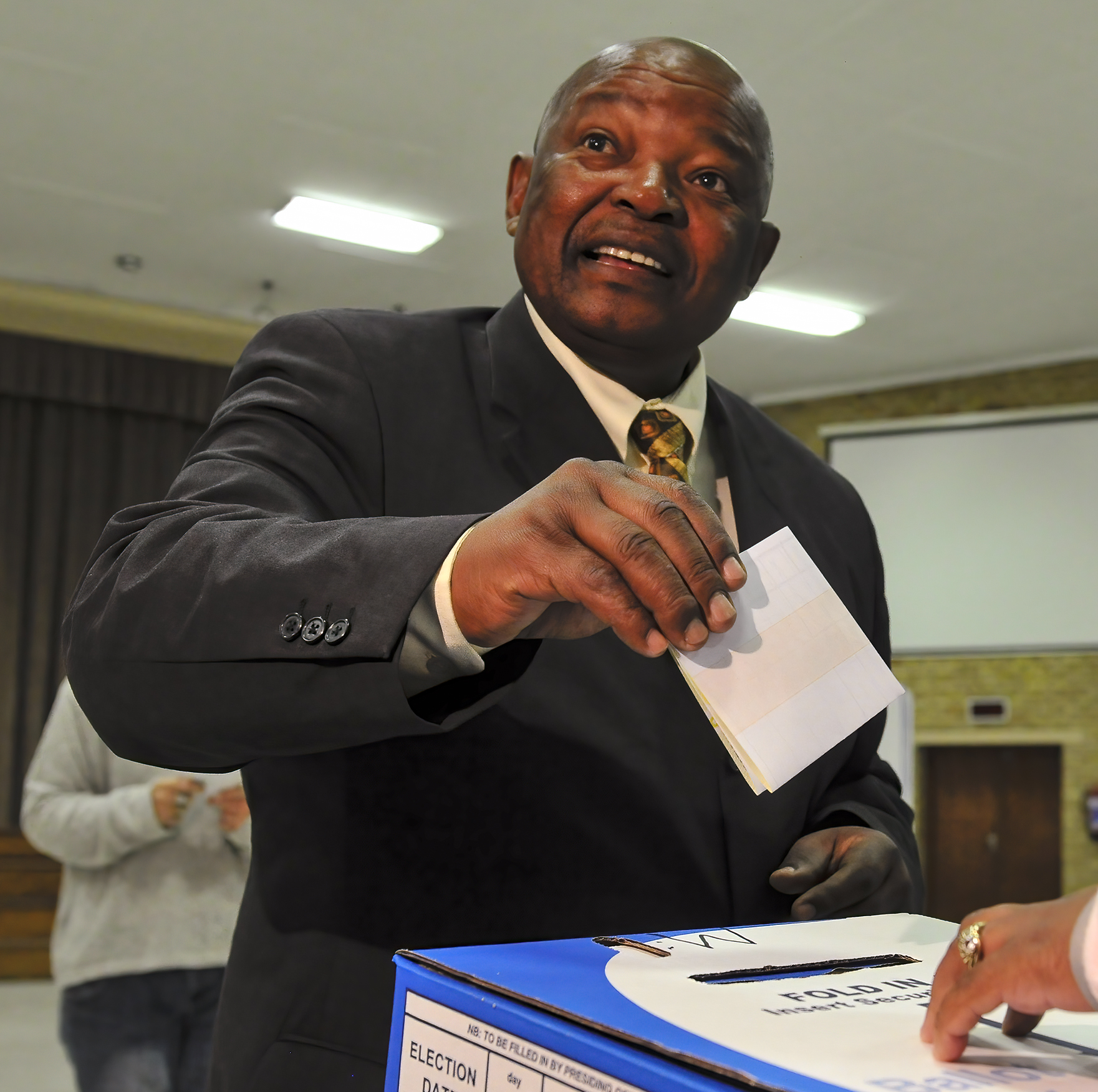
Thebe Mabanga remembers the late
Terror Lekota, who passed away on 4 March 2026
I was at the Five Flies restaurant behind parliament, not far from the Western Cape High Court in Cape Town, when Mosiuoa Patrick “Terror” Lekota, the anti-apartheid activist and founder of the Congress of the People (COPE), who has died at the age of 77, planted the seeds of implosion of the very party he had established or, to use a more current metaphor, dropped the bomb that ultimately destroyed COPE.
COPE had been established in December 2008 by Lekota, former Gauteng Premier Mbhazima Shilowa, the late Mluleki George, after famously serving “divorce papers” to the ANC over its treatment and expulsion of former President Thabo Mbeki under former President Jacob Zuma’s presidency following his victory at the controversial 2007 Polokwane elective conference.
So loyal was Lekota to Mbeki that he sometimes mirrored the former president’s most controversial instincts.
In a 2009 interview, when asked directly whether HIV causes AIDS, Lekota declined to answer, saying: “Look I am not an expert on HIV and AIDS and I don’t want to venture an opinion on whether it does or not—I am not a medical doctor.”
As a parliamentary correspondent, I witnessed the party’s spectacular electoral debut, when it amassed 1.3 million votes—7.42%—and a respectable 30 seats in Parliament.
It quickly carved out space in the legislature. Lekota, however, largely stayed out of the parliamentary fray, opting instead to remain at headquarters to consolidate the project.
From there, COPE established monthly media briefings at the Five Flies, where various leaders would address the parliamentary press corps.
The party’s face and leader in parliament was the Reverend Mvume Dandala while Shilowa was its chief whip.
Phillip Dexter was its national spokesperson and had, months earlier, set the tone for the briefings with a brilliant exposition on COPE’s position on a range of national matters and work in various committees.
The briefings became a staple for journalists looking for news and, ahem, a drink.
Then came Lekota’s turn.
After giving the usual issues in the environment briefing, he started speaking in what felt like riddles almost in lowered tones. It was not quite clear what he was saying.
He spoke about problems with COPE’s parliamentary finances and alluded to how “the Chief Whip is in charge of party finances”.
He did not name Shilowa, and it was not clear what he had done.
It needed follow-up and direct questions to ask if he was accusing Shilowa of wrongdoing, but even then he was coy.
Why would Shilowa, who probably did not need his chief whip salary and who could be kept by wealthy spouse Wendy Luhabe if he chose to, steal what must have felt like petty cash? No clear answer, or indeed direct accusation, was given, but the damage was done.
The remarks morphed into a full-blown fall out that drove Shilowa out of COPE and politics—with no hint of bitterness—to a comfortable married life with a rare glimpse of a public profile.
With that followed a spiral that could not be contained.
COPE meandered ideologically and suffered electoral decline.
By the 2014 elections, the party won just three seats as voters grew disillusioned.
Its leaders, like Dennis Bloem, became caricatures even as they tried to pronounce on various matters with conviction and indignation.
Ideologically, COPE tried to inexplicably fraternise with Afrikaner right wing parties as Lekota—and activist with roots in the Black Consciousness Movement (BCM)—cuddled with former oppressors on certain issues.
The party was doomed and Lekota’s own health declined with it, never to fully recover.
The political commentator Makhosini Mgitywa makes the point that when Zuma left the ANC, Lekota and his acolytes, with whatever was left of his members and voters, should have simply folded back to the ANC, and he would have died in his political home.
But ego and a sense of diminished power allowed him to carry his tattered flag to flutter in the wind while he shouted inaudible complaints about the state of the nation that no one really listened to.
His time in the wilderness will instead be remembered for another bomb he threw when, with no proper context or provocation, he alleged that President Cyril Ramaphosa was a collaborator with the apartheid government, based on his supposed treatment during detention. A damaging but unsubstantiated claim thrown like a grenade by a bitter, exiled family member.
That is the latter half of Lekota’s life, and it would be unfair or incorrect to remember him as such.
He was a distinguished freedom fighter who served the country and ANC in many capacities, some with distinction.
The ANC will rightly eulogise him in death.
They should even consider conferring on him Isithwalandwe/Seaparankwe posthumously, such was his service to the party.
COPE did far less damage than those led by Julius Malema, the Economic Freedom Fighters in 2014, and most telling the uMkhonto weSizwe Party (MKP) led by Zuma, in 2024, to loosen the ANC’s grip on power.
Following its unbanning in 1990, Lekota was elected to the ANC’s National Executive Committee (NEC) and National Working Committee (NWC) at its Durban Conference in 1991.
He went on to serve as the party’s National Chairperson for a decade leading up to the fateful 2007 Polokwane Conference.
Lekota served as Free State Premier from 1994 to 1996 and then served as chair of the National Council of Provinces (NCOP).
This was before serving as the country’s minister of defence from 1999 to September 2008, when he resigned following Mbeki’s recall.
In that role he would have played a part in the country’s post democracy scandal, the arms deal.
Yet supporters of his nemesis Zuma will point out that, unlike Zuma, he has not been hounded in courts.
Lekota’s contribution to establish democracy is distinguished and undisputed.
He was a Delmas Treason Trialist and was convicted alongside the late Moss Chikane and former North West Premier Popo Molefe, among others.
Earlier in his struggle career, he had been detained in the 70s to the early 80s for his activism.
Following his release in the 80s, he was elected as publicity secretary of the United Democratic Front (UDF) the vehicle for internal resistance where he served alongside Ramaphosa, who he later embarrassed with spy claims, as well as former finance minister Trevor Manuel.
Lekota’s political activism led to his expulsion from a social science degree from the then University of the North where he served in structures aligned to the Black Consciousness Movement (BCM) around the same time as renowned activist Onkgopotse Tiro, who was killed by a parcel bomb in Botswana.
This led to his imprisonment in Robben Island from 1974 to 1982 alongside former President Nelson Mandela and many others. He thus holds the distinction of being a Robben Islander and internal resistance leader. Zuma, for example, is a Robben Islander with a history of exile.
Lekota was born in Kroonstad in 1948, the year apartheid became national policy, and was educated in Matatiele before completing his schooling at St Francis in Marianhill.
Maybe that is the gallant fighter the world must choose to remember.
Mosiuoa Terror Lekota
Minister of Defence
Founder of Cope
13 August 1948 to 4 March 2026.
Thebe Mabanga is a writer for Inside Politics: The African Narrative.
This article was originally published by Inside Politics: The African Narrative. It appears with permission.