

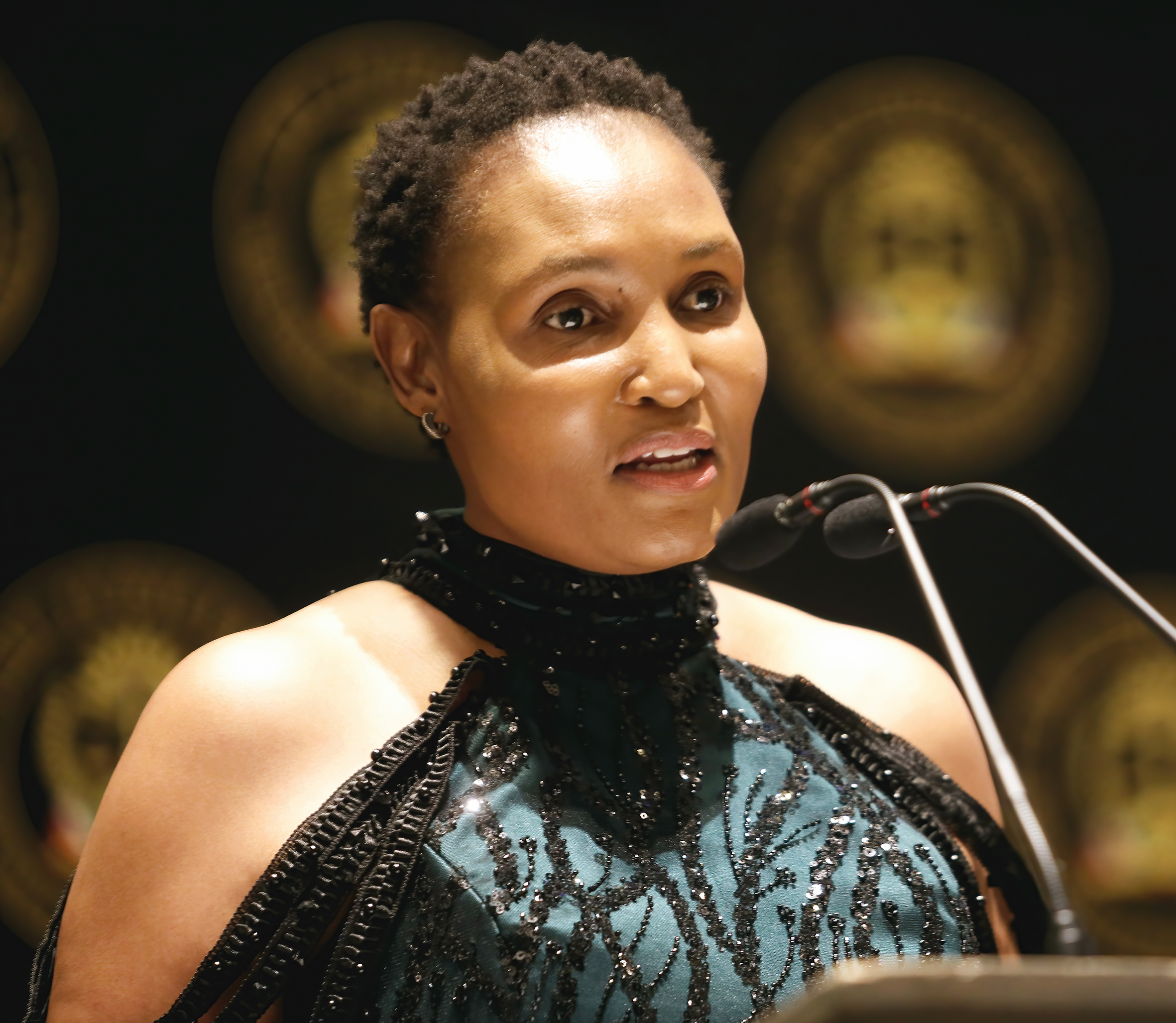
Minister of Human Settlements, Thembi Simelane, speaks to Leadership about the current state of housing in South Africa
South Africa enters 2026 with renewed economic momentum after years of low growth and stagnation. Recent recovery has been supported by public–private partnerships, where organised business collaborates with government to address systemic constraints—outcomes that have been recognised by ratings agencies and financial observers.
Despite progress, a significant housing deficit persists. South Africa continues to grapple with an acute shortage of affordable homes, particularly in the so-called “gap market”.
These are the households that earn too much to qualify for fully-subsidised government housing but too little to secure private financing, with studies showing a backlog of at least 2.2 million housing units in this segment of the market.
We spoke with the Minister of Human Settlements, Thembi Simelane, about the Department’s plans to work with the private sector to reduce the backlog and stimulate growth within the construction sector.
Creating Sustainable Human Settlements
Minister Simelane: “It’s vital to clarify why the Department of Human Settlements exists. Our mandate is not only to build houses but to create integrated human settlements—places where people live, work, and play.
This requires recreation of social amenities, access to clean water, electricity and roads, and proximity to economic opportunities. That is essential for inclusive economic growth. Ownership remains one of the most effective ways for individuals to ascend the social and economic ladder, and it remains a core focus for government.”
This approach aligns with the Department’s stated mandate, which emphasises sustainable development, spatial integration, and improved quality of life for households.
Understanding the Housing Backlog
Leadership: “You mention more than three million people are waiting for housing. What is the true scale of the current residential housing shortfall?”
Minister Simelane: “The figure of three million refers to people who qualify for the 40m² RDP house—the subsidised Reconstruction and Development Programme homes. It does not include the gap market.”
Public sources, including studies by the Centre for Affordable Housing Finance, estimate a gap market deficit of at least 2.2 million housing units, reinforcing the view that the overall shortfall extends beyond those qualifying for RDP housing alone.
Minister Simelane: “We also offer serviced stands—land parcels with infrastructure, including roads, water and electricity ready for construction. This reduces the cost barriers for prospective homeowners who do not qualify for free houses.”
This reflects broader policy shifts. With fiscal constraints limiting traditional subsidy outputs, the Department has increasingly prioritised serviced sites and informal settlement upgrading.
Operation Vulindlela and Structural Reform
Leadership: “There’s a perception that government regulation discourages business activity. How has Operation Vulindlela helped address structural challenges in housing delivery?”
Minister Simelane: “Fiscal discipline has allowed us to innovate. For example, the Department of Correctional Services is contributing funding so we can assist in building homes for employees who are required to close to the prisons they work in.
We are engaged in partnerships with private companies like Sasol to provide employee housing solutions using government subsidies. We are working with the Department of Public Works to repurpose unused state buildings and state land for housing development.”
These collaborative efforts mirror national strategies under Operation Vulindlela, which aims to align multiple agencies around common infrastructure and housing outcomes.
Unlocking Private Sector Investment
Leadership: “What single action would attract large-scale private investment in affordable housing?”
Minister Simelane: “Streamlining administrative processes at municipal level is critical. Delays in planning approvals can deter financiers, who require certainty on timelines. If development cannot start as scheduled, investment may be redirected.”
This challenge is reflected in public commentary on housing market dynamics, where regulatory and transactional barriers are cited as obstacles to private sector engagement, particularly in the gap market.
Thankfully, the expanded mandate of Operation Vulindlela now includes support for local government reform, which is expected to help address these bottlenecks.