Africa leads the world through South Africa’s G20 Presidency
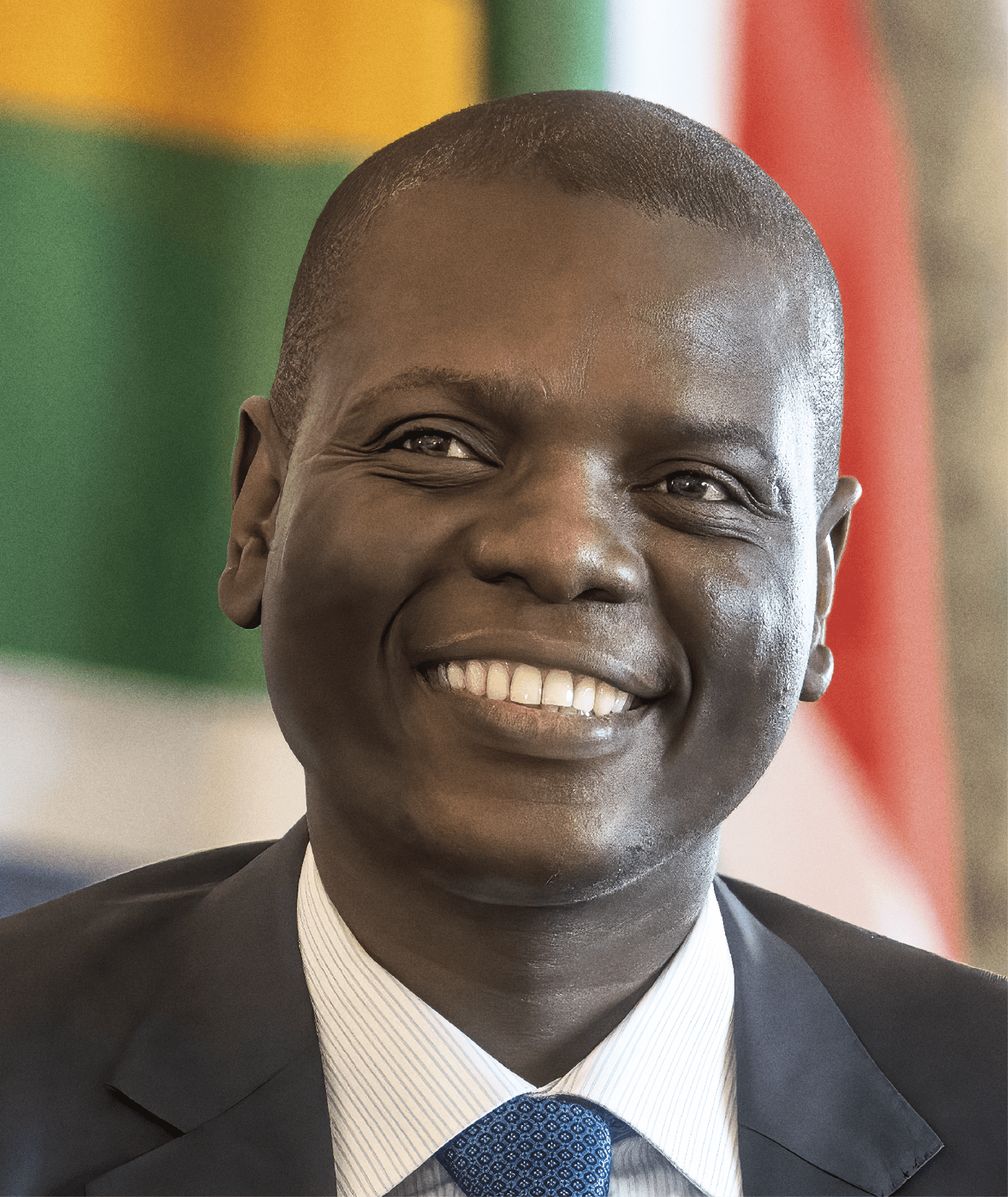
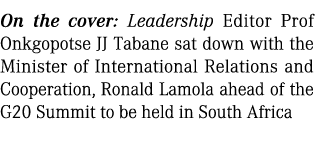
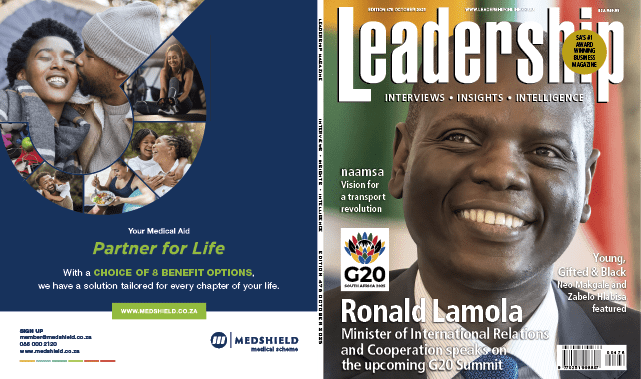
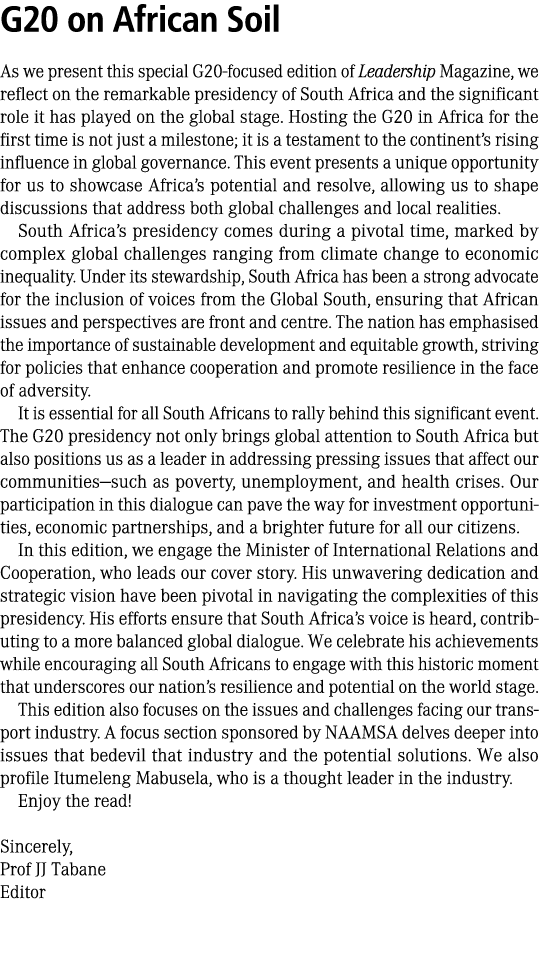
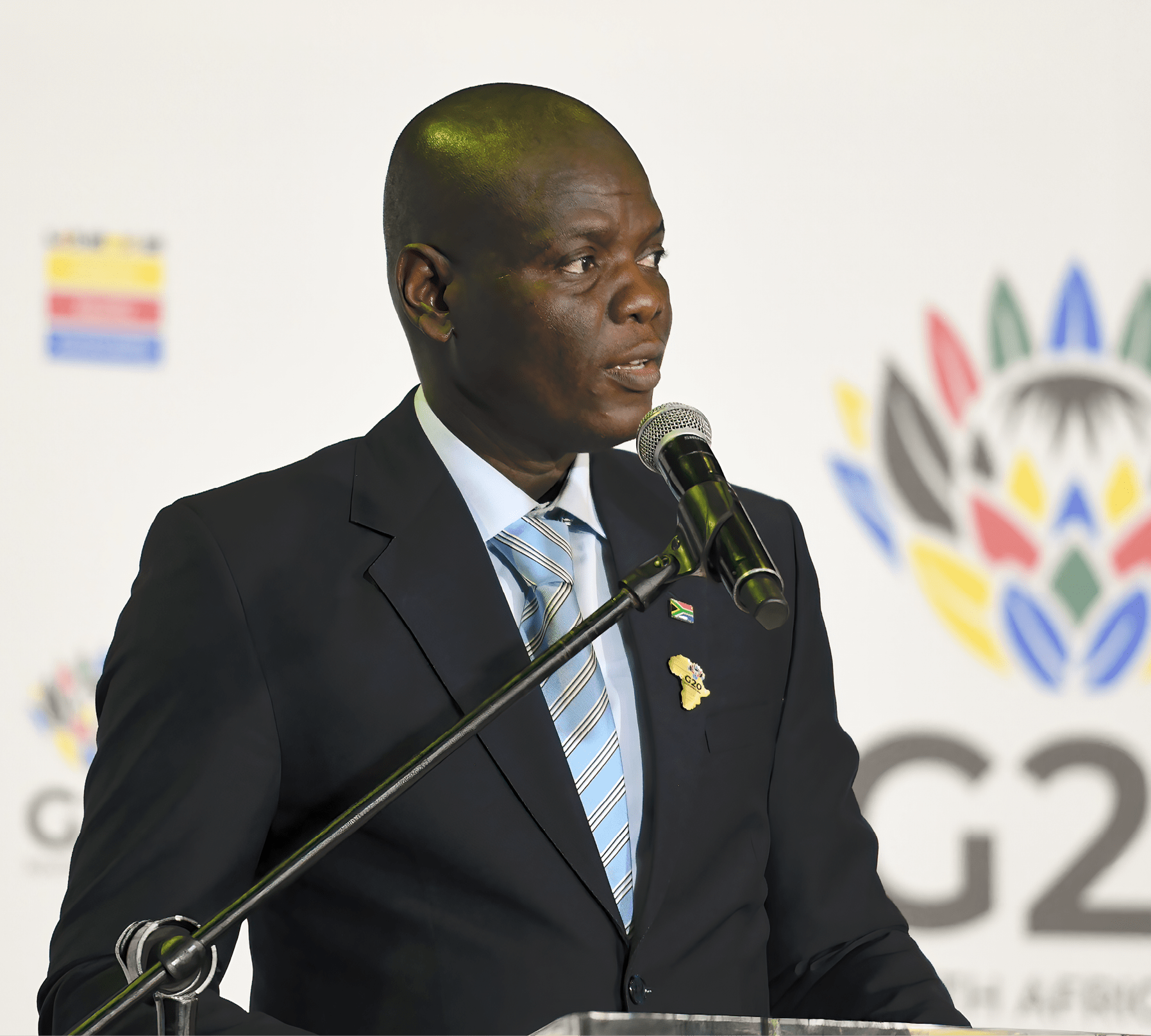
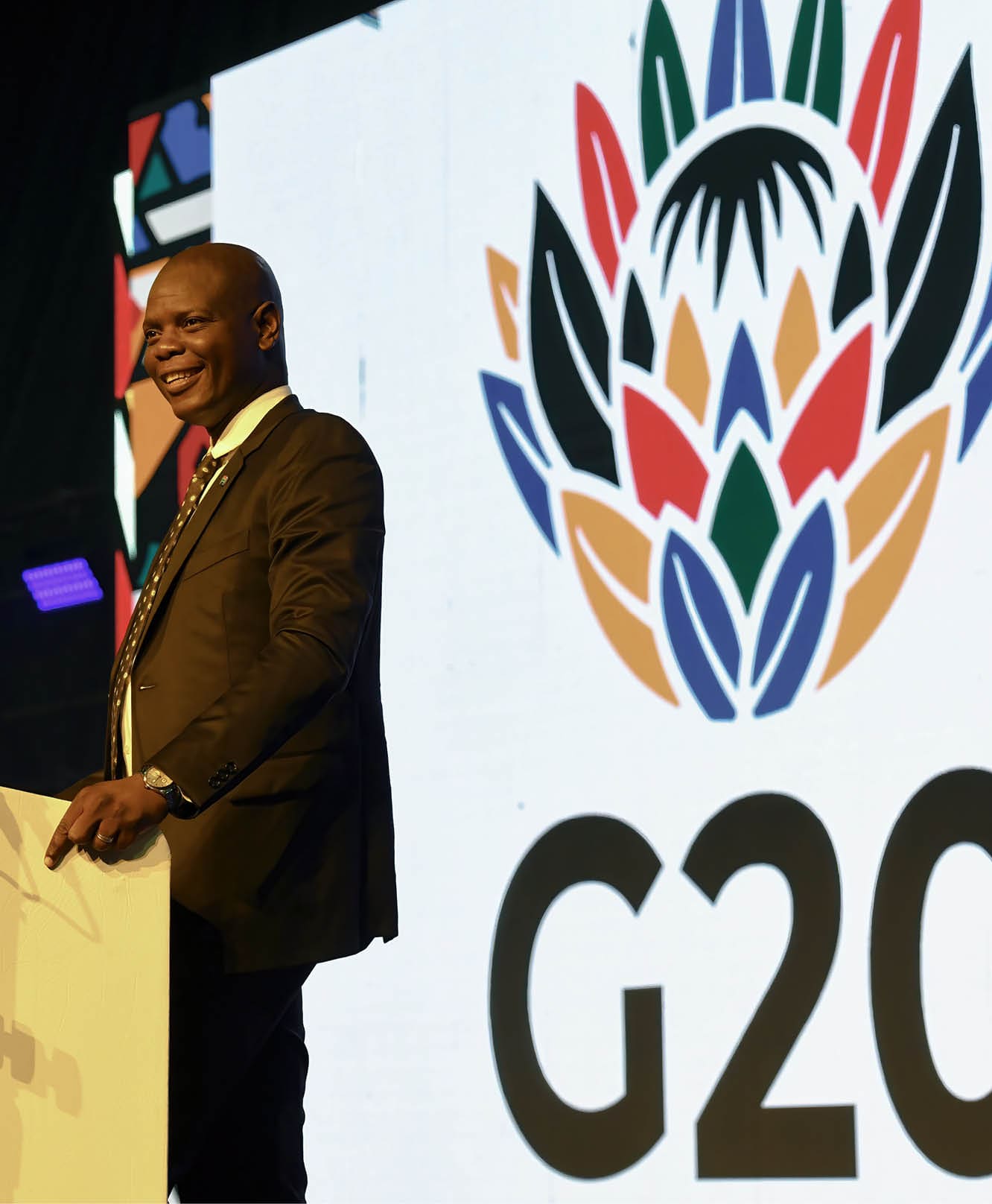
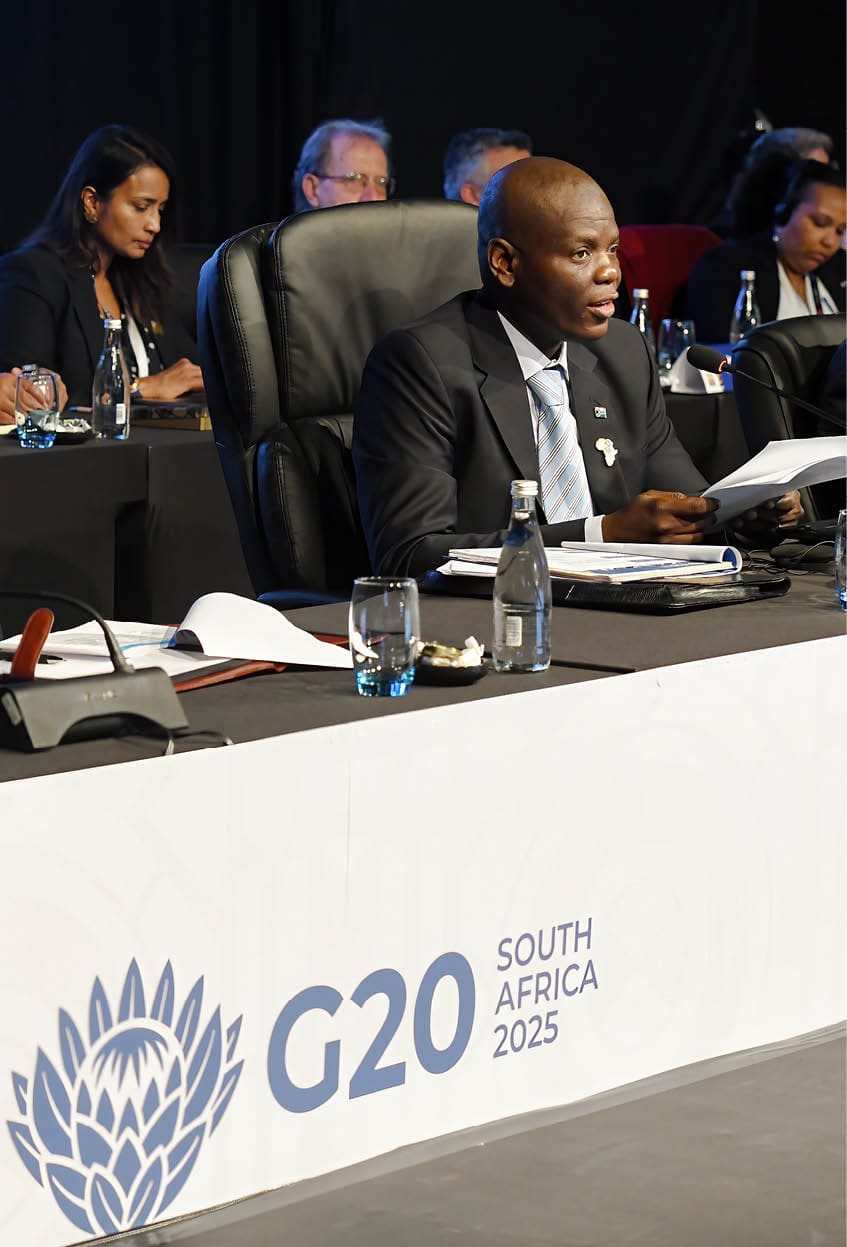
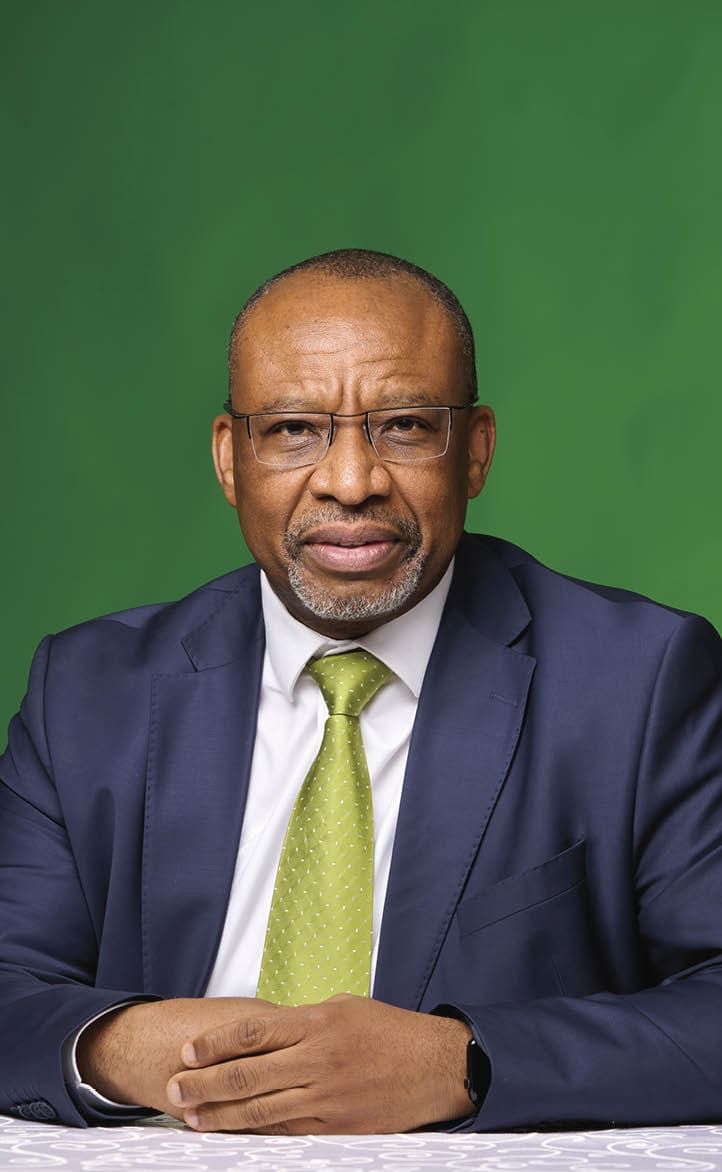
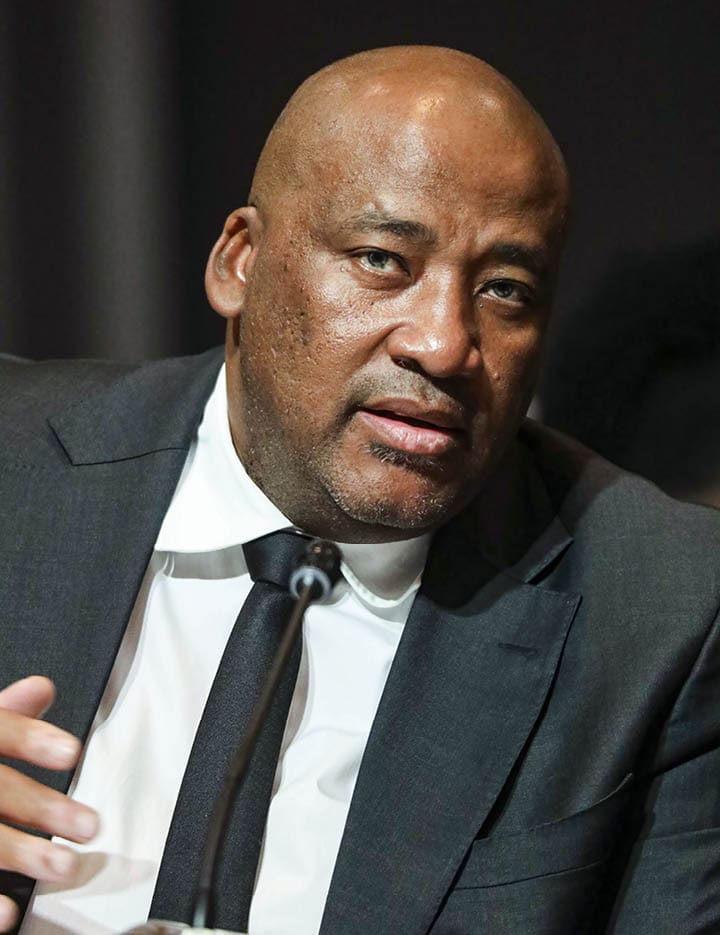
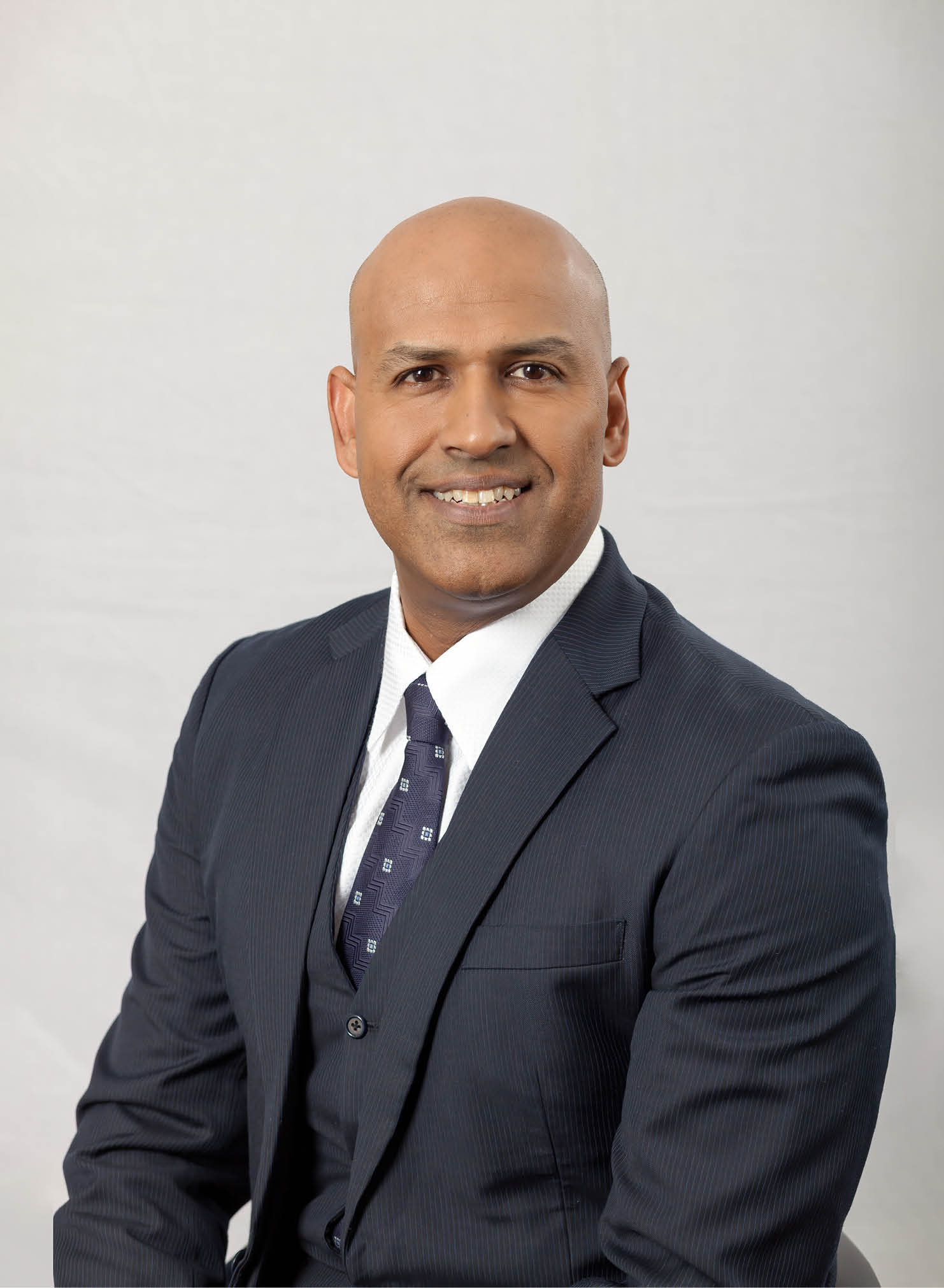
Leadership Editor Prof Onkgopotse JJ Tabane sat down with the Minister of International Relations and Cooperation Mr Ronald Lamola ahead of the G20 Summit to be held in South Africa and reflected on SA’s Presidency of the World body
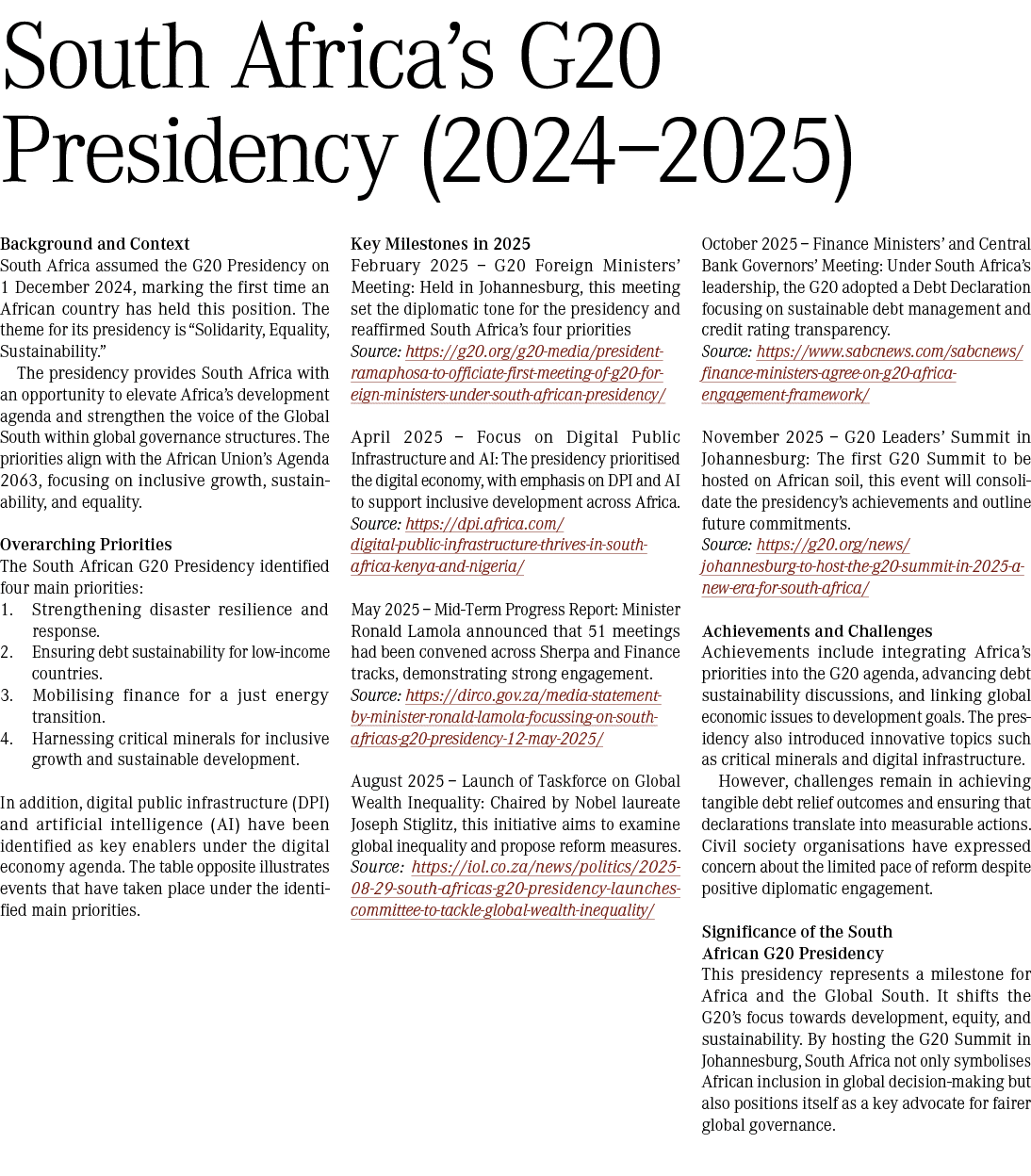
As South Africa’s historic G20 presidency draws to a close, the nation stands poised to hand over the global economic leadership baton with a legacy that fundamentally reshapes how the world’s most powerful economies engage with Africa and the developing world. What began in December 2024 as an ambitious commitment to build a better Africa has evolved into a comprehensive framework that promises to influence global economic governance for years to come.
The Minister Ronald Lamola reflects on this transformative journey and speaks with the measured confidence of someone who has witnessed unprecedented transformation. ‘Our presidency has been a catalyst for change, focusing on solidarity, equality, and sustainability,’ the Lamola states. He further emphasises the interconnectedness of global issues and the critical need for a people centred approach to development.
When Climate Change Becomes Existential
South Africa opted not to adopt the partisan stance that often mires talks of climate change, instead the country brought an uncompromising clarity to the G20 table. Given the devastating effects on Southern Africa, we can no longer afford to debate the existence of climate change and the 2023-2024 El Niño event has delivered a brutal lesson in climate vulnerability. Southern Africa endured the worst mid-season dry spell in over 100 years, with rainfall levels plummeting to 40-year lows. The result has been a looming hunger crisis that threatens millions across the region.
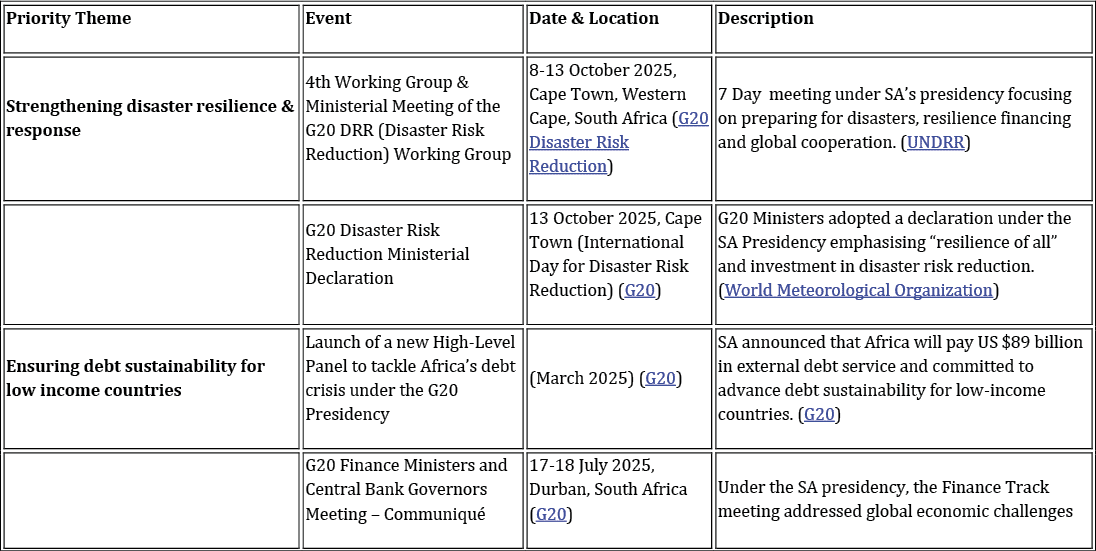
Lamola believes that for South Africa’s G20 presidency, disaster risk reduction wasn’t merely a policy priority, it was an existential imperative for the Global South. The presidency championed frameworks that recognise climate change not as a future threat but as a present crisis demanding immediate action, particularly for vulnerable nations that contribute least to global emissions yet suffer their most severe consequences. But within this crisis lies an opportunity for Africa as it holds 60% of the world’s best solar resources, vast wind potential, and many of the critical minerals that underpin the global clean energy economy.
Breaking the Chains of Unsustainable Debt
More than half of Africa’s 1.3 billion people live in countries that spend more on interest payments than on health, education, and infrastructure combined. This illustrates the extent of structural inequalities in debt burden African countries which the Lamola says is ‘unsustainable and undermines efforts towards sustainable development and poverty alleviation.’
Under South Africa’s leadership, the International Financial Architecture Working Group devoted extensive attention to African debt challenges and the African Development Bank prepared a pivotal report on bridging the cost of capital divide in Africa. This report was instrumental in launching the broader Africa Engagement Framework.
The G20 Finance Track’s work on debt sustainability produced tangible results, which included engagements with African borrower countries experiencing debt distress, preparation of fact sheets on Common Framework debt treatment cases for Chad, Zambia, and Ghana, and enhanced information sharing between the G20 and the Global Sovereign Debt Roundtable. These efforts culminated in the adoption of a G20 Ministerial Statement on Debt in October 2025.
The presidency’s focus extended beyond immediate debt relief to examine the root causes of Africa’s disproportionately high cost of capital. By bringing this issue to the forefront of G20 deliberations, South Africa has planted the seeds for long-term structural reform in how international financial markets assess and price African risk.
Putting Wealth Inequality on the Global Agenda
South Africa succeeded in placing global wealth inequality on the G20’s long-term agenda, a topic that powerful economies have historically resisted to address. The presidency commissioned a report to the summit by Nobel Prize-winning economist Joseph Stiglitz and his expert panel, which lent intellectual weight and moral authority to the subject.
Lamola asserted that this is not about addressing immediate needs but rather about ensuring that the future generations of Africans can thrive. This focus on inequality represents a paradigm shift because development should no longer be viewed as charity since it is a matter that affects global economic stability.
By advocating for the G20 to confront wealth inequality as a systemic issue rather than a regional problem, South Africa has created space for more honest conversations about the structures that perpetuate global economic disparities. Africa contributed only $2.8 trillion to global GDP in 2025 compared to India’s $4.2 trillion and China’s $19.2 trillion. A key barrier remains the lack of intra-African trade, which the African Continental Free Trade Area (AfCFTA) seeks to address.
Driving Inclusive Finance and Fair Taxation
Financial inclusion has been at the centre of the development agenda during this presidency and it has succeeded in shifting the focus from access to actual usage of financial services, a challenge particularly relevant to Africa. The Global Partnership for Financial Inclusion conducted a global analysis to identify barriers such as affordability, product design flaws and regulatory constraints that limit meaningful participation in the financial system.
To address these challenges, a high-level dialogue was convened in July 2025 by the South African Reserve Bank and the Bank for International Settlements. The meeting examined the persistent problems of high costs and slow processing times in Africa’s cross-border payment systems. It proposed practical solutions, including improved market data sharing and stronger payment infrastructure, aimed at enhancing regional financial integration.
The Presidency also advanced African priorities on international taxation by promoting domestic resource mobilisation and strengthening tax capacity. Follow up reports under the G20 framework encouraged investment in resilient revenue administrations and deeper international cooperation. These initiatives reflect tangible progress in ensuring Africa’s fuller participation in shaping global financial governance and promoting sustainable economic growth.
A Legacy Through the Africa Engagement Framework
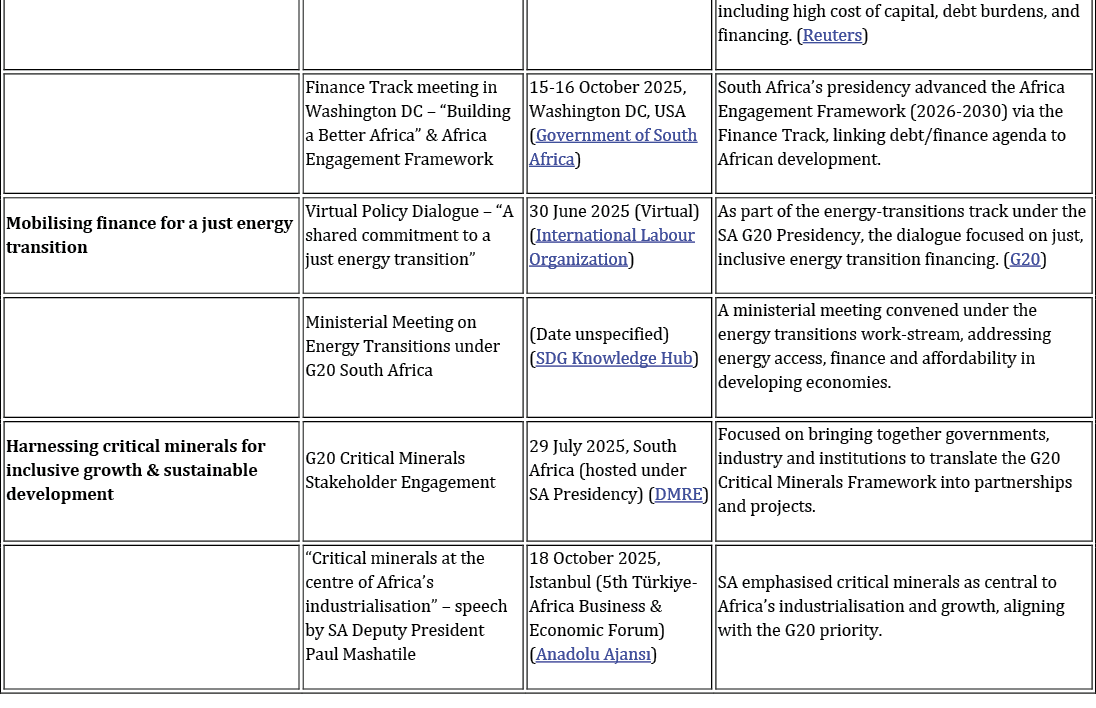
If South Africa’s G20 presidency will be remembered for one signature achievement, it may well be the G20 Finance Track Africa Engagement Framework (AEF) for 2026-2030, endorsed by G20 Finance Ministers and Central Bank Governors at their October 2025 meeting in Washington DC.
‘The AEF marks a lasting legacy and opportunities for enhanced collaboration between the G20 and Africa,’ Lamola states. Developed through extensive policy papers by the African Development Bank, Asian Infrastructure Investment Bank, World Bank, and IMF, the Framework represents an unprecedented commitment to sustained engagement with African economic and financial priorities.
The AEF prioritises African fiscal and macroeconomic challenges, institutional governance improvements and development of regional infrastructure aligned with the AfCFTA and AU Agenda 2063. It also seeks to reduce Africa’s high cost of capital and enhance private sector finance and strengthen the role of international financial institutions in African development. South Africa has committed to supporting the AEF through 2030, including resource dedication, coordination, and collaboration with the African Union and African institutions. This will ensure that the momentum generated during its presidency endures long after the gavel passes to the next host nation.
Throughout 2025, the Finance Track’s focus on Africa grew significantly, with multiple ministerial meetings, working groups, and workshops addressing the continent’s economic and financial challenges. This sustained engagement represents a fundamental shift in how the G20 views its relationship with Africa.
Amplifying African Voices in Global Governance
The African Union’s recent inclusion in the G20 provided a historic opportunity that South Africa leveraged masterfully to amplify Africa’s voice in global economic governance. President Ramaphosa launched the Africa Expert Panel in March 2025, comprising leading African experts across economic and development fields. The Panel provided strategic advice to the Minister of Finance, Enoch Godongwana, whilst former Minister of Finance Trevor Manuel, serving as Panel Chair, briefed G20 Deputies and Ministers on Africa’s policy challenges and priorities at their July 2025 meeting.
The Panel’s Plan for Action, which was issued in October 2025, calls for a fundamental change that emphasises several focus areas such as infrastructure, energy and human capital. What is most important is that work that is currently being done will continue beyond 2025.
AU Ministers and Central Bank Governors expressed strong support for sustained G20 engagement during their October 2025 meeting in Johannesburg thus endorsing the Africa Engagement Framework as a durable mechanism for ongoing collaboration. Africa must cease to be viewed as a supplicant and must be valued as a partner, with relationships based on mutual interest rather than benevolence.
Investing in Africa’s Youth Dividend
By 2050 over a quarter of the world’s population will live on the African continent. Around 2.5 billion people will call Africa home, making it the world’s youngest region with a median age of roughly 19. This youthful population represents decades of potential for a dynamic labour force if the right investments are made in skills and productivity. This is a strategic asset that will expand the world’s intellectual resources and position the continent as a catalyst for global growth.
However, youth unemployment remains a critical challenge. There are too many young people who are not in education, employment or training (NEET). South Africa’s presidency secured important commitments through the Nelson Mandela Bay G20 Youth Target, which asks G20 members to reduce NEET youth by another 5% by 2030. This represents a direct investment in social stability and future productivity.
The inaugural Global SME Ministerial Meeting co-hosted by South Africa placed small businesses at the heart of the global trade agenda. These enterprises are the backbone of African job creation. The Framework Working Group emphasised that technology and artificial intelligence can boost productivity across the continent. Africa’s youth dividend can only be realised through deliberate investment in education and skills development.
Bringing Civil Society to the Table
South Africa established a comprehensive Framework for Engagement Groups to ensure inclusive and meaningful participation in the G20 process. This framework details processes for consolidating inputs and integrating recommendations from formal engagement groups like W20, Y20, L20, C20, and B20, as well as informal community stakeholders.
‘We guarantee that the lived experiences of ordinary citizens, particularly the most vulnerable, are reflected in the final Declaration,’ Lamola explains. Engagement groups organised consultations with their constituencies through outreach programs, roundtables, and public lectures, with civil society establishing weekly stocktaking meetings to monitor progress and ensure stakeholder feedback continues to influence evolving drafts.
A National Stakeholder Workshop consolidated diverse contributions, allowing groups to identify thematic areas of convergence and strengthen consensus. The Department of International Relations and Cooperation, in partnership with the Presidency and international partners, provided technical and logistical support to ensure representatives from diverse backgrounds, including youth, women, persons with disabilities, and grassroots communities, could participate meaningfully.
By simply institutionalising civil society participation, South Africa has demonstrated that effective global leadership requires legitimacy derived from broad consultation and inclusion.
Economic Benefits Beyond Diplomacy
Hosting G20 events has delivered measurable economic benefits for South Africa. According to the World Travel and Tourism Council, the country’s tourism sector employed 1.46 million people in 2023 and that figure is expected to increase to 1.7 million jobs. In addition, tourism’s direct and indirect contribution to GDP reached 8.2% in 2023 and 8.8% in 2024. The hosting of the G20 Summit will boost these figures further and strengthen the sectors contribution to economic growth and job creation. Hundreds of delegates, including ministers, government representatives, global media, business leaders, and support staff attending the November Leaders’ Summit will generate substantial demand for services. From hotel bookings to dining experiences.
Beyond immediate tourism impacts, renewed confidence is evident in the strengthening rand and rising foreign direct investment that are reflections of trust in South Africa’s economic trajectory. The presidency has positioned South Africa as a credible broker between developed and developing economies, potentially unlocking new trade and investment opportunities long after the summit concludes. It is also during this period that the country was removed from the Financial Action Task Force (FATF)’s grey list.
A New Paradigm for Global Cooperation
As South Africa prepares to host the November Leaders’ Summit in Johannesburg, its G20 Presidency stands as a turning point in how global economic governance can serve humanity. The theme of Solidarity, Equality, and Sustainability has moved beyond rhetoric to become a living framework for action. Under this banner, South Africa has sought to ensure that the world’s most powerful economies not only listen to Africa but act in ways that advance fairness, inclusion, and shared progress.
Reflecting on the journey, Lamola said, ‘Our presidency was not about prestige but about purpose. It was about proving that Africa’s leadership can shape solutions that work for all, not just a few.’ His words capture the spirit of a year defined by cooperation and conviction. South Africa’s presidency has shown that when nations commit to acting collectively, they can rebuild trust in the global system and open pathways to peace, equality, and prosperity for future generations.
The real test of this leadership will unfold in the years ahead. The Africa Engagement Framework will help track whether promises on debt relief, climate finance, and youth employment are met with measurable results. By embedding accountability into the process, South Africa has given global institutions the tools to respond not only to markets but also to people’s everyday needs. The hope is that these frameworks will not fade into the archives of good intentions but instead form the backbone of meaningful change.
As the gavel passes to the next host, South Africa leaves more than policy papers behind. It leaves a vision of moral leadership anchored in empathy, justice, and solidarity. It has shown that even in an era of division and uncertainty, transformative change is possible when nations see each other as equals. In doing so, South Africa has offered the world a powerful reminder that Africa’s rise is inseparable from the future of global prosperity.
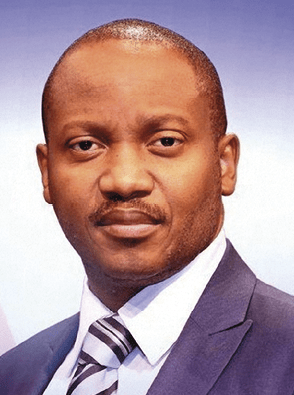
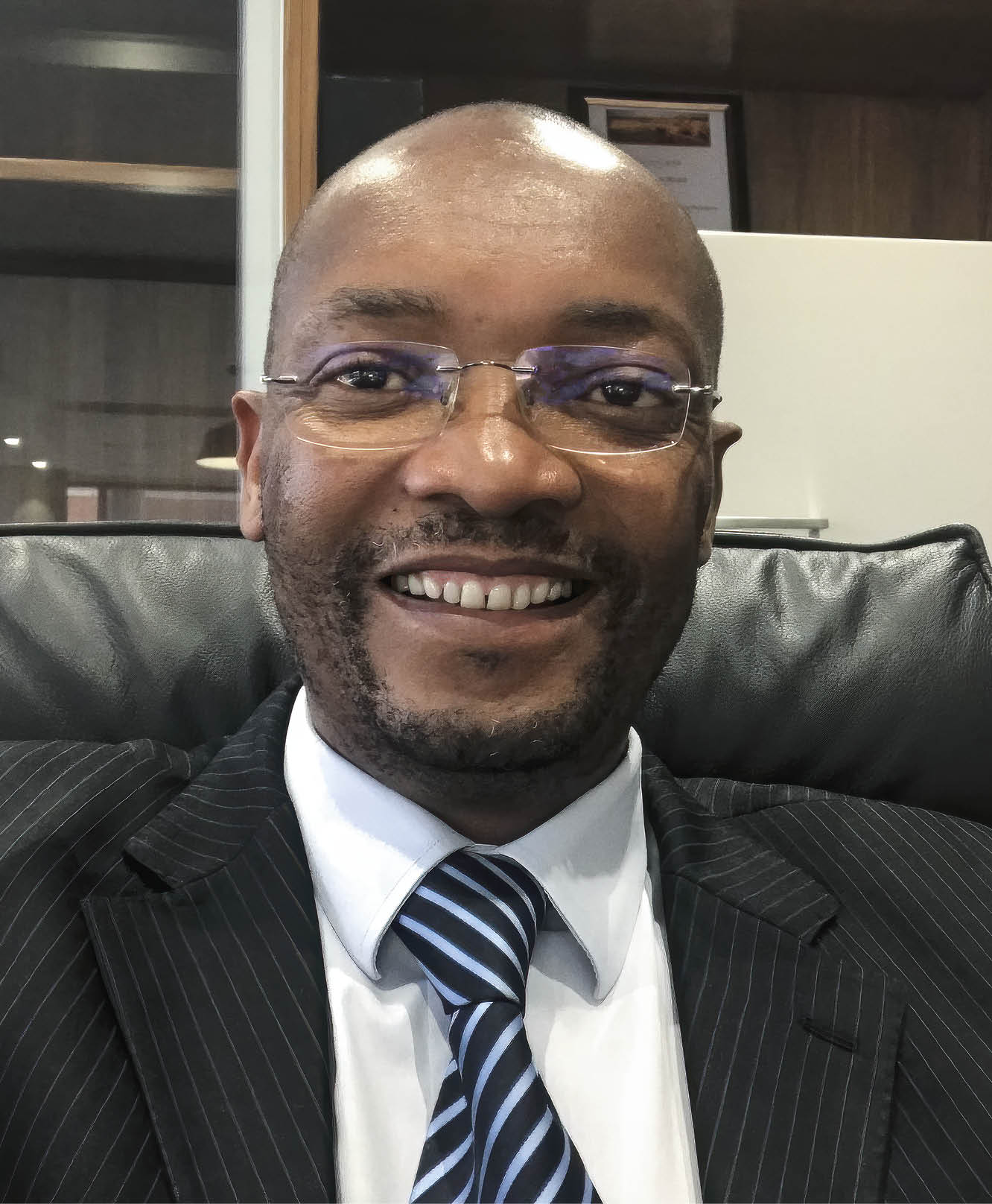
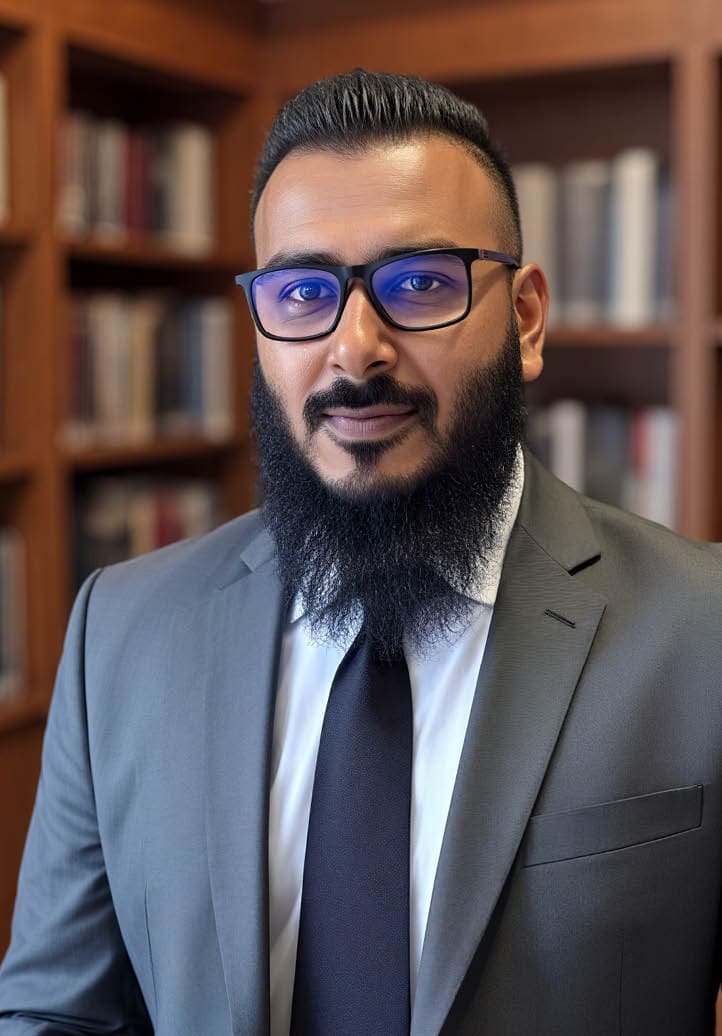
Prof Onkgopotse JJ Tabane is Editor of Leadership Magazine and Convenor of Frank Dialogue.
Reflecting on South Africa’s Year at the Helm
Minister of International Relations and Cooperation in his own words
As South Africa’s G20 Presidency nears its conclusion, what key achievements stand out?
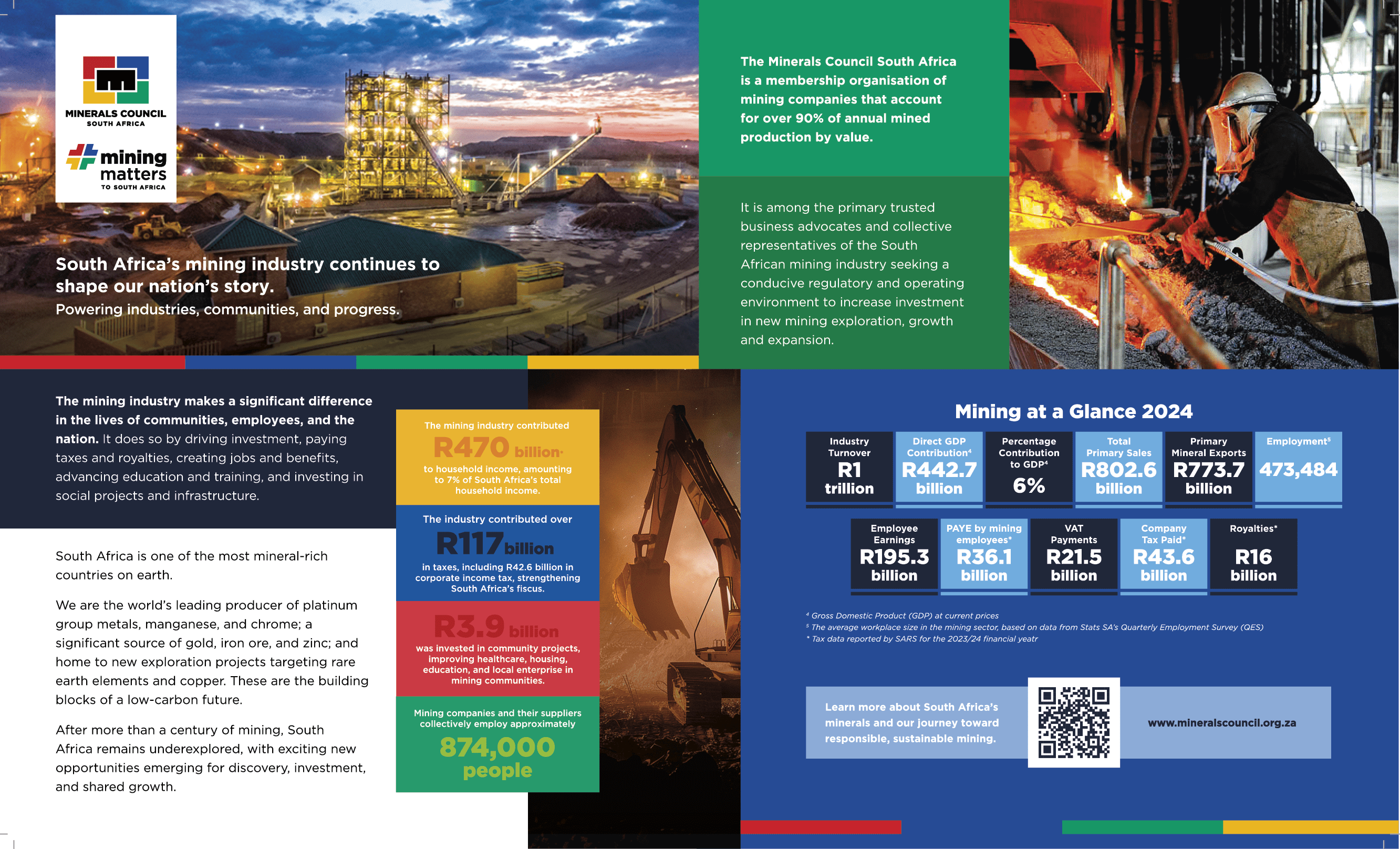
Our G20 Presidency has been transformative in advancing climate action, equity, and sustainable development. We prioritised disaster risk reduction and mobilising finances for a just energy transition in a world where climate change is now existential. Our efforts were focussed especially for the Global South. Africa’s mineral wealth which currently holds 30% of global reserves, offers an immense opportunity for industrialisation and beneficiation. This is why South Africa’s G20 agenda emphasised cooperation, local value capture, and the responsible use of these resources to power the green economy.
A notable outcome for me, was the adoption of the G20 Africa Cooperation Agenda on Trade and Investment. It is a voluntary framework supporting Africa’s economic integration. The framework strengthens the African Continental Free Trade Area (AfCFTA) by mobilising investment into productive sectors and infrastructure. One of the hindrances to our growth as a continent remains the challenges that come with continental trade and the AfCFTA is poised to address this and thus unlock Africa’s full trade potential.
We also co-hosted the first Global SME Ministerial Meeting, which placed small businesses at the centre of global trade priorities. Our African economies thrive on the contributions of small businesses and we continue to create conducive environments for them to ensure their success. SMME’s are a source of job creation and innovation in the continent and their role in the economic growth of Africa cannot be understated.
For Africa, climate change is not an abstract debate as is the case for many developed nations. For us, it is our daily reality and the recent El Niño cycle brought the worst mid-season dry spells in over a century, triggering hunger risks across Southern Africa. Our Presidency therefore underscored the urgency of resilience financing, including the Investment Action Plan on Clean Cooking, which channels investment into clean energy access for millions of households.
South Africa will continue to press for reforms to global institutions so that multilateralism delivers not only stability but also tangible development results. Our Presidency was guided by one overarching goal to bridge divides and expand opportunities for peace, equity, and prosperity. The objective here was to amplify Africa’s voice in shaping a fairer global order.
What were the main themes and outcomes under South Africa’s leadership?
Our Presidency was anchored in the theme “Solidarity, Equality, Sustainability.” The themes reflected South Africa’s conviction that global governance must be inclusive and people-centred. Key priorities included disaster resilience, debt sustainability, lowering Africa’s cost of capital, and financing just energy transitions.
From the February Finance Ministers Meeting to the October 2025 Finance Track Summit in Washington DC, our Presidency strengthened Africa’s visibility in every working group. This culminated in the adoption of the G20 Finance Track Africa Engagement Framework (AEF) 2026–2030 which is a landmark mechanism for structured collaboration between the G20 and Africa which will continue beyond our Presidency.
Working groups made concrete progress. The International Financial Architecture Group advanced debt treatment discussions for Zambia, Chad, and Ghana. This produced a Ministerial Statement on Debt and a key African Development Bank report on closing the cost of capital divide. The Infrastructure Working Group developed a toolkit for cross-border projects and launched the Ubuntu Legacy Initiative, fostering regional infrastructure collaboration.
The Framework Working Group analysed Africa’s macroeconomic vulnerabilities and the potential of technology and AI to address unemployment. The Joint Finance–Health Task Force focused on pandemic preparedness through simulations based on African scenarios, strengthening health financing capacity.
The Sustainable Finance Working Group advanced adaptation finance, carbon market transparency, and climate resilience initiatives. The Financial Inclusion track shifted global focus from mere access to actual use of financial services, while a high-level dialogue that was co-hosted by the Reserve Bank and the Bank for International Settlements (BIS) tackled Africa’s cross-border payment challenges.
The International Taxation Working Group promoted domestic resource mobilisation and stronger tax administration capacity, while the Africa Expert Panel that was chaired by Trevor Manuel, presented a visionary plan calling for a paradigm shift from aid dependence to investment-led growth.
Together, these initiatives shaped the G20 Africa Engagement Framework (AEF), prioritising fiscal reform, institutional governance, private sector finance, and regional infrastructure aligned with AfCFTA and Agenda 2063. The AEF represents South Africa’s enduring legacy as G20 President and solidifies the work that we have done to ensure that as a continent, we succeed. A united Africa, one that takes advantage of trade opportunities within the continent, implements strategies that lead to improvements in cross border payments and leverages its young population, will ultimately be a formidable force. The work has already begun and will continue beyond South Africa’s G20 Presidency.
How has South Africa amplified the voices of African and developing countries?
Africa faces a debt crisis that directly undermines social investment. Over half the continent’s 1.3 billion citizens live in countries paying more in interest than on education or health. South Africa has used its Presidency to highlight this inequality and mobilise for debt relief, fairer financing, and stronger global safety nets. The continent cannot rise to its full potential if it cannot invest sufficiently in education and healthcare due to debt servicing.
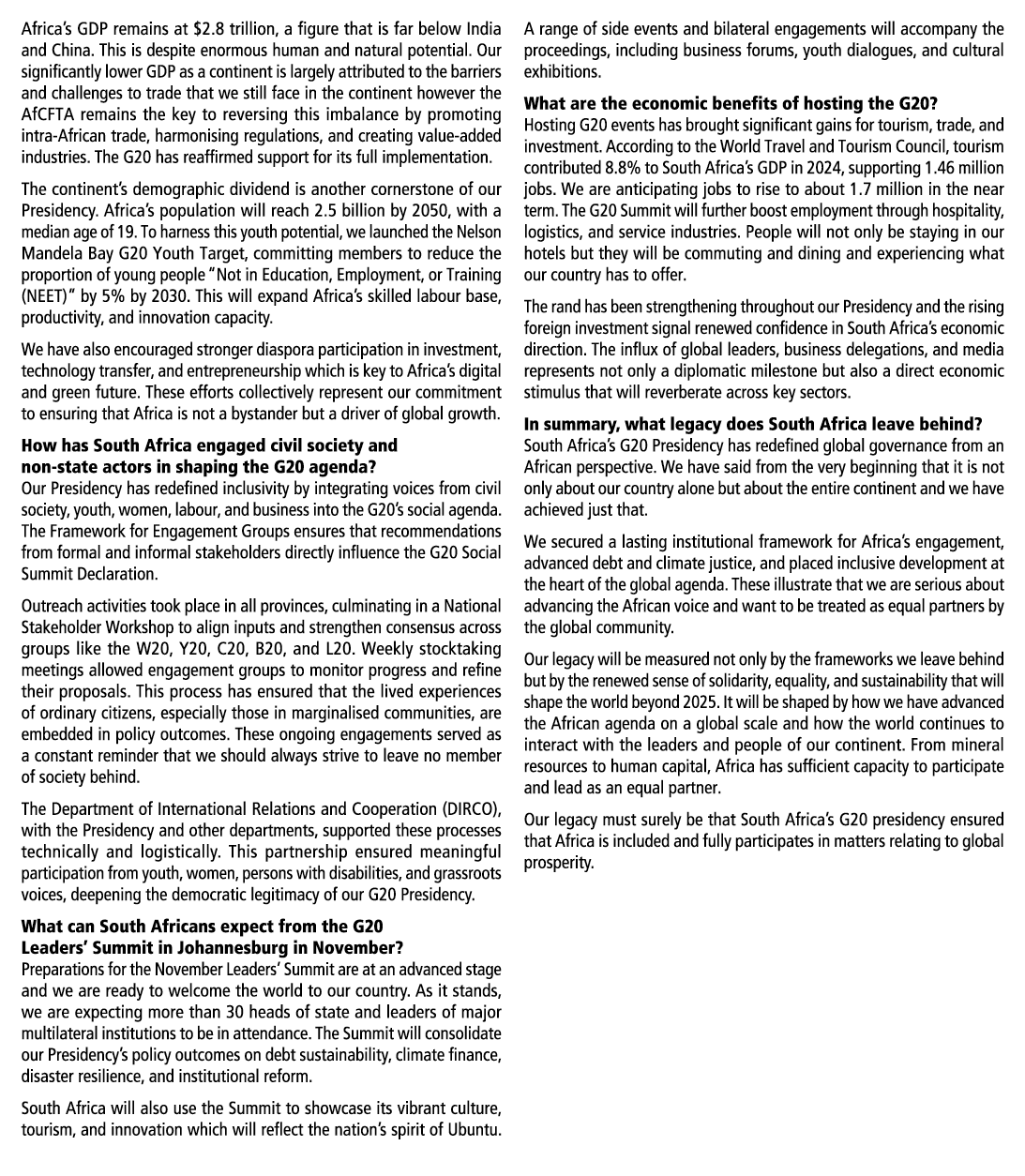
Africa’s GDP remains at $2.8 trillion, a figure that is far below India and China. This is despite enormous human and natural potential. Our significantly lower GDP as a continent is largely attributed to the barriers and challenges to trade that we still face in the continent however the AfCFTA remains the key to reversing this imbalance by promoting intra-African trade, harmonising regulations, and creating value-added industries. The G20 has reaffirmed support for its full implementation.
The continent’s demographic dividend is another cornerstone of our Presidency. Africa’s population will reach 2.5 billion by 2050, with a median age of 19. To harness this youth potential, we launched the Nelson Mandela Bay G20 Youth Target, committing members to reduce the proportion of young people “Not in Education, Employment, or Training (NEET)” by 5% by 2030. This will expand Africa’s skilled labour base, productivity, and innovation capacity.
We have also encouraged stronger diaspora participation in investment, technology transfer, and entrepreneurship which is key to Africa’s digital and green future. These efforts collectively represent our commitment to ensuring that Africa is not a bystander but a driver of global growth.
How has South Africa engaged civil society and non-state actors in shaping the G20 agenda?
Our Presidency has redefined inclusivity by integrating voices from civil society, youth, women, labour, and business into the G20’s social agenda. The Framework for Engagement Groups ensures that recommendations from formal and informal stakeholders directly influence the G20 Social Summit Declaration.
Outreach activities took place in all provinces, culminating in a National Stakeholder Workshop to align inputs and strengthen consensus across groups like the W20, Y20, C20, B20, and L20. Weekly stocktaking meetings allowed engagement groups to monitor progress and refine their proposals. This process has ensured that the lived experiences of ordinary citizens, especially those in marginalised communities, are embedded in policy outcomes. These ongoing engagements served as a constant reminder that we should always strive to leave no member of society behind.
The Department of International Relations and Cooperation (DIRCO), with the Presidency and other departments, supported these processes technically and logistically. This partnership ensured meaningful participation from youth, women, persons with disabilities, and grassroots voices, deepening the democratic legitimacy of our G20 Presidency.
What can South Africans expect from the G20 Leaders’ Summit in Johannesburg in November?
Preparations for the November Leaders’ Summit are at an advanced stage and we are ready to welcome the world to our country. As it stands, we are expecting more than 30 heads of state and leaders of major multilateral institutions to be in attendance. The Summit will consolidate our Presidency’s policy outcomes on debt sustainability, climate finance, disaster resilience, and institutional reform.
South Africa will also use the Summit to showcase its vibrant culture, tourism, and innovation which will reflect the nation’s spirit of Ubuntu. A range of side events and bilateral engagements will accompany the proceedings, including business forums, youth dialogues, and cultural exhibitions.
What are the economic benefits of hosting the G20?
Hosting G20 events has brought significant gains for tourism, trade, and investment. According to the World Travel and Tourism Council, tourism contributed 8.8% to South Africa’s GDP in 2024, supporting 1.46 million jobs. We are anticipating jobs to rise to about 1.7 million in the near term. The G20 Summit will further boost employment through hospitality, logistics, and service industries. People will not only be staying in our hotels but they will be commuting and dining and experiencing what our country has to offer.
The rand has been strengthening throughout our Presidency and the rising foreign investment signal renewed confidence in South Africa’s economic direction. The influx of global leaders, business delegations, and media represents not only a diplomatic milestone but also a direct economic stimulus that will reverberate across key sectors.
In summary, what legacy does South Africa leave behind?
South Africa’s G20 Presidency has redefined global governance from an African perspective. We have said from the very beginning that it is not only about our country alone but about the entire continent and we have achieved just that.
We secured a lasting institutional framework for Africa’s engagement, advanced debt and climate justice, and placed inclusive development at the heart of the global agenda. These illustrate that we are serious about advancing the African voice and want to be treated as equal partners by the global community.
Our legacy will be measured not only by the frameworks we leave behind but by the renewed sense of solidarity, equality, and sustainability that will shape the world beyond 2025. It will be shaped by how we have advanced the African agenda on a global scale and how the world continues to interact with the leaders and people of our continent. From mineral resources to human capital, Africa has sufficient capacity to participate and lead as an equal partner.
Our legacy must surely be that South Africa’s G20 presidency ensured that Africa is included and fully participates in matters relating to global prosperity.