


Leadership in the not-for-profit (NPO) sector requires a unique blend of purpose, resilience, and resourcefulness. Unlike corporates measured by profit margins, NPOs are assessed by the depth and sustainability of their social impact. For leaders, this means doing more with less, building trust, and creating meaningful change across diverse communities.
At the South African National Blood Service (SANBS), this approach underpins a bold five-year strategy centred on customer-centricity. By placing stakeholder needs, preferences, and expectations at the core of decisions, SANBS is cultivating leaders who listen, adapt, and strengthen trust.
Developing Customer-Centric Leadership
SANBS uses annual 360-degree feedback to track leadership capabilities critical to its strategy, such as adaptability, listening, and client focus. Insights guide both individual development and collective growth, ensuring leaders can embed customer-centric behaviours and close performance gaps. Clear behavioural anchors—Responsive with Personal Touch (Respect), Empathy in Action (Accountability), and Commitment to Excellence (Excellence)—further align leadership behaviours with organisational values.
Navigating Complexity
The NPO landscape is becoming increasingly complex. Digital transformation, donor expectations for transparency, and broader socio-economic challenges demand leaders who can act with agility, influence, and authenticity. Authority alone is insufficient; effective leadership relies on credibility and collaboration to mobilise people behind a shared mission.
Insights and Progress
Recent 360 results show SANBS executives outperforming global change-agent benchmarks in agility. Middle managers demonstrate strength in structuring and decisiveness, with growth opportunities in listening and feedback. Junior managers are building agility aligned with the customer-centric strategy. Participants scored higher than non-participants in learning agility and self-awareness, confirming the value of continuous measurement.
Succession planning has also advanced significantly since 2022. High-risk roles have halved, low-risk roles have doubled, and broader coverage has strengthened SANBS’s talent pipeline and organisational resilience.
Leading with Purpose
In the NPO space, leadership goes beyond strategy—it requires courage, compassion, and conviction. SANBS leaders are learning to balance vision with pragmatism, ensuring the organisation stays true to its mission while adapting to a changing environment. The gains in agility, self-awareness, and succession planning demonstrate commitment to building leadership capacity for the future.
The SANBS journey shows that when leaders embody purpose and put stakeholders first, they not only strengthen their organisation but also inspire wider change in society.
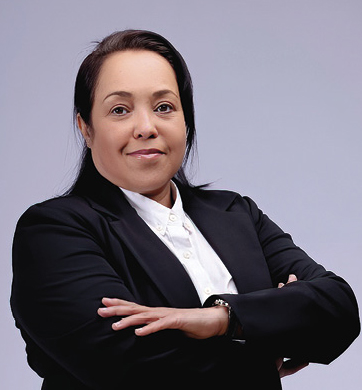
Alison Visagie, Senior Manager: Human Resources, SANBS
SANBS: blood grouping
& transfusion excellence

Zinhle Mjoli heads the SANBS Blood Grouping Lab, ensuring safe transfusions through ABO, Rh, anti-A,B titre, and syphilis testing
At the heart of South Africa’s life-saving blood supply chain is a team of unsung heroes ensuring that every transfusion is as safe as possible. One of these champions is Zinhle Mjoli, the dynamic Head of the Blood Grouping Laboratory at the Donation Testing Department (DTD) of the South African National Blood Service (SANBS).
Based in KwaZulu-Natal, Mjoli oversees one of the most critical stages in the blood donation lifecycle. The accurate and high-throughput testing of all blood donations is conducted before various products are dispatched to the hospitals and patients who need them.
Her laboratory is responsible for a comprehensive suite of essential tests, including:
- ABO and Rhesus (Rh) blood group typing
- High-titre anti-A,B antibody screening
- Irregular antibody screening
- Extended Rhesus and Kell phenotyping
- Syphilis testing.
This broad scope of testing not only confirms donor compatibility but actively safeguards against haemolytic transfusion reactions like alloimmunisation, and the spread of transfusion-transmissible infections. Zinhle’s laboratory is a fast-paced, precision-driven environment where hundreds of samples are tested daily using automated systems such as Beckman Coulter PK7400, Biorad IH1000 screening instruments, and additional confirmatory technologies.
Every test, every check, and every result serves one clear purpose—to protect patients.
“We’re not just processing samples, we’re protecting the lives of people we are likely to never see. It’s that unseen responsibility that drives our discipline, innovation, and teamwork. We are truly serving with heart,” says Mjoli.
Zinhle’s own professional and scientific growth has been shaped by the mentorship of Wendy Sykes, who has fostered a research-rich, innovation-driven environment within the Donation Testing Department. Under Wendy’s guidance, Mjoli has developed as a researcher and gained the confidence to present nationally at platforms such as South African National Blood Transfusion Congress (SANBTC).
“I’ve been incredibly fortunate to be mentored by someone like Wendy Sykes. She doesn’t just lead, she encourages exploration, academic growth, and excellence in every aspect of the work we do,” expresses Mjoli.
Her long-term vision includes developing the next generation of scientists, with a focus on advancing transfusion safety through local research. In 2025, Mjoli presented a study at the SANBTC.
The study was based on a review of high-titre anti-A,B antibody prevalence in over 1.3 million blood donations. The results revealed relevant demographic and regional trends which will further inform plasma usage policies and donor screening protocols across South Africa.
Her data showed:
- A higher prevalence of elevated titres in younger donors
- A stronger correlation among female donors
- Regional variation, with KwaZulu-Natal and Eastern Cape showing increased risk zones.
High-titre anti-A,B refers to elevated levels of natural antibodies found in group O donors. These antibodies can attack red blood cells of A, B, or AB recipients if transfused, particularly through platelets, which contain more plasma than red cell components.
This is a critical concern in transfusion medicine because not all group O blood is universally safe. Only low-titre group O plasma qualifies as universally compatible. Unchecked, these antibodies can cause haemolysis (destruction of red blood cells).
High-titre anti-A,B antibodies can lead to haemolytic transfusion reactions, which may cause:
- Jaundice
- Fever and chills
- Kidney damage
- In rare cases, shock or death.
To prevent these outcomes, SANBS conducts routine titre testing of all donations in the Blood Grouping Laboratory and flags high-titre units for restricted use.
These measures ensure that even in urgent transfusions, the right blood goes to the right patient safely. Prevalence varies by region, age, gender, and donor history. Localised research led by Mjoli’s lab aims to shape tailored risk-reduction strategies for our donor population.
Plasma from Group AB donors naturally lacks anti-A and anti-B antibodies, making it ideal for a wider range of recipients. This is why SANBS encourages more Group A and AB donors to donate plasma and platelets, as their donations are generally safer for patients with these common blood types.
Thanks to advanced testing and local research led by SANBS, these risks are carefully managed. When you donate, you’re not just giving blood – you’re giving life with science, safety, and heart.
Go donate and save three lives, or become a platelet donor at your nearest SANBS branch.
Zinhle Mjoli leads the Blood Grouping Laboratory at SANBS
Iron therapy: caring for donors, strengthening South Africa’s blood supply
Blood donation is one of the most selfless acts
a person can undertake. It saves lives every day.
Behind each pint of donated blood lies a meticulous process that ensures the safety of both the donor and the recipient. One common hurdle is low iron levels.
Iron deficiency is a leading reason donors are temporarily turned away from donating blood. At the South African National Blood Service (SANBS), we know how disheartening this can feel. A donor asked to sit out, even for their own health, may lose confidence and never return. For patients waiting for transfusions, a lost donation can mean the difference between life and death.
At this year’s South African National Blood Transfusion Congress (SANBTC), I had the opportunity to present on this very challenge. My presentation focused specifically on iron therapy interventions in the Vaal Zone, the region where I am based. The goal was to share how targeted solutions can improve donor care, reduce deferrals, and strengthen blood supply reliability.
In the Vaal Zone, we explored a solution: iron replacement help for donors with low haemoglobin levels. Our question was simple: could we help donors recover faster, feel supported, and encourage them to return to give again?
Iron deficiency isn’t unique to South Africa. It affects blood donors worldwide, particularly women and younger donors. Haemoglobin testing ensures safety on donation day but does not prevent future deferrals. Being turned away can feel like rejection and create a barrier for both donors and blood services.
With the novel iron therapy and personalised guidance, donors could restore their iron levels, transforming their donation experience. They felt supported, trust in SANBS grew, and recovery was faster, encouraging repeat donations. Supporting donor health and retention is key to a reliable blood supply.
South Africa’s healthcare system depends on voluntary blood donors. From accident victims to mothers in childbirth, thousands of patients rely on a steady, safe blood supply. By addressing iron deficiency directly, we create a ripple effect: healthier donors return more often, and more donations mean more lives saved.
While our study focused on the Vaal Zone, its lessons extend far beyond. Proper iron management can enhance donor care nationwide and across the continent, emphasising respect, support, and true partnership with the selfless individuals who give blood.
At its heart, this work is guided by one truth: when we care for donors, we care for patients. Iron therapy is reducing deferrals, improving donor wellbeing, and strengthening South Africa’s blood supply for the future.
At SANBS, we remain committed to Serving with Heart.
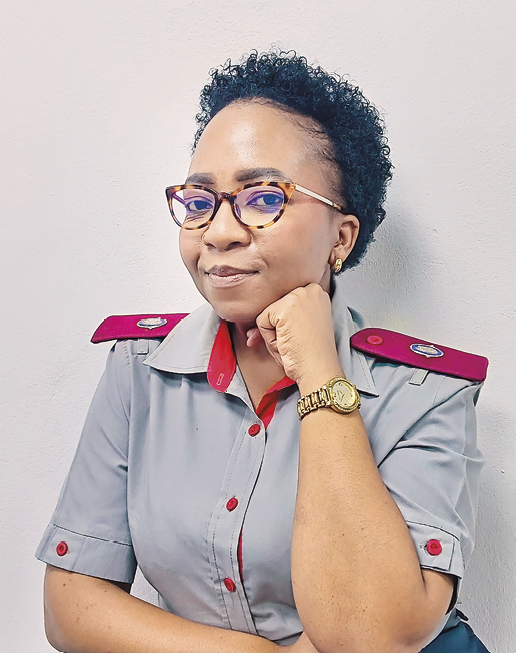
Mosa Kobe, Clinic Supervisor, Springs Donor Centre
