Leadership Editor Prof JJ Tabane sat down for a chat with Mlandzeni Boyce, Chief Executive Officer of the Republic of Mozambique Pipeline Investments Company (ROMPCO). The conversation explored South Africa’s energy security, the gas landscape, the origins of ROMPCO, the future of gas as a transition fuel, the company’s relationship with Sasol, and the leadership lessons Boyce has learned along the way.
South Africa is at a crossroads when it comes to energy. For decades, the country has relied almost entirely on coal to power homes, businesses, and industries. This dependence has created problems: high carbon emissions, unreliable electricity supply, and a lack of energy security. As the world looks to cleaner and more sustainable options, South Africa must diversify its energy mix.
Natural gas has emerged as an important alternative. It is not a perfect solution, but it burns cleaner than coal and oil and can provide reliable power while renewable energy sources such as wind and solar continue to grow. In this context, two companies play a central role: Sasol and ROMPCO. Sasol is one of South Africa’s largest energy and chemicals companies, while ROMPCO operates the pipeline that transports natural gas from Mozambique into South Africa.
Since its inception, ROMPCO has been a shining example of the success that can be achieved through a public-private partnership. Our shareholder structure reflects this: iGas (the South African state-owned gas infrastructure company) and CMG (Companhia Moçambicana de Gasoduto, Mozambique’s state-owned partner) each hold 40%, while Sasol holds 20%.
This balance of public and private ownership has been one of our greatest strengths. The beauty of a PPP, not just in Africa but globally, is that when government and the private sector work together, there is political will that ensures projects move and progress quickly. ROMPCO contributes the financing, technical expertise, and skilled workforce needed to build and maintain critical infrastructure, while our government shareholders align policy and regulation to enable long-term sustainability.
Ultimately, this model benefits both governments and their citizens. The private sector provides capital and skills that often outlive the financing period, leaving behind infrastructure that drives economic growth and improves quality of life. Our cross-border operations and diverse workforce give us a competitive edge, enabling us to remain agile and meet the distinct requirements of both Mozambique and South Africa.
This article explores the gas landscape in South Africa, the role of ROMPCO, and the opportunities and challenges that lie ahead.
South Africa’s Energy Security Challenge
South Africa generates about 80 percent of its electricity from coal. This over-reliance has left the country vulnerable. Coal plants are ageing and often break down, leading to load-shedding, rolling blackouts that disrupt daily life and economic activity.
To achieve energy security, South Africa needs to diversify its sources. Gas is a promising option because it is cleaner than coal, reducing harmful emissions. It can also provide reliable “baseload” power to keep the lights on and supports renewables by filling the gap when the sun is not shining or the wind is not blowing. For industries such as manufacturing, chemicals, and steel, gas is also an important fuel and feedstock. Without access to gas, these industries would struggle to remain competitive.
Energy security is not only about keeping the lights on. It is also about creating a stable environment for economic growth. Investors are reluctant to expand operations in a country where electricity is unreliable. By strengthening its gas supply, South Africa sends a message that it is serious about building a stronger and more resilient economy.
The Gas Landscape in South Africa
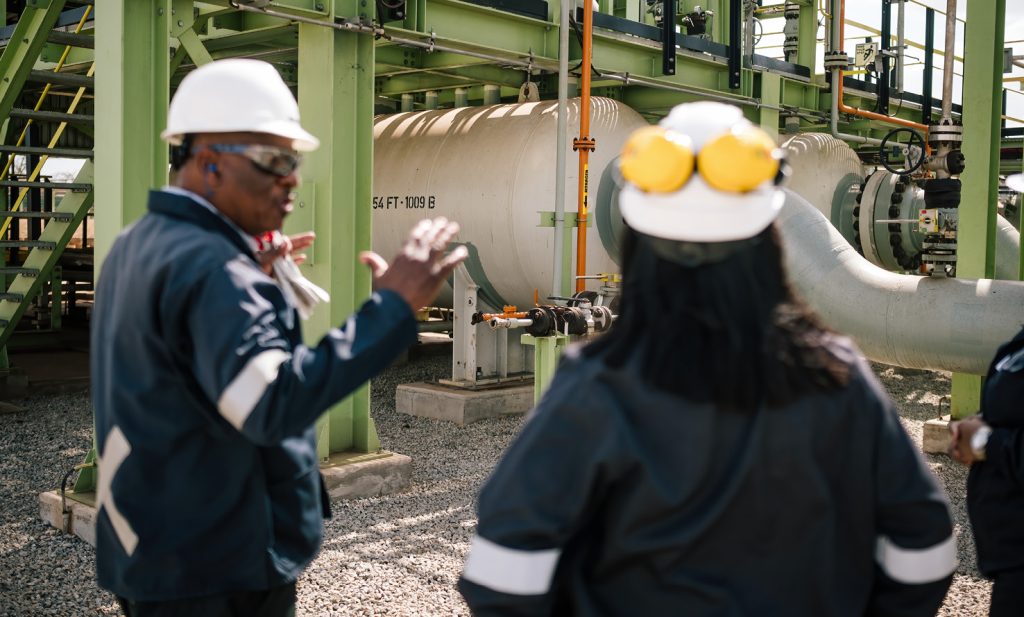
Historically, South Africa has made little use of natural gas. The country has no large-scale domestic gas production and depends mostly on imports from Mozambique. However, the situation is slowly changing. South Africa has discovered some shale and offshore gas, though these remain largely untapped. Almost all the gas used in the country today comes through pipelines operated by ROMPCO.
The market is still limited, with gas mainly used in industries, especially in Gauteng and Mpumalanga, while households have little access. Future opportunities, such as new liquefied natural gas (LNG) terminals and exploration projects, could expand supply and diversify the sector. This means that gas is both a necessity and an opportunity for South Africa’s future energy strategy.
In global terms, South Africa is still a small player in the gas sector. Countries such as Nigeria, Egypt, and Algeria have developed large gas economies that support exports as well as domestic use. But the potential for South Africa is significant. With the right investment, the country could move from being a dependent importer to becoming a regional hub for gas distribution in Southern Africa.
How ROMPCO Came About
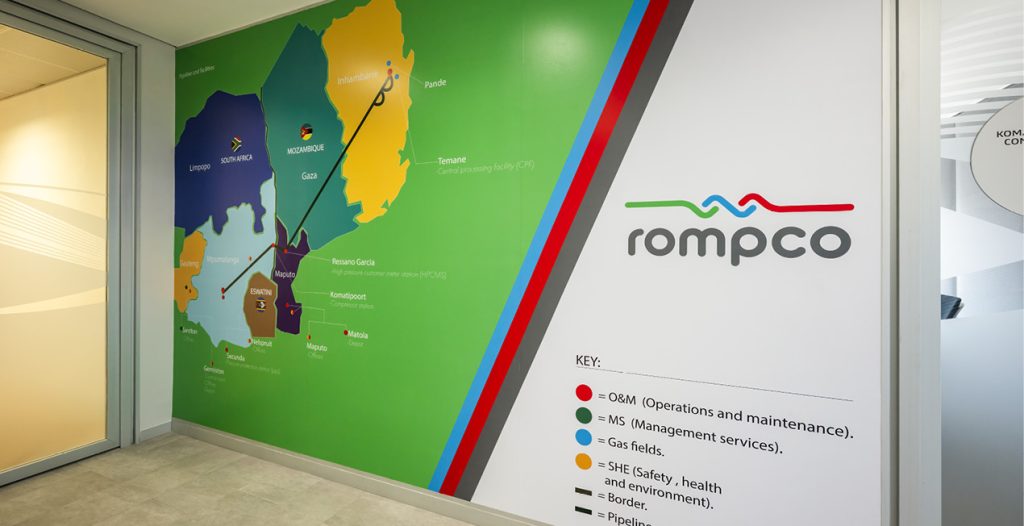
The Republic of Mozambique Pipeline Investments Company (ROMPCO) was created in 2000 as a joint venture between Sasol, the South African government through iGas, and the Mozambican government through CMG. Its purpose was to build and operate a pipeline to transport natural gas from Mozambique’s Pande and Temane fields into South Africa.
The pipeline is 865 kilometres long, running from Mozambique to Sasol’s facilities in Secunda and other industrial hubs. It was completed in 2004 and has since been expanded to meet rising demand. By creating this infrastructure, ROMPCO opened a new chapter in regional energy cooperation. It gave South Africa access to a reliable source of gas while creating economic benefits for Mozambique.
ROMPCO is also an example of what regional partnerships can achieve. Instead of working in isolation, South Africa and Mozambique built a project that benefits both nations. Mozambique earns revenue and jobs from gas production, while South Africa gains access to a stable supply of fuel. This spirit of cooperation could be extended to other neighbouring countries, turning gas into a unifying force for Southern Africa.
ROMPCO’s Role in the Gas Economy
Sasol has been a pioneer in South Africa’s energy and chemicals industry since its founding in 1950. The company developed world-leading gas-to-liquids (GTL) technology, which converts natural gas into liquid fuels and chemicals. Sasol was among the first companies to recognise the potential of natural gas as both a fuel and a feedstock. It played a central role in establishing the ROMPCO pipeline and continues to be one of its biggest customers. Its operations in Mozambique helped open cross-border energy trade in Southern Africa.
ROMPCO is repositioning itself as a player in the low-carbon economy, with natural gas at the centre of its strategy to move away from coal. This transformation is critical not just for Sasol but for South Africa as a whole. The company’s leadership in innovation and technology gives it an important role in shaping the country’s energy transition.
The Benefits of Gas for South Africa
The importance of natural gas goes beyond energy supply. It produces fewer carbon emissions and pollutants than coal and oil, making it a cleaner alternative. It supports reliable energy for industries and households, which in turn strengthens the economy. By ensuring a steady supply, the gas industry contributes to job creation, from pipeline construction to operations, and encourages economic growth across sectors.
Gas also improves South Africa’s energy security by diversifying the country’s sources of power. Relying solely on coal is risky; having gas in the mix reduces that risk. Importantly, gas strengthens regional cooperation as it links South Africa with Mozambique and builds economic ties between the two nations.
Gas also has social benefits. Expanding access to natural gas for households can improve quality of life by offering cleaner cooking and heating options compared to coal or paraffin. It also reduces health risks linked to air pollution in communities that rely heavily on coal.
Policy and Regulation
One of the biggest questions facing South Africa’s gas future is the role of government policy. Clear regulations are needed to attract investment in pipelines, LNG terminals, and gas-to-power plants. Investors want certainty, and without it, many projects risk being delayed or abandoned.
The government has spoken about its intention to include natural gas in the country’s Integrated Resource Plan (IRP), which guides future energy investments. However, the pace of decision-making has often been slow. A more decisive policy approach would help unlock private sector interest and ensure that South Africa does not fall behind other countries in developing its gas economy.
The regulatory framework must also balance competing priorities: environmental concerns, economic growth, and energy security. If designed well, it could provide a pathway for gas to serve as a transition fuel while supporting the country’s long-term shift to renewable energy.
Investment Opportunities and Risks
For investors, the South African gas sector offers major opportunities but also significant risks. Opportunities lie in building new infrastructure, such as pipelines, distribution networks, and LNG terminals. There is also potential for investment in gas-to-power projects that could help stabilise the electricity grid.
On the other hand, risks include policy uncertainty, potential resistance from environmental groups, and reliance on imports from Mozambique. Political stability in the region will also be important, as disruptions to supply would have a direct impact on South Africa’s economy.
Despite these risks, the fundamentals remain strong. Demand for cleaner, more reliable energy is growing, and natural gas is well positioned to meet that demand in the short to medium term.
Regional Integration and Cooperation
South Africa does not exist in isolation. The energy future of the region is interconnected. ROMPCO is already a success story in cross-border cooperation, but it is only the beginning. The Southern African Development Community (SADC) could benefit from a stronger regional gas network that connects producers and consumers across borders.
Countries such as Mozambique and Tanzania have large reserves of natural gas, while others such as Botswana, Zimbabwe, and Namibia have growing demand. By working together, these nations could create a regional market that ensures energy security, reduces costs, and fosters development. South Africa, with its large economy and industrial base, is well positioned to be a hub in this network.
Environmental and Climate Considerations
Natural gas is cleaner than coal, but it is still a fossil fuel. This reality means South Africa must use it wisely. Environmental groups have raised concerns that over-reliance on gas could delay the move to renewable energy. Policymakers and companies must therefore treat gas as a “bridge fuel” rather than a destination.
At the same time, natural gas can support South Africa’s climate goals by reducing reliance on coal in the short term. It also enables the growth of renewables, since it can provide backup power when the sun is not shining or the wind is not blowing. Used correctly, gas can lower emissions now while buying time for green technologies to scale up.
Skills Development and Jobs
The growth of the gas sector is not only about pipelines and power plants. It is also about people. Expanding the industry will create demand for new skills in engineering, operations, safety, and environmental management. South Africa has a large pool of young people seeking employment, and the gas sector could offer them valuable opportunities.
Training programmes, apprenticeships, and partnerships with universities could prepare the next generation of workers for careers in the energy sector. This would ensure that the benefits of the gas industry are widely shared and contribute to inclusive growth.
The Road Ahead: Gas as a Bridge to Renewables
Gas is not the destination for South Africa’s energy future. Renewables such as wind and solar will take centre stage in the long term. But gas will play a vital role in the transition period. It can stabilise the grid, support renewables, and buy time for new technologies like green hydrogen to mature.
Looking ahead, gas-to-power projects could reduce load-shedding, LNG terminals will expand supply options, and policy clarity from government will encourage much-needed investment.
Regional cooperation with Mozambique and other neighbours will also remain central to South Africa’s strategy.
International experience shows the value of gas in energy transitions. Countries such as the United States reduced emissions quickly by replacing coal with natural gas before renewables took over a larger share. South Africa can follow a similar path, adapting it to local needs and conditions.
South Africa’s energy crisis demands urgent solutions. Natural gas is not perfect, but it is an important step towards a more balanced, secure, and sustainable energy future.
ROMPCO is at the heart of the gas story it provides the infrastructure that makes gas available.
This helps to diversify South Africa’s energy mix, reduce emissions, and create opportunities for growth.
As the transition continues, gas will not replace renewables but will work alongside them. The challenge for South Africa is to seize the opportunity now, invest in infrastructure, and create policies that make gas a central part of the journey towards a secure and sustainable energy future.
The Gas Masterclass: Mlandzeni Boyce Interview
Prof JJ Tabane (JJ): South Africa is facing an ongoing energy crisis. From your perspective, what does energy security mean for the country, and how can gas help address the challenge?
Mr Mlandzeni Boyce (MB): Energy security in South Africa is a very serious matter. For too long, we have depended almost entirely on coal, and now we are seeing the results of that dependence. The power stations are old, they break down often, and the country ends up with load-shedding. This disrupts the economy, it disrupts families, and it makes investors nervous about putting money into the country.
Gas is not the perfect solution, but it is part of the answer. It burns cleaner than coal, so it can help us reduce emissions, and it can provide stable power when we need it most. Gas is flexible. You can bring it online quickly when the demand is high, and you can reduce it when renewables like wind and solar are performing well. That makes gas the best partner for renewables.
When I talk about energy security, I am also talking about confidence. If businesses and communities know they can rely on energy, they plan better, they invest more, and they create jobs. So gas is about more than just filling the gap—it is about restoring confidence in South Africa’s ability to keep the lights on.
JJ: How do you see the gas landscape in South Africa today? Is the sector where it needs to be?
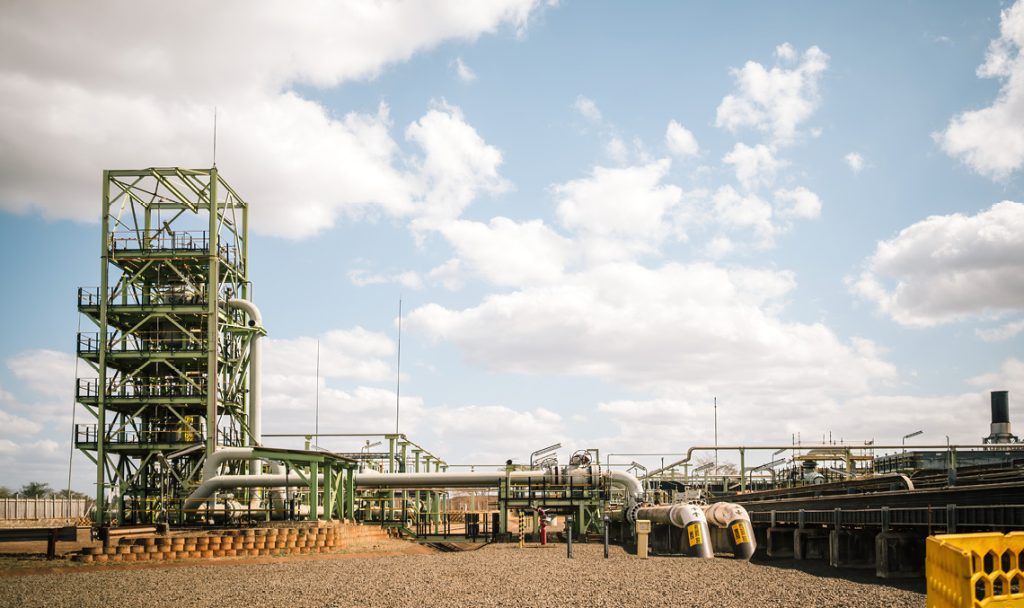
MB: The gas industry in South Africa is still very young. Right now, most of the gas we use comes from Mozambique through the pipeline that ROMPCO operates. That has been critical for industries in Gauteng and Mpumalanga, but it is still limited compared to what is possible. There are opportunities we have not yet tapped. South Africa has shale gas in the Karoo, and there are offshore discoveries near the southern coast. These could be game changers, but they come with challenges—technical, financial, and environmental. In addition, the global liquefied natural gas (LNG) market gives us another chance to expand. If we build the right terminals, we can import LNG from international suppliers, which would diversify our sources and reduce reliance on one pipeline.
The exciting part is that gas is now firmly on the national agenda. Policymakers and industry leaders are talking about it as part of the solution, and communities are starting to see the benefits. But we must be realistic. Building a gas economy requires investment, infrastructure, and most importantly, policy clarity from government. Without that clarity, it is very difficult for private investors to commit.
JJ: ROMPCO has become a very strategic player in the region. How did the company start, and what has been achieved since its formation?
MB: ROMPCO is a story of partnership. Around the late 1990s, South Africa knew it needed to look for other energy options beyond coal. Mozambique had discovered gas reserves in the Pande and Temane fields, but the gas had to reach markets if it was to be useful. That is how ROMPCO was born.
The company was established in 2000 as a joint venture between three parties: Sasol, the South African government through iGas, and the Mozambican government through Companhia Moçambicana de Gasoduto (CMG). Together, we built an 865-kilometre pipeline to bring gas from Mozambique to South Africa. The pipeline started operating in 2004, and since then, it has been expanded as demand has grown.
The impact has been huge. The pipeline supplies industries that employ thousands of people. It has created revenue for Mozambique and supported South Africa’s industrial base. For me, ROMPCO is an example of how regional cooperation can deliver real results. Two countries came together, shared resources, and built something that benefits both.
JJ: You often describe gas as a transition fuel. Can you share your vision for gas in South Africa’s future energy mix?
MB: My vision is that gas should sit at the heart of South Africa’s transition. We all know that renewables are the future. Wind, solar, and eventually technologies like green hydrogen will dominate. But we cannot switch from coal to renewables overnight. There has to be a bridge, and gas is that bridge.
Gas gives us the stability that renewables need. It allows us to reduce emissions quickly by replacing coal, but at the same time, it creates room for renewables to grow. Gas is not only about electricity. It can also be used for transport, for cooking and heating in households, and as a raw material for industries.
If we think bigger, gas can also drive regional integration. Mozambique has reserves. Namibia and Tanzania are also developing gas projects. South Africa has the demand and the infrastructure. If we connect all these pieces, we can create a regional gas market that is strong and sustainable. That is the future I see: gas helping South Africa transition, while also connecting Southern Africa in a new energy economy.
JJ: ROMPCO and Sasol have a very close relationship. How important is that partnership for your work?
MB: Sasol is a key partner, and I must say that without Sasol, there would be no ROMPCO. It was Sasol that had the vision to invest in the pipeline and to commit to using gas at a time when it was not a popular option. They developed world-class gas-to-liquids technology, and they gave the project the credibility it needed.
Our relationship with Sasol is both commercial and strategic. On the commercial side, they are a major customer, taking gas from the pipeline for their operations in Secunda. On the strategic side, we share a vision of how gas can help South Africa transition to a lower-carbon economy.
What I also respect is Sasol’s commitment to communities. They have invested in social projects, skills development, and local businesses, both in Mozambique and in South Africa. That aligns with our values at ROMPCO. For us, this partnership is not just about energy; it is about shared progress.
At ROMCO, we are equally committed to uplifting communities. Together with our shareholders, we invest in social projects, skills development, and local businesses in Mozambique and South Africa. This ensures that our work goes beyond energy–it contributes to sustainable socio-economic growth.
JJ: You lead a company that operates in a very complex environment. What leadership lessons have you learned along the way?
MB: The first lesson is that partnership is everything. Energy projects are too big and too complex for one company or one government to do alone. ROMPCO exists because three partners came together, and every day we are reminded that collaboration is the key to success.
The second lesson is the importance of vision. In this industry, projects take years, sometimes decades. If you are only thinking about the short term, you will lose your way. You need a clear long-term vision and the discipline to stay focused, even when challenges come.
The third lesson in humility and listening. A leader cannot just issue instructions from the top. You must listen to employees, to communities, to governments, and to partners. When people feel heard, they trust you. And trust is the foundation of leadership.
I also believe in integrity. This sector involves huge investments and high stakes. If you lose trust, you lose everything. So, integrity is not negotiable.
JJ: ROMPCO is often cited as a successful example of a public-private partnership (PPP). How has this PPP model, and your shareholder structure, contributed to ROMPCO’s success and impact over the years?
MB: Since its inception, ROMPCO has been a shining example of the success that can be achieved through a public-private partnership. Our shareholder structure reflects this: iGas (the South African state-owned gas infrastructure company) and CMG (Companhia Moçambicana de Gasoduto, Mozambique’s state-owned partner) each hold 40%, while Sasol holds 20%.
This balance of public and private ownership has been one of our greatest strengths. The beauty of a PPP, not just in Africa but globally, is that when government and the private sector work together, there is political will that ensures projects move and progress quickly. ROMPCO contributes the financing, technical expertise, and skilled workforce needed to build and maintain critical infrastructure, while our government shareholders align policy and regulation to enable long-term sustainability.
Ultimately, this model benefits both governments and their citizens. The private sector provides capital and skills that often outlive the financing period, leaving behind infrastructure that drives economic growth and improves quality of life. Our cross-border operations and diverse workforce give us a competitive edge, enabling us to remain agile and meet the distinct requirements of both Mozambique and South Africa.
JJ: What message would you give to young professionals who want to enter the energy sector?
MB: My message is that energy is not just a career—it is a calling. Energy is what powers development. Without it, there are no jobs, no industries, no progress. So, if you choose this sector, you are choosing to make a difference in people’s lives. I would encourage young people to stay curious and keep learning. The energy world is changing rapidly. New technologies are coming, new policies are shaping markets, and new challenges are emerging. If you keep learning, you will stay relevant.
I would also tell them to think beyond borders. South Africa’s energy future is linked to the region and the world. Opportunities will come from collaboration across countries, so prepare yourself to work in that global context.
And lastly, always act with integrity. People will trust you if you are honest, and that trust will open doors.
Prof JJ Tabane is the editor of Leadership magazine
www.leadershiponline.co.za |