

Repositioning a national youth institution through shared leadership
When loveLife was established 27 years ago as a Cabinet-endorsed partnership between the South African Department of Health and non-state actors, it was answering an emergency. HIV incidence among South Africans under 25 was among the highest in the world.
What followed was one of the most ambitious behaviour-change experiments this country has attempted: a national target to halve new HIV infections among youth, pursued through mass media at scale, youth-friendly health services, and peer-led community outreach.
It worked, and it worked visibly. Within two years, Y-Centres stood in every province, and Youth Zones and the groundBREAKERS programme moved through clinics, schools, and townships. Over four million young people were reached, and more than 80% of young South Africans reported knowing or participating in loveLife programming. National HIV prevalence among youth fell from 10.3% in 2005 to 8.6% in 2008. loveLife was not a project. It was a household name.
Then the ground shifted. The Global Fund’s withdrawal in 2005 removed roughly 30% of the budget overnight, and the donor landscape moved from large unrestricted grants to project-based funding. The national HIV response pivoted towards treatment expansion, quietening the era of mass prevention campaigning. COVID-19 redirected public resources. The 2025 United States foreign aid pause left South Africa with an immediate R2.82 billion financing gap, and allocations to organisations like loveLife contracted further. An organisation that everyone knew became an organisation few young people could name.
What I Inherited
The financial story is the one most people tell. It is not the whole story, and it is not the part that leadership could not control.
Beneath the funding narrative sat something more corrosive: a collapse in executive continuity. Through the mid-2010s and into the early 2020s, loveLife had enjoyed relatively stable medium- to long-term executive terms. From 2022, that continuity gave way to acute turbulence, consecutive executive vacancies, protracted recruitment cycles, and a sequence of ad hoc interim and transitional arrangements. In March 2023, the Board Chairwoman assumed the executive function in an acting capacity to fill the gap at the helm.
That arrangement kept the lights on. It also fused governance and management into a single point, creating exposure to board overreach and suspending the organisation’s capacity to reposition itself. An organisation cannot chart a five-year strategy while its leadership horizon is measured in months. What I inherited was not simply an underfunded NGO, but an institution suffering from chronic top-tier disruption, the very mechanism through which capable NGOs decline.
The diagnosis mattered, because it determined the treatment. A funding problem invites a fundraising response. A legitimacy and continuity problem demands a leadership response.
The Leadership Choice
I deliberately did not reach for the heroic turnaround playbook, the decisive individual imposing direction from the top. That model would have been the fastest route back to the fragility we had just survived, concentrating the organisation’s future in one person again. Bolden (2016), Uhl-Bien and Arena (2018), and Holbeche (2019) are consistent: hierarchical, personality-driven leadership produces stability that is brittle and adaptability that is absent.
Instead, I anchored the repositioning in two integrated approaches. Collaborative leadership; the convening of diverse stakeholders around shared problems through dialogue, trust, and joint decision-making (Chrislip and Larson, 1994; Ospina et al., 2020) became the external strategy. Inclusive leadership; openness, accessibility, psychological safety, and the genuine valuing of diverse contributions (Carmeli et al., 2010; Randel et al., 2018) became the internal strategy. After years of instability, staff needed to know their voice carried weight and their tenure was secure enough to invest in.
Underpinning both, Relational Leadership Theory (Uhl-Bien, 2006) and Shared Leadership Theory (Pearce and Conger, 2003) reframed leadership as distributed practice rather than positional authority. Deliberately dispersing leadership across provincial teams, programme leads, and the groundBREAKER cadre meant the organisation’s stability would no longer be hostage to any single appointment, including mine.
What the Organisation Itself Reports
The claim that leadership practice has changed cannot rest on the assertion of the person who changed it. In interviewing members of the executive and management committee, these are what they had to say after observing the revolution.
The first finding is that the shift is dated, not diffuse. Long-serving managers independently locate a change point rather than describing a gradual mood improvement and several contrast it explicitly with what preceded it.
“Previously I wasn’t sure. I seriously was not sure–and I’m talking two and a half years back, I was not sure in terms of the leadership. But right now I would say we have visionary leadership. There’s a clear direction.”–National Manager, 15 years of service.
“The leadership has had a chance to sit, review, take inputs, and then the decision is taken. Unanimously, not from one person. That’s how the past 18 months have been.”–National Manager, 18 years of service.
The first of these participants went further, estimating employee engagement as having risen from roughly 10–15% to 65–70% across the same window, and describing internal communication as having moved “from a totally low perspective” to high. These are perceptions rather than instruments, but their convergence across unrelated portfolios is itself the finding.
The second finding is that collaboration is now producing work the organisation could not previously produce. Three participants, in three separate interviews and without prompting, named the same instance: a regional funding proposal built by a cross-functional team rather than a single unit.
“There was a lot of collaboration, there was a lot of inclusiveness which had assisted the organisation positively. Rather than us working in silos–we would not have reached where we are. We went to the region and it’s not our comfort zone, but still we had to come together to make sure that we put a good presentation to them, despite that we have never done it before.”–National Manager and Acting Provincial Manager, 7 years of service.
“I really felt like everyone was included. Everyone felt like they matter within the organisation. Their inputs matter.”–National Manager, 18 years of service.
The third finding is the one that matters most for repositioning: collaboration is converting into external visibility. A 20-year veteran of the organisation described loveLife’s presence at the last AIDS Conference, an evidence platform the organisation had drifted away from during the decline.
“It was a resounding success. We actually presented a paper. Because of collaboration, we were able to have a study. And the team–from the groundBREAKERS to the managers–everybody showed up. Even the minister had to ask us to arrange for a walk the next morning, and almost the whole AIDS Conference had to walk behind the minister. And all that because loveLife was there and loveLife was leading in that. That’s a beautiful story of collaboration.”–Provincial Manager, 20 years of service.
The same interviews are candid about what remains unfinished; residual silos, uneven feedback loops after consultation, and pockets where staff still hesitate to speak freely. I regard that candour as evidence in its own right: an organisation where people will name the gaps to the Chief Executive is an organisation in which psychological safety is being rebuilt rather than performed.
What the Resurgence Looks Like
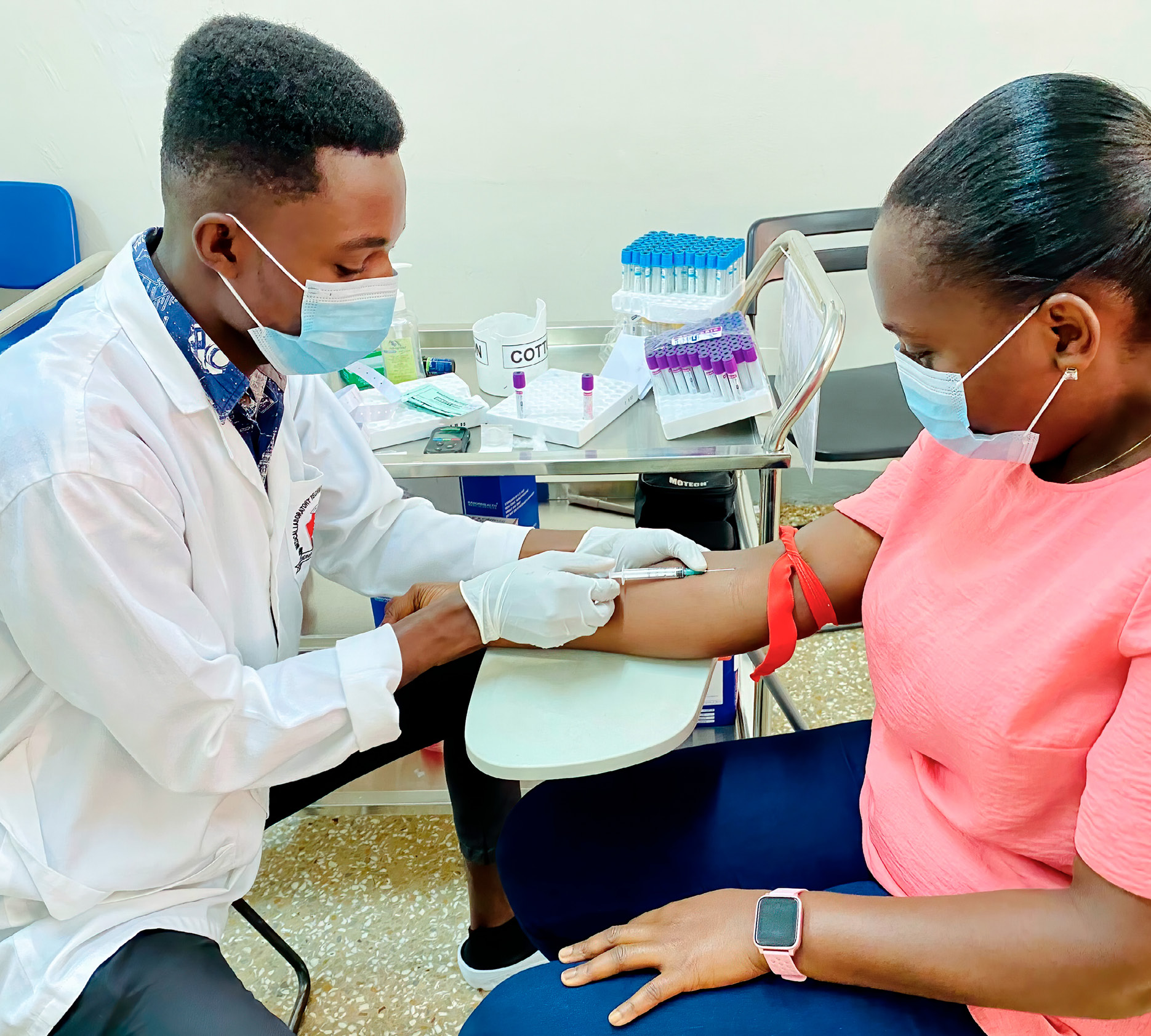
The 2025 results describe an organisation that is not merely surviving. In one year we facilitated over 44 000 sexual and reproductive health referrals, conducted nearly 10 000 HIV tests, delivered almost 55 000 health screenings, and held more than 92 000 health talks and over 4 000 youth dialogues. More than ten million condoms were distributed nationally.
Our Psychosocial Support Contact Centre handled 58 673 legitimate engagements, peaking at 6 982 in July–young people bringing relationships, HIV, contraception, gender-based violence, and pregnancy to a service they trusted enough to call.
And the household name is returning. The PowerInMe campaign reached more than five million young people. Our digital platforms now reach over four million annually. Forty community radio partnerships carry us to an estimated 2.3 million listeners. The refurbished Purple Couch has become a national conversation space.
Collaboration as the Engine
Every one of those numbers is a partnership. exceeding six million viewers, a reach no NGO budget could purchase. The Showmax ‘Youngings’ partnership extends that logic to streaming audiences, and community radio delivers cultural credibility we could never manufacture centrally.
Government, corporate, and philanthropic partners enabled us to steward more than R98 million and deliver another clean, unqualified audit opinion–the legitimacy signal that reopens donor doors.
This is Bryson, Crosby, and Stone’s thesis demonstrated in practice. We did not rebuild reach by rebuilding infrastructure. We rebuilt it by building relationships.
The Work Ahead
The environment remains hard. The Department of Sport, Arts, and Culture withdrawal left a real gap. But the organisation absorbing that shock is structurally different from the one that absorbed the Global Fund cut two decades ago: its leadership is distributed, its partnerships are diversified, and its legitimacy is documented.
As 2026 closes our current strategic cycle, the next chapter is a digitally connected youth health ecosystem, AI-enabled, data-driven, ethically governed. loveLife is becoming a household name again. This time, it belongs to a movement rather than a moment.
We have reached millions. We have transformed futures. And together, we are only just beginning.
| www.leadershiponline.co.za
Big Debate
Big Debate
The ‘Scandal!’ collaboration placed evidence-based storylines on HIV prevention, gender-based violence, and mental health in front of audiences
Big Debate
Leading with purpose
For almost 30 years, Magda Koster has been at the heart of JLR’s evolution, building a career that has traversed dealership operations, national leadership and international assignments at the company’s global headquarters in the United Kingdom
Few leaders have experienced the business from as many perspectives, giving her a unique understanding of what it takes to translate global strategy into meaningful customer experiences across diverse markets.
Today, as Parts and Accessories and Customer Service Commercial Manager for JLR SA and SSA, Magda plays a pivotal role in shaping the ownership experience long after customers drive their vehicles off the showroom floor. Leading commercial strategy across parts, after-sales and customer service, she is responsible for ensuring that every interaction reflects the premium standards, craftsmanship and modern luxury philosophy synonymous with the JLR.
For Magda, that premium ownership experience is increasingly defined by convenience, responsiveness and simplicity. Customers expect high-quality parts with quick turnaround times and minimal vehicle downtime, supported by skilled technicians capable of resolving issues correctly the first time. Convenience measures such as vehicle collection and drop-off also demonstrate respect for customers’ time, while prompt and transparent communication helps build the trust that ultimately encourages customers to return to the brand.
Throughout a career defined by continuous growth and transformation, Magda has remained guided by a leadership philosophy built on integrity, transparency and trust. Whether working alongside retailers, global colleagues or regional teams, she believes that authentic leadership is rooted in empowering people, fostering collaboration and creating environments where individuals feel valued, respected and inspired to contribute their best.
Her experience across different levels of the business has also shaped the way she approaches decision-making. Having worked close to customers as well as within broader national and global structures, Magda understands both the need for quick, impactful decisions at retail level and the complexities that can require more time at manufacturing and global level. She is known for acting quickly and believes strongly in respecting other people’s time.
Her international experience across Asia-Pacific, Europe, Africa and Latin America has reinforced an important leadership lesson: while every market, culture and customer is different, the foundations of successful relationships remain the same. Listening with intent, communicating openly and building trust are universal principles that transcend borders and create lasting business success.
That experience has also taught her that respect and trust can look different across cultures. Some teams value open debate with leaders, while others place greater emphasis on hierarchy; in some markets trust is built through speed and delivery, while in others personal relationships and consistency carry greater weight. For Magda, effective global leadership therefore requires adapting communication to the audience while recognising that one size does not fit all.
Passionate about leading through change, Magda sees transformation not as a process imposed on people, but as a journey undertaken with them. She believes that meaningful progress happens when leaders communicate with honesty, demonstrate empathy and create a shared sense of purpose, enabling teams to embrace change with confidence rather than resist it.
As the automotive industry continues to evolve through digital innovation, electrification and changing customer expectations, Magda remains committed to developing future-ready teams while delivering exceptional customer experiences. Looking back on a career spanning nearly three decades, she hopes her legacy will not simply be measured by commercial success, but by the trust she earned, the people she inspired and the positive impact she made on every team and every role she had the privilege to serve.