

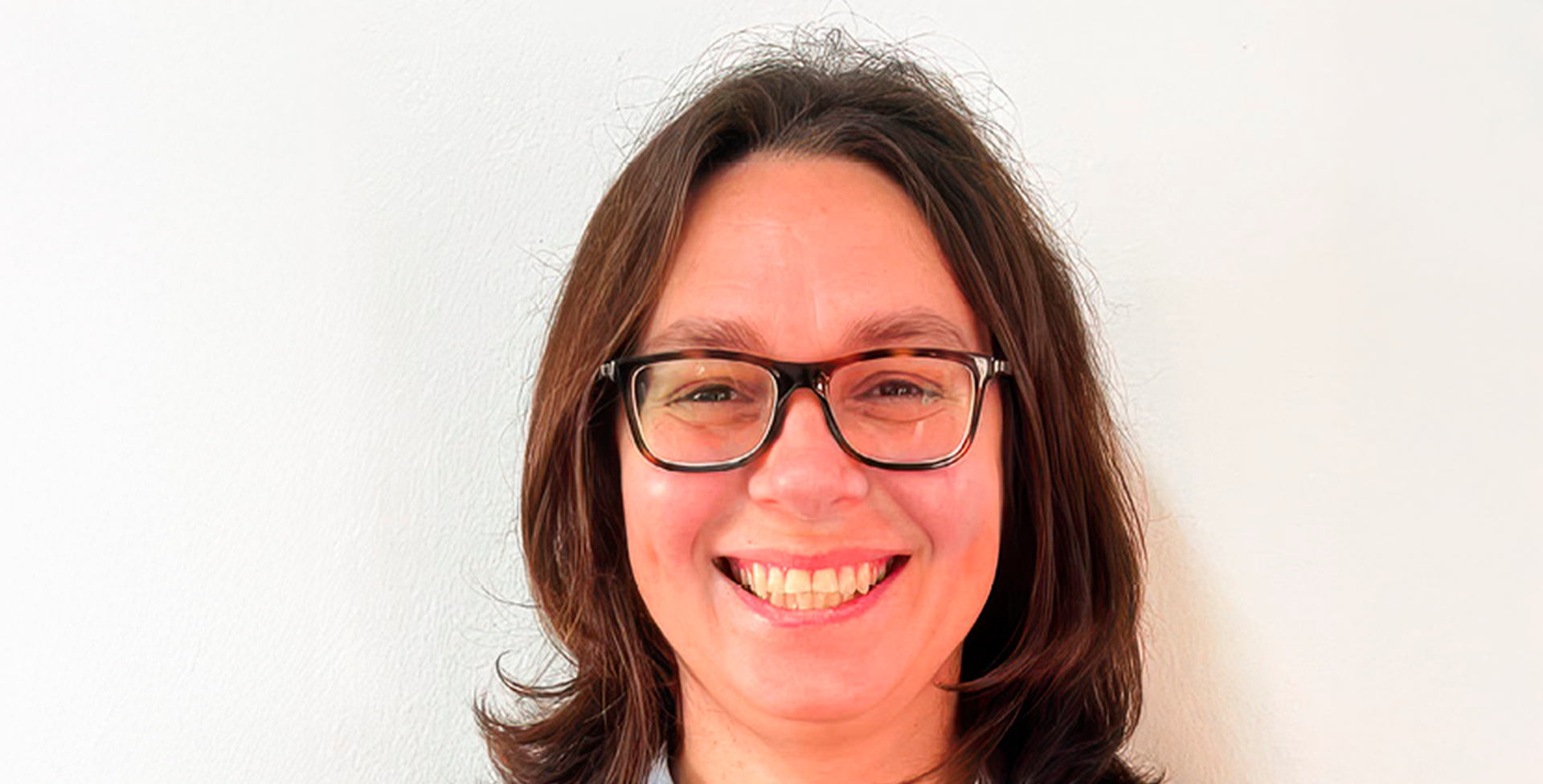
For Dr Debbie Claassen, Chief Scientist at the Council for Geoscience, the value of science ultimately lies in its ability to serve society
After 19 years in geology, her work spans geological mapping, mineral potential and land degradation research, providing knowledge that can inform everything from mining and exploration to infrastructure planning and the protection of rural communities. At the heart of it all is a remarkably straightforward professional philosophy: be useful.
Dr Claassen was just 22 when she began her career as a Junior Geologist at the Council for Geoscience’s (CGS) regional office in Gqeberha.
It provided an early opportunity to participate in a wide variety of projects across the Eastern Cape and, importantly, to learn from experienced industry professionals. Nineteen years later, those foundations have helped take Dr Claassen from junior geologist to Chief Scientist.
Along the way, she has developed expertise across geological mapping, Quaternary science, neotectonics, sedimentology and land degradation research, while completing a doctorate in Geology from Nelson Mandela University.
“The skills I learned as a young scientist led me to the work I currently do,” she explains.
Today, much of that work involves leading tasks within the Integrated and Multidisciplinary Geoscience Mapping Programme (IMMP) across South Africa.
The programme produces geological maps and investigates lithostratigraphy, structural geology, geohydrology and mineral potential across areas including the Cape Fold Belt, Karoo Basin and Cenozoic environments.
While highly technical, the implications of this work extend far beyond the scientific community.
Building the knowledge beneath mining
Reliable geoscientific information provides an important foundation for understanding South Africa’s mineral and energy resources.
Through the IMMP, Dr Claassen and her colleagues investigate and model geological environments and mineralising systems, contributing to the fundamental body of information available to those making decisions about the country’s resources.
“The collection, analysis and interpretation of fundamental geoscientific data undertaken by not only me, but a team of dedicated scientists within the CGS provides a valuable resource for stakeholders and decision-makers in the mining sector,” she says.
That work assumes particular importance at a time when South Africa’s mining industry faces significant challenges.
Dr Claassen points to mining’s continuing contribution to GDP, exports, employment and government revenue, as well as the economic lifeline it provides to communities around the country.
At the same time, the industry’s dominance has diminished over the longer term.
Declining ore grades, maturing deposits, rising extraction costs and the increasing difficulty associated with identifying and developing new mineral resources all present challenges.
Yet those pressures also strengthen the case for scientific investment.
Dr Claassen believes integrated research and improved national geoscience datasets can help stimulate new exploration and mineral-resource assessment while supporting infrastructure planning and better-informed government decision-making.
There are also areas in which she would like to see the industry itself evolve.
Greater inclusion is one of them, particularly through better support for small-scale miners and the formalisation of artisanal mining activities.
For Dr Claassen, strengthening the science underpinning the sector and broadening participation within it can both contribute to a more sustainable future.
Science with tangible consequences
The importance of geoscience is not limited to what lies beneath the ground waiting to be discovered or extracted.
Sometimes its value is visible at the surface.
One of Dr Claassen’s recently completed projects investigated the formation and evolution of erosional gullies around Mthatha, where parts of the north-eastern Eastern Cape experience extreme land degradation.
The research examined the distribution of gullies, erosion mechanisms and rates of expansion over decades, considering both natural and human drivers. It also explored the influence of lithostratigraphy and physicochemical properties on erosion.
Crucially, however, the research did not end with understanding the geological processes involved.
The study also assessed the susceptibility of areas to degradation and the socio-economic risks posed to arable land and infrastructure.
Its findings assisted stakeholders in prioritising the sustainable implementation of mitigation strategies designed to protect valuable agricultural land and infrastructure within rural communities.
It is an example of the connection Dr Claassen sees between rigorous scientific research and its practical application.
“In my experience, the value of geoscientific input into decision-making should not be underestimated,” she says. “Sound decisions need to be underpinned by reliable, accessible and up-to-date information.”
Doing so, she argues, generally contributes to more sustainable long-term solutions.
But producing the information is only part of the responsibility. Dr Claassen would also like to see greater science communication with interested and affected stakeholders, ensuring that scientific knowledge is not confined to those who produced it.
Building scientific capacity
Dr Claassen is appreciative of the government support that has enabled her and her CGS colleagues to conduct research to a high standard.
However, she believes South Africa should continue investing in the scientific capacity of its science councils.
That means not simply funding individual projects, but developing the people required to conduct the research.
“I would continue to advocate for greater investment in scientific capacity within science councils in South Africa,” she says.
For Dr Claassen, appointing and developing more scientists would strengthen the ability of institutions such as the CGS to deliver high-quality research in support of national priorities and the stakeholders who rely on that information.
Her own career illustrates what sustained scientific development can produce.
Among her proudest professional achievements is completing her doctoral thesis in 2025. She was also elected a Fellow of the Geological Society of South Africa.
Another significant experience came through working alongside international scientists involved in probabilistic hazard assessments for proposed nuclear power plants in South Africa. The work exposed her to multidisciplinary research and international scientific collaboration on projects carrying considerable national significance.
Yet Dr Claassen’s definition of professional achievement is not reserved solely for major qualifications or accolades.
“Over the years, I’ve learned that every successfully completed project should be celebrated and should be considered an achievement,” she says.
It is a perspective that reflects a career built incrementally, from the lessons absorbed as a 22-year-old junior geologist to leading complex multidisciplinary work almost two decades later.
A simple measure of success
Despite the complexity of the science that occupies her professional life, Dr Claassen’s ambition for the future can be distilled into two words.
“Be useful.”
It is the philosophy she has carried throughout her career at the CGS.
“Produce high-quality, impactful scientific products that serve the needs of the South African people,” she says.
There is considerable meaning contained within that seemingly simple ambition.
Being useful means producing geological information that can assist the mining sector in understanding mineral potential. It means giving policymakers reliable evidence upon which to base decisions. It means understanding land degradation well enough to help communities protect arable land and infrastructure. It means communicating science so that those affected by it can understand and use it.
And it means ensuring South Africa continues developing the scientists who will undertake that work in future.
Dr Claassen’s ambitions away from the laboratory, fieldwork and geological maps are equally clear.
On a personal level, she prioritises the well-being of her family and ensures that, as a wife and mother, her household remains prosperous, happy and healthy.
The two ambitions may occupy very different parts of her life, but both are grounded in a similar sense of purpose.
After 19 years in geology, Dr Claassen has accumulated qualifications, professional recognition and experience across projects stretching from the erosion-scarred landscapes of the Eastern Cape to research associated with proposed nuclear power facilities.
Yet the measure she has chosen for the years ahead remains refreshingly uncomplicated.