

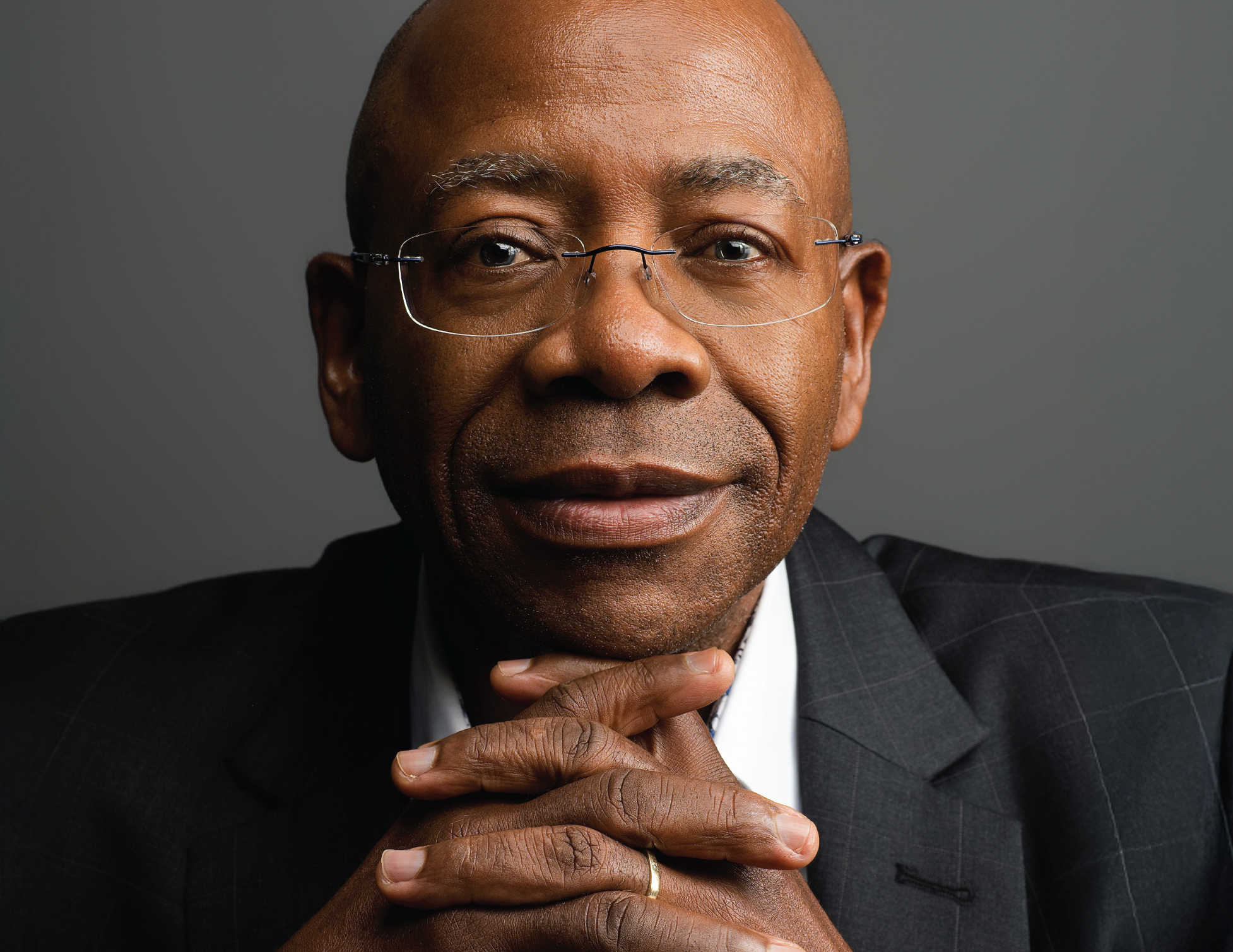
Leadership is delighted to publish an excerpt from ‘Coming in from the Cold: An Autobiography’ by Professor Bonang Francis Mohale.
I have spent much of my life thinking, speaking, and writing about leadership. It has been my great obsession – not because of power or prestige, but because leadership is ultimately about people. It is about lifting as we rise. I have already written two books that deal largely with my thoughts on leadership–particularly ethical leadership. But I feel that I would not be true to who I am if I didn’t include some thoughts on leadership here too. It is, after all, my enduring obsession that has shaped my life’s journey.
For me, a leader is not defined by title or position. A leader is anyone who feels called to take responsibility–to create movement and influence. Leadership is hard. It requires a compelling vision, the courage of conviction, and integrity. It is not for the faint-hearted.
True leaders are like captains at sea or pilots in the cockpit of an Airbus 380. People put their trust–their very lives–in our hands. They will only follow if they believe in us and in the destination we paint so vividly that they can see it in their mind’s eye.
Courage is at the heart of leadership. It is the courage to stand for what is right, to speak truth to power irrespective of the consequences, and to swim against the tide when the easier path would be to stay silent. Integrity matters just as much–being the same person wherever you are, consistent and trustworthy, warts and all.
Leadership starts with self-mastery. Long before you can lead others, you must know yourself deeply–your values, your strengths, your weaknesses. As the ancient Greek inscription at Delphi says: Know thyself. Once you have done that inner work, you can lead a few people, then a team, then a division, and eventually an enterprise. Each step requires growth and humility.
Great leaders are other centred. They measure success not by their own achievements, but by how many people they have helped to rise. My proudest moments have been seeing those I once hired as drivers, receptionists or mailroom clerks flourish as executives, entrepreneurs, and graduates. Leadership is about seeing potential in people before they see it in themselves.
I have always believed that hope is the most precious currency of leadership. Napoleon Bonaparte said leaders are dealers in hope, and he was right. If you cannot give your people hope, you are not equipped to lead. The best leaders are not speedboats that roar loudly on their own power, but sailboats that harness the energy of the whole crew. When everyone feels they own the organisation, you create a thousand CEOs–ambassadors who carry the vision forward.
Around the world we face a crisis of leadership–a retreat into fear, nationalism, and exclusion. But authentic leadership is about rejecting that monochrome vision. It is about openness, inclusivity, and the courage to imagine new possibilities.
Ultimately, leadership is an act of service. It is doing what is required for the betterment of others–even when no one is watching, even when there is no recognition. Like the sun that rises each day, leaders show up because that is what they were put here to do.
A call for African leaders
I’ve often said that leadership is a calling–not a position, not a title, not even a profession. A calling. A job is how you make money. A career is how you make your mark. A calling is how you acknowledge a higher vision, whatever it may be.
Leadership, to me, is about being genuinely obsessed with the development of others. It’s about creating a better future not just for yourself, but for your community, your country, your continent. It is about courage–the kind of courage that faces down fear, challenges injustice, and dares to believe that tomorrow can be better than today.
Alexander the Great once said, ‘I am not afraid of an army of lions led by a sheep; I am afraid of an army of sheep led by a lion.’ That quote has stuck with me over the years. I’ve seen the truth of it in business, in politics, in civil society. The presence–or absence–of good leadership changes everything. It shapes outcomes. It defines cultures. It determines who thrives, and who gets left behind.
The world today – and Africa in particular–faces a crisis of leadership. But I believe this moment demands not more managers, but more conscious leaders. Leaders who, in the words of Dr Cheryl Moen Vermey, bring their whole selves with total awareness to their roles. Leaders who focus on the ‘we’ rather than the ‘me’, who create cultures of trust, care and expansive influence. Leaders with integrity. Leaders with vision. Leaders with empathy.
When I think about what makes African leadership unique, I come back to three core pillars: context, direction setting, and organisational capability.
African leaders are not trying to be assimilated into a classical, Western mould. We are not just climbing the corporate ladder of success. We are trying to change the ladder altogether–to reshape what it means to lead. The progressive African leader is a change agent, concerned with the simultaneous political, social, and economic transformation of their communities. They know that a transformed entity is not the same as an empowered one. They understand that the goal is not short-term gain, but sustainable impact. They are deeply rooted in the continent, and they lead from that place of cultural, historical, and moral grounding.
In this work, I often reflect on how success must be redefined. It’s not just about results–though those matter too.
It’s about producing embarrassingly good outcomes at work while still being present in your family, contributing to your community, and acknowledging your spirituality. That, for me, is the progressive realisation of a worthy ideal.
More than ever, we need leaders who are willing to confront the major anxieties of our time. As John Kenneth Galbraith said, ‘All of the great leaders have had one characteristic in common: it was the willingness to confront unequivocally the major anxiety of their people in their time.’ In post-pandemic South Africa, those anxieties are many–poverty, unemployment, inequality, corruption, a failing state, declining trust. If we don’t think for ourselves, we place our future in the hands of others. It is up to us to create our own new world.
To do that, we must invest in developing the next generation of African leaders, starting now. The demographics are on our side. More than half the continent is under 25. That is a staggering pool of potential. If we can direct that energy into economic opportunity–through better education, entrepreneurial support, youth employment, and inclusive growth–we can fundamentally reshape our destiny. If we fail, we will entrench cycles of poverty and despair.
Africa has already lost too many opportunities through a lack of leadership and foresight. We were slow to industrialise, relying on exporting raw materials rather than building manufacturing capacity that could have created millions of jobs. We have lagged in developing our agricultural potential, despite having the world’s largest reserves of uncultivated arable land. We have underinvested in infrastructure–roads, ports, power grids, digital networks–all of which are essential for growth. These are not just economic losses–they are leadership failures.
It is our responsibility to ensure we don’t finish last in our own race. That means cultivating leadership that understands Africa’s unique challenges and solutions. It means engaging, interacting and problem-solving in a way that reflects who we are. We cannot solve African problems with foreign tools.
Events like Marikana are tragic reminders that unless business leaders act with empathy and restore the dignity of communities, we will continue to repeat the mistakes of the past.
Leadership, ultimately, is about vision, courage, and character. It’s about seeing around corners. It’s about asking, ‘What else is missing?’ It’s about having the moral clarity to say, ‘This is not good enough,’ and the energy to do something about it.
Leaders must help people understand that the pain of change is less than the pain of staying the same. That the future is worth the sacrifice, the effort, the hard conversations.
Good leaders don’t leave people out in the cold. They bring others into the warmth. They create spaces where people feel seen, heard, and valued. They ensure that progress is not a private privilege but a shared journey. That, to me, is the essence of coming in from the cold–not just for me, but for every person who has ever been excluded, overlooked, or underestimated.
True leadership is about opening doors, setting extra places at the table, and lighting fires that others can gather around.
We need moral leadership–in business, in government, and in every sphere of public life. Leadership that is honest, ethical, and accountable. Leadership that does not bribe, steal, or cheat. A better normal is only possible when we reject corruption, speak out against its perpetrators, and rebuild trust in our institutions–brick by brick, person by person.
That’s the leadership I try to model. And that’s the kind of leadership I believe Africa needs now more than ever.
Professor Bonang Mohale is the Chancellor of the University of the Free State, Former President of Business Unity South Africa (BUSA), Professor of Practice in the Johannesburg Business School (JBS) in the Faculty of Business and Economics and Chairman of four companies (two listed), The Bidvest Group Limited and ArcelorMittal as well as Swiss Re Corporate Solutions Africa and SBV Services.