

South Africa’s energy transition did not emerge from long‑term planning alone. It was accelerated by crisis.
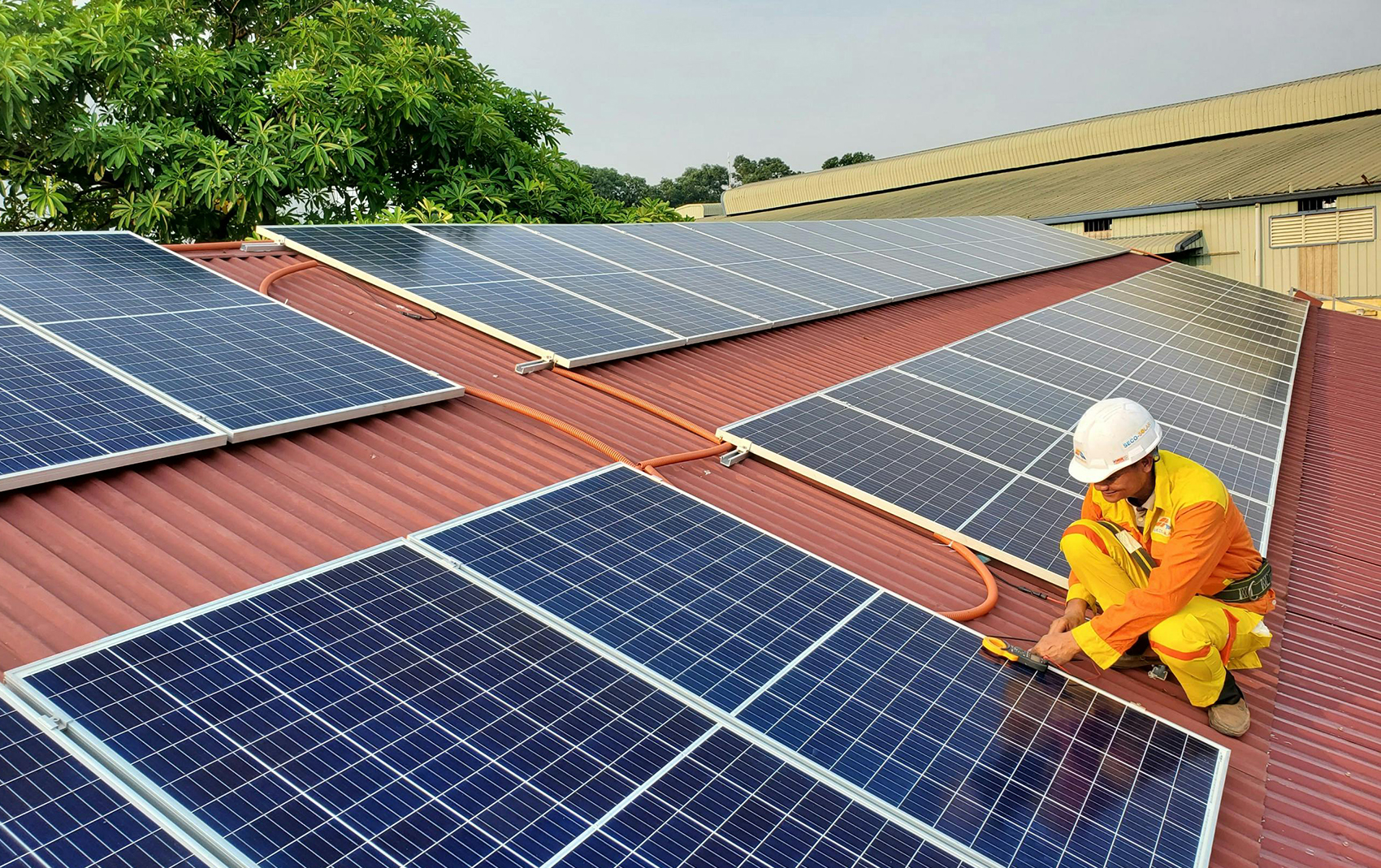
As load-shedding intensified and electricity supply became increasingly unreliable, households and businesses across the country turned to self-generation—particularly rooftop solar—as a practical response to an immediate challenge. What followed was one of the fastest decentralised energy shifts in South Africa’s history.
This movement is now formally known as Small‑Scale Embedded Generation (SSEG). While often viewed narrowly as a solar approval process, SSEG in fact represents a much deeper shift in how electricity systems are designed, governed, and shared.
From Centralised Power to Distributed Participation
For decades, South Africa’s electricity system was built on a simple premise: large, centralised power stations generate electricity, which flows one-way through transmission and distribution networks to end users. Consumers consumed; utilities generated.
Embedded generation at scale was never part of this original design.
When rooftop solar adoption began accelerating, it happened faster than regulatory frameworks could be developed. Municipalities and Eskom were suddenly faced with a grid receiving power from thousands of new sources —many of them unregistered, unseen, and uncoordinated.
The absence of early SSEG frameworks was therefore not a policy failure, but a reflection of how quickly the energy landscape changed.
Why SSEG Regulation Became Necessary
As embedded generation expanded, several critical risks emerged:
Reverse power flows into infrastructure designed for one-directional supply
Voltage fluctuations affecting power quality and equipment safety
Protection and isolation risks for maintenance teams
Revenue uncertainty for municipalities responsible for local grids
Without formal processes, decentralised energy—while well-intentioned—risked undermining the very system it sought to support.
SSEG regulation emerged as a stabilising mechanism: not to slow down adoption, but to enable it safely and at scale.
What the SSEG Process Actually Does
At its core, the SSEG application and approval process serves three essential functions:
1. Grid safety and system stability
Approved, certified inverters ensure automatic disconnection during outages, protect workers, and maintain voltage within acceptable limits.
2. Visibility and planning
Knowing where generation exists allows municipalities and Eskom to plan network upgrades, manage demand, and design future capacity expansions.
3. Formalisation of distributed energy assets
Compliance transforms informal installations into recognised infrastructure — insurable, financeable, and aligned with national energy planning.
In short, SSEG turns individual energy decisions into coordinated national progress.
Who Should Be Applying?
Any electricity customer installing a grid‑connected generation system—residential, commercial, agricultural, or industrial—should apply for SSEG approval through their local authority.
This includes:
Homeowners with rooftop solar
Businesses managing rising energy costs
Farms and agro-processing facilities
Schools, hospitals, and public institutions
Participation ensures that decentralised energy strengthens the grid rather than fragmenting it.
The Cost Question — and the Real Economics
One of the most common concerns around SSEG is cost.
In practice, compliance typically represents a small proportion of total system cost, covering application fees, inspections, engineering sign-off, and, where required, metering upgrades.
While this may appear burdensome upfront, non-compliance carries far greater long-term risk:
systems may be uninsurable
property transactions can be delayed or devalued
businesses may fail governance or ESG assessments
municipalities may disconnect unsafe installations
Compliance protects both the consumer and the system.
SSEG and the Expansion of the Grid
There is a misconception that embedded generation competes with grid expansion. In reality, the opposite is true.
When properly regulated, SSEG:
reduces peak demand strain
defers costly infrastructure upgrades
improves local energy resilience
enables more accurate long-term planning
This hybrid model—combining centralised generation, distributed energy, and storage—reflects how modern electricity systems operate globally.
It is a model increasingly discussed in international energy forums, including the World Economic Forum in Davos, where grid resilience, decentralisation, and energy governance dominate conversations about emerging economies.
Leadership Thinking at National Level
South Africa’s national energy leadership has consistently emphasised that the energy transition must balance speed with stability.
The Minister of Electricity and Energy has repeatedly highlighted the importance of orderly grid integration, noting that renewable energy and self-generation are essential to economic recovery—but must be implemented within frameworks that protect the grid and public safety.
Similarly, Eskom’s leadership has acknowledged that embedded generation is now a permanent feature of the energy landscape, requiring cooperation, transparency, and technical discipline rather than resistance.
SSEG is the practical expression of that philosophy.
Why Professionalisation Matters
As embedded generation becomes formal infrastructure, the role of qualified professionals becomes central.
Installers, engineers, and energy advisors are no longer simply service providers. They are:
interpreters of policy
custodians of safety standards
intermediaries between citizens and municipalities
contributors to national energy stability
Professionalisation ensures that decentralised energy grows responsibly, inclusively, and sustainably.
What Success Looks Like
If implemented well, SSEG will achieve far more than compliance statistics.
It will:
normalise citizen participation in infrastructure
strengthen municipal distribution networks
unlock investment aligned with ESG principles
support climate commitments
create skilled jobs in the energy sector
Most importantly, it will allow South Africa to move beyond emergency responses toward a deliberate, future-focused energy system.
Conclusion
SSEG is not merely an application form or a technical requirement. It is the framework through which South Africa reconciles decentralised innovation with national coordination.
The future grid will not be centralised — but it must be intelligent, visible, and governed.
Compliance is not the obstacle… it is the enabler.
Kabo Leshoai