

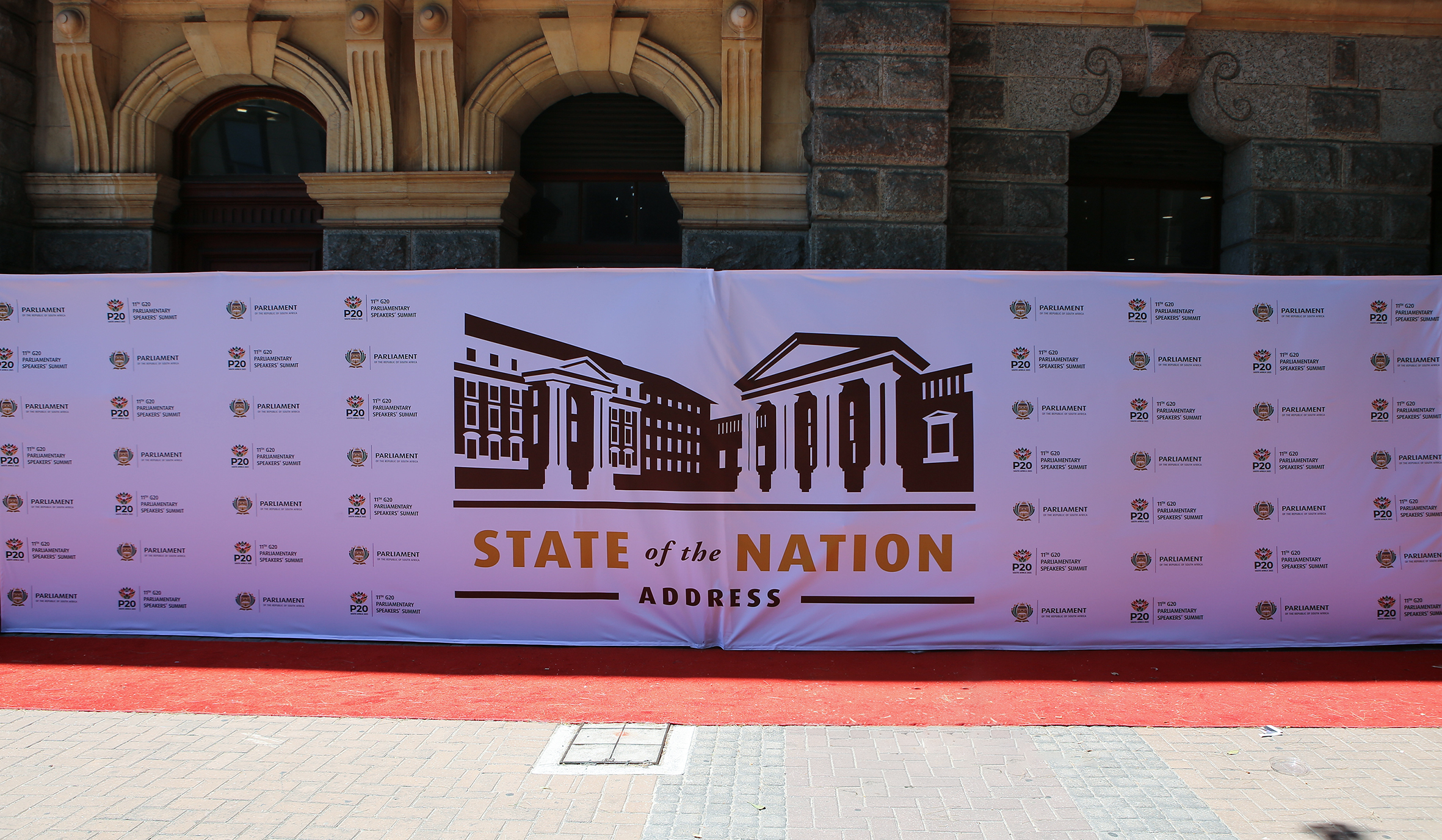
Nasiphi Ndevu compares SONA 2025 and
SONA 2026 through three national priorities
The State of the Nation Address (SONA) remains one of the most significant political events in South Africa. Delivered annually before Parliament, it outlines government’s priorities, reflects on progress made, and sets the tone for the year ahead. More than a ceremonial speech, SONA acts as a policy compass, guiding national debate and signalling the direction of governance, economic planning, and institutional reform.
When comparing SONA 2025 and SONA 2026, a clear evolution becomes visible. The 2025 address largely focused on stabilisation and recovery. It recognised the economic pressures facing the country, the strain on infrastructure, and the urgent need to rebuild public confidence. By contrast, SONA 2026 reflected a more assertive and forward-looking tone. It built on earlier reforms and shifted toward expansion, acceleration, and measurable delivery.
To understand this transition clearly, this article compares the two addresses across three central themes: Economic Growth, Job Creation, and Energy Security. These themes are deeply interconnected. Economic growth requires reliable energy. Job creation depends on expanding industries. Energy security underpins both productivity and investor confidence. Together, they shape the foundation of national development.
Economic Growth in SONA 2025: Rebuilding the Foundation
Economic growth was a dominant theme in SONA 2025, but it was framed within the context of recovery. The economy faced modest growth levels, fiscal pressure, and weakened investor confidence. The speech emphasised stabilising the economic environment before pursuing ambitious expansion.
Infrastructure investment featured strongly, particularly in transport, water systems, and energy. Government stressed the importance of improving regulatory certainty and strengthening partnerships with the private sector. The tone was measured and cautious. The message was that economic repair must precede acceleration. Structural reforms were presented as groundwork necessary to unlock future growth.
Rather than promising rapid transformation, the 2025 address focused on restoring credibility. Economic stability was described as a prerequisite for sustainable development. In essence, the priority was to fix what was not functioning effectively and rebuild trust in the country’s economic direction.
Economic Growth in SONA 2026: Driving Industrial Expansion
By 2026, the economic narrative had shifted noticeably. Growth was no longer framed primarily as recovery but as expansion. The tone reflected greater confidence in the reform process and a stronger commitment to measurable outcomes.
Industrialisation became a central theme. The speech emphasised localisation, export diversification, and expanding domestic manufacturing capacity. Instead of focusing mainly on attracting investors, the emphasis shifted toward strengthening productive sectors within the country. Sector-specific strategies were highlighted, and there was stronger language around performance targets and accountability.
The 2026 address suggested that the stabilisation efforts of the previous year had laid a platform for acceleration. Growth was presented not merely as an aspiration but as a deliberate outcome of coordinated policy action.
The Shift in Economic Strategy
The contrast between the two years is clear. In 2025, government concentrated on repairing the economic engine. In 2026, it focused on pressing the accelerator. The progression reflects a natural policy cycle in which stability creates space for expansion. Recovery efforts in 2025 paved the way for a more ambitious and forward-looking strategy in 2026.
Job Creation in SONA 2025: Providing Immediate Relief
Unemployment remained one of the country’s most pressing challenges in 2025. For many citizens, job creation is not an abstract policy issue but a matter of survival. The 2025 address responded to this urgency by expanding public employment programmes and youth initiatives.
Community-based work schemes and support for Small, Medium and Micro Enterprises (SMMEs) were emphasised as critical tools for employment generation. Government acknowledged that public employment programmes are not permanent solutions, but they were presented as necessary support mechanisms during economic recovery.
The tone balanced compassion with realism. Immediate relief was necessary while broader structural reforms took effect. Youth employment received particular attention, with the understanding that prolonged unemployment among young people poses both economic and social risks.
Job Creation in SONA 2026: Building Sustainable Employment
In 2026, the emphasis shifted toward long-term sustainability. While public employment initiatives remained relevant, the focus moved decisively toward private-sector driven job creation. The speech highlighted the importance of aligning education and training systems with industry needs.
Technical and vocational education gained prominence, alongside skills development in sectors such as digital technology, infrastructure, and renewable energy. Entrepreneurship support and partnerships with industry were emphasised as central to employment growth.
Rather than concentrating primarily on temporary job opportunities, SONA 2026 framed employment as an outcome of industrial expansion and productivity. The objective was not only to increase the number of jobs but to improve their sustainability and contribution to economic growth.
From Access to Sustainability
The evolution between the two years reflects deeper strategic thinking. In 2025, government acted as a buffer against economic hardship through relief-based employment measures. In 2026, the strategy aimed to reduce dependency on state-driven programmes by empowering industries and building a skilled workforce.
The shift from job access to job sustainability demonstrates an integrated approach in which employment is closely linked to industrial policy and economic transformation.
Energy Security in SONA 2025: Responding to Crisis
Energy security shaped much of the economic debate in 2025. Electricity shortages had disrupted businesses and households, affecting productivity and investor confidence. The address treated energy as an urgent national priority requiring immediate action.
Commitments included expanding renewable energy procurement, enabling private power generation, and implementing regulatory reforms. Governance improvements within the energy sector were also emphasised. The tone was corrective and urgent, focusing on stabilising supply and restoring reliability.
Energy reform was presented as a necessary condition for economic survival. Without reliable electricity, growth and job creation would remain constrained.
Energy Security in SONA 2026: Building Resilience and Modernisation
By 2026, the energy conversation had matured. While stabilisation remained important, the focus broadened to long-term system resilience and infrastructure modernisation.
The speech highlighted transmission grid expansion, diversification of the energy mix, and accelerated renewable energy investment. Energy storage and innovation were discussed as part of building a sustainable future.
Energy was no longer framed only as a crisis to manage but as an opportunity to modernise infrastructure and support industrial growth. The shift from emergency response to strategic transformation mirrored the broader progression seen in economic and employment policies.
A Broader Pattern of Transition
Across Economic Growth, Job Creation, and Energy Security, a consistent pattern emerges. SONA 2025 prioritised stabilisation and immediate relief. SONA 2026 prioritised expansion, sustainability, and measurable performance.
The later address integrated these themes more clearly, linking energy reform to industrial growth and connecting skills development to employment outcomes. The tone also shifted from cautious rebuilding to confident acceleration.
From Stabilisation to Momentum
The comparison between SONA 2025 and SONA 2026 reveals a country moving through a deliberate policy transition. The 2025 address focused on restoring balance, rebuilding trust, and stabilising key systems. The 2026 address built upon that foundation and sought to generate forward momentum through industrial expansion, sustainable job creation, and resilient energy infrastructure.
If 2025 was about repairing foundations, 2026 was about constructing the next level. Together, the two addresses reflect an attempt to move beyond crisis management toward structured and strategic development.
Whether these ambitions are fully realised will depend on consistent implementation, accountability, and collaboration across society. However, the progression across these three core themes demonstrates an intentional shift in focus, from recovery to acceleration, from short-term response to long-term transformation.
Governance, Accountability and Implementation
An additional difference between SONA 2025 and SONA 2026 can be seen in the way governance and accountability were framed. In 2025, the emphasis was placed on rebuilding systems, restoring credibility, and strengthening institutional capacity. There was recognition that effective economic reform depends on capable public institutions. The speech stressed improving coordination across departments, enhancing oversight, and rebuilding administrative efficiency. The tone suggested that before ambitious promises could be made, systems of governance needed to function reliably and transparently.
By 2026, the conversation moved beyond institutional repair toward performance and delivery. The language of measurable targets, timelines, and outcomes became more prominent. There was stronger emphasis on monitoring progress and ensuring that reforms translated into visible improvements. Implementation was no longer presented as a technical process but as a political priority. This signalled a shift from policy intention to policy execution.
Public Confidence and National Momentum
Another important development between the two addresses was the tone of public confidence. SONA 2025 sought to reassure citizens during a period of uncertainty. It acknowledged hardship while offering a structured plan for recovery. The underlying message was one of resilience—that the country had faced challenges before and could overcome them again through discipline and partnership.
In contrast, SONA 2026 projected momentum. It assumed that recovery efforts were beginning to yield results and encouraged the country to think in terms of expansion and opportunity. The tone was more forward-looking, focusing on potential rather than constraint. This shift in tone plays an important role in shaping public perception. Confidence, after all, influences investment decisions, consumer spending, and social stability.
Together, these additional dimensions reinforce the broader conclusion of this comparison. The movement from stabilisation in 2025 to acceleration in 2026 reflects not only policy adjustments but also a deliberate attempt to change national mood—from cautious recovery to determined progress.
Nasiphi Ndevu is the head of research for Sgwilil Media Group.