

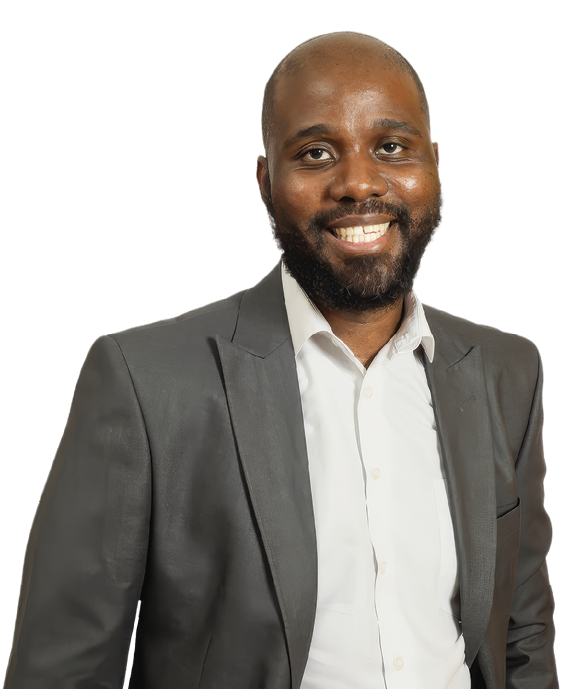
“If we work together, we don’t just fix cars. We fix economies. We fix futures. And in the process, we fix ourselves,” says Ipeleng Mabusela, Chief Executive Officer of the Retail Motor Industry Organisation (RMI).
“Collaboration is not charity—it’s strategy. When we work together, we multiply possibility.” With these words, Ipeleng Mabusela, Chief Executive Officer of the Retail Motor Industry Organisation (RMI), captures not only his leadership philosophy but also his vision for one of South Africa’s most vital sectors.
His story is one of discipline, resilience, and deep belief in the power of collective effort to transform industries, communities, and, ultimately, a nation.
A Childhood of Discipline and Aspiration
Ipeleng’s journey begins in Ga-Rankuwa in a township north of Pretoria, where his upbringing was shaped by the values of education, faith, and discipline. Both of his parents were high school principals, and his mother also served as a reverend. In this environment, education was not optional but the very foundation of life.
From the earliest years, Ipeleng’s days began before sunrise. At 4:30 each morning, he boarded a bus to travel into Pretoria for schooling. The routine was demanding, but it instilled in him discipline, resilience, and a quiet toughness that would later define his leadership style.
He describes growing up in Ga-Rankuwa as both grounding and motivating. “You saw young people succeed, and you saw others fall behind. That gave your perspective and pushed you to decide which direction you wanted your life to take.” For Ipeleng, the path forward was education—and with it, engineering.
Discovering Engineering and a Path to Leadership
In high school, a chance encounter with industry ignited his passion. A friend of his sister, working as an engineer at BMW, invited young Ipeleng on a plant tour. Walking through the factory, witnessing the interplay of precision, technology, and human skill, he was hooked.
“I thought this is what I want to do,” he recalls. That single experience inspired him to study mechanical engineering at the University of the Witwatersrand. The decision shaped not just his career but also his way of thinking about problems and solutions.
Engineering taught him to view challenges as interconnected systems—a car engine, a business, or even society itself. He explains: “As an engineer, you learn to break things down into parts, understand each one, and then put them back together in a way that works better. I carry that thinking into leadership.”
That mindset has served him across roles in South Africa and abroad, from working in Europe and Dubai to leading within the country’s automotive sector. But it is in his current role at the helm of RMI where his skills, experience, and philosophy come together with greatest impact.
Understanding the RMI and the Automotive Aftermarket
To understand Ipeleng’s work, one must understand the role of the Retail Motor Industry Organisation. The RMI represents over 8 000 businesses in South Africa’s automotive aftermarket—the network of services and suppliers that support vehicles after they are manufactured.
This includes workshops, fuel stations, dealerships, parts suppliers, body repairers, and more.
In simple terms: if manufacturing is the birth of a car, then the aftermarket is its entire life. Every service, every repair, every part replaced—that is the domain of the RMI.
The sector is massive, employing more than 300 000 people and contributing over 2% to South Africa’s GDP.
ΩBut beyond numbers, it represents livelihoods—thousands of small and medium businesses spread across towns and cities.
“Our work is to set standards, protect consumers, support businesses, and negotiate on behalf of employers,” says Ipeleng. The organisation functions both as a trade association and as an employers’ body. That means it influences policy, sets fair standards for members, and negotiates wages with unions.
At its heart, though, RMI is about trust. Its logo—displayed proudly at workshops and service centres—signals to consumers that they can expect fairness, safety, and professionalism. “If you see our logo, you know you’re dealing with qualified people, proper health and safety, and fair pricing,” explains Ipeleng. “That’s why insurers, fleet companies, and ordinary South Africans trust us.”
Rebuilding Standards and Community
In South Africa, where counterfeit parts and fly-by-night operators abound, standards matter. Without them, cars become unsafe, businesses collapse, and trust evaporates. RMI fills that gap, offering not just regulation but also community.
Ipeleng believes the organisation’s power lies in its collective strength. “A small workshop with eight employees can feel very alone. But when they are part of RMI, they have access to knowledge, mentorship, and a network of people who have faced the same struggles.”
He recalls a story from a recent annual general meeting. A young black entrepreneur stood up to thank an older Afrikaans couple who had mentored him. Seven years earlier, he had quit his job in a mine to open a workshop and nearly gave up several times. But his mentors, fellow RMI members, encouraged him to persist. “If you survive five years in this business, you’ll thrive,” they had told him. Today, his business is growing—and his gratitude was public.
For Ipeleng, these stories illustrate the deeper meaning of his work. “It’s about belonging. About knowing you are not alone in the challenges you face. That’s what makes RMI special.”
A Philosophy of Collaboration
Collaboration runs through Ipeleng’s thinking. He often draws on African traditions of community and shared strength. He recalls the market traders of Marabastad, who would send customers from shop to shop until they found what they needed. Competitors on paper, they understood that cooperation could make them all stronger.
“That’s the mentality we need in business today,” he argues. “If we collaborate—whether as small workshops, as unions and employers, or as business and government—we create outcomes that no one could achieve alone.”
This philosophy has already shaped his leadership. Under his watch, wage negotiations with unions concluded in record time, avoiding strikes and securing stability for both workers and employers. His secret? Relationships. “Sometimes it’s as simple as having coffee together, building trust as people, not just as organisations,” he says.
It is the same collaborative spirit he brings to government engagement. For years, the automotive aftermarket was absent from policy conversations. Now, through Ipeleng’s leadership, the RMI has secured a seat at the table with the Department of Trade, Industry and Competition (DTIC), ensuring that the sector’s 22 000 businesses and 300 000 jobs are not overlooked.
Driving Skills and Transformation
One of Ipeleng’s passions is education and training. He is troubled by the paradox of South Africa’s high youth unemployment alongside severe shortages of skilled artisans. “These two things cannot coexist,” he says firmly.
Through partnerships with SETAs and initiatives like Project Denali, RMI is addressing this gap. The project identifies talented high school learners in technical fields, puts them through competitions, and funds the best candidates for apprenticeships at TVET colleges. Crucially, it links them to employment opportunities through networks like SA Youth.
The goal is to produce 100 skilled young people a year—with a strong focus on including women. “There’s nothing more disheartening than finishing school and finding no opportunities,” says Ipeleng. “We are determined to change that.”
He also sees transformation as essential to the sector’s future. Many workshops are family businesses whose founders are aging. Often, their children do not want to take over, leading to closures. Ipeleng wants to create pathways for young entrepreneurs to take over such businesses, ensuring continuity and new opportunities. “It’s not just about preserving jobs,” he explains. “It’s about unlocking transformation and keeping our industry vibrant.”
Engineering Leadership: Lessons from a Discipline
Engineering did more than give Ipeleng a career; it gave him a way of leading. He views leadership as solving complex systems—breaking problems into parts, identifying underlying fears, and designing solutions that work for everyone.
In tense negotiations, he asks: “What problem are you really trying to solve? What’s your fear in signing this deal?” By identifying core concerns, he can adjust the solution without compromising fairness. It is engineering applied to human dynamics.
He also believes engineers make strong leaders because they are trained to imagine what they cannot see. “You can’t see electrons, but you must trust the model. In business, it’s the same—you imagine better futures and then work systematically to build them.”
A Family Man with a National Vision
Despite his heavy responsibilities, Ipeleng remains grounded by his family. He and his wife are raising two young sons—one a toddler, the other just a few months old. Fatherhood, he says, brings both joy and lessons. “Children make you patient. They also show you your own flaws in the mirror. It’s humbling.”
What worries him most, however, is the future his children will inherit. “Will they have a country left in 20 years? That is my fear. As business leaders, political leaders, and citizens, are we making the daily choices to ensure they can thrive here?”
It is a deeply personal question, but also a practical one. It is what drives him to engage government, to fight for standards, and to invest in skills development. For him, leadership is not just about today’s businesses but about tomorrow’s South Africans.
The Power of Simplicity and Humanity
Despite his intellectual depth, Ipeleng keeps his personal routines simple. While his wife devours business books, he prefers African literature. Recently, he read ‘The Secret Lives of Baba Segi’s Wives’, a novel far removed from boardroom topics. Reading fiction, he says, relaxes him and reminds him of the human side of life.
He also maintains humility. In interviews, he often laughs at himself and acknowledges the privilege of learning from others. His leadership style, he insists, is teaching rather than commanding. “My joy comes from helping others grow, from sitting down and saying: how would you solve this problem?”
A Call to Action: Building an Industry, Building a Nation
As CEO of the RMI, Ipeleng sits at the intersection of industry, policy, and society. His vision is clear: strengthen standards, support small businesses, build skills, and create collaboration that goes beyond competition.
The stakes are high. The automotive sector contributes over 5% of South Africa’s GDP. The aftermarket alone sustains hundreds of thousands of jobs. Done right, it can be a cornerstone of resilience, transformation, and growth.
But the lesson of Ipeleng Mabusela’s story goes beyond economics. It is about the mindset of unity. “We are more than the sum of our parts,” he says. “If we share knowledge, mentor each other, and collaborate across divides, we can build something far stronger than any of us alone.”
Inspiration with Practical Direction
Ipeleng’s message is both hopeful and urgent. South Africa, he believes, has the talent, the businesses, and the culture of community to thrive. But it requires choices: to value standards over shortcuts, collaboration over isolation, and long-term transformation over quick wins.
For policymakers, it means integrating the aftermarket into national planning. For business leaders, it means mentoring the next generation and creating succession paths. For young people, it means seizing opportunities and daring to enter industries that need them.
Ultimately, his call is simple: “If we work together, we don’t just fix cars. We fix economies. We fix futures. And in the process, we fix ourselves.”
Nasiphi Ndevu is the Head of Research for Sgwili Media Group.