

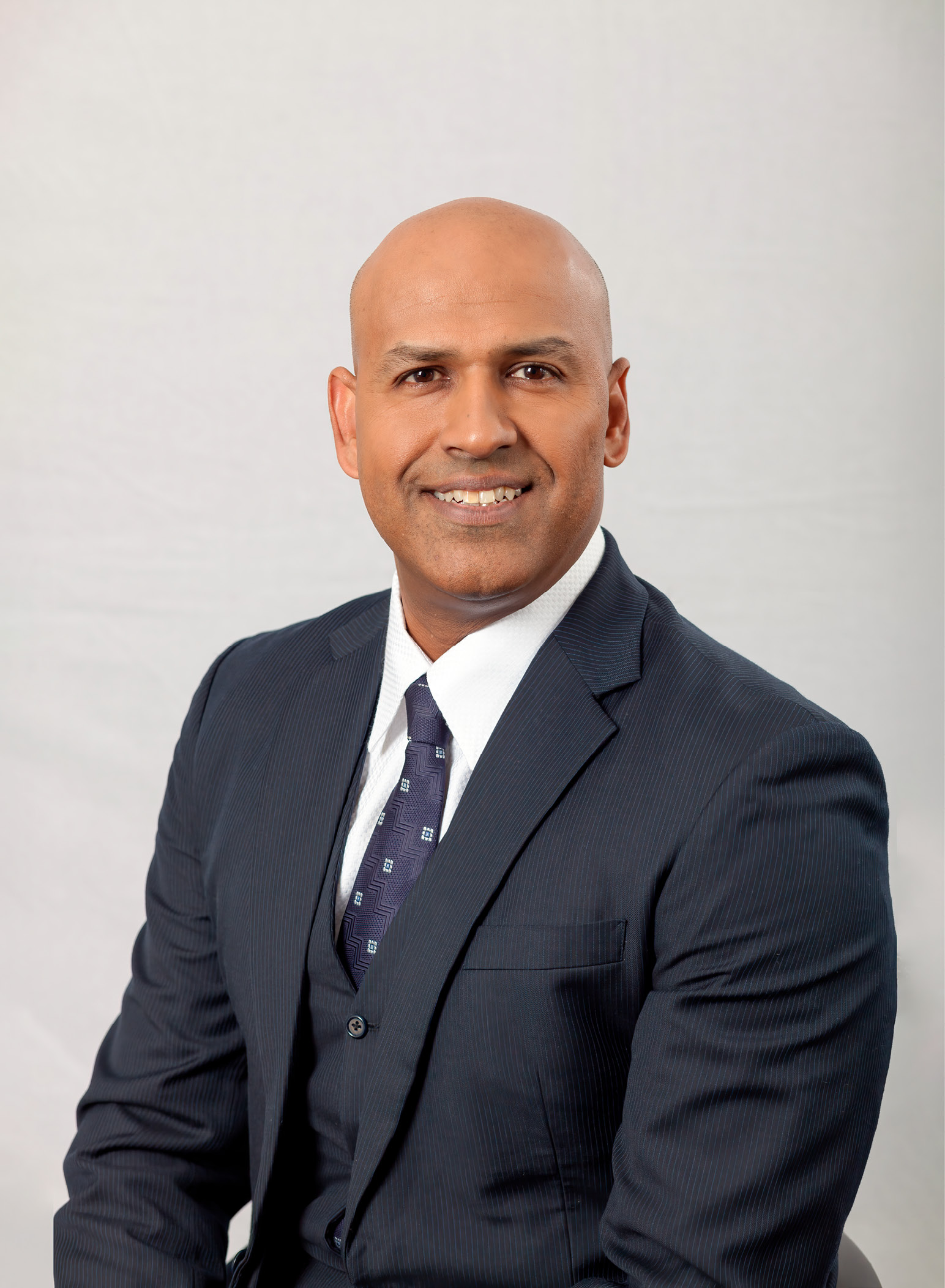
Ido Lekota sat down for a chat with Mantengu Limited’s Group Chief Financial Officer Magen Naidoo to find out more about what makes him and the organisation tick
Mantengu Limited, headquartered in Sandton, Johannesburg, is described as “a next generation conglomerate” because the company utilises business normal extractive models by combining innovative funding methods, broad-based economic empowerment, sustainable mining practices, and investments in clean energy.
Mantengu is also committed to driving radical transformation through wealth and job creation, skills transfer, rural infrastructure development, and biodiversity protection.
Leading Mantengu Limited is a team of visionaries and innovators, including Group Chief Financial Officer Magen Naidoo. A qualified Chartered Accountant with over 22 years of experience in auditing and financial management, Naidoo began his career as an Audit Partner at Deloitte South Africa, where he spent more than 17 years honing his expertise.
Transitioning from audit to financial and strategic management, he has served as Mantengu’s Group CFO since 2023. In this role, Naidoo oversees financial reporting, risk management, and operational performance improvement. He recently sat down with Leadership Magazine.
What attracted you to the mining sector and what has kept you motivated throughout your career, especially given your background in audit and finance?
I believe it was fate—or perhaps destiny—that I entered the mining sector on my very first day at work. After university, I completed my articles at Deloitte, and once I qualified as a Chartered Accountant, my first client was in mining. Throughout my years at Deloitte, I spent most of my time working within the mining industry.
How did your experience as an audit partner at Deloitte shape your approach to financial leadership and risk management at Mantengu?
I honestly couldn’t have asked for a better foundation, experience, or exposure than what I gained at Deloitte. While working for Deloitte in the United States, I witnessed then Enron financial scandal and the resulting Sarbanes-Oxley Act of 2002, which introduced stringent controls around financial reporting and risk management.
This experience proved invaluable when I later became a partner at Deloitte. I was among the few qualified to sign off on audit opinions for companies reporting to US financial authorities, whose regulation were more rigorous than those in South Africa. Upon returning to South Africa, I had the chance to work with large, listed multinational companies, including Anglo American, which exposed me to some of the most complex financial and risk management challenges.
During my time at Deloitte, I was also responsible for signing off on Anglo American thermal coal business—now Thungela—and was one of the only about eight individuals worldwide authorised to sign off on the Anglo America Group as a whole.
Can you share some key financial or operational challenges you encountered upon joining Mantengu, and how you navigated the company’s recent financial turnaround?
When I joined Mantengu, we had just one asset that had not started production and only five employees. Our biggest challenge was to build the company from the ground up with no initial funding. According to the country’s funding model, those seeking funding must first demonstrate a strong balance sheet and track record—essentially financial institutions require proof that you don’t actually need the money before they’ll lend it to you.
Today, just two and half later, we have grown to eight different companies employing at least 500 people, with several strategic acquisitions in the pipeline. In terms of turning the business around, it didn’t take long for us to identify our largest costs. For example, we had contracted a mining company but realised we were not getting value for what we paid them. We terminated that contract, cutting our production costs by more than half.
ESG and sustainable mining practices are increasingly important. How does Mantengu integrate these concerns into its financial and strategic planning?
My view is that fully meeting ESG criteria is something you can only achieve once your venture has reached a certain level of development. While ESG may be a major focus in Europe and globally, in rural areas like Limpopo, people’s primary concern is simply having enough food to eat. So while we discuss ESG, we must keep in mind that our pressing challenges remain poverty and inequality.
That said, Mantengu is committed to solar energy, aiming to eventually reduce our energy costs by half, particularly in our silicon and chrome operations. The pace of this roll-out will depend on the stability of demand for our product, which remains uncertain as some of our operations are still in the capital expenditure phase. Additionally, we are replacing diesel-powered loader with electrical alternatives.
We believe that by using alternative energy sources, we will create a more sustainable environment and enhance the important ESG benefits we seek.
How do you balance the demands of regulatory compliance, reporting standards (like IFRS) and maintaining agility in such a dynamic sector?
The question of balancing agility and compliance does not apply to us in the usual sense, because we believe that for a company to be sustainable, it must be both compliant and agile. Our strength lies in our ability to be dynamic and move quickly, creating an environment where neither compliance nor agility is compromised. We see compliance and agility as complementary necessities, not opposing forces. This allows us to maintain regulatory standards while responding rapidly to changing conditions without sacrificing either aspect.
What leadership qualities do you consider essential for driving change and maintaining best practices across a diverse and growing mining enterprise?
The ability to influence others is crucial because without it, no one will follow you. Respect matters greatly, as showing respect to others earns their respect in return. Additionally, emotional intelligence is essential for a leader to understand what motivates people and connect with them effectively.
How do you see the future of mining in South Africa evolving, especially in terms of investment, regulation, and community impact?
My view is that under the current government, the mining sector risks declining to a natural death. Although mining remains the highest contributor to South Africa’s GDP—accounting for about 6% of nominal GDP and contributing significantly to export earnings and employment—the government is doing very little to ensure its long-term sustainability.
One major issue is the poor state of transport infrastructure, which imposes extremely high logistics costs on the mining industry. These costs undermine the competitiveness of local mining companies on the international stage. For example, at Mantengu, logistics represent up to 36% of our operational costs. Transporting ore from places like Limpopo to Denver in Johannesburg and then to the coast is costly because we rely on road transport; the rail infrastructure that would significantly reduce these costs is virtually non-existent.
These high transportation costs drive up export prices, making it harder to compete globally. If cheaper rail options were available, we could lower our export prices, increase demand for our products, expand operations, and ultimately employ more people. Without urgent government action to improve infrastructure and support the mining sector, its future looks bleak despite its critical economic role.
What advice would you give aspiring finance professionals aiming to build careers in mining or other resource-based industries?
Be resilient and passionate about your career. Keep questioning the way things are done, especially in your field, and develop a thick skin because you will inevitably face a lot of criticism. Remember the wise saying: “99 percent of the time, you are not criticised by people who are more successful than you.”
Ido Lekota is a media practitioner and an independent socio-political commentator.